
The Shifting AI Landscape: Why Power Users are Migrating
While OpenAI’s ChatGPT burst onto the scene, quickly becoming a household name and the de facto introduction for millions to generative AI, a quiet yet profound shift is underway among its most demanding users. For a significant segment of professionals who integrate artificial intelligence into their daily workflows, the initial allure of novelty is giving way to a discerning search for reliability and depth. These power users, those whose productivity and output quality increasingly hinge on AI assistance, are demonstrating a growing preference for Anthropic’s Claude, signaling a crucial evolution in how value is perceived and measured in this rapidly maturing technological landscape.
ChatGPT undeniably benefited from a colossal first-mover advantage, capturing widespread public imagination and setting the benchmark for what a conversational AI could do. Its accessibility and broad utility made it an indispensable tool for countless casual inquiries and creative explorations. However, as the market saturates and users move beyond simple queries, Claude has quietly cultivated a reputation for its ‘quality-first’ approach. It often emphasizes nuanced reasoning, extended context windows, and a reduced propensity for “hallucinations” – a critical factor for professionals who cannot afford to fact-check every AI output meticulously. This distinction highlights a divergence in design philosophy: one aimed at broad appeal, the other at robust, dependable performance for intricate tasks.
Understanding the psychology of the paying subscriber reveals much about this migration. Casual users are often content with a free tier, but professionals invest in AI subscriptions because they expect a tangible return on investment, whether it’s time saved, enhanced creativity, or improved accuracy. When someone chooses to upgrade from a free AI service to a paid model, they are making a commitment to integrate the tool deeply into their routines. The decision to then cancel one paid subscription, like ChatGPT Plus, in favor of another, such as Claude Pro, is not taken lightly. It stems from a clear evaluation of performance metrics, a desire for specific capabilities, and a perceived gap in the value offered by their current solution for their most critical tasks.
For professionals, the stakes are considerably higher. They are not merely seeking clever responses but rather accurate summaries of dense documents, reliable code generation, sophisticated data analysis, and the ability to maintain coherent, extensive conversations without losing context. Claude’s architecture, particularly its larger context windows, allows it to process and recall vastly more information in a single interaction. This capability translates directly into fewer errors, more comprehensive outputs, and a reduced need for constant re-prompting or manual correction, which are significant time-savers in demanding professional environments. This consistent, higher-fidelity interaction is precisely what busy professionals are willing to pay a premium for.
Furthermore, the concept of ‘AI fatigue’ is becoming increasingly relevant. This phenomenon describes the frustration users experience when an AI repeatedly fails to understand complex instructions, generates inconsistent or irrelevant output, or requires excessive hand-holding to achieve desired results. For professionals, this fatigue can be a major productivity drain. Claude’s specific design choices, often underpinned by its ‘Constitutional AI’ principles that prioritize helpfulness, harmlessness, and honesty, are engineered to mitigate this. By focusing on generating more relevant, coherent, and less misleading information, Claude aims to provide a more consistent and less frustrating user experience, fostering trust and reducing the mental load associated with constant oversight. This leads to a more seamless integration into professional workflows, where the AI acts as a true collaborator rather than another tool that needs constant management.
Ultimately, while ChatGPT undeniably democratized access to generative AI and remains a powerful force, the professional AI market is evolving beyond novelty. Power users are making deliberate choices based on nuanced performance, reliability, and how effectively an AI can integrate into and elevate their complex, daily tasks. This migration to Claude among paid subscribers signifies a maturing market where discerning professionals are actively seeking specialized tools that offer not just innovation, but also unwavering dependability and a superior return on their investment.

Understanding the Claude Advantage: Nuance, Reasoning, and Tone

The recent ascent of Claude 3.5 Sonnet has signaled a definitive shift in how power users interact with large language models. While ChatGPT long held the undisputed crown for general accessibility, a growing cohort of developers, technical writers, and data analysts has migrated toward Anthropic’s ecosystem. The primary driver behind this migration is not mere novelty, but a palpable difference in output quality. Claude consistently demonstrates a more nuanced understanding of complex instructions, eschewing the verbose, “corporate-polite” filler that often characterizes GPT-4o. By stripping away the robotic over-explanations and forced cheerfulness, Claude functions more like a high-level creative partner than a generic chatbot.
For those working in high-stakes environments, the absence of these “AI-isms” is a significant productivity multiplier. When a user asks for a code refactor or a synthesis of a lengthy legal document, they require precision, not a lecture on safety guidelines or a repetitive summary of the task just completed. Claude’s architecture is tuned to provide direct, context-aware responses that respect the user’s time. Furthermore, its reasoning capabilities in structured data analysis have proven to be remarkably robust. Whether it is parsing through thousands of lines of raw JSON or debugging intricate Python scripts, Claude maintains a level of logical consistency that reduces the need for constant “prompt engineering” or manual corrections.

The Power of Long-Context Retention
Beyond its tone, Claude’s technical edge is most visible in its handling of massive context windows. In professional workflows, the ability to ingest entire research papers, project briefs, or voluminous codebases without losing the “thread” of the conversation is essential. Where other models might begin to hallucinate or summarize prematurely as the input length grows, Claude 3.5 Sonnet demonstrates a superior capacity for long-context retention. This allows analysts to feed the model vast amounts of data and receive answers that are anchored in specific, granular details rather than broad, generalized assumptions.
The true value of an AI assistant isn’t just in how much it knows, but in how little it interferes with the user’s cognitive flow. Claude’s ability to remain invisible—providing the right answer without the fluff—is why it has become the preferred choice for those who value efficiency over gimmicks.
Ultimately, the transition from ChatGPT to Claude is less about choosing one brand over another and more about selecting the tool that best aligns with professional output requirements. Developers find the code generation more reliable and less prone to “lazy” responses, while writers appreciate the human-like flexibility of its prose. By prioritizing reasoning depth and minimizing communicative friction, Anthropic has successfully carved out a niche where the model acts less like an interface and more like a seamless extension of the user’s own analytical process.
The ChatGPT Ecosystem: Familiarity vs. Feature Evolution
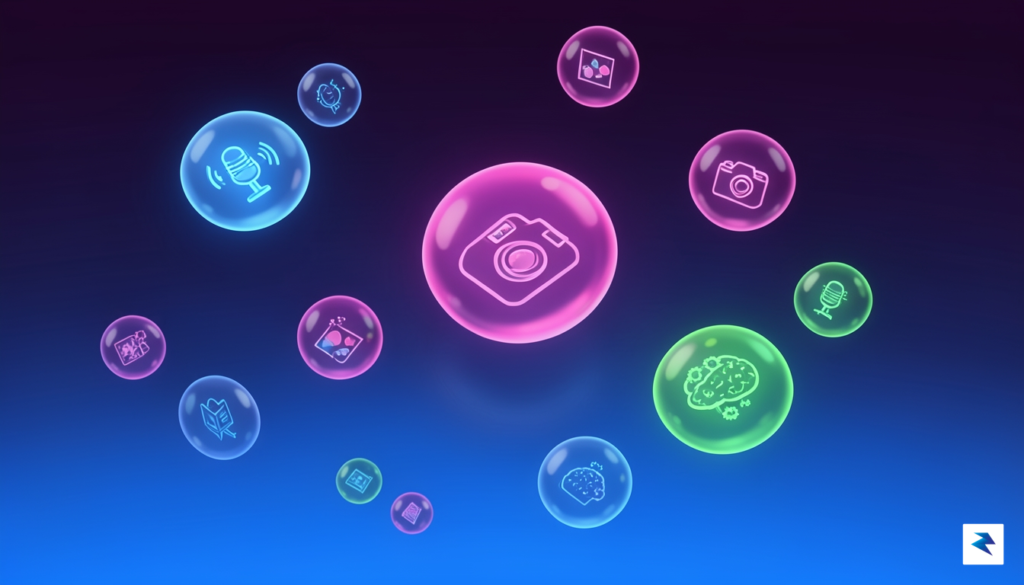
For years, OpenAI’s ChatGPT has been the undisputed heavyweight champion of the generative AI landscape, effectively defining what a conversational assistant should look like. Its sprawling ecosystem—which includes a sophisticated Voice Mode, seamless DALL-E image generation, and the robust Custom GPTs marketplace—has transformed it from a simple chatbot into a comprehensive productivity suite. For the average user, this “kitchen sink” approach is a massive advantage; whether you need to analyze a spreadsheet, generate an illustration for a presentation, or practice a foreign language via real-time audio, the platform offers a tool for almost every conceivable task within a single interface.
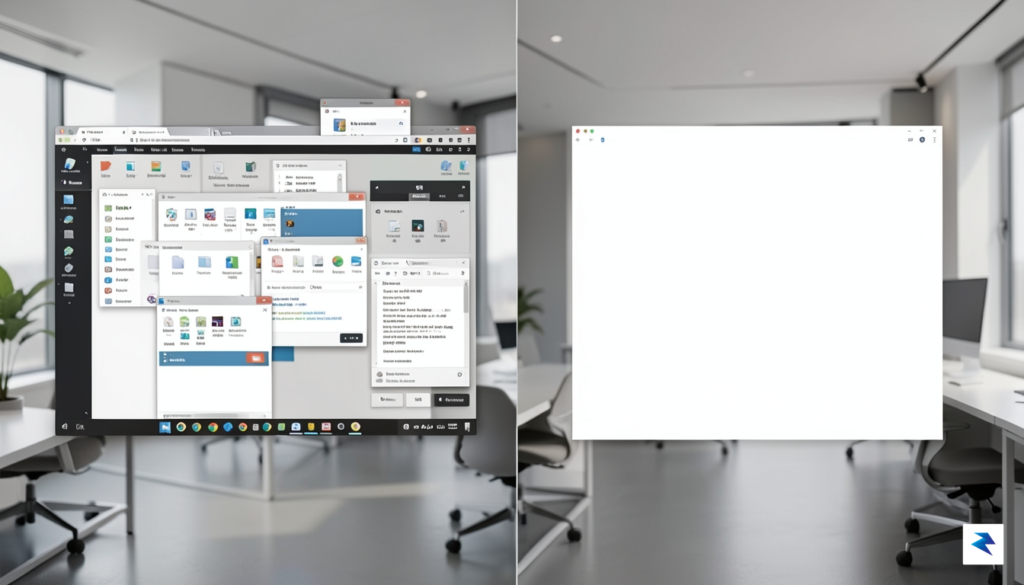
However, as the professional landscape shifts toward deep, focused work, this breadth of functionality is beginning to show its limitations for power users. While ChatGPT excels as a generalist tool, the sheer density of its interface can occasionally feel overwhelming, creating friction for professionals who require a distraction-free environment to process complex data or iterate on technical code. The “everything-everywhere” design philosophy, while impressive in its versatility, can lead to cognitive overhead that distracts from the primary objective: high-quality output. As a result, many power users are starting to view the platform less as a streamlined workspace and more as a cluttered digital toolbox.
The true divide between these platforms lies in the transition from novelty consumption to deep professional workflow integration.
This is precisely where Anthropic’s Claude has carved out a significant competitive advantage. By prioritizing a clean, minimalist aesthetic and a focus on long-context reasoning, Claude positions itself as the preferred “specialist” for cognitive heavy lifting. Instead of overwhelming the user with bells and whistles, Claude emphasizes a refined interaction model that feels more like a collaborative partnership than a feature-rich utility. For professionals who spend their entire day drafting reports, summarizing massive documents, or debugging intricate software, the streamlined nature of Claude is not just a stylistic choice—it is a functional necessity that promotes flow state.
Ultimately, the retention of paid users is no longer just about who has the most features, but who provides the best experience for the task at hand. While ChatGPT continues to hold the crown for versatility, it is increasingly being sidelined by users who value precision, stability, and a focused interface. When the novelty of AI generation wears off and the reality of daily professional demands takes over, the choice often shifts toward the tool that offers the least amount of friction. This migration signals a maturing market, where users are prioritizing specialized performance over the sheer volume of capabilities.
Comparative Analysis: Feature Sets and Workflow Integration
The modern landscape of generative AI is no longer a simple race for raw intelligence; it is a battle for the most intuitive digital workspace. For power users and professionals, the choice between Anthropic’s Claude and OpenAI’s ChatGPT often boils down to how these tools handle complex, iterative tasks. Anthropic has leaned heavily into the concept of “Artifacts,” a dedicated side-panel feature that allows users to generate code, web pages, and documents in a previewable, distinct window. This design philosophy keeps the primary conversation thread uncluttered while providing a sandbox for real-time collaboration. Conversely, ChatGPT’s “Canvas” interface serves a similar purpose but emphasizes a more collaborative, document-centric approach that feels familiar to users accustomed to traditional word processors, focusing on real-time editing and inline suggestions.
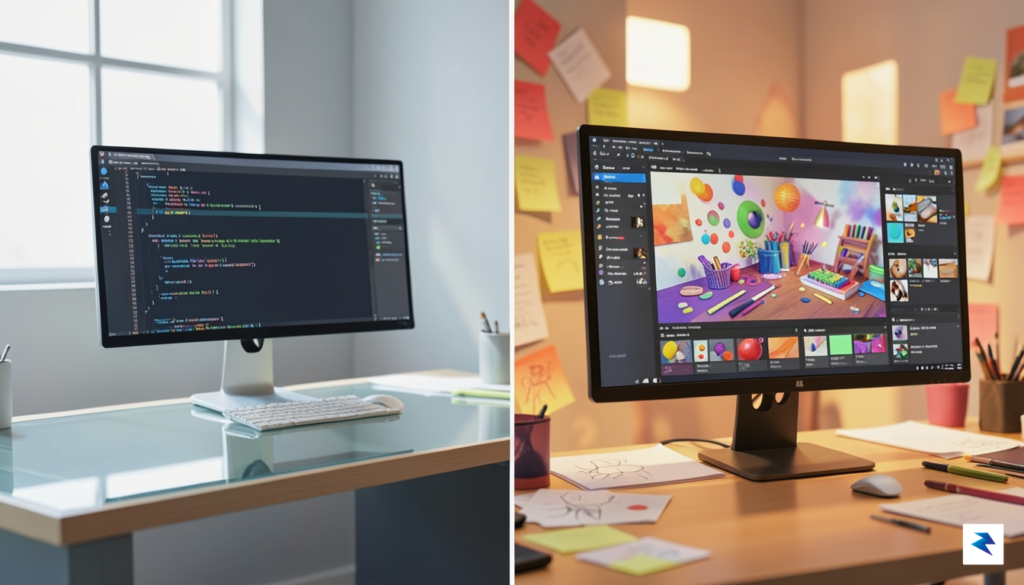
When analyzing long-form content generation, the UI/UX differences become even more pronounced. Claude’s architecture is uniquely optimized for extended context windows, allowing it to maintain coherence over massive documents or dense coding projects. Because Claude excels at nuanced, human-like prose and meticulous reasoning, users who deal with heavy research or lengthy reporting often find its output requires significantly less “prompt engineering” to reach a final draft. Meanwhile, ChatGPT remains the king of multimodal versatility. Its ability to fluidly transition between DALL-E image generation, advanced data analysis, and voice-to-voice interaction makes it an indispensable tool for creatives who need a “Swiss Army knife” approach to their daily tasks.
The decision-making process for professional AI adoption has shifted: it is no longer about which model is objectively smarter, but which model understands the rhythm of your specific professional ecosystem.
Beyond the user interface, the integration capabilities of these platforms define their utility in a professional setting. ChatGPT maintains a distinct advantage with its vast ecosystem of GPTs and user-facing plugins, which allow for seamless connectivity with external services like Canva, Kayak, or specialized research databases. This makes it a superior choice for users who need their AI to act as an orchestrator of multiple external applications. On the other hand, Claude focuses on a more “pure” experience, prioritizing API stability and high-performance reasoning for developers and enterprise clients who integrate the model directly into their own custom-built software environments.
Choosing Your AI Partner
- Choose Claude if: Your workflow is dominated by long-form writing, complex coding, or tasks requiring deep, logical reasoning and high-fidelity text output.
- Choose ChatGPT if: You require a versatile, multimodal assistant that can generate images, analyze spreadsheet data, and interface with a wide variety of third-party digital tools.
Ultimately, the transition of many professionals toward Claude suggests a growing preference for models that prioritize depth and reliability over breadth. While ChatGPT provides the most expansive toolkit for generalists and creators, Claude’s refined approach to long-form projects and its sophisticated, distraction-free environment are winning over those who view AI as a primary writing and problem-solving partner. By identifying whether your work demands a jack-of-all-trades or a specialized thinker, you can select the platform that effectively reduces your cognitive load and enhances your daily output.
What This Means for the Future of AI Productivity

The shifting landscape of AI adoption suggests that we are moving past the era of novelty and entering a phase of rigorous utility. For months, the market was defined by a race for feature parity and viral growth, but today’s professional users are increasingly prioritizing nuance, factual reliability, and a more human-like reasoning style. As Anthropic’s Claude gains traction among power users, it serves as a clear signal that the “AI wars” are no longer just about who has the most recognizable name; they are becoming a contest of who can provide the most dependable cognitive partner. This trend indicates that the next phase of development will likely be defined by specialization, where models are judged not by their breadth of knowledge, but by their precision and the quality of their output in complex, high-stakes tasks.
OpenAI, having long enjoyed the first-mover advantage, now faces the challenge of pivoting to retain its more discerning, quality-focused demographic. We should expect them to respond by doubling down on advanced reasoning, tighter integration with developer ecosystems, and perhaps a more tailored approach to model behavior that feels less like a generic chatbot and more like an extension of the user’s own workflow. This competitive friction is ultimately a win for the consumer. As these tech giants strive to outdo one another in accuracy, safety, and creative sophistication, the barrier to entry for high-level AI assistance will continue to drop, forcing developers to build models that respect the user’s time rather than just generating endless streams of filler content.

The future of AI competition won’t be won by the loudest hype, but by the model that delivers the most consistent, error-free reasoning for the professional who relies on it daily.
For the average user, this evolution necessitates a more strategic approach to tool selection. Rather than settling for a single platform out of habit, professionals should view these AI models as specialized consultants. If your work involves heavy coding or technical architecture, you might find one platform’s logic-based approach superior; conversely, if your daily output requires long-form creative writing or complex document synthesis, another model might offer a more natural, nuanced tone. To choose the right AI partner, start by auditing your own workflow: identify the specific tasks that consume the most time and test each model against those exact requirements. The best AI partner isn’t the one that does everything passably—it is the one that excels at the specific, high-value tasks that define your unique career path.