The Rise of AI Neoclouds and Infrastructure Bottlenecks
The meteoric rise of generative AI has fundamentally reshaped the requirements for data center architecture, giving birth to a specialized category of infrastructure providers known as “neoclouds.” Unlike traditional general-purpose clouds that cater to a broad spectrum of web applications and legacy databases, neoclouds are engineered specifically to provide the massive, parallelized compute power required by large language models (LLMs). As hyperscalers struggle to keep pace with the insatiable demand for GPU capacity, these agile newcomers are stepping in to offer high-performance clusters that are more accessible and often more cost-effective. However, the promise of this specialized infrastructure is frequently hampered by the sheer complexity of the underlying networking, which has become the single most significant hurdle to scaling operations.
Traditional networking stacks, designed decades ago for predictable, transactional traffic, are fundamentally ill-equipped to handle the unique demands of AI workloads. When training a modern LLM, thousands of GPUs must communicate simultaneously, exchanging vast amounts of data with near-zero latency. If the network fabric cannot facilitate this constant, high-speed synchronization, the entire cluster faces a performance degradation known as a “bottleneck,” where the most powerful GPUs sit idle while waiting for data packets to navigate poorly configured routing protocols. Consequently, building these environments is not merely a matter of racking servers; it requires a sophisticated, automated approach to software-defined networking that traditional manual configuration methods simply cannot sustain.
This struggle manifests as a critical issue regarding the “Time-to-Live” for new cloud capacity. In the fast-moving AI market, a neocloud provider’s ability to bring new hardware online is directly tied to their revenue potential; every day spent manually configuring VLANs, BGP routing, or load balancers is a day of lost opportunity. When infrastructure deployment takes weeks due to human error or the complexity of integrating heterogeneous hardware, the business loses its competitive edge. To scale efficiently, these providers must shift toward a model where networking is as programmable and automated as the compute resources themselves.
The primary challenge for the next generation of cloud providers is no longer just sourcing enough GPUs, but rather creating a seamless, automated fabric that allows those GPUs to communicate at the speed of light without human intervention.
Ultimately, the bottleneck is not just technical—it is operational. As neoclouds strive to reach parity with established giants, they are finding that the “manual networking” era is unsustainable. By abstracting the complexities of low-level infrastructure into software-defined layers, these companies can finally focus on what matters most: delivering the raw compute power necessary to fuel the next wave of artificial intelligence innovation. Without solving this networking puzzle, the vision of a decentralized, high-performance AI cloud will remain an expensive and slow-moving pursuit.
How Netris Simplifies Network Operations for AI
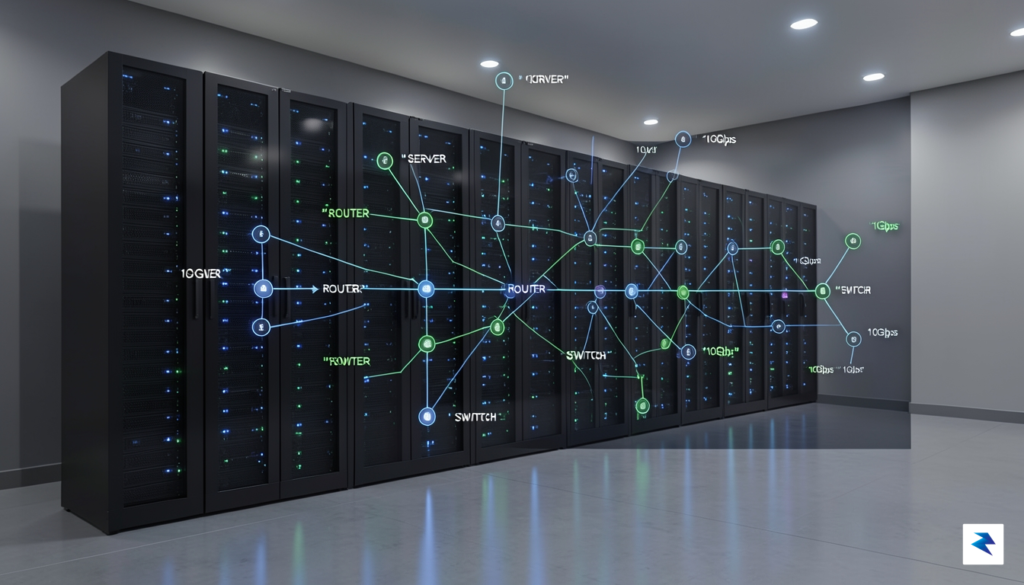
For AI-driven infrastructure, the traditional approach to networking—characterized by fragmented command-line interface (CLI) configurations and manual hardware provisioning—has become a significant bottleneck. Netris effectively breaks this cycle by shifting network orchestration from the physical layer into a modern software-defined networking (SDN) framework. By treating physical switches as programmable, API-driven resources, Netris transforms the network from a static, rigid component into a dynamic utility that scales alongside high-compute AI clusters. This abstraction allows infrastructure operators to move away from the “box-by-box” management style that has plagued data centers for decades, replacing it with a centralized, software-centric control plane.
The core of this transformation lies in the automation of NetOps workflows. Rather than requiring specialized engineers to manually craft complex configurations for every switch, Netris provides a declarative interface that abstracts underlying network protocols like BGP and EVPN. When a developer or system architect needs to deploy a new service or scale an AI workload, they no longer need to navigate the nuances of disparate hardware vendors. Instead, they interact with a unified platform that translates high-level intent into the necessary low-level configurations across the entire switching fabric. This reduction in manual touchpoints not only minimizes human error—which is frequently cited as the leading cause of network downtime—but also drastically accelerates the time-to-live for new infrastructure deployments.

By decoupling the network configuration from proprietary vendor hardware, Netris empowers operators to build cloud-like agility on top of their own physical infrastructure.
Beyond simple orchestration, the platform offers deep visibility through real-time monitoring and telemetry, which are essential for maintaining the performance demands of modern AI neoclouds. Because the network is managed through software, Netris can provide a holistic view of traffic patterns, link utilization, and potential bottlenecks that would otherwise be obscured by the silos of legacy hardware management. This level of observability ensures that teams can proactively troubleshoot issues before they impact training jobs or inference latency. Furthermore, by integrating these network functions into developer-friendly workflows—such as CI/CD pipelines—Netris ensures that the network evolves at the same speed as the software applications it supports, effectively eliminating the “networking gap” that currently hinders many rapid AI deployments.
Why Andreessen Horowitz is Betting on Netris

The $15 million Series A investment led by Andreessen Horowitz (a16z) serves as more than just a capital injection; it represents a fundamental endorsement of the “Network-as-Code” philosophy. By backing Netris, a16z is signaling that the bottleneck for modern artificial intelligence is no longer restricted to the availability of high-performance GPUs, but rather the operational complexity of the networks that connect them. As the industry moves toward specialized “neoclouds”—smaller, nimbler, and highly performant data centers tailored specifically for AI workloads—the ability to automate networking infrastructure becomes the definitive competitive advantage. This move confirms that investors are shifting their focus toward the plumbing of the cloud, recognizing that software-defined network management is the missing link in scaling AI infrastructure rapidly.
For Netris, this influx of funding is set to act as a primary catalyst for an aggressive expansion of their product roadmap. The company is now uniquely positioned to deepen its integration with GPU-dense environments, where high-speed interconnects and low-latency throughput are non-negotiable requirements. By further aligning their platform with cloud-native orchestration tools like Kubernetes, Netris aims to provide a seamless experience where networking configuration is handled with the same agility as application deployment. This evolution will likely allow neocloud operators to manage their complex hardware stacks with a “self-driving” network approach, drastically reducing the manual intervention that typically slows down the rollout of massive AI compute clusters.

The true measure of a neocloud’s success will be defined by its operational velocity; Netris provides the infrastructure abstraction layer necessary to turn static data centers into dynamic, programmable AI engines.
Furthermore, this strategic backing sends a powerful market signal to the broader ecosystem of independent cloud providers and infrastructure startups. It effectively validates the neocloud business model, suggesting that the era of monolithic, general-purpose public clouds is being challenged by smaller, specialized players who can offer better performance and cost-efficiency. By prioritizing Netris, a16z is essentially telling the market that the “Network-as-Code” movement is no longer an experimental niche, but a core component of the future cloud stack. As other operators take note, the expectation for automated, programmable networking will become the new baseline, forcing the industry to move away from legacy, manual networking configurations toward the software-defined future that Netris is currently building.
The Future of Software-Defined Networking in the AI Era

The trajectory of modern AI infrastructure is rapidly shifting toward a model where network complexity must be abstracted away to keep pace with the voracious demands of machine learning workloads. As we look toward the future, the traditional silos separating compute orchestration from network management are destined to collapse. Netris sits at the vanguard of this convergence, effectively transforming the network from a static, manual bottleneck into a dynamic, software-defined utility that functions as fluidly as the cloud services it supports. By automating the provisioning and lifecycle management of networking hardware, companies are no longer tethered to the slow, error-prone processes of legacy deployments, allowing them to focus entirely on the specialized AI services that drive modern enterprise value.
This evolution represents a fundamental democratization of high-performance infrastructure. In the past, the barrier to entry for building a competitive cloud environment was prohibitively high, requiring deep expertise in complex networking protocols and massive operational overhead. As Netris continues to mature and integrate deeper into the fabric of the cloud ecosystem, the time-to-market for specialized neocloud providers will shrink from months to mere days. This shift essentially turns the complex “picks and shovels” of data center connectivity into an invisible, reliable layer of code. Consequently, smaller, agile players can now compete on a level playing field with hyperscalers, ensuring that high-performance AI compute is not just a luxury for the tech giants, but an accessible resource for a broader spectrum of innovators.

The true power of the next generation of cloud infrastructure lies in its invisibility; when networking becomes fully programmable, the focus shifts from managing hardware to accelerating intelligence.
Looking ahead, we can expect the industry to move toward an era of “intent-based” infrastructure, where engineers describe the desired state of their network, and platforms like Netris handle the complex execution required to maintain that state at scale. This level of automation is critical for the AI revolution, which requires massive, low-latency communication between thousands of GPUs to train complex models efficiently. By providing the foundational plumbing that makes this scale possible, Netris is not merely optimizing current workflows; they are building the structural integrity required for the next decade of AI development. As these automated systems become the industry standard, the result will be a more resilient, scalable, and highly performant cloud ecosystem that can support the next generation of generative AI applications without breaking under the weight of its own complexity.