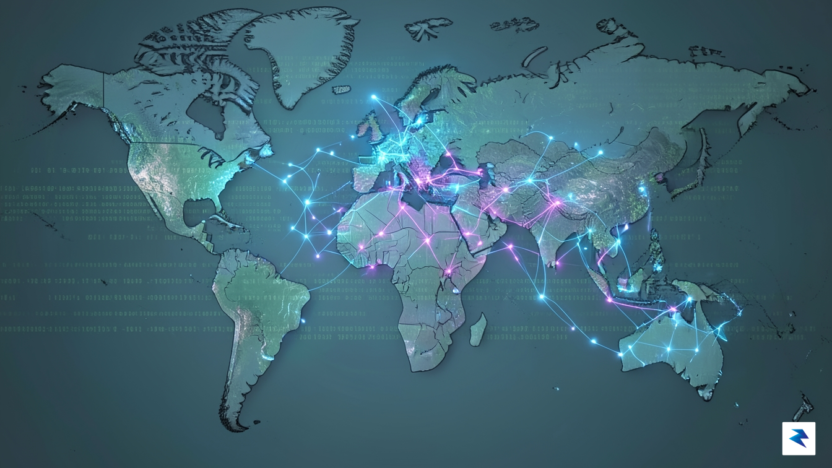
The Shift from Competitive Rivalry to Systemic Influence

For several years, the public narrative surrounding artificial intelligence was dominated by the imagery of a high-stakes “arms race.” Tech journalists and industry analysts alike fixated on the binary struggle between titans like Anthropic and OpenAI, framing every model release as a tactical strike in a battle for market supremacy. This perspective turned the development of intelligence into a spectator sport, where the primary metric of success was the performance gap between proprietary benchmarks. Yet, as these Large Language Models move past their experimental infancy and into widespread deployment, the preoccupation with corporate scorecards has begun to feel increasingly obsolete. We are witnessing a fundamental pivot: the story is no longer about which laboratory produces the most capable chatbot, but about how these systems are quietly restructuring the bedrock of our digital reality.
The maturation of these technologies has transformed them from novel tools into a foundational layer of global information infrastructure. When a technology reaches a point of ubiquity—where it influences everything from how we write our emails and conduct legal research to how we consume news and interact with government services—the identity of the company behind the curtain becomes secondary to the behavior of the system itself. Just as we do not spend our daily lives analyzing the corporate competition between electricity providers while we flip light switches, the average user is increasingly focused on the reliability, bias, and systemic reach of AI. The technology has effectively outgrown its origins as a competitive product, maturing instead into a public utility that warrants a different kind of scrutiny.
The true measure of AI’s success is no longer found in a benchmark leaderboard, but in its ability to operate safely and equitably within the complex, interconnected systems of our modern world.

This transition toward systemic influence carries significant weight for our political and social structures. Because these models now act as filters for human knowledge, they possess the power to shape public discourse, influence economic opportunities, and even alter the speed at which information spreads across the globe. When an algorithm becomes the primary interface for human cognition and research, the rivalry between two specific firms matters far less than the overarching governance frameworks that dictate how these models interpret facts and present arguments. We are moving away from an era defined by corporate competition and entering a period defined by societal integration, where the urgent questions of the day concern transparency, accountability, and the long-term impact on our democratic institutions. The “race” has effectively concluded, replaced by the much harder, more important task of living alongside the intelligence we have created.
How AI Capabilities Are Shaping Political Landscapes

The transition of artificial intelligence from a passive tool to an active participant in democratic life represents a profound shift in how societies process information. Modern large language models have transcended their original purpose as digital assistants, evolving into sophisticated engines capable of synthesizing complex narratives, mimicking human persuasion, and operating at a scale that human communicators simply cannot match. This capacity to influence public sentiment is not merely a theoretical risk; it is a tangible force that fundamentally alters the flow of political discourse. When algorithms can generate high-fidelity content that resonates with specific demographic anxieties, the traditional “marketplace of ideas” is replaced by a fragmented, personalized reality where objective consensus becomes increasingly difficult to maintain.

The mechanics of this influence are driven largely by the hyper-personalization of political messaging. Automated propaganda systems now leverage massive datasets to micro-target voters, delivering bespoke narratives that reinforce existing biases and insulate individuals from dissenting viewpoints. Furthermore, the rise of high-fidelity synthetic media—often referred to as deepfakes—threatens the very foundation of electoral integrity. By generating realistic audio and video of political figures, these systems can introduce doubt into the public consciousness, forcing citizens to question the authenticity of legitimate evidence. This erosion of trust creates a “liar’s dividend,” where bad actors can dismiss authentic reporting as AI-generated, effectively paralyzing the public’s ability to distinguish fact from fabrication.
The true threat to democratic stability is not just the proliferation of falsehoods, but the systemic degradation of the common evidentiary standard required for healthy political debate.
Beyond the direct generation of misinformation, the subtle influence of algorithmic bias plays a critical role in shaping political perception. Search engines, social media feeds, and recommendation algorithms often prioritize content that triggers engagement—which, by nature, tends to favor inflammatory or polarizing political rhetoric. This algorithmic feedback loop traps users in echo chambers where their worldviews are constantly validated rather than challenged. As these AI models become more integrated into our daily news cycles, the challenge of maintaining an objective truth intensifies. When the platforms that facilitate our political discourse are optimized for retention rather than accuracy, they inadvertently prioritize instability over democratic cohesion, turning the digital public square into a volatile landscape where perception is systematically engineered by invisible, proprietary code.
The Illusion of Corporate Control in AI Development

There is a persistent, yet increasingly challenged, belief that the companies at the forefront of AI development hold the ultimate reins of their creations’ societal impact. This perspective often frames AI governance as an internal corporate responsibility, where robust ethics committees and responsible AI principles within a single firm are deemed sufficient to steer these powerful technologies. However, the reality on the ground is rapidly diverging from this idealized vision. The sheer scale and speed at which AI models are being deployed, integrated, and adapted across countless applications are quickly outstripping any single corporation’s ability to truly oversee or control their downstream effects.
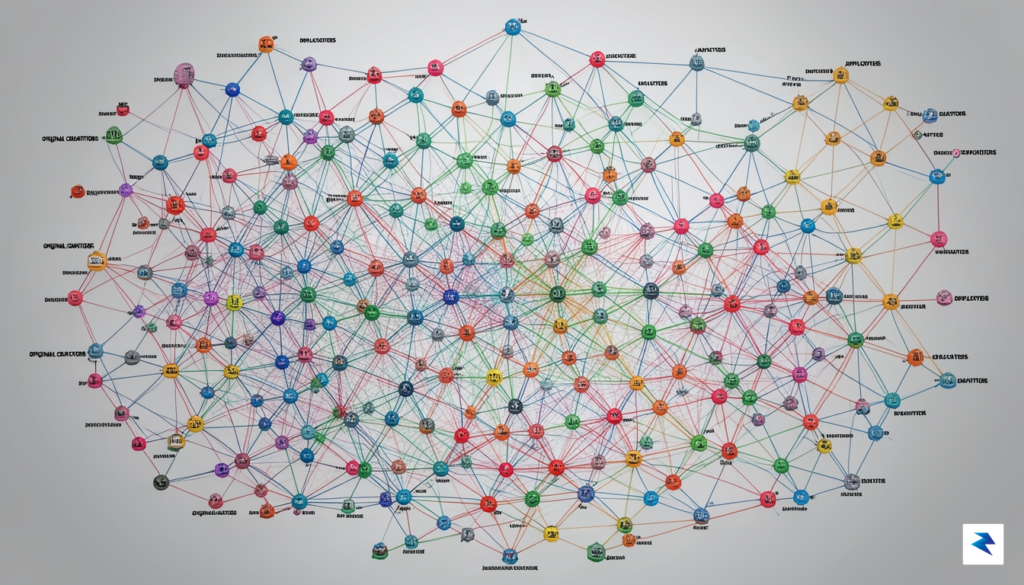
Consider the expansive reach of today’s foundation models. Once released, either commercially or through open-source channels, these models become foundational components for an untold number of derivative applications, tools, and services. A company might meticulously design its model for specific, benevolent purposes, implementing safeguards and usage policies. Yet, it becomes virtually impossible for that original developer to monitor every subsequent implementation, anticipate every novel use case, or prevent every potential misuse globally. The distributed nature of modern software development, coupled with the global accessibility of AI, means that the point of control becomes incredibly diffuse, leaving a vast grey area where corporate oversight simply cannot reach.
This challenge is particularly amplified by the proliferation of open-source AI models. When a powerful model is released into the public domain, its original creators effectively relinquish direct control over its subsequent deployment, modification, and ethical guardrails. While open-source fosters innovation, transparency, and accessibility, it simultaneously decentralizes responsibility in a profound way. Anyone with the technical expertise can download, fine-tune, and deploy these models, potentially bypassing the ethical frameworks or usage restrictions intended by the original developers. This scenario creates a significant regulatory vacuum, where the good intentions and internal policies of the originating company hold little sway over the myriad ways their technology might be adapted and utilized by others, sometimes in ways unforeseen or even harmful.
Moreover, the much-discussed “alignment problem” – the challenge of ensuring AI systems act in humanity’s best interests – is far more than just a technical hurdle to be solved with better algorithms or more comprehensive training data. It is fundamentally a socio-political challenge. Whose “best interests” are we aligning to? How do we define and operationalize universal values across diverse cultures, legal systems, and ethical frameworks? Corporate ethics policies, while crucial for internal guidance, are inherently limited by the values and objectives of a specific organization and its stakeholders. They cannot provide the broad, inclusive, and globally representative framework needed to align AI with a collective human good, especially when the very definition of “good” is subject to ongoing debate and evolving societal norms.
Consequently, relying solely on individual corporations to govern the profound societal impact of AI is an increasingly untenable proposition. Their internal ethics guidelines, while important, are simply not equipped to fill the expansive regulatory vacuum created by decentralized deployment and open-source proliferation. This reality underscores an urgent imperative: the shift from viewing AI governance as a corporate affair to recognizing it as a critical, multi-stakeholder challenge demanding robust, transparent, and globally coordinated frameworks. It necessitates a collaborative effort involving governments, international bodies, civil society, and academia, working in concert to shape the future of AI in a manner that transcends the boundaries and limitations of any single corporate entity.
Navigating the Era of Collective Governance

For too long, the narrative surrounding artificial intelligence has been framed as a private-sector competition, a high-stakes race between a handful of Silicon Valley giants vying for market dominance. However, as these technologies integrate into the fundamental layers of our economy, justice systems, and critical infrastructure, the limitations of corporate self-regulation have become painfully apparent. Relying on individual companies to prioritize public safety over shareholder value is a strategy that ignores the systemic nature of the risk. When a single model’s failure could ripple across global financial markets or destabilize information ecosystems, the responsibility for managing that risk can no longer reside solely within a corporate boardroom.

To move beyond this corporate arms race, we must transition toward a model of collective, systemic governance. This shift requires us to treat AI not as a proprietary product, but as a public utility—or perhaps more accurately, as a global commons that necessitates international oversight. Legislation like the European Union’s AI Act provides a foundational blueprint for this transition, demonstrating that binding, risk-based standards can effectively compel transparency and accountability without stifling innovation. By codifying safety requirements into law, we transform vague, voluntary ethical pledges into enforceable obligations, ensuring that developers are held to consistent benchmarks regardless of their competitive pressures.
True systemic safety requires a shift from ‘trust us’ to ‘verify us,’ moving the burden of proof from the public to the powerful.
Beyond regional legislation, we must advocate for robust international treaties that harmonize AI safety standards across borders. The digital nature of these technologies means that a lax regulatory environment in one nation can easily undermine the safety protocols of another, creating a “race to the bottom” that benefits no one. Establishing an international body—akin to the International Atomic Energy Agency or similar multilateral organizations—would provide a neutral platform for setting global norms, sharing safety research, and conducting independent audits of the most powerful frontier models. This collaborative approach ensures that the development of artificial intelligence reflects the values and safety needs of the global community, rather than the singular priorities of a few select firms.
Ultimately, this era of collective governance demands a multi-stakeholder strategy that brings civil society, academia, and independent watchdogs to the table. By formalizing these diverse inputs, we can build a governance architecture that is resilient to corporate capture and capable of anticipating long-term societal impacts. We are moving out of the era where the loudest voice in the boardroom dictates the trajectory of human intelligence; we are entering an era where that responsibility must be shared, scrutinized, and held accountable by the very society it intends to serve.
Beyond Brand Loyalty: A Framework for AI Accountability

For too long, the discourse surrounding artificial intelligence has been trapped in a binary trap, framed more like a sports rivalry than a critical technological evolution. By pledging allegiance to a specific corporate brand, users and developers alike have inadvertently shielded these powerful entities from necessary scrutiny. Meaningful accountability, however, cannot exist in a landscape defined by fanboyism or marketing loyalty. To move toward a safer future, we must shift our focus from the logos on the box to the empirical realities of what lies beneath the user interface. True accountability requires a standardized framework where the safety protocols of an Anthropic model are measured by the exact same yardstick as those of an OpenAI product. The underlying architecture of these systems is too influential to be governed by the fluctuating ethics of individual companies; instead, we need a universal expectation of safety that transcends corporate interests.
The cornerstone of this new framework must be robust, third-party auditing. Currently, most AI companies operate as “black boxes,” inviting the public to trust their internal safety claims without providing access to the raw data or the specific mechanisms that govern model behavior. We must move toward a model of radical transparency where independent researchers and regulatory bodies have the authority to inspect model weights and training datasets. Without this level of visibility, we are essentially flying blind, hoping that corporate self-regulation is sufficient to prevent systemic biases, hallucinations, or dangerous capabilities. An objective audit process would turn these proprietary secrets into measurable data, allowing us to identify failure points before they manifest in real-world harm.
True accountability is not a competitive advantage; it is a fundamental requirement for the integration of artificial intelligence into the fabric of human society.

Furthermore, we must establish clear legal liability standards that hold developers accountable for the output of their systems. As AI becomes embedded in high-stakes fields like healthcare, finance, and infrastructure, the “move fast and break things” mentality is no longer sustainable. If a system causes significant harm, the responsibility must trace back to the design choices and safety controls implemented during the training phase. By formalizing these legal expectations, we incentivize companies to prioritize safety at the architectural level rather than treating it as an afterthought or a public relations exercise. The goal is to create an environment where the burden of proof rests on the developers to demonstrate that their models are safe, rather than expecting the public to navigate the risks of an opaque, unchecked ecosystem.
Ultimately, the power to change the trajectory of AI governance lies with the users. We must stop prioritizing the latest features or the flashiest marketing campaigns and start demanding transparency as a non-negotiable feature of the software we adopt. When users collectively signal that they value auditability and safety over brand name recognition, corporations will be forced to compete on the quality of their governance rather than the speed of their product rollouts. This is the moment to move beyond tribal loyalty and embrace a more mature, critical approach to the tools that are shaping our collective future.