
Apple and Google Face Legal Pressure to Remove ‘Nudify’ Apps
The Rise of Nudify Apps and the Call for Accountability The digital landscape has recently been overshadowed by the rapid proliferation of…


For years, the Indian smartphone market has been defined by a race toward affordability, with manufacturers balancing performance and price to cater to a massive, value-conscious consumer base. However, the sudden, aggressive integration of generative artificial intelligence and Large Language Models (LLMs) has fundamentally disrupted this equilibrium. As OEMs scramble to market “AI-ready” devices, they are hitting a harsh reality: the hardware foundation that sustained the previous generation of smartphones is no longer adequate. This creates a distinct paradox where the demand for sophisticated AI features is colliding head-on with the physical limitations of existing mobile architecture, specifically regarding volatile and non-volatile memory.

The core of this issue lies in the sheer resource intensity of on-device AI. Unlike traditional applications that run on cloud-based servers, true generative AI workloads require high-speed access to massive datasets stored locally to ensure latency-free responses and privacy. Standard mid-range smartphones, which typically feature 6GB or 8GB of RAM, are increasingly struggling to juggle the standard operating system overhead while simultaneously running background AI processes. This “memory crunch” is not merely a technical inconvenience; it is a bottleneck that threatens to degrade the user experience, leading to sluggish performance, aggressive app killing, and thermal throttling that discourages long-term usage.
The integration of generative AI is effectively forcing a paradigm shift in the smartphone Bill of Materials (BOM), pushing memory requirements to levels previously reserved for high-end flagship devices.
Consequently, the bill of materials for even entry-level and mid-range handsets is undergoing a radical transformation. Manufacturers are now pressured to source high-capacity LPDDR5X RAM and faster UFS 4.0 storage to accommodate the heavy compute requirements of modern AI models. This shift, however, creates significant market friction. As supply chains struggle to keep pace with the sudden global surge in demand for these high-performance components, the associated costs are inevitably being passed down to the Indian consumer. The result is a tightening squeeze: consumers expect the cutting-edge features they see in international marketing campaigns, yet the hardware inflation required to make those features functional threatens to push the most popular price segments out of reach for millions of buyers.
Ultimately, the push for AI is reshaping the very definition of a “capable” smartphone in India. It is no longer enough to have a decent processor and a high-resolution camera; memory density has become the new frontier of hardware competition. As we move forward, the industry must grapple with the challenge of democratizing AI without compromising the accessibility that has made the Indian smartphone market one of the most vibrant and competitive in the world.

The transition toward on-device artificial intelligence represents a fundamental shift in how smartphones interact with data. Unlike traditional cloud-based AI, which offloads computational heavy lifting to remote server farms, on-device processing keeps information localized directly on the handset. While this offers significant advantages in terms of privacy, reduced latency, and the ability to function without an active internet connection, it imposes a massive burden on the device’s internal hardware. Specifically, the volatile memory—or RAM—must now act as the primary workspace for complex Large Language Models (LLMs) that were previously too cumbersome to fit within a mobile architecture.
Running these models locally requires loading massive neural network parameters into the RAM to ensure the processor can access them instantaneously. As the parameter count of these models grows to improve intelligence and nuance, the memory footprint expands proportionally. For instance, a model that once required only a few gigabytes of space may now demand 10GB or more just to remain resident in the memory, leaving very little room for standard applications like browsers or high-resolution cameras. This reality has effectively rendered the traditional 8GB RAM baseline obsolete, forcing manufacturers to pivot toward 12GB and 16GB configurations as the new industry standard to maintain a fluid user experience.
To ensure seamless multitasking while running local AI, smartphones are moving toward a 16GB RAM minimum to prevent system “swapping,” where the device struggles to balance background processes against heavy AI workloads.
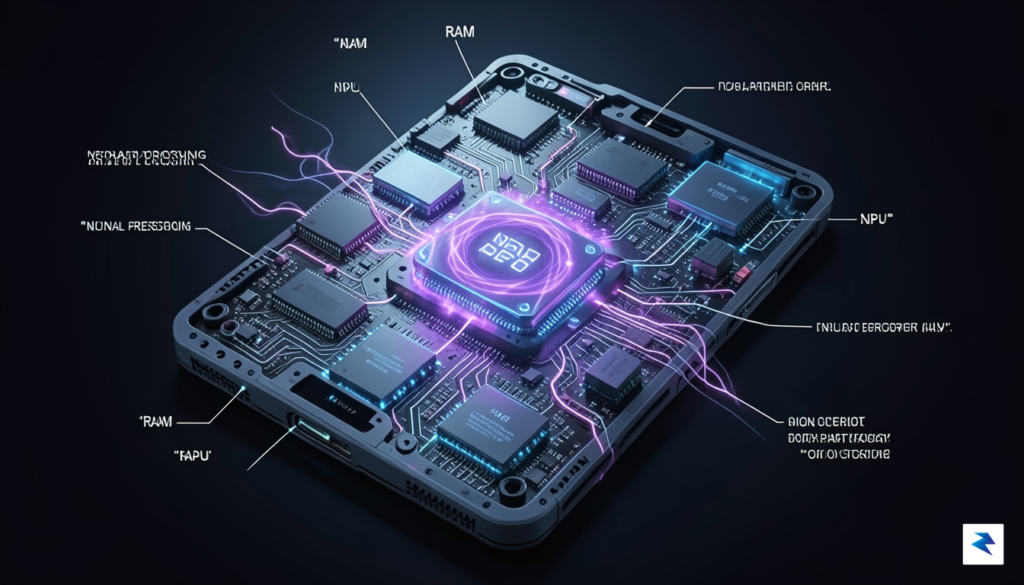
Beyond the simple capacity requirements, the integration of AI places immense strain on thermal management and power efficiency. When the system memory is constantly taxed by complex inference tasks, the CPU and NPU (Neural Processing Unit) must work in tandem to move data back and forth at blistering speeds. This high-frequency data transfer generates significant internal heat, which, if not managed by sophisticated cooling solutions and efficient memory architecture, can lead to thermal throttling. Consequently, smartphone designers are not just packing in more gigabytes; they are also adopting faster memory standards like LPDDR5X to minimize the time the processor spends waiting for data, thereby lowering the power consumption associated with sustained AI operations.
Ultimately, the move to on-device AI is transforming smartphones from simple communication tools into sophisticated personal computing hubs. As consumers in India and beyond increasingly rely on generative features for real-time translation, predictive text, and image manipulation, the underlying hardware must keep pace. The race for higher RAM is not merely a marketing gimmick or a spec-sheet war; it is a technical necessity driven by the need to house the “brains” of modern artificial intelligence within the palm of a user’s hand.

For the average Indian smartphone buyer, the decision-making process has long been anchored by a singular, non-negotiable metric: value for money. In a market where a significant portion of consumers operate within strict budgetary constraints, even marginal shifts in retail pricing can determine the difference between a successful product launch and a commercial failure. This inherent price sensitivity creates a formidable challenge for manufacturers as they attempt to integrate sophisticated artificial intelligence capabilities. To support these resource-heavy AI models, devices require significant upgrades in DRAM and NAND flash memory, which directly drives up the Bill of Materials (BOM) cost. Consequently, brands are caught in a precarious balancing act, forced to navigate the thin line between maintaining razor-thin profit margins and inflating the final price tag to a point that risks alienating their core user base.
The global volatility in semiconductor pricing further exacerbates this predicament. As demand for high-capacity memory chips surges to accommodate generative AI, the cost of these components has become a volatile variable in production planning. For brands targeting the mid-range segment—where the bulk of India’s smartphone volume lies—the choice is stark: either absorb these rising costs and sacrifice profitability, or pass them on to the consumer, potentially pushing their devices into a higher, less accessible price bracket. This economic tension is particularly acute in the sub-₹20,000 segment, a category that is historically defined by high growth but low margins. In this tier, even a minor increase in component costs can force a compromise on other hardware specifications, such as camera quality or build materials, to keep the device affordable.
The integration of AI is no longer a luxury feature; it is becoming a standard expectation. However, in a price-sensitive landscape like India, the industry must innovate to ensure these advanced features do not become a barrier to entry for the average consumer.
To mitigate these pressures, smartphone manufacturers are increasingly experimenting with tiered software strategies and strategic hardware compromises. Some companies are opting to offer AI-driven features only on their premium flagships, while others are exploring cloud-based AI solutions to reduce the local hardware requirements, thereby keeping the physical memory specifications modest. Despite these efforts, the market is witnessing a clear shift where entry-level and mid-range devices are struggling to achieve AI feature-parity with their more expensive counterparts. As consumers become more aware of the benefits of on-device AI, the pressure on brands to deliver these features at lower price points will likely intensify, setting the stage for a period of aggressive competition centered on memory efficiency and cost-optimized hardware architectures.
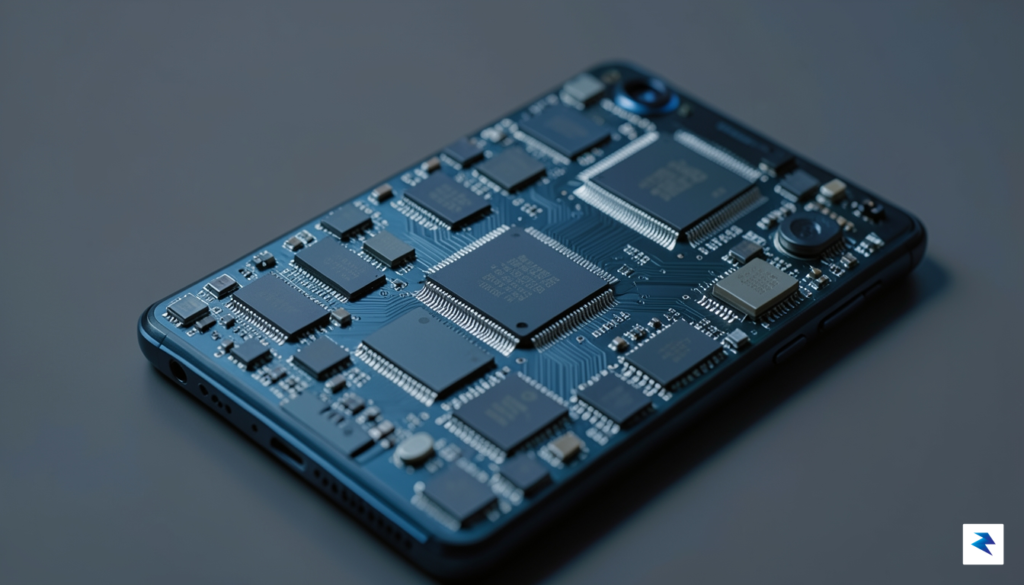

To navigate the escalating costs and technical limitations imposed by the memory-intensive demands of artificial intelligence, smartphone manufacturers in India are undergoing a profound strategic transformation. Rather than attempting to force high-end AI capabilities into every price bracket, brands are embracing sophisticated software optimization techniques. Chief among these is model quantization, a process that compresses large language models (LLMs) to function efficiently within the constrained memory footprints of mid-range devices. By reducing the precision of model weights, engineers are successfully enabling local AI tasks to run smoothly without requiring the exorbitant amounts of RAM that previously served as a barrier to entry for budget-conscious consumers.
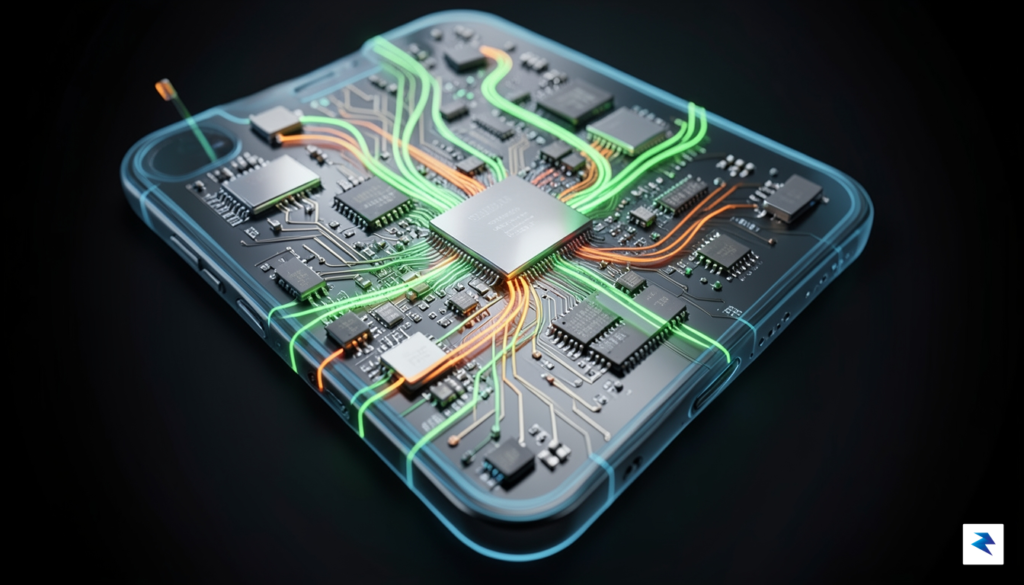
This technical refinement is being paired with a new “tiered” product strategy that fundamentally reshapes how devices are marketed and sold. Manufacturers are now strictly segmenting their portfolios, reserving the most complex, on-device generative AI features for premium flagship models to ensure a high-performance experience. Meanwhile, entry-level and mid-range devices are being equipped with “lite” versions of these models or cloud-dependent AI tools that rely on external processing power. This approach allows companies to maintain a competitive presence in the volume-driven Indian market while simultaneously justifying the higher price tags associated with their top-tier handsets.
The industry is moving away from the “megapixel race” of the last decade, shifting its marketing narrative from hardware-centric photography specs to the intelligence and personalization capabilities of the device itself.
The marketing landscape is pivoting in tandem with these technical shifts. For years, the Indian smartphone market was driven primarily by camera specifications and battery longevity, but the current discourse has shifted squarely toward AI-centric branding. Companies are now positioning their devices as “AI-first” ecosystems, emphasizing features like real-time translation, intelligent photo editing, and personalized productivity assistants. This rebranding strategy is designed to create a sense of necessity, convincing consumers that an AI-capable device is an essential upgrade for modern digital life, regardless of the underlying memory constraints.
To ensure these ambitious product roadmaps do not collapse under the weight of global supply chain volatility, manufacturers are increasingly moving toward long-term strategic partnerships with semiconductor giants. These agreements are essential for securing the high-bandwidth memory (HBM) and specialized neural processing units required to power next-generation AI. By locking in supply lines and collaborating on early-stage component development, smartphone brands are effectively insulating themselves from the price spikes that typically accompany sudden surges in demand. This shift toward deeper integration with chip suppliers represents a departure from the traditional procurement model, signaling that in the era of mobile intelligence, control over the supply chain is the most valuable asset a manufacturer can possess.

The current memory crunch, while challenging for manufacturers and consumers alike, should be viewed as a classic “growing pain” of a technological revolution rather than a permanent ceiling. Over the next 18 to 24 months, we expect the Indian smartphone landscape to undergo a significant shift as the industry moves beyond the initial scramble for higher RAM capacities. As silicon efficiency improves and manufacturing processes for high-bandwidth memory scale to meet global demand, the cost-to-performance ratio will inevitably stabilize. This transition will likely result in a new equilibrium where sophisticated AI capabilities, once the exclusive domain of flagship devices, permeate the mid-range and eventually the entry-level segments, effectively democratizing on-device intelligence.

One of the most promising developments in this trajectory is the rapid evolution of specialized Neural Processing Units (NPUs). As these dedicated components become more refined, they will significantly reduce the smartphone’s reliance on general-purpose system RAM for AI tasks. By offloading complex computational workloads to hardware specifically designed for machine learning, manufacturers can bypass the current memory bottleneck, allowing devices with modest memory footprints to perform high-level AI functions with ease. This architectural evolution is critical for the Indian market, where price sensitivity remains a dominant factor in consumer purchasing decisions; it allows companies to deliver “smart” experiences without necessitating prohibitively expensive hardware upgrades.
The future of the smartphone is not defined by raw memory specs alone, but by the intelligent optimization of existing resources through specialized hardware acceleration.
However, the successful adoption of these AI-ready devices depends heavily on consumer education. Currently, the market is obsessed with the “more is better” mentality regarding gigabytes of RAM, a metric that may become less relevant as AI software becomes more efficient. Moving forward, the industry must pivot its messaging from hardware-heavy specifications toward real-world utility—showing consumers how AI can solve everyday problems, such as real-time language translation, predictive battery management, or enhanced computational photography. This shift in narrative is essential to help users understand that a well-optimized, AI-integrated device is far more valuable than one that simply boasts inflated numbers on a specification sheet.
Ultimately, the impact on India’s tech ecosystem will be transformative. By navigating this memory bottleneck, local developers and original equipment manufacturers (OEMs) are being forced to innovate in software optimization, potentially positioning India as a global hub for efficient, AI-driven mobile solutions. As the ecosystem matures, the integration of AI will no longer be a luxury add-on but a standard expectation, driving a cycle of innovation that empowers users and challenges manufacturers to extract the maximum value from every byte of memory available.
You must be logged in to post a comment.