
The Memory Bottleneck: How AI is Reshaping India’s Smartphone Market
The AI Hardware Paradox: Memory Constraints in India’s Smartphone Market For years, the Indian smartphone market has been defined by a race…


The pursuit of artificial intelligence supremacy has fundamentally recalibrated the DNA of the modern technology industry, shifting the primary theater of competition from the lean, intangible world of software code to the heavy, unforgiving reality of industrial-scale infrastructure. For decades, the tech sector was defined by its ability to scale products with minimal physical overhead, relying on cloud-based software to drive margins. However, the current generative AI boom has shattered this paradigm. Training the next generation of large language models is no longer a matter of clever algorithms alone; it is a brutal, capital-intensive race for physical territory, high-voltage electricity, and specialized silicon.

To understand this transition, one must look at the specific physical bottlenecks that dictate the speed of AI development. Unlike traditional cloud computing, which relies on standard processors, AI training requires thousands of top-tier graphics processing units (GPUs) working in perfect, high-bandwidth synchronization. These machines generate an extraordinary amount of heat and require a consistent, massive draw of power that rivals the energy consumption of small cities. Consequently, tech giants are no longer just software developers; they are effectively becoming utility companies and real estate developers, securing massive parcels of land and negotiating with power grids to ensure their server farms remain operational.
The transition to AI-centric business models has transformed tech giants from asset-light software providers into capital-heavy infrastructure titans, where the competitive edge is measured in megawatts and square footage rather than just lines of code.
This shift has forced a fundamental change in how companies like Oracle, Microsoft, and Google manage their balance sheets. When the primary expense of a business shifts from developer salaries to the acquisition of billions of dollars in hardware and the construction of power-hungry cooling facilities, the internal financial strategy must evolve accordingly. The upfront capital expenditure required to stay relevant in the AI arms race is so astronomical that internal cash flows, no matter how robust, are frequently insufficient. This reality explains the recent pivot toward the bond market; by leveraging debt, these firms are essentially betting their future on the idea that the physical infrastructure being built today will serve as the indispensable foundation for the global economy of tomorrow. This is not merely an expansion; it is a complete restructuring of the tech sector’s cost basis, signaling that the era of “cheap” innovation has been replaced by a new reality of sustained, multi-billion-dollar industrial investment.

At first glance, it may seem counterintuitive for technology behemoths—many of which sit on billions of dollars in liquid assets—to tap the bond market for capital. However, the sheer scale of the current artificial intelligence infrastructure build-out demands a level of investment that dwarfs traditional capital expenditure cycles. By issuing corporate bonds, companies like Oracle are strategically choosing to leverage debt rather than depleting their own cash piles. This approach allows these firms to maintain a robust “war chest” of liquidity, ensuring they remain agile enough to pursue strategic acquisitions, pivot in response to rapid technological shifts, or weather unforeseen economic downturns without compromising their long-term infrastructure commitments.
The economic logic behind this decision rests on a precise calculation of the cost of capital versus the projected return on investment (ROI) for AI dominance. Because AI infrastructure—such as massive, GPU-dense data centers—represents a long-term asset that will generate revenue for years, it is effectively financed by the future earnings those facilities will produce. When tech firms issue bonds, they are essentially betting that the profit margins realized from AI-driven cloud services and enterprise solutions will significantly outpace the interest payments owed to bondholders. Consequently, debt becomes a powerful tool for scaling operations rapidly, allowing firms to dominate market share before competitors can establish a foothold in the generative AI landscape.
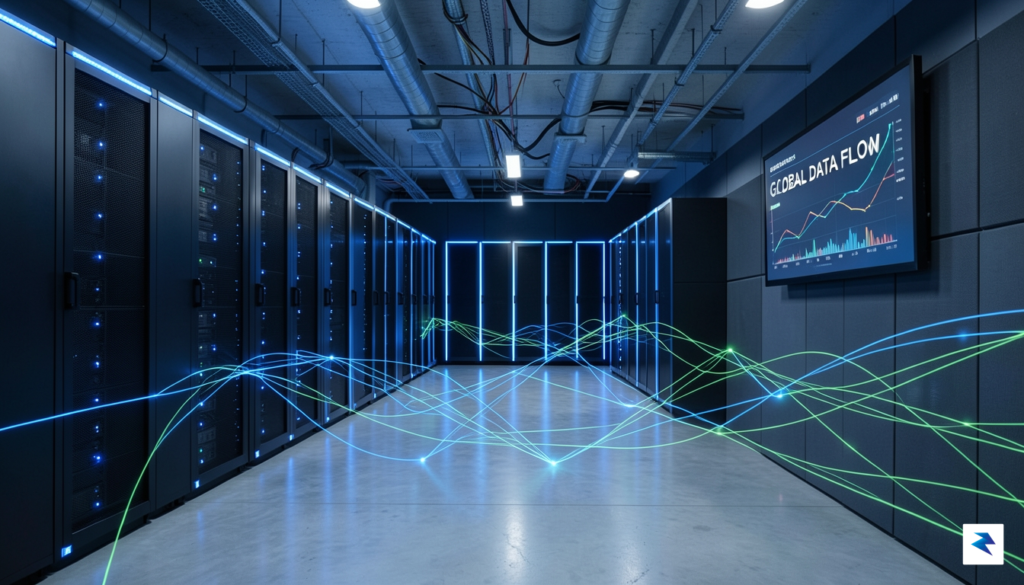
Furthermore, in this specific economic cycle, corporate leadership is heavily incentivized to avoid equity dilution. Issuing new shares would dilute the ownership stakes of existing shareholders and often signals a lack of internal confidence to the market, which can negatively impact stock performance. By opting for debt financing, management retains full control over the company’s equity while still accessing the massive capital needed for rapid expansion. This strategy is particularly effective in an interest rate environment where, despite elevated rates, the creditworthiness of top-tier tech firms remains high enough to secure favorable borrowing terms, effectively allowing them to “buy” the time needed to build out their AI empires.
The decision to leverage debt is not a sign of financial weakness, but a calculated maneuver to preserve operational flexibility while aggressively securing the hardware and energy infrastructure required for the next decade of technological advancement.
Ultimately, the bond market provides a predictable, structured way to fund multi-year capital projects that cash reserves simply cannot match without creating inefficiency. By locking in long-term financing, firms shield themselves from the volatility of short-term cash fluctuations. This disciplined approach to capital structure ensures that even as the costs of AI development skyrocket, these titans can continue to fuel their expansion without sacrificing the financial stability that investors and partners have come to rely on.
Oracle has positioned itself as the definitive bellwether for a new, capital-intensive era of software services, demonstrating that the barriers to entry in the artificial intelligence age are measured in billions of dollars of physical infrastructure. By aggressively tapping into bond markets to fund the massive construction of data centers, the company is signaling that the era of “asset-light” software dominance is effectively over. Instead, Oracle’s strategy reflects a fundamental shift in the cloud computing landscape, where the ability to scale compute power is now just as critical as the quality of the software code itself. This pivot toward debt-fueled expansion highlights the necessity of securing immediate, massive liquidity to maintain a competitive edge in a market that rewards speed above almost all other metrics.
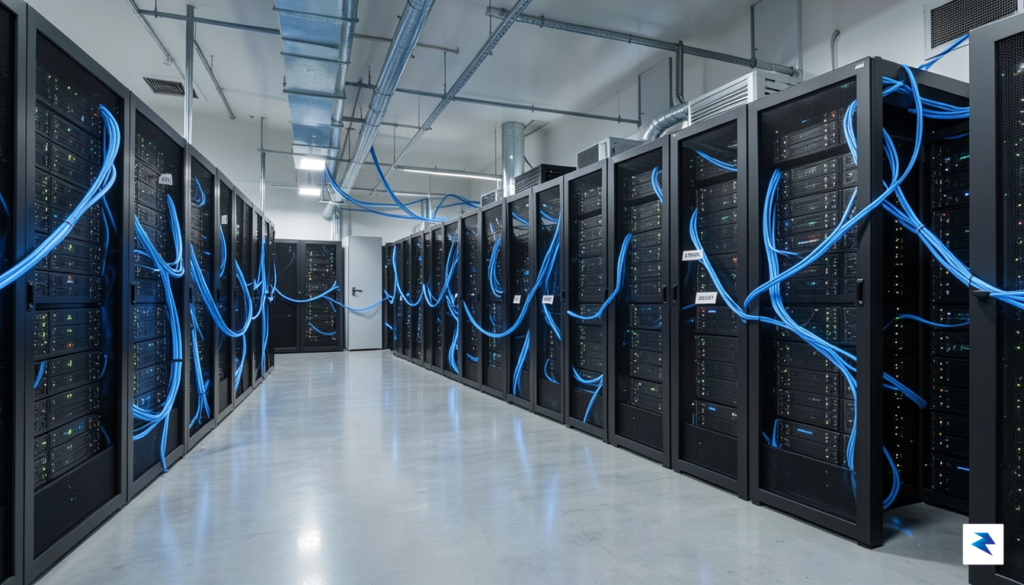
The Ellison-led empire is effectively setting the pace for industry-wide infrastructure spending, forcing competitors to weigh the risks of stagnation against the risks of leverage. While traditional software models prioritized high margins and low overhead, Oracle’s recent debt issuances prove that modern cloud giants must now function like industrial utilities. This strategy is not merely an operational choice; it is a defensive maneuver designed to ensure that when demand for generative AI peaks, Oracle possesses the physical footprint required to host the next generation of massive language models. By leveraging its balance sheet today, the firm aims to capture long-term market share that would be unattainable through organic cash flow alone.
“The shift toward debt-financed growth represents a calculated bet: that the demand for AI-driven cloud services will prove durable enough to justify the interest costs incurred today.”
This aggressive approach has sparked a nuanced debate among credit rating agencies and long-term shareholders. On one hand, credit analysts keep a watchful eye on debt-to-EBITDA ratios, wary of the risks associated with such rapid, capital-heavy expansion if the AI hype cycle were to decelerate. However, institutional investors appear largely supportive, viewing these bond offerings as a strategic necessity rather than financial recklessness. For these shareholders, the potential for Oracle to dominate the infrastructure layer of the AI economy outweighs the temporary burden of increased leverage. Ultimately, Oracle’s trajectory serves as a microcosm for the broader tech sector, illustrating that in the high-stakes arms race for AI supremacy, the firms that master the art of debt management will be the ones that define the future of the cloud.

The aggressive rush to construct massive AI-ready data centers is fundamentally a high-stakes wager on the future of enterprise software and automation. By leveraging billions in bond markets to fund this infrastructure, tech giants are effectively betting that the demand for generative AI will grow exponentially and sustain itself for decades. However, this strategy carries the distinct danger of over-building, a phenomenon that has historically plagued the telecommunications and hardware sectors. If the projected surge in AI revenue fails to materialize at the scale or velocity that executives anticipate, companies may find themselves saddled with billions of dollars in “stranded assets”—multi-billion-dollar facilities that are far too expensive to maintain but lack the client base to turn a profit.

Furthermore, the financial health of these companies is increasingly sensitive to interest rate volatility. When debt is cheap, servicing massive loans is a manageable operational expense; yet, in an environment where interest rates remain “higher for longer,” the cost of servicing this mountainous debt can rapidly erode corporate margins. Should market conditions shift, firms that have prioritized rapid scaling over conservative balance sheet management could face a liquidity squeeze. This scenario creates a potential credit crunch within the tech sector, forcing firms to divert capital away from innovation and R&D just to cover interest payments. History reminds us that aggressive expansion cycles often mask underlying structural weaknesses, and investors are right to question whether this current iteration is fundamentally different from the dot-com bubble of the late 1990s.
The primary risk in the current AI expansion cycle is not the technology itself, but the maturity of the monetization models that must support the massive infrastructure debt being accumulated today.
Comparisons to previous tech cycles are inevitable, though the current landscape offers a unique set of challenges. Unlike the speculative era of the early internet, today’s tech giants possess massive cash flows and established market dominance; however, the sheer scale of capital expenditure required for AI—specifically for power-hungry GPUs and cooling systems—is unprecedented. If the anticipated “AI productivity boom” is slower to arrive than the market expects, these firms will be forced to reconcile their massive debt obligations with a stagnating revenue stream. Balancing the relentless pressure to lead the AI arms race with the prudent management of long-term financial liabilities remains the defining challenge for leadership teams across Silicon Valley and beyond.

For decades, the technology sector was defined by a “cash-is-king” mentality, where industry titans operated with pristine balance sheets and minimal reliance on external credit. However, the colossal capital expenditure required to build out sovereign AI infrastructure is forcing a fundamental shift in corporate finance. As tech giants pivot toward bond markets to fund massive data centers and GPU clusters, investors must move beyond simple revenue growth metrics and start scrutinizing the underlying leverage of these firms. This new era of “infrastructure-heavy” tech means that the ability to service debt is becoming just as critical as the ability to innovate.
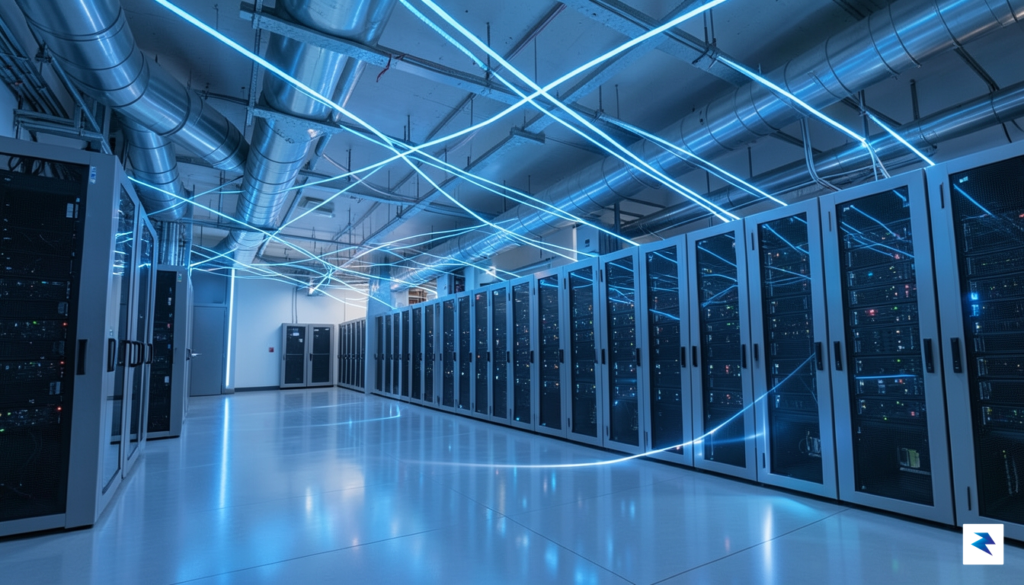
To navigate this transition, shareholders should pay close attention to specific financial indicators that reveal how comfortably a company is managing its liabilities. The debt-to-EBITDA ratio has become the single most important metric for assessing whether a company’s borrowing is sustainable or potentially overextended. While a high ratio might be acceptable during a rapid expansion phase, it serves as a warning sign if the company’s operating cash flow fails to scale in tandem with its infrastructure spending. Furthermore, the interest coverage ratio—which measures how easily a firm can pay interest on its outstanding debt—should be monitored quarterly to ensure that rising interest rate environments do not erode the company’s net margins prematurely.
Investors should view infrastructure debt not as a sign of weakness, but as a strategic lever. The key is distinguishing between ‘growth debt,’ which funds revenue-generating capacity, and ‘distress debt,’ which is often used to plug gaps in declining operational efficiency.
Distinguishing between these two types of debt is essential for long-term portfolio health. Growth debt is characterized by clear, transparent timelines for project completion and expected return on investment, typically tied directly to AI-as-a-Service revenue streams. Conversely, distress debt often appears when a company is forced to borrow simply to maintain existing operations or cover shortfalls in research and development budgets. When reviewing earnings reports, look for management commentary that explicitly links debt issuance to specific, scalable AI projects rather than generic corporate purposes. If a firm is issuing bonds to cover operating expenses rather than tangible assets like energy-efficient data centers, it may be a signal to tighten your risk exposure.
Ultimately, evaluating the sustainability of these long-term AI projects requires a shift in investor mindset. You are no longer just betting on software code; you are betting on the physical reality of global infrastructure. Sustainability in this context means prioritizing firms that demonstrate a high return on invested capital (ROIC), even amidst heavy borrowing. By focusing on firms that maintain a disciplined approach to their debt-to-equity ratios while simultaneously securing a competitive moat through their physical infrastructure, investors can better position themselves to weather the volatility of this capital-intensive AI arms race.
You must be logged in to post a comment.