The Neural Circuitry Behind How We Think and See
Unraveling the Brain's Dual Processing Mystery For decades, the human brain has been viewed through a fragmented lens, often treated as a…

The landscape of scientific research is undergoing a profound and accelerating transformation, moving far beyond the traditional confines of human-led experimentation and laborious data analysis. Artificial intelligence, once primarily a tool for processing vast datasets, is now actively stepping into the realm of discovery, fundamentally reshaping how new knowledge is generated and applied. This shift is particularly evident in the life sciences, where the sheer complexity and scale of biological systems present a perfect challenge for advanced computational methods. We are witnessing the dawn of an era where AI doesn’t just assist scientists, but increasingly drives the very process of scientific inquiry, from hypothesis generation to experimental design and interpretation.
Traditional research workflows, especially in areas as intricate as drug discovery, have long been plagued by inherent limitations: immense costs, protracted timelines spanning over a decade, and staggeringly high failure rates, with only a small fraction of candidate molecules ever reaching patients. The combinatorial explosion of potential molecular structures and biological pathways means that human intuition and conventional lab techniques can only scratch the surface of what’s possible. These bottlenecks have created an urgent demand for innovative approaches that can accelerate the pace of breakthroughs, reduce financial burdens, and ultimately bring life-saving therapies to market more efficiently. AI offers a powerful solution by sifting through unimaginable quantities of data, identifying subtle patterns, and predicting outcomes with unprecedented speed and accuracy.
Indeed, the role of AI in research has evolved dramatically from its earlier iterations as a mere data cruncher or a sophisticated chatbot. Today, advanced AI models are transitioning into indispensable laboratory partners, capable of performing complex tasks that were once exclusively human domains. These specialized scientific engines can simulate molecular interactions, design novel chemical compounds with desired properties, predict protein folding structures, and even optimize experimental protocols, all before a single test tube is touched. This profound transition means AI is no longer just a general-purpose tool; it is becoming a highly specialized co-pilot, deeply integrated into every stage of the scientific discovery pipeline, offering insights and capabilities that extend far beyond simple information retrieval.
It is against this backdrop of radical innovation that Anthropic’s recent strategic move takes on immense significance. By choosing to develop its own drugs, Anthropic is signaling a bold pivot towards vertical integration within the life sciences sector. This move transcends the familiar model of AI companies simply providing foundational models or general-purpose tools to existing pharmaceutical giants. Instead, it positions a leading AI developer directly at the forefront of the drug discovery process, indicating a clear intent to leverage its sophisticated large language models and advanced AI architectures to actively innovate in therapeutic development. This isn’t just about building better AI for science; it’s about using that AI to *become* a scientific discovery engine itself, redefining the boundaries of what an AI company can achieve.
This strategic direction from a major player like Anthropic sends a powerful message across both the technology and biotechnology industries. It underscores the growing confidence that AI, particularly highly specialized forms of it, can not only augment but also fundamentally transform the entire lifecycle of drug discovery, from initial target identification to preclinical development. The implications are far-reaching: potentially leading to faster drug development cycles, reduced costs, and the discovery of novel treatments for previously intractable diseases. Anthropic’s entry thus marks a critical inflection point, demonstrating that general-purpose AI platforms are maturing into highly specialized, vertically integrated scientific powerhouses capable of delivering tangible, real-world innovations in areas as critical as human health.
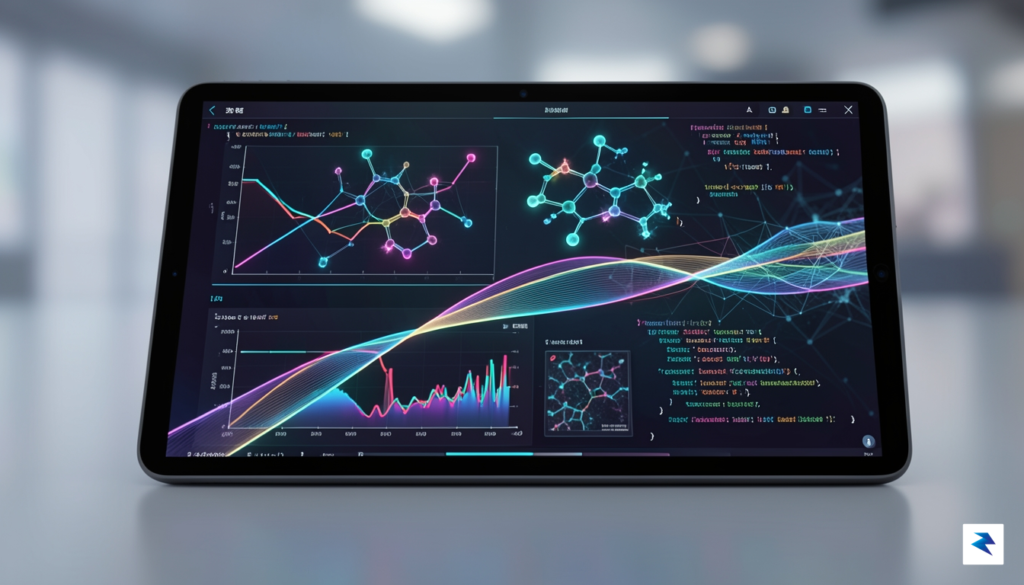
Claude Science is more than just a new software application; it represents a fundamental rethinking of how scientific research, particularly in the complex realm of drug discovery, should be conducted. Historically, researchers have navigated a labyrinth of specialized, often incompatible, tools—each designed for a specific task, from molecular modeling to genomic analysis or experimental data logging. This fragmentation creates significant bottlenecks, requiring scientists to spend valuable time on data wrangling rather than actual discovery. Anthropic’s vision with Claude Science is to dissolve these artificial barriers, establishing a single, coherent ecosystem where every facet of the research pipeline converges seamlessly. It promises to transform what was once a disjointed, manual process into an intuitive, integrated workflow, thereby accelerating the pace of innovation.
At its heart, Claude Science excels in its ability to ingest and unify an incredibly diverse range of scientific data. Imagine a platform that effortlessly pulls in high-throughput screening results, intricate genomic and proteomic sequencing data, detailed molecular structural information, pharmacokinetic profiles, and even relevant findings from vast scientific literature databases. Unlike traditional approaches where data often resides in isolated silos, requiring laborious manual export, reformatting, and import between different programs, Claude Science employs sophisticated APIs and intelligent parsers to automate this process. It establishes a common data model, allowing disparate datasets to “speak” to each other, revealing connections and insights that would otherwise remain hidden within fragmented information stores. This holistic data integration is crucial for building a comprehensive understanding of biological systems and potential therapeutic interventions.
Once data is centralized, Claude Science unleashes a suite of powerful analytical engines, many of which are enhanced by Anthropic’s cutting-edge AI capabilities. These aren’t just off-the-shelf statistical packages; they are purpose-built algorithms designed to tackle the unique challenges of drug discovery, from identifying novel drug targets and predicting compound efficacy to optimizing synthesis pathways and analyzing clinical trial outcomes. Researchers can execute complex computational experiments, run simulations, and perform predictive modeling without ever leaving the workbench environment. This integrated analytical power means that hypotheses can be tested, refined, and validated with unprecedented speed and precision, allowing scientists to iterate on their ideas much more rapidly.
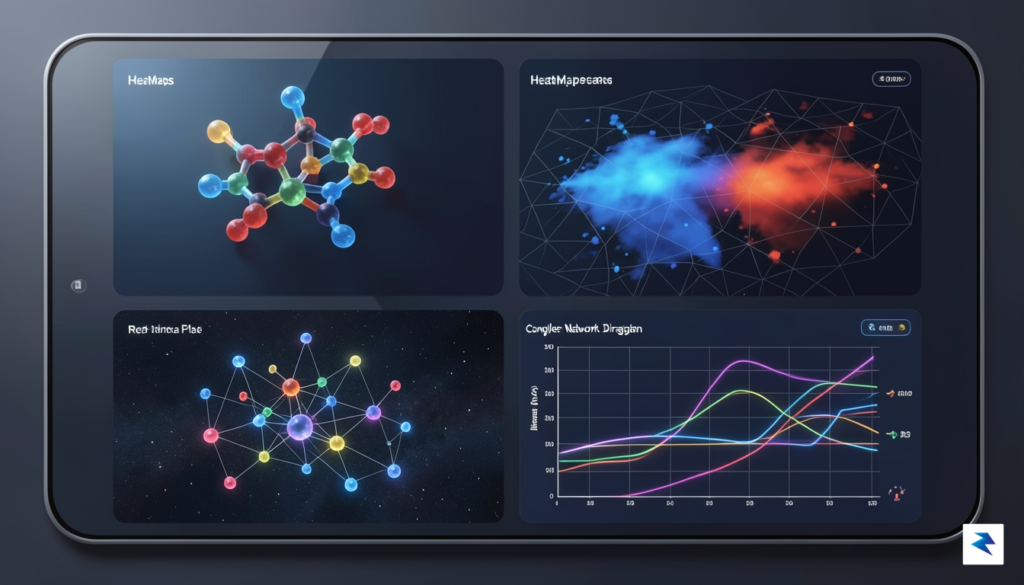
One of the most revolutionary aspects of Claude Science lies in its automated visualization and figure generation capabilities. Moving beyond static, manually created charts, the platform intelligently synthesizes analytical results into dynamic, interactive visual representations. Whether it’s a 3D rendering of a protein-ligand interaction, a dose-response curve that updates in real-time with new data, or complex network diagrams illustrating biological pathways, Claude Science can generate publication-ready figures instantly. This not only saves countless hours typically spent in graphic design software but also enhances comprehension, enabling researchers to quickly grasp intricate relationships and communicate their findings with greater clarity and impact. The platform essentially acts as an intelligent assistant, suggesting optimal visualization types based on the data and analysis performed.
The stark contrast between Claude Science and conventional research environments cannot be overstated. Traditional workflows are often characterized by a series of disconnected steps: data collected in one system, analyzed in another, visualized in a third, and then manually compiled for reporting. This “swivel chair” approach is notoriously inefficient, prone to errors from manual data transcription, and creates significant delays in the research cycle. Claude Science eliminates these pain points by offering a truly end-to-end solution. It fosters a continuous feedback loop where new experimental data immediately informs analysis, which in turn drives new visualizations and refined hypotheses, all within a single, unified interface. This cohesive environment dramatically reduces the time from raw data to actionable insight, marking a significant leap forward for scientific innovation.
The journey from a promising molecular target to a life-saving drug is notoriously long, arduous, and immensely expensive. Pharmaceutical research and development (R&D) typically spans a decade or more, costing billions of dollars, with a success rate that often feels like searching for a needle in a haystack. This protracted timeline and significant capital investment are primarily due to the iterative, often trial-and-error nature of drug discovery, where identifying and refining a viable drug candidate can consume years of effort in laboratories worldwide.
At the heart of this bottleneck lies the hypothesis-generation phase. Traditionally, scientists rely on deep expertise, intuition, and extensive literature review to hypothesize potential molecular targets, design compounds, and predict their interactions with biological systems. This process is human-intensive and inherently limited by cognitive capacity and the sheer volume of ever-growing biochemical data. However, the emergence of advanced artificial intelligence, particularly large language models (LLMs) like those developed by Anthropic, promises to fundamentally transform this landscape by automating and accelerating this crucial early stage.
By leveraging sophisticated reasoning capabilities, LLMs can sift through vast databases of chemical structures, biological pathways, protein interactions, and scientific literature at an unprecedented scale and speed. This allows them to generate novel hypotheses for drug targets or compound designs, and even predict potential efficacy and toxicity profiles, far quicker than traditional methods. For instance, in lead optimization – the process of refining initial promising compounds to improve their potency, selectivity, and pharmacokinetic properties – an AI can explore millions of chemical modifications and predict their biological impact, significantly compressing a phase that conventionally takes years of laboratory synthesis and testing. This accelerated iteration can shave years off the overall development timeline, moving a potential drug from an abstract concept to a clinical candidate much faster.
Furthermore, the role of AI extends deeply into the analysis of complex biochemical datasets. Modern biology generates an avalanche of data, from genomic and proteomic profiles to high-throughput screening results and patient data. Interpreting these intricate patterns to identify disease mechanisms, predict drug responses, or pinpoint off-target effects is beyond human capacity alone. AI algorithms excel at finding subtle correlations and predictive markers within these colossal datasets, enabling researchers to make more informed decisions earlier in the R&D pipeline. This analytical power not only speeds up discovery but also enhances the precision with which drugs are designed, potentially leading to more effective and safer therapies.
Crucially, better early-stage modeling through AI has the potential to dramatically reduce the staggering failure rates observed in clinical trials. A significant portion of drug candidates fail in human trials due to unexpected toxicity or lack of efficacy, after billions have already been invested. By employing AI to build more accurate predictive models of drug behavior in biological systems – even simulating complex interactions and patient responses – researchers can better select candidates with a higher probability of success. This means fewer resources wasted on doomed compounds and, ultimately, more successful drugs reaching patients faster. Anthropic’s foray into this domain isn’t just about building better AI; it’s about reimagining the entire pharmaceutical R&D pipeline, making it more efficient, cost-effective, and ultimately, more fruitful for global health.

The pursuit of new medicines is an inherently data-intensive endeavor, yet it has long been plagued by a persistent and frustrating challenge: the ‘data silo’ effect. Modern scientific laboratories generate colossal volumes of information, ranging from intricate genomic sequences and high-resolution imaging data to detailed clinical trial results and decades of published research. However, a significant portion of this crucial data often remains trapped within legacy software, proprietary databases, or incompatible file formats, creating isolated islands of knowledge. This fragmentation severely hampers researchers’ ability to synthesize information across experiments, identify subtle patterns, or leverage the full potential of their own findings, ultimately slowing down the discovery process and increasing the cost of innovation.
This is precisely where Claude Science steps in, acting as a crucial unifier in a fractured landscape. Rather than attempting to force all data into a single, rigid format – an often impossible task given the diversity of scientific domains – Claude Science creates an intelligent, unified environment. It functions as a sophisticated cognitive glue, capable of ingesting and understanding data from a myriad of disparate sources, whether they reside in archaic spreadsheets, specialized instruments, or modern cloud databases. By establishing this overarching layer, it enables seamless cross-dataset synthesis, allowing researchers to explore connections and derive insights that were previously obscured by technical barriers and a lack of interoperability.
The core strength of Claude Science lies in its sophisticated approach to interoperability, powered by advanced large language models (LLMs). These LLMs are not merely searching for keywords; they are designed to interpret the context, semantics, and underlying structure of heterogeneous data types. This means they can parse the nuances of a researcher’s handwritten notes digitized from a lab notebook, understand the complex relationships within a genomic sequencing file, or extract meaningful trends from clinical trial data tables. They can identify common entities, normalize varying terminologies, and even infer connections between seemingly unrelated datasets, bridging the gap between disparate experimental results and historical knowledge.
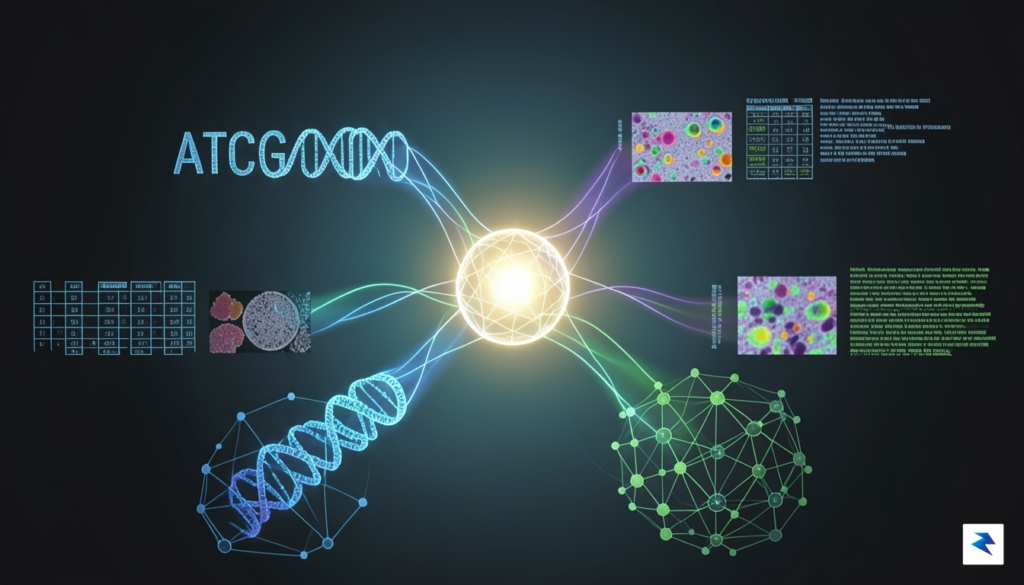
Such a capability transforms how scientists interact with their data. Imagine a scenario where a researcher can query for potential drug targets by simultaneously cross-referencing patient genetic profiles, protein interaction databases, and the outcomes of thousands of previous drug screens, regardless of where that data originally resided or its initial format. Claude Science’s ability to build a comprehensive, semantically rich understanding of the entire scientific data landscape accelerates hypothesis generation, identifies novel therapeutic pathways, and reduces the time and resources traditionally wasted on manual data harmonization. It effectively unlocks the collective intelligence of vast scientific datasets, ushering in an era where data silos no longer impede the urgent quest for life-saving treatments.

The burgeoning role of artificial intelligence in drug discovery offers unprecedented speed and analytical power, yet with this immense capability comes a profound ethical imperative: ensuring safety, accuracy, and transparency. One of the most significant challenges stems from the “black box” nature inherent in many advanced AI models, particularly deep learning networks. These sophisticated algorithms can identify novel drug candidates or predict molecular interactions with astonishing precision, but often without explicitly revealing how they arrived at their conclusions. For the scientific community, accustomed to dissecting every variable and understanding the mechanistic basis of findings, this opacity presents a considerable hurdle, raising legitimate concerns about accountability and trust in the AI-driven insights that could shape future medical interventions.
Consequently, the necessity for robust human-in-the-loop verification becomes paramount. AI, even at its most advanced, should serve as a powerful assistant, not an autonomous decision-maker, in the intricate process of drug development. Human scientists, with their invaluable domain expertise, critical thinking, and ethical judgment, must meticulously scrutinize AI-generated hypotheses, experimental designs, and predictive models. This oversight is crucial not only for validating the accuracy of AI outputs but also for interpreting complex results, identifying potential errors, and most importantly, recognizing biases that might be inadvertently propagated or even amplified by the AI if left unchecked. Establishing clear protocols for human review and intervention will be fundamental to harnessing AI’s power responsibly and safely.
Beyond the immediate operational challenges, AI developers in the medical field bear a heightened ethical responsibility. Companies innovating in this space, such as Anthropic,
You must be logged in to post a comment.