
Trump Family Crypto Ventures Reveal $1.4 Billion in Earnings
The Financial Landscape of the Trump Family's Crypto Ventures The recent mandatory financial disclosures for 2025 have cast a revealing…


The recent administrative shift from the Trump White House has granted Anthropic a critical lifeline, effectively rescinding the restrictive measures that had previously throttled the company’s ability to deploy its most sophisticated AI architectures. Following weeks of intense regulatory scrutiny and bureaucratic uncertainty, the administration’s decision to restore full access to high-compute model training and distribution marks a pivotal pivot point for the San Francisco-based firm. By rolling back the sanctions that had effectively handicapped the rollout of their latest frontier models, the government has signaled a newfound, albeit measured, willingness to allow private sector innovation to proceed with fewer immediate federal constraints. This reversal is not merely a technical adjustment; it represents a tactical change in how the current administration intends to balance the dual pressures of national security concerns and the competitive necessity of leading in the global artificial intelligence race.

For Anthropic, this reprieve provides immediate operational relief, allowing their engineering teams to resume the scaling and deployment of models that were previously caught in a legal and regulatory bottleneck. The restoration of access means that the company can once again push the boundaries of large-scale inference without the constant fear of sudden administrative intervention, which had threatened to stall their product roadmap indefinitely. However, while this development provides a much-needed morale boost and operational stability, the industry at large is treating the news with a healthy dose of caution. Stakeholders within the AI ecosystem are keenly aware that this administrative action functions more as a temporary shield than a permanent policy shift, leaving the door open for future regulatory pivots should the political winds change once again.
The reprieve is less of a victory for deregulation and more of a strategic pause, acknowledging that stifling domestic AI development may carry a higher long-term risk than the uncertainty of rapid, open innovation.
The broader implications of this decision suggest that the administration is struggling to reconcile its populist rhetoric with the pragmatic reality of technological hegemony. By granting Anthropic this breathing room, officials have acknowledged that AI is not just a commercial product, but a cornerstone of national competitiveness that cannot be easily contained by restrictive mandates. Nevertheless, observers should remain mindful that the regulatory landscape remains deeply fluid. The reprieve offers a window of opportunity to demonstrate the safety and societal value of these models, but Anthropic must now navigate a delicate path of transparency and compliance to ensure this shield remains in place. Ultimately, the future of the company rests on its ability to prove that its frontier technology can serve the public interest while operating under this newly established, yet fragile, regulatory grace period.
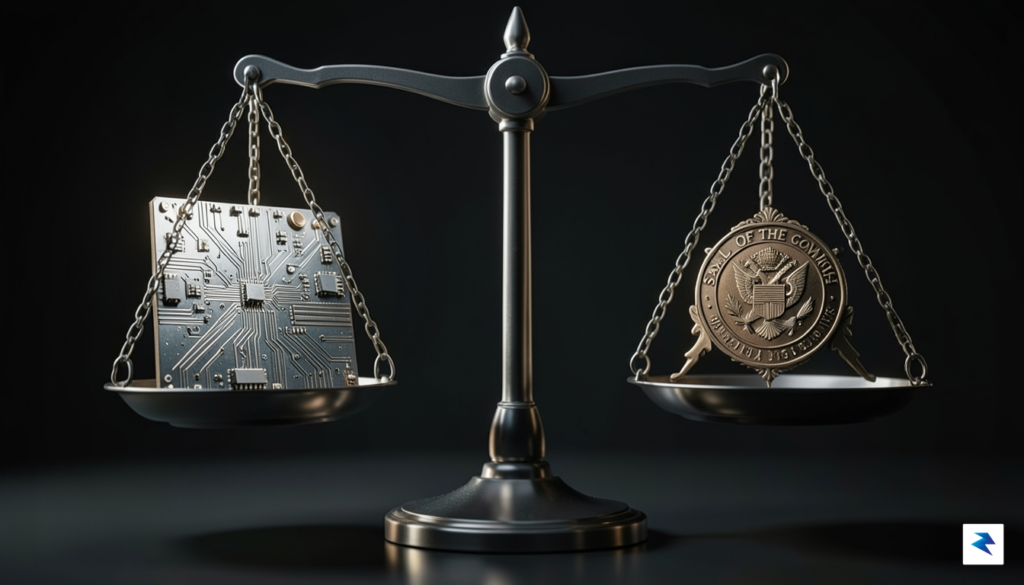
For years, the technology sector operated under a largely hands-off philosophy, characterized by a laissez-faire approach that prioritized rapid innovation and market expansion over rigid federal oversight. However, the current administration has fundamentally upended this paradigm, replacing the “move fast and break things” ethos with a markedly more interventionist strategy. This ideological pivot is driven by a growing consensus within the White House that artificial intelligence is not merely a commercial commodity, but a critical pillar of national security and public stability. By framing AI development as a geopolitical imperative, the administration has moved to exert granular control over how leading models are trained, deployed, and secured against potential adversaries.
This shift in philosophy has placed companies like Anthropic directly in the crosshairs of federal scrutiny. Unlike the previous era, where regulation was often reactive or confined to antitrust concerns, the current regulatory framework is proactive and focused on the inherent risks of foundation models. Agencies such as the Department of Commerce and the newly empowered AI Safety Institute are no longer content with voluntary industry guidelines; instead, they are demanding rigorous, mandated transparency in data sets and safety testing. The scrutiny directed at Anthropic specifically stems from its influential role in defining the state-of-the-art for large language models, making it a primary testing ground for the government’s nascent enforcement mechanisms.
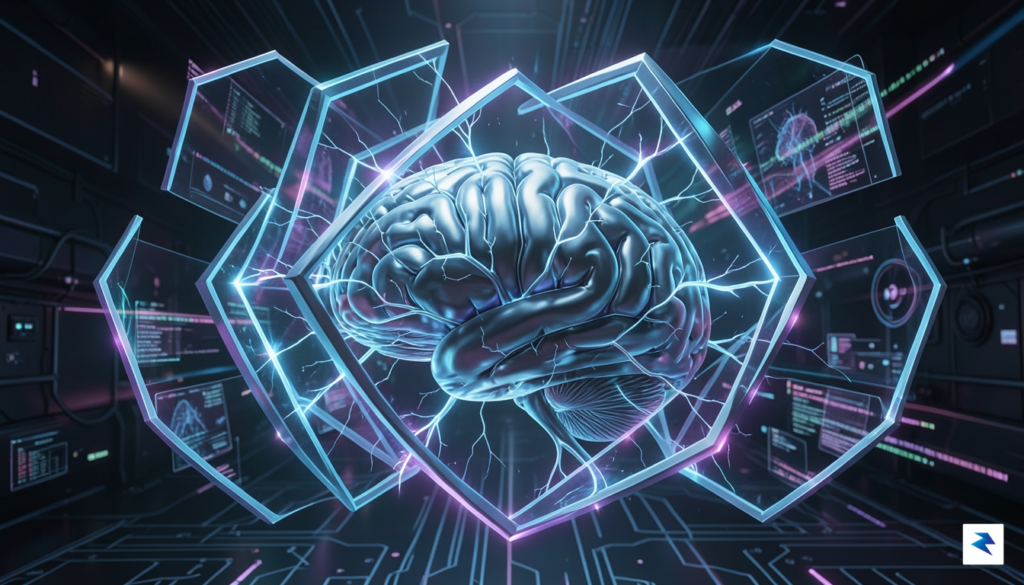
The administration’s regulatory philosophy rests on the premise that AI safety is a matter of national defense, necessitating a departure from traditional market-driven governance in favor of state-led oversight.
The tension between fostering domestic innovation and imposing government oversight has created a precarious environment for AI developers. On one hand, the administration publicly champions the need to outpace global competitors, particularly in the race for artificial general intelligence. On the other hand, the heavy burden of compliance—ranging from mandatory reporting of training compute clusters to strict post-deployment monitoring—risks stifling the very agility that allowed companies like Anthropic to lead the field in the first place. This creates a challenging paradox: the government wants the most powerful AI systems in the world, yet it is simultaneously erecting a complex web of requirements that could slow down the iterative development cycles essential for keeping those systems at the cutting edge.
Ultimately, the current regulatory landscape reflects a deep-seated anxiety regarding the dual-use nature of modern AI. By treating companies as critical infrastructure, the administration is signaling that the era of self-regulation is effectively over. Whether this newfound interventionism will secure the nation’s technological lead or inadvertently hamper the pace of discovery remains the central debate. For Anthropic and its peers, the path forward is no longer just about engineering excellence; it is about navigating a high-stakes geopolitical landscape where every algorithm, dataset, and safety protocol is subject to the evolving priorities of federal oversight.

The recent reprieve granted to Anthropic has sent a resounding signal through Silicon Valley, acting as both a sigh of relief and a sobering wake-up call for the broader artificial intelligence ecosystem. For venture capitalists and startup founders, the episode underscores the reality that the federal government is no longer a distant observer of tech trends but an active, and often unpredictable, participant in the lifecycle of AI development. This “chill” effect is palpable; investors are increasingly hesitant to pour massive capital into high-risk, frontier model startups when the regulatory environment remains so fluid. The fear is not necessarily that regulation will be implemented, but that enforcement will remain arbitrary, leaving companies vulnerable to sudden shifts in political winds that could render years of research and development obsolete overnight.

Consequently, the industry is witnessing a frantic pivot in how companies handle their internal compliance workflows. Where firms once prioritized speed-to-market above all else, there is now a growing emphasis on building “regulatory-ready” infrastructures. CTOs and compliance officers are being tasked with documenting model training processes with a level of rigor typically reserved for aerospace or pharmaceutical industries. This tactical shift is designed to create a defensive moat, ensuring that if a firm finds itself in the crosshairs of federal regulators, they possess the granular data necessary to demonstrate safety and ethical alignment. However, this transition comes at a cost: it diverts significant engineering talent away from innovation and toward bureaucratic documentation, potentially slowing the pace of American AI progress compared to global competitors.
The primary anxiety among AI leaders is not the existence of oversight, but the absence of a standardized, predictable framework that allows for long-term strategic planning.
Looking ahead, the long-term investment strategies of major firms are beginning to prioritize “regulatory resilience.” Founders are increasingly seeking out legal counsel with deep ties to Washington, signaling that the ability to navigate the halls of power is becoming just as vital as possessing a superior technical architecture. The prevailing sentiment is that until a clear, codified set of standards is established, the AI sector will remain in a state of flux. While Anthropic successfully avoided an immediate crackdown, the broader industry understands that they are operating in an era where the rules of the game are being written in real-time. For the startup ecosystem to thrive, the federal government must eventually transition from reactive, case-by-case enforcement to a transparent regulatory roadmap that provides the stability required for sustainable technological growth.

At the center of the current regulatory crossroads sits a profound dilemma: how can the government mitigate the existential risks posed by frontier models without effectively killing the open-source spirit that has fueled the last decade of technological progress? On one side of this divide, policymakers and security hawks argue that powerful AI models—those capable of assisting in cyberattacks, bio-weapon development, or large-scale disinformation—pose a systemic threat to national stability. They contend that unfettered access to model weights and architecture allows bad actors to strip away safety guardrails, effectively “weaponizing” intelligence that would otherwise remain under lock and key. For proponents of strict oversight, the potential for catastrophic harm necessitates a regime of rigorous pre-deployment testing and government-monitored access, treating advanced AI more like sensitive nuclear technology than traditional software.

Conversely, the open-source community and many industry leaders maintain that the benefits of transparency far outweigh these theoretical dangers. They argue that when code is open, it invites a global collective of researchers to identify vulnerabilities, improve safety, and democratize access to high-level machine learning tools. By restricting these models to a handful of massive, private corporations, the government risks creating a “closed-loop” ecosystem that is actually less secure because it lacks the benefit of public scrutiny. Furthermore, there is the undeniable concern of global competitiveness; if the United States imposes overly burdensome compliance costs or bans the open release of frontier research, talent and innovation will inevitably migrate to jurisdictions with more permissive regulatory environments, leaving American companies at a long-term strategic disadvantage.
The core of the debate is not whether AI should be safe, but who gets to define safety: a small group of government bureaucrats and corporate executives, or the broader, decentralized scientific community that has historically driven breakthroughs.
Ultimately, the federal government faces a delicate trade-off that requires more than just reactionary policy. If regulators lean too heavily toward restriction, they risk stifling the next generation of AI-driven startups that rely on open-source foundations to build their products. If they lean too far into laissez-faire openness, they may inadvertently provide the keys to the kingdom to those who wish to disrupt democratic institutions. Finding a middle ground—perhaps through “red-teaming” mandates, controlled API access, or tiered release strategies—is the only way to ensure that the U.S. remains both a safe haven and a global leader in the race to define the future of artificial intelligence.

While the recent political reprieve provides Anthropic with a necessary window of operational stability, the broader landscape remains characterized by profound volatility. The temporary easing of pressure should not be mistaken for a permanent shift in the regulatory climate; rather, it represents a fleeting moment of equilibrium in a rapidly shifting legislative theater. As Anthropic continues to scale its frontier models, the company will inevitably face a more complex web of legal expectations, ranging from stringent data sovereignty requirements to emerging mandates regarding the transparency of algorithmic training sets. The challenge lies in maintaining a trajectory of rapid innovation while simultaneously building the infrastructure required to appease an increasingly skeptical and interventionist federal government.
The core tension moving forward will revolve around the fundamental debate between industry self-regulation and the imposition of mandatory government standards. While major AI labs have long argued that voluntary safety frameworks allow for the flexibility needed to address the unique risks of cutting-edge technology, policymakers are increasingly viewing these measures as insufficient safeguards against systemic disruption. If the industry fails to establish universally accepted benchmarks for transparency and safety, it is almost certain that heavy-handed legislative intervention will follow. This creates a high-stakes scenario where Anthropic must act as both an innovator and a de facto policymaker, helping to define the very standards that will eventually govern its own existence.

Looking toward the next phase of the AI arms race, we can anticipate several potential scenarios that will define the survival of current industry leaders. We are likely to see a shift toward “compliance-by-design,” where safety protocols are embedded into the fundamental architecture of large language models rather than added as an afterthought. Furthermore, as the geopolitical stakes of artificial intelligence grow, we may see a transition from domestic regulatory debates to international treaties that attempt to govern the proliferation of frontier AI models. Companies that can successfully balance aggressive deployment with proactive, radical transparency will likely weather the coming storm far better than those that treat regulation as a hurdle to be jumped rather than a necessary foundation for long-term public trust.
The resilience of the AI sector will ultimately depend on its ability to evolve in lockstep with democratic institutions, transforming political volatility from an existential threat into a catalyst for maturation.
Ultimately, the future of Anthropic, and indeed the entire AI ecosystem, remains tethered to the capacity for adaptation. Political winds will continue to shift, but the underlying technological momentum—and the necessity for robust, responsible AI—remains a constant. By leaning into rigorous internal governance and engaging in transparent, constructive dialogue with regulators, companies can help steer the legislative process toward outcomes that foster both safety and continued progress. The path ahead is undoubtedly fraught with uncertainty, yet it also offers an unprecedented opportunity to institutionalize the values of fairness and security at the very heart of the next generation of computing.
You must be logged in to post a comment.