Gemini Spark for Mac: Google’s Agentic AI Assistant Explained
Introducing Gemini Spark for Mac Google has officially bridged the gap between browser-based AI and desktop utility with the debut of Gemini…


In an era where artificial intelligence has rapidly evolved from a niche laboratory experiment into a cornerstone of our daily digital existence, the friction between technological utility and personal privacy has become undeniable. For years, the mainstream AI landscape has been dominated by a surveillance-capitalism model, where the price of admission to sophisticated Large Language Models is the wholesale surrender of personal data. As these systems ingest our queries, creative drafts, and private research to refine their algorithms, users have been forced to accept a Faustian bargain: relinquish your digital autonomy, or lose access to the cutting edge of human intelligence.
Venice AI has emerged as a disruptive force by proving that this trade-off is not an inherent requirement of intelligence, but rather a choice made by incumbents. By positioning itself as a privacy-first platform, Venice AI offers a sanctuary where high-performance model access meets rigorous data protection. Unlike traditional platforms that operate on a data-harvesting architecture, Venice utilizes a decentralized and encrypted approach that ensures every interaction remains between the user and the model. This is not merely a feature update; it is a fundamental reconfiguration of the user-AI relationship that prioritizes digital sovereignty over corporate data extraction.

This shift represents a growing philosophical movement toward “private-by-design” computing, a standard that is rapidly gaining traction among both individual power users and privacy-conscious enterprises. The core premise is simple: the intelligence of an AI should reside in the model’s reasoning capabilities, not in the cumulative history of its users’ private lives. By decoupling user identity from the computation process, Venice AI creates a clean-room environment for intellectual work. This ensures that sensitive information—whether it is proprietary business strategy or intimate personal reflection—remains strictly confidential, effectively eliminating the risk of accidental data leaks or unauthorized model training on private inputs.
The true measure of an AI platform’s value is no longer just how many parameters it possesses, but how much trust it can earn from the people who rely on it daily.
As the market reaches a saturation point for generic, data-hungry models, Venice AI’s ascent to unicorn status signals a broader market correction. Investors and users alike are beginning to recognize that the next generation of AI dominance will belong to platforms that respect the boundaries of the individual. By refusing to compromise on privacy, Venice has successfully carved out a high-value niche that proves security is not an obstacle to innovation, but rather its most essential foundation. This approach ensures that as AI continues to expand its role as an extension of our digital lives, users can finally enjoy the benefits of advanced intelligence without the shadow of constant surveillance looming over their every prompt.
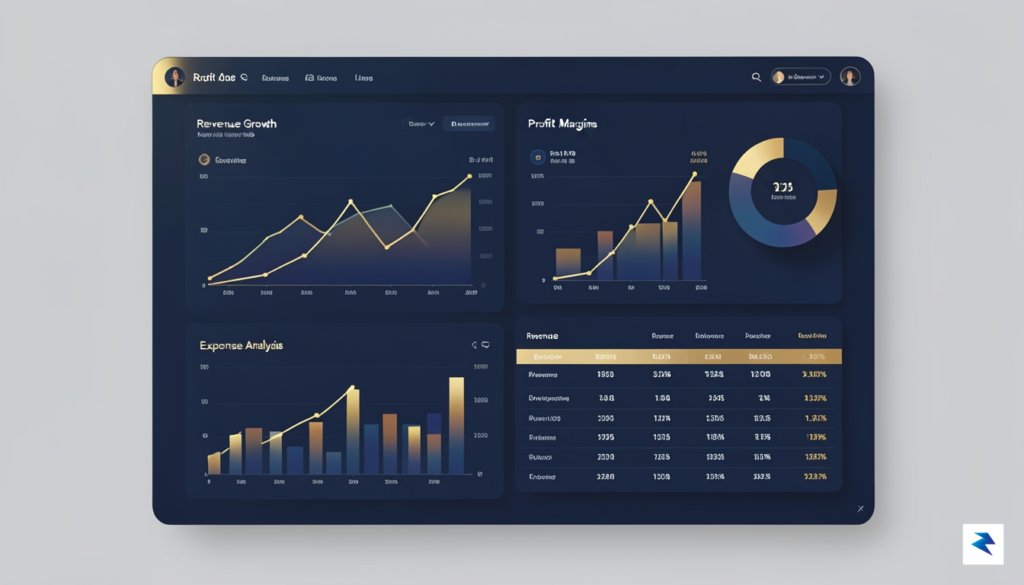
In an era where the prevailing narrative for AI startups centers on the “grow at all costs” mentality fueled by massive venture capital burn, Venice AI has charted a refreshingly contrarian course. By reaching an annualized revenue run-rate of $70 million before even closing its Series A, the company has effectively dismantled the myth that AI tools cannot achieve immediate, sustainable profitability. This success is rooted in a fundamental shift toward valuing user agency and data sovereignty, proving that privacy is not merely a feature for the security-conscious, but a high-value commodity that customers are actively willing to pay for.
The business model relies on a tiered subscription architecture that prioritizes the user over the advertiser. Unlike free-to-use platforms that harvest data to train models or serve targeted ads, Venice AI positions its privacy-first stance as a premium product. By stripping away the surveillance-heavy infrastructure typical of tech giants, the company has attracted a loyal user base of professionals, developers, and privacy advocates who view data security as a non-negotiable business expense. This willingness to pay creates a virtuous cycle where revenue is directly tied to user satisfaction rather than speculative metrics, allowing the company to scale its operations with the support of its own cash flow rather than relying solely on external injections of capital.
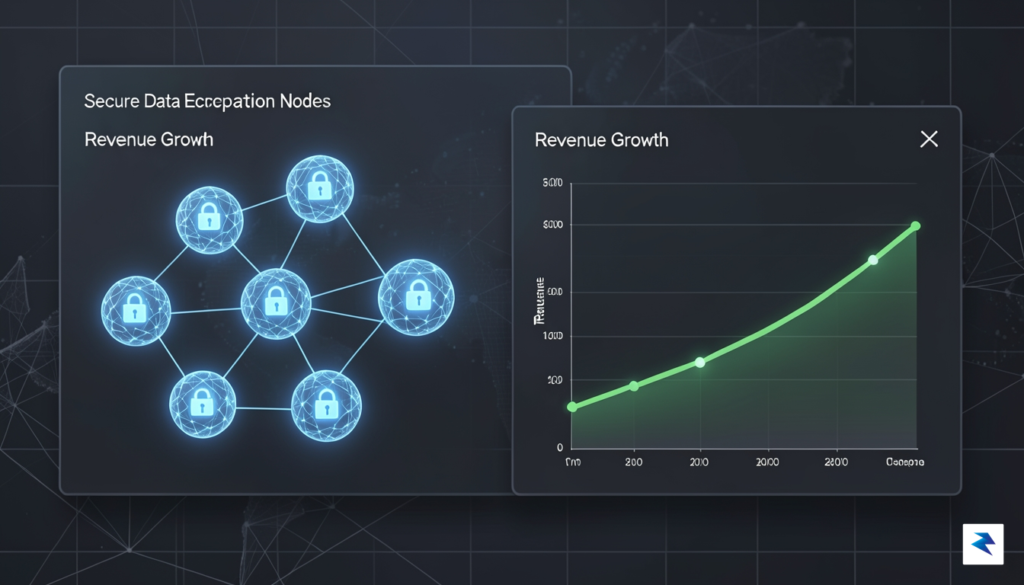
Operational efficiency has also played a pivotal role in maintaining these impressive margins. In the post-LLM-hype era, many startups have struggled to justify their existence once the initial excitement of new technology wanes. Venice AI, however, avoided the trap of “shiny object syndrome” by focusing intensely on product-market fit. By building tools that solve specific, high-friction problems—such as secure document synthesis and private creative workflows—the company ensured that its platform provided tangible utility. This focus on practical application meant that the company did not need to spend exorbitant amounts on customer acquisition costs (CAC); rather, the product’s inherent value drove organic adoption through word-of-mouth and community trust.
The core of Venice AI’s market strategy is the realization that privacy-conscious users are an underserved demographic. When you stop treating the user as the product, you unlock a level of loyalty and willingness to pay that traditional, ad-supported AI models simply cannot replicate.
Ultimately, the company’s trajectory serves as a blueprint for the next generation of AI enterprises. By demonstrating that robust, privacy-centric architecture can be profitable at scale, Venice AI has proven that the market is ready for a more ethical approach to artificial intelligence. As the digital landscape continues to grapple with data privacy concerns and regulatory scrutiny, a platform that builds trust as its primary asset is uniquely positioned to capture long-term market share. Their success highlights a critical industry lesson: when you align your business model with the genuine needs of your users, profitability becomes a natural byproduct of your growth.

The closing of a $65 million Series A round is more than just a financial milestone for Venice AI; it represents a fundamental recalibration of what investors consider “valuable” in the current artificial intelligence landscape. For years, the gold rush in AI was defined almost exclusively by the pursuit of larger parameter counts and more massive compute clusters. However, this recent injection of capital signals a decisive shift in investor appetite, moving away from the “bigger is better” ethos toward a more nuanced appreciation for user sovereignty and data privacy. By reaching unicorn status through this funding, Venice AI has proven that the market is ready to reward platforms that prioritize the individual’s right to private, uncensored, and secure interactions over the standard, surveillance-heavy models that dominate the mainstream sector.

This infusion of capital is set to act as a primary catalyst for the company’s next phase of aggressive growth, specifically regarding the scaling of their underlying infrastructure. Building a privacy-first platform is inherently more complex than deploying centralized, cloud-based models because it requires a decentralized approach that ensures data remains on the edge or remains encrypted throughout the processing lifecycle. With $65 million in the bank, Venice AI is now positioned to invest heavily in the specialized hardware and distributed computing architectures necessary to maintain low-latency performance without compromising the user’s anonymity. Furthermore, the company will be utilizing these resources to embark on a massive talent acquisition drive, seeking out top-tier engineers who specialize in zero-knowledge proofs, encryption protocols, and localized machine learning—areas that were previously secondary to basic model training but are now at the center of the industry’s evolution.
“The shift toward privacy-first AI isn’t just a regulatory necessity; it is becoming the primary competitive advantage for the next generation of generative technology platforms.”
When viewed against the broader venture capital landscape, this funding round serves as a bellwether for the maturation of the AI market. While many startups continue to struggle with the high costs of API-based models and the growing public concern regarding data harvesting, Venice AI is carving out a defensive moat built on trust. Investors are increasingly wary of the risks associated with centralized AI platforms—ranging from data breaches to the potential for platform-wide censorship—and are subsequently funneling billions into companies that can offer a verifiable, private alternative. As Venice AI scales, its success will likely influence a new wave of competitors and incumbents alike, forcing the industry to reconsider whether the future of artificial intelligence will remain a closed, monitored ecosystem or transition into a decentralized, user-empowered model.

Engineering an AI that is both highly capable and strictly private presents a formidable architectural challenge. Traditionally, large language models have relied on massive, centralized data lakes to “learn” from user interactions, effectively trading personal privacy for functional intelligence. Venice AI, however, has chosen to dismantle this paradigm by integrating a sophisticated stack of privacy-preserving technologies. The technical hurdle lies in ensuring that the model remains highly responsive and sophisticated without ever creating a permanent, identifiable record of the individual’s prompts or personal context. Achieving this requires moving away from the standard cloud-heavy inference models toward a decentralized architecture that prioritizes user sovereignty at every step of the computation process.

To solve the friction between performance and protection, the platform leverages a combination of robust end-to-end encryption and advanced cryptographic protocols. By employing zero-knowledge proofs and localized processing, Venice AI ensures that the computational weight of the model is balanced against the necessity of data masking. Instead of funneling raw user data into a centralized training database, the system is designed to minimize the retention of sensitive identifiers, ensuring that the model learns patterns without ever “knowing” the person behind the query. This approach requires meticulous engineering to ensure that the model’s latency remains low, allowing for a seamless experience that feels just as fast as mainstream, non-private counterparts.
The true test of a privacy-first AI isn’t just the absence of data logging; it is the ability to maintain high-level reasoning capabilities while treating every interaction as a transient, ephemeral event.
Ultimately, the trade-off between intelligence and security is being rewritten through these architectural innovations. By shifting the burden of data protection from the user to the underlying infrastructure, Venice AI demonstrates that privacy does not have to come at the expense of utility. The platform manages this balance by compartmentalizing data processing and utilizing ephemeral sessions, which effectively strips away identifying metadata before it can be stored or analyzed. As users become increasingly aware of the dangers of data harvesting, these technical hurdles—once considered insurmountable—are now becoming the gold standard for the next generation of artificial intelligence, proving that a secure, private, and highly intelligent AI ecosystem is not just a dream, but a scalable reality.

The rise of Venice AI to unicorn status signals a pivotal shift in how users perceive the value of their personal data in the age of generative models. However, the path forward is paved with significant hurdles as the company moves from a breakout startup to a sustained market participant. The competitive landscape is dominated by Silicon Valley titans with virtually unlimited access to compute, data, and distribution channels. To remain viable, Venice AI must prove that its “privacy-first” ethos is not merely a marketing differentiator, but a robust technical moat that Big Tech cannot easily replicate without dismantling their own existing advertising-driven business models.

One of the most pressing risks for Venice AI is the inevitable “privacy-washing” that occurs when larger corporations scramble to integrate privacy-centric features into their established ecosystems. Should industry giants decide to prioritize local-processing or encrypted inference as a standard feature, Venice AI will need to double down on its commitment to radical transparency and user sovereignty. The company’s long-term success will likely hinge on its ability to scale its infrastructure—ensuring low-latency, high-performance model responses—without compromising the decentralized or private protocols that initially attracted its user base. Scaling effectively while maintaining a strict ethical baseline is an engineering tightrope that few startups have successfully navigated.
The true test of Venice AI’s longevity will not be its initial growth rate, but its ability to prove that ethical, user-centric AI can be as powerful and intuitive as the data-hungry alternatives currently dominating the market.
Ultimately, the viability of Venice AI rests on the growing consumer demand for digital autonomy. As users become increasingly wary of how their prompts and personal interactions are used to train third-party models, Venice AI is positioned as a primary destination for the “privacy-conscious” demographic. If the company can continue to deliver state-of-the-art model performance while upholding its promise of zero-knowledge architecture, it has the potential to define the next generation of artificial intelligence. By aligning its technological trajectory with the societal need for digital rights, Venice AI is not just competing for market share; it is setting a new standard for what it means to be an ethical steward of intelligence in a post-privacy world.
You must be logged in to post a comment.