
Beyond the Lylat System: How Indies are Resurrecting the Arcade Space Shooter
The Enduring Legacy of the Lylat System For a generation of gamers who grew up in the late 1990s, the Lylat System was far more than a…


The global landscape of artificial intelligence development is undergoing a dramatic reorientation, largely triggered by stringent export controls originating from the United States. Over the past few years, Washington has progressively tightened restrictions on the sale of high-end AI chips and related technologies, particularly those deemed critical for training advanced large language models and other sophisticated AI systems. These measures, often framed under national security imperatives, aim to curb the access of certain nations to cutting-edge computational power, thereby preserving a technological lead and mitigating perceived strategic risks associated with unchecked AI proliferation. This policy shift has fundamentally reshaped the calculus for countries previously reliant on Western suppliers for their AI infrastructure.
At the heart of these export limitations lies a clear strategic motivation: to maintain the United States’ preeminence in the rapidly evolving field of artificial intelligence. By controlling the supply of essential hardware, such as advanced GPUs and specialized AI accelerators, the US seeks to slow down competitors’ progress in areas like foundational model development, autonomous systems, and advanced surveillance technologies. The underlying rationale suggests that denying access to these crucial components can act as a choke point, influencing the pace and direction of global AI innovation and ensuring that sensitive technological capabilities remain within a sphere of trusted partners. This approach underscores a belief that technological leadership in AI translates directly into geopolitical power and economic advantage.
This strategic tightening, however, has inadvertently ignited a powerful counter-movement: the push for “sovereign AI.” Nations and regions now find themselves compelled to cultivate indigenous AI ecosystems, striving for independence from foreign supply chains and technological dependencies. Sovereign AI development isn’t merely about replicating existing technologies; it’s about building comprehensive domestic capabilities, from chip design and manufacturing to model training and application deployment, all tailored to local languages, cultures, and regulatory frameworks. This paradigm shift represents a profound commitment to self-reliance, recognizing AI as a national asset too critical to be outsourced or subjected to external control.
The vacuum created by these Western export bans has, paradoxically, become a fertile ground for innovation, particularly across Asian markets. Once heavily reliant on importing advanced AI hardware and software frameworks, many Asian countries found themselves facing significant hurdles in scaling their AI ambitions. This regulatory friction, rather than stifling progress, has acted as a potent catalyst, compelling local enterprises and startups to step up and fill the void. The absence of readily available, high-performance Western solutions has provided an unprecedented incentive for domestic companies to invest heavily in research and development, fostering an unexpected boom in regional technological ingenuity and pushing the boundaries of what local capabilities can achieve.
Consequently, a new wave of Asian AI startups is now emerging, developing sophisticated foundation models and specialized AI applications that cater specifically to regional needs and data landscapes. These innovators are not just building alternatives; they are forging new paths, often leveraging novel architectural approaches or optimizing models for less powerful hardware, demonstrating remarkable resilience and adaptability. From advanced language models that deeply understand nuanced local dialects to AI solutions tailored for specific industrial sectors within Asia, this period of forced self-reliance is accelerating the creation of diverse and robust AI ecosystems. This shift is not merely about overcoming obstacles; it’s about fundamentally reshaping the global AI map, paving the way for a more distributed and regionally diverse future for artificial intelligence.
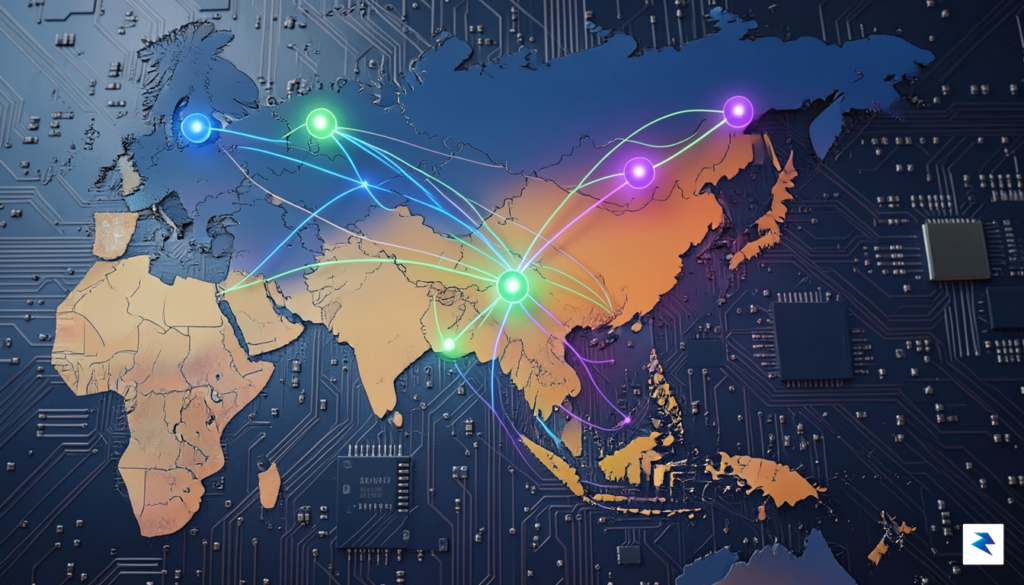

The narrative that Asian AI startups are merely trailing behind Western innovation has been decisively dismantled. As international trade policies and export restrictions tighten around high-end silicon, regional developers have pivoted toward architectural ingenuity, resulting in the creation of models that stand toe-to-toe with the renowned Mythos architecture. These new systems are not simply clones; they represent a fundamental shift in how large language models are engineered, prioritizing hyper-efficient parameter utilization and localized training datasets that Western-centric models often overlook. By optimizing for specific linguistic structures and regional context, these startups are delivering high-performance, cost-effective solutions that remain entirely immune to the volatility of global trade barriers.
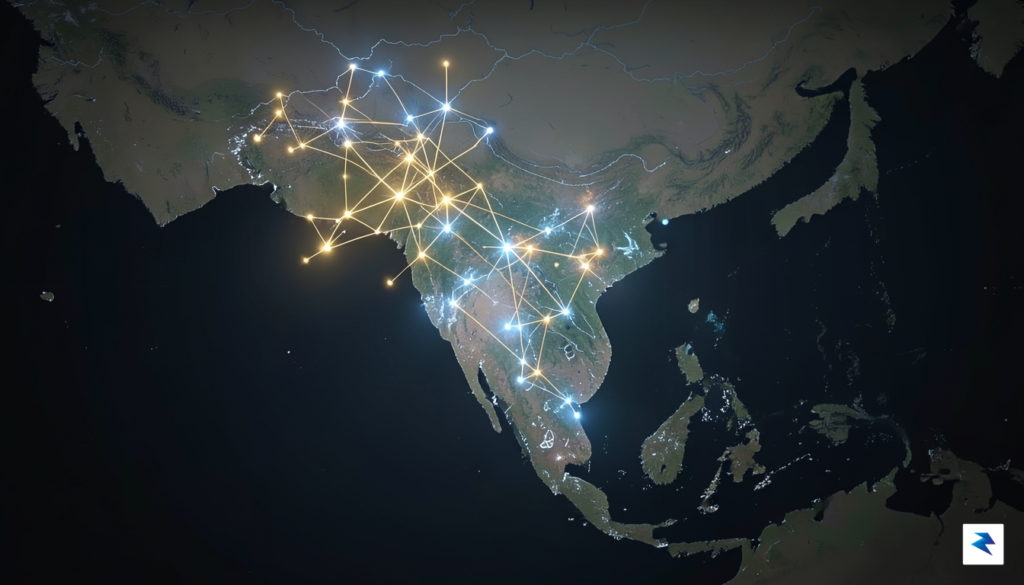
Technically, the architectural evolution of these models is striking. Where many Western giants focus on brute-force scaling, Asian innovators like 01.AI and Qwen have pioneered advancements in mixture-of-experts (MoE) configurations that demand significantly less compute power while maintaining, or even exceeding, the reasoning capabilities of their Western counterparts. These models are designed with a unique focus on multi-modal fluency, integrating deep-seated cultural nuances and local idioms that standardized models often misinterpret or generalize. This cultural alignment is not merely a linguistic feature; it is a structural advantage that allows these AIs to function with far greater precision in professional, legal, and creative tasks within the Asia-Pacific market.
The true strength of these emerging Asian models lies in their contextual intelligence; by training on diverse, regional-specific data, they achieve a depth of nuance that globalized models, optimized for a Western baseline, simply cannot replicate.
Performance benchmarks further underscore this rapid maturation. In recent standardized evaluations, several regional models have demonstrated parity with Mythos-grade architectures in coding, complex logical reasoning, and creative synthesis. This efficiency is largely attributed to refined tokenization strategies that handle non-Latin scripts with superior granularity, reducing latency and increasing overall output quality. As these companies continue to scale, they are establishing an independent infrastructure that ensures regional businesses can innovate without fear of sudden hardware or software supply chain disruptions.
Ultimately, the rise of these high-performance models marks the beginning of a truly multipolar AI landscape. Startups are no longer looking to Silicon Valley for validation; instead, they are defining their own standards for what intelligence, speed, and cultural relevance look like in a globalized digital economy. By mastering the balance between raw computational power and localized relevance, these organizations are ensuring that the next generation of AI development remains robust, inclusive, and fundamentally independent of geopolitical constraints.

The strategic intent behind Washington’s restrictive export policies was ostensibly to preserve a technological hegemony by throttling the compute power available to global competitors. However, this heavy-handed approach has inadvertently triggered a classic case of the Innovator’s Dilemma on a geopolitical scale. By effectively cutting off Asian firms from the most advanced American silicon, the United States has forced these companies to stop relying on legacy dependencies. Instead of stalling their progress, these bans have acted as a powerful catalyst for innovation, compelling Asian startups to optimize software efficiency and develop custom hardware architectures that are no longer tethered to Western ecosystems.

The economic ramifications of this policy shift are becoming increasingly visible as Western firms risk losing their foothold in some of the world’s most lucrative growth markets. When developers in Asia are pushed away from US-based APIs and proprietary models, they naturally pivot toward local alternatives that are specifically fine-tuned for their regional linguistic and cultural needs. This “de-Americanization” of the AI stack does more than just shift market share; it creates a fragmented global landscape where standardization is no longer dictated by Silicon Valley. As these local models achieve parity with their Western counterparts, the original architects of the export bans may find themselves locked out of a burgeoning, multi-billion-dollar ecosystem that they can no longer influence or monetize.
The unintended consequence of tightening the supply chain is the birth of an independent, self-sustaining AI infrastructure that operates entirely outside the reach of US regulatory oversight.
Furthermore, the pressure to innovate under constraint has led to remarkably faster iteration cycles within Asian tech hubs. Because these startups cannot simply “buy” their way out of a computational bottleneck with massive clusters of high-end GPUs, they are forced to invest heavily in algorithmic efficiency, model distillation, and hardware-software co-design. This lean approach to AI development is now proving to be a competitive advantage, as models that can perform complex reasoning on limited or varied hardware are inherently more scalable and adaptable to diverse global environments. If this trend continues, the long-term risk is not just the loss of revenue, but the erosion of the “gold standard” status that Western AI has enjoyed for the better part of a decade. By attempting to choke the competition, the US may have accidentally accelerated the development of a resilient, alternative AI paradigm that is better suited for a post-globalization future.

We are currently witnessing the rapid emergence of an AI “splinternet,” a fractured digital landscape where the dream of a unified, global model ecosystem is being replaced by regional silos. As export restrictions on high-end hardware and advanced AI models tighten, Asian startups are stepping into the vacuum, developing indigenous alternatives that mirror the capabilities of Western counterparts like Anthropic’s Claude. This divergence is not merely a technical trend; it is a fundamental shift in how intelligence is built, governed, and deployed. For global enterprises, this means the era of relying on a single, universally applicable AI stack is coming to a close, forcing organizations to navigate a complex labyrinth of regional compliance, data sovereignty, and interoperability hurdles.

The primary challenge for multinational corporations lies in managing multi-model deployments that must adhere to conflicting regulatory frameworks. In an environment where AI sovereignty is becoming a national security priority, companies can no longer assume that a model trained in one jurisdiction will be legally or ethically compliant in another. Consequently, businesses are being forced to adopt “multi-model architectures,” where they mix and match domestic Asian models for local operations while maintaining different stacks for Western markets. This approach creates significant technical debt, as engineering teams must constantly synchronize workflows, fine-tune disparate models to maintain brand voice consistency, and ensure that data privacy standards are not compromised when moving between these isolated environments.
The rise of regional AI sovereignty is transforming the deployment strategy from a centralized “one-size-fits-all” approach to a decentralized, localized intelligence model.
Furthermore, this geopolitical friction is accelerating a pivot away from the obsession with massive, generalized “frontier” models. Instead, the industry is increasingly favoring smaller, specialized models that are easier to host locally, cheaper to run, and less dependent on the restricted high-end silicon that remains caught in the crossfire of trade wars. These task-specific models allow Asian startups to optimize performance for local languages, cultural nuances, and specific industrial sectors, effectively bypassing the need for massive, compute-heavy general-purpose models. While this strategy provides resilience against future export bans, it introduces new complexities regarding cross-border interoperability, as these specialized tools may not always communicate seamlessly with global enterprise resource planning systems.
Ultimately, the bifurcation of the AI market will define the next decade of technological advancement. As countries continue to prioritize the development of domestic AI capabilities, the global standard will likely shift from a singular point of reference to a tapestry of regional protocols. Organizations that thrive in this environment will be those that view AI not as a static utility, but as a dynamic asset that requires constant calibration to meet the demands of a fragmented world. By embracing this decentralized reality, businesses can mitigate the risks of isolation while still leveraging the unique, high-performance innovations emerging from the rapidly maturing Asian AI ecosystem.

The rapid development of regional AI models across Asia represents a fundamental pivot from the era of hyper-globalization toward a more fragmented, resilient model of technological autonomy. While initial efforts were sparked by restrictive export controls on high-end hardware, the pursuit of “Sovereign AI” has quickly evolved into a calculated strategic initiative. By decoupling their innovation cycles from the whims of foreign trade policy, Asian nations are effectively insulating their digital economies from external political shocks, ensuring that their foundational technological infrastructure remains operational regardless of geopolitical friction.

Beyond mere self-reliance, these localized models offer a profound advantage in data governance and national security. When AI systems are built and trained within domestic borders, enterprises gain unprecedented control over the privacy and integrity of their proprietary data. Rather than funneling sensitive information into black-box systems hosted overseas, local industries can leverage custom-built LLMs that adhere strictly to regional regulatory standards and cultural nuances. This creates a feedback loop of trust; businesses are far more likely to integrate AI into critical workflows when they know that the underlying infrastructure is governed by local laws rather than shifting foreign mandates.
Sovereign AI is not merely a defensive workaround; it is the cornerstone of a new digital sovereignty that empowers nations to define their own technological trajectory in an increasingly competitive global landscape.
Ultimately, the global AI arms race is moving away from a single-winner scenario toward a multipolar ecosystem. For the average user and enterprise consumer, this transition promises a future defined by choice and specialization. Instead of relying on a monolithic global standard, organizations will soon be able to deploy models specifically optimized for their domestic markets, languages, and industrial needs. As these Asian startups continue to refine their architectures, they are not just filling a void left by export bans—they are establishing a new baseline for resilience, proving that the most powerful AI systems of the future will be those that are built with both local context and global ambition at their core.
You must be logged in to post a comment.