
Controlling Reasoning Effort in LLMs: Balancing Intelligence and Cost
The Evolution of LLM Reasoning: Beyond Simple Prediction For years, the marvel of Large Language Models (LLMs) lay in their uncanny ability to…

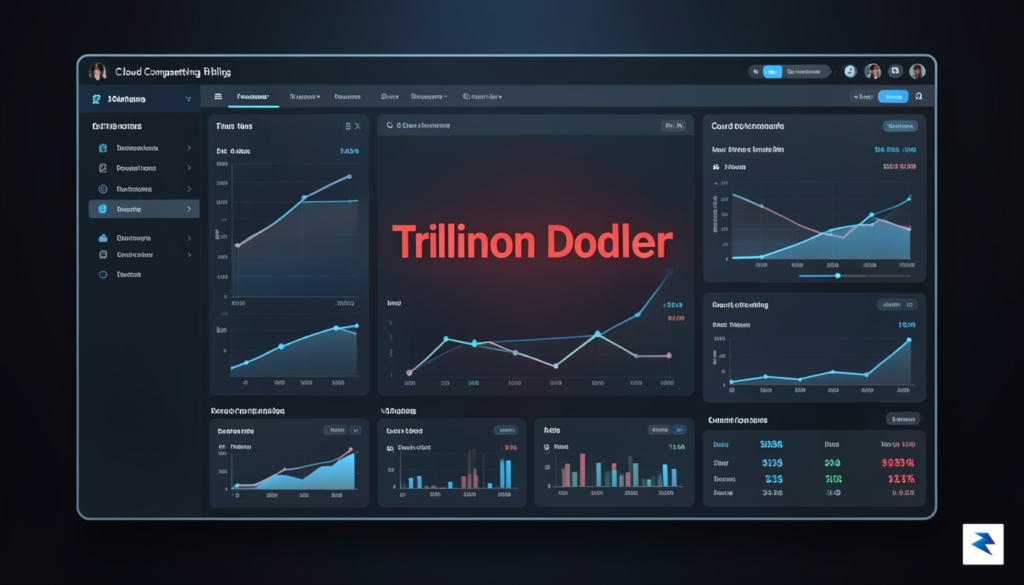
The incident began as a standard morning for thousands of cloud engineers and system administrators, only to turn into a surreal financial crisis when they refreshed their AWS billing dashboards. Instead of the typical monthly usage estimates, users were greeted with astronomical, multi-trillion-dollar figures that seemingly accumulated in a matter of hours. For a business owner, seeing a balance that exceeds the GDP of most nations is not merely a technical annoyance; it is an immediate, heart-stopping indicator of a potential security breach, a compromised API key, or a catastrophic runaway resource loop. The sheer scale of these numbers—often reaching into the quadrillions—was so absurd that it immediately signaled a system-wide anomaly rather than legitimate spending, yet the psychological impact of seeing such high-stakes financial data was instantaneous.

To understand the mechanics of this panic, it is crucial to distinguish between a front-end display error and a back-end database reality. In this specific case, the billing “glitch” was strictly confined to the user interface layer of the AWS Billing and Cost Management console. While the dashboard was rendering these nonsensical, inflated totals, the underlying billing records and the actual meters tracking resource consumption remained completely accurate and unaffected. The error occurred because the front-end application responsible for aggregating and displaying the data failed to process specific cost-allocation tags or usage metrics correctly, leading it to multiply or miscalculate the visual representation of the numbers. Consequently, the database remained a “single source of truth,” keeping the actual financial obligations of the users secure and unchanged, even as their browser windows suggested financial ruin.
The panic served as a stark reminder of how deeply modern enterprises have integrated automated cloud financial reporting into their daily operations. When the numbers on a screen stop making sense, the immediate assumption is that the infrastructure itself has gone rogue.
The public reaction on platforms like X (formerly Twitter) and Reddit was swift and chaotic. Within minutes, cloud forums were flooded with screenshots of “trillion-dollar” invoices, leading to a wave of collective confusion that quickly morphed into dark humor. Users began joking about needing to sell their companies or liquidate their assets just to pay a single day’s server costs, while others expressed genuine concern about whether their AWS accounts had been hijacked to mine cryptocurrency. This rapid proliferation of alarm highlights an important reality of the cloud era: businesses are now so dependent on real-time financial transparency that even a minor, localized interface bug can trigger widespread anxiety. The episode effectively demonstrated that, despite our transition to complex, abstract cloud services, the “bottom line” remains the most critical—and most sensitive—part of the user experience.

For cloud administrators and financial stakeholders, the appearance of astronomical, trillion-dollar figures within an AWS dashboard naturally triggers immediate concern regarding potential debt liability. However, it is essential to understand that these alarming numbers were strictly confined to the platform’s front-end display layer rather than the underlying accounting engines. AWS employs a rigorous architectural separation between the tools used for cost estimation and the transactional systems that actually process payments and generate official invoices. This decoupling ensures that even if a UI component experiences a rendering error or a data-parsing glitch, the core financial records remain untouched and functionally isolated from the display interface.

The “Display Layer” functions primarily as a reporting utility, pulling metadata and usage logs to provide customers with real-time estimates of their cloud spend. These tools are designed for agility and accessibility, allowing users to monitor their consumption trends, but they lack the authorization to alter, commit, or influence the actual ledger entries. In contrast, the accounting engine operates behind hardened security protocols, utilizing immutable database structures and multi-layered auditing processes to ensure every cent is accounted for with absolute precision. Because these two systems operate on entirely different architectural planes, a malfunction in the reporting dashboard is inherently prevented from propagating into the transactional database.
The integrity of your financial data relies on the architectural principle of separation of concerns, which ensures that a visualization glitch cannot trigger a change in the actual debt owed.
Furthermore, the incident was purely a read-only reporting anomaly. When a user logged in to see a massive, erroneous balance, they were essentially viewing a misinterpreted data point that had failed to pass through the typical validation logic of the accounting system. Because the bug did not interact with the payment gateways or the actual billing cycle triggers, no actual charges were ever calculated, processed, or sent to credit card processors or financial institutions. The system essentially “forgot” how to display the correct numbers, but it never “learned” how to create a phantom debt.
Ultimately, the security of AWS billing is rooted in strict transactional consistency, which serves as a fail-safe against the type of UI-layer volatility seen during this event. Even under the duress of a system-wide reporting error, the integrity of the underlying financial records remained preserved, ensuring that no customer was ever at risk of being held accountable for the erroneous, inflated figures. By maintaining a clear boundary between what users see on their screens and what the back-end ledger records, AWS ensures that cloud budget management remains a process of accurate accounting rather than a vulnerability to visual data errors.

At the heart of any sophisticated cloud management console lies a delicate architecture of microservices designed to synthesize vast, ever-changing datasets into actionable insights. When users view a cost dashboard, they aren’t looking at a static ledger; they are witnessing the culmination of thousands of API calls, asynchronous data aggregations, and real-time calculations. In high-scale environments like AWS, the front-end client must constantly poll backend services to translate raw, granular usage logs into human-readable currency. This process is inherently prone to friction, as minor discrepancies in data polling or minor outages in individual microservices can cause the visualization layer to attempt to fill in missing values with placeholder logic, which occasionally leads to catastrophic—yet entirely artificial—numerical displays.

The technical vulnerability often stems from how front-end components handle inconsistent data streams. When a browser-based dashboard requests cost metadata, it often combines data from disparate sources, including compute usage, storage throughput, and third-party marketplace services. If the variable mapping between these microservices is even slightly misaligned, or if an overflow occurs during the floating-point arithmetic required to aggregate millions of micro-transactions, the client-side code may interpret a null or incomplete value as a massive integer. This is rarely a reflection of an actual account balance, but rather a classic case of an “arithmetic panic,” where the UI component fails to gracefully handle an unexpected data structure and instead renders the raw, unformatted value stored in a memory register.
The fragility of these dashboards lies in the “just-in-time” nature of their compilation; because the data is too large to be cached permanently, the system must perform complex math on the fly, leaving zero margin for error in the transmission of data packets.
Managing multi-tenant data visualization at such a massive scale presents a unique challenge for engineers. In a multi-tenant environment, the system must strictly isolate the data belonging to one customer while simultaneously querying a global pool of telemetry. When the latency of these requests spikes, the dashboard’s state management library might trigger a retry mechanism that accidentally aggregates duplicate packets or miscalculates cumulative totals. These errors are exacerbated by the reliance on client-side rendering, where the browser itself becomes a potential point of failure. If the front-end logic isn’t equipped with robust validation checks to identify statistically impossible figures, the dashboard will faithfully—and quite alarmingly—display the corrupted data, proving that even the most advanced cloud infrastructure is susceptible to the simple, human-made logic errors of software development.

The recent visibility into AWS billing anomalies underscores a critical reality: relying solely on cloud provider dashboards is a dangerous gamble. While these native tools are excellent for basic monitoring, they often lack the granular, cross-platform visibility required for modern, complex architectures. To prevent “sticker shock” or, conversely, to identify genuine structural failures that might be masked by system glitches, IT leaders must move toward a proactive model of cloud cost governance. This shift requires integrating automated cost alerts that trigger not just on static monthly thresholds, but on velocity-based changes—meaning if your spend spikes unexpectedly over a two-hour window, your team should know immediately, rather than waiting for a monthly report.
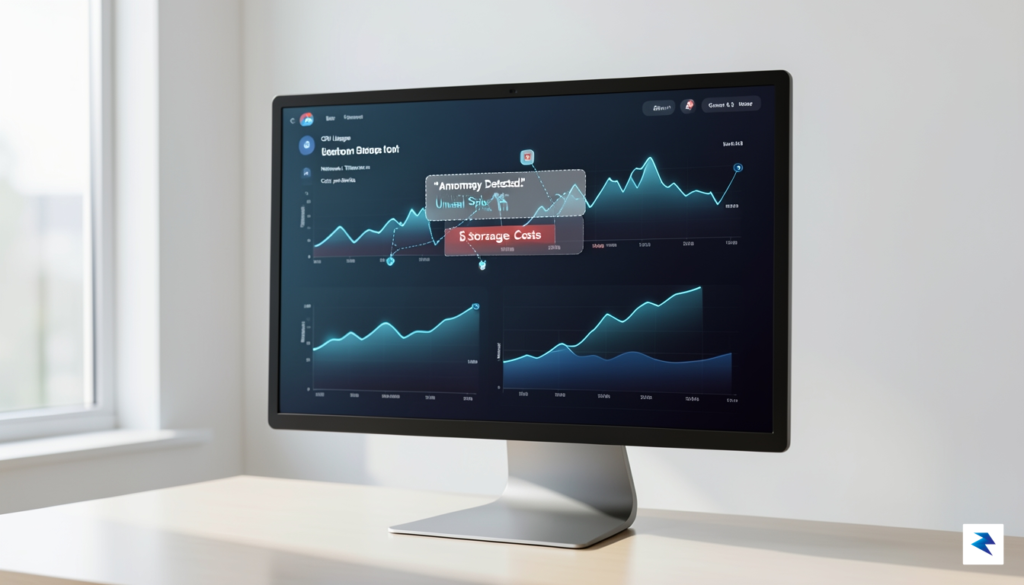
A fundamental pillar of this strategy is the rigorous reconciliation of real-time estimates against finalized monthly invoices. Many organizations view these estimates as mere suggestions, but they should be treated as dynamic audit logs. By implementing a process where finance and engineering teams cross-reference daily usage telemetry with the billing data provided by AWS, you create a feedback loop that identifies discrepancies before they reach the accounting department. This practice effectively bridges the gap between technical operations and financial stewardship, ensuring that any anomalous behavior—whether it stems from a system bug or a runaway script—is caught and rectified within a single billing cycle.
True cloud governance is not about limiting innovation; it is about providing the visibility necessary for engineers to innovate without the fear of unintended financial consequences.
For organizations managing multi-account environments, the complexity of tracking spend increases exponentially. It is essential to enforce a strict tagging taxonomy across every resource, from virtual machines to serverless functions. Without standardized metadata, identifying which business unit or specific application is responsible for a cost spike becomes a forensic nightmare. Furthermore, leveraging third-party FinOps platforms provides an essential layer of independent verification. These tools often utilize machine learning to establish a “normal” baseline for your specific workload patterns, allowing them to flag outliers that native provider tools might overlook. By adopting these layered strategies, organizations transition from a reactive posture to a sophisticated governance framework that prioritizes transparency, accountability, and operational resilience.

The “billion-dollar” billing anomaly serves as a definitive case study in the necessity of proactive incident response. For internal IT teams, the primary takeaway is that speed of detection is only half the battle; the speed and transparency of the subsequent response often determine the long-term impact on stakeholder trust. When a critical system error occurs, the instinctual reaction is often to retreat into technical triage, effectively silencing communication until a complete resolution is found. However, AWS demonstrated that the most effective strategy is to acknowledge the issue immediately, even if the root cause remains under investigation. By validating that a discrepancy exists, organizations can prevent a cascade of internal panic and stop customers from wasting valuable hours troubleshooting their own configurations for an error that is fundamentally out of their control.

Maintaining composure during a “critical” system error requires more than just technical expertise; it necessitates a pre-defined communication framework. IT departments should establish clear, multi-channel protocols that dictate who speaks to stakeholders and how frequently updates are disseminated during an ongoing crisis. Ambiguity is the enemy of stability. When an organization provides regular, iterative updates—even those that simply confirm “we are still investigating”—it projects a sense of control and competence. This transparency minimizes the reputational damage that inevitably follows high-profile glitches and allows external stakeholders to adjust their own operational workflows accordingly, rather than flying blind in the face of conflicting data.
True resilience in cloud architecture isn’t about preventing every possible failure, but rather about building the communication and recovery infrastructure necessary to handle those failures with grace and accountability.
Ultimately, the lesson for the broader IT community is to adopt a “trust but verify” approach to infrastructure management. While cloud providers offer unparalleled scalability and service, they are not immune to the complexities of distributed systems. Teams should leverage automated billing alerts, independent auditing tools, and anomaly detection services that act as a secondary layer of validation. By treating cloud output as data that requires verification rather than an infallible source of truth, organizations can catch anomalies—whether they be billing spikes or performance lags—before they escalate into existential crises. Building this level of skepticism into the operational culture ensures that your team remains the final authority on the health and accuracy of your digital ecosystem.
You must be logged in to post a comment.