Moonshot AI’s Kimi K3 Outperforms Claude: A New Era for Coding AI
The Rise of Kimi K3: A New Benchmark for Coding AI The landscape of large language models (LLMs) is in a state of perpetual, rapid evolution,…

For years, the marvel of Large Language Models (LLMs) lay in their uncanny ability to predict the next word in a sequence, a statistical feat performed with astonishing accuracy. These early iterations, built upon vast datasets, excelled at tasks like generating coherent text, translating languages, and summarizing information, primarily by identifying the most probable continuation of any given input. The underlying mechanism was largely an autoregressive one, where each generated token became part of the context for the prediction of the subsequent token, creating a seamless, albeit often superficial, flow of language. This predictive power, while undeniably impressive, often masked a fundamental limitation: the models weren’t truly ‘thinking’ in the human sense; they were sophisticated pattern-matchers.
However, the landscape of AI is undergoing a profound transformation. We are now witnessing a pivotal shift from mere probabilistic prediction to an era where Large Language Models are expected to exhibit genuine reasoning capabilities. This paradigm change introduces the radical idea of ‘thinking before speaking’ – or more accurately, engaging in an internal, multi-step thought process before generating a final output. It moves beyond simply guessing the most statistically likely response, instead aiming for a logically sound, contextually appropriate, and deeply reasoned conclusion. This evolution signifies a crucial leap towards AI that doesn’t just parrot patterns but actively constructs understanding.

The traditional transformer architecture

In the landscape of modern artificial intelligence, the assumption that more computation always equates to a better product is a costly misconception. At its core, controlling reasoning effort is about navigating the delicate equilibrium between inference-time compute—the resources a model consumes while actively “thinking”—and the utility of the output. When we scale up reasoning, we are essentially demanding that the model explore a wider search space, evaluate more potential paths, and perform deeper internal verification before committing to an answer. While this is indispensable for tasks requiring logical rigor, it introduces a non-linear increase in latency and financial expenditure that can quickly become unsustainable for high-frequency applications.
Consider the stark difference between a simple intent-classification task and a high-stakes architectural coding challenge. For a straightforward query, such as summarizing a short email or routing a customer support ticket, the marginal gains of deep reasoning are effectively zero; the model has already reached its peak accuracy threshold with minimal processing. In these instances, forcing the system to “reason” further creates a performance bottleneck that degrades the user experience through unnecessary delays. Conversely, when the task involves multi-step mathematical proofs, complex debugging of legacy software, or nuanced strategic planning, the extra compute acts as a vital safety buffer. In these scenarios, the additional cycles allow the model to catch errors, simulate outcomes, and refine its internal logic, transforming a potentially hallucinatory result into a reliable, high-quality solution.

The fundamental challenge for developers is not simply maximizing performance, but optimizing for the specific complexity of the task at hand. Over-provisioning intelligence is as much an architectural failure as under-provisioning it.
To manage these levers effectively, businesses must adopt a tiered approach to inference. By dynamically adjusting the reasoning effort based on the detected difficulty of the input, developers can ensure that simple requests remain lightning-fast and cost-effective, while difficult prompts receive the heavy-duty processing power they require. This selective application of compute—often referred to as adaptive reasoning—prevents the “one-size-fits-all” trap that plagues many deployments. Ultimately, the goal is to treat compute as a precious commodity: allocating it generously where it provides meaningful value and conserving it where brevity and speed are the true marks of intelligence.
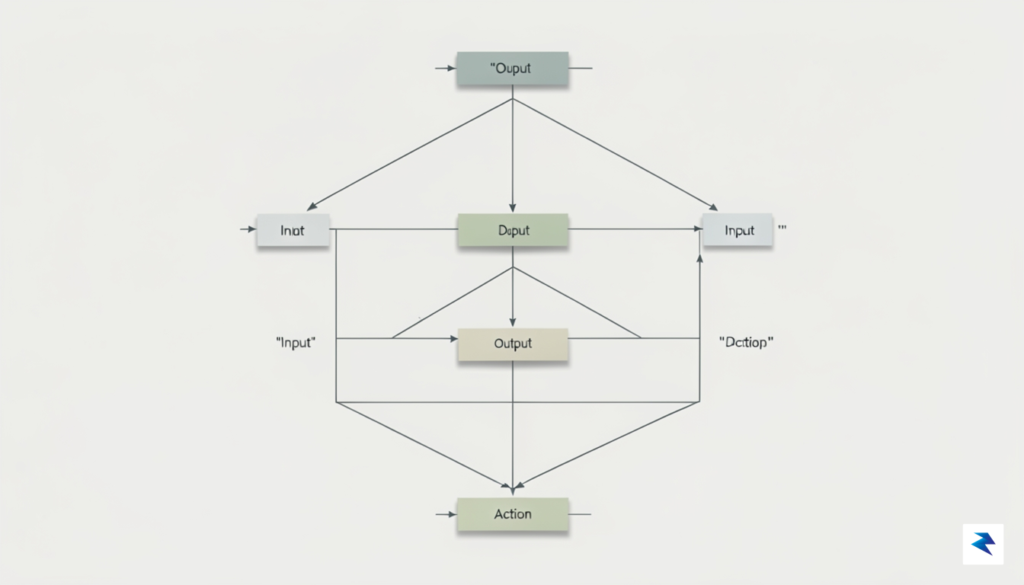
Modern large language models are evolving beyond fixed, linear processing patterns toward more flexible, adaptive systems that mimic human deliberation. At the core of this transition is the shift from static computation—where every query consumes the same amount of resources—to dynamic reasoning, where the model adjusts its effort based on the complexity of the task at hand. By integrating mechanisms that allow a model to “pause and reflect,” researchers are enabling systems to allocate more computational cycles to difficult logical puzzles while breezing through simple, routine queries.
One of the most prominent ways models manage reasoning depth is through Chain-of-Thought (CoT) token generation. In this paradigm, the model is prompted or trained to produce intermediate reasoning steps before arriving at a final answer. By explicitly writing out its “internal monologue,” the model effectively expands its scratchpad, using the generated text as an external memory to break down multi-step problems. This process transforms a single-pass inference into a sequential, iterative workflow, allowing the model to correct its own errors or refine its logic as it proceeds through the generated tokens.
Beyond simple prompting, process-based reinforcement learning serves as a critical supervisor for this internal deliberation. Instead of merely rewarding the final, correct answer, this method provides feedback on the quality of the intermediate steps taken during the reasoning process. By training the model to value logical consistency and step-by-step accuracy, developers can encourage the system to spend more time on paths that lead to robust conclusions. This creates a computational feedback loop where the model learns to identify when it needs to “slow down” and explore more detailed explanations rather than jumping to a potentially flawed, hasty conclusion.

To optimize for both speed and intelligence, researchers have introduced dynamic early-exit strategies. In these architectures, the model is equipped with multiple “exit points” distributed throughout its layers. During inference, the model evaluates its own confidence at each stage; if a particular query is simple enough to be resolved with low-level patterns, the system can “exit” early, bypassing the deeper, more expensive layers of the neural network. This mechanism functions much like a human deciding to stop reading a document once the core message is understood, thereby saving significant energy and time.
The true power of adaptive computation lies in the model’s ability to treat reasoning not as a binary state, but as a spectrum of effort that scales proportionally with the difficulty of the input.
Ultimately, these mechanisms represent a move toward “system two” thinking in machine intelligence. By combining early-exit efficiency with the expansive logic of iterative CoT generation, models can effectively self-regulate their cognitive load. As these systems become more sophisticated, the ability to discern when to exert maximum effort and when to rely on heuristics will be the defining factor in creating AI that is not only powerful but also economically and environmentally sustainable.

Achieving the right balance between computational cost and output accuracy requires a deliberate approach to how models process information. Rather than relying on default settings, developers can actively modulate the “reasoning budget” of a model through strategic prompt engineering. The most effective starting point is the classic “Chain of Thought” (CoT) prompting technique, which forces the model to decompose complex queries into a sequence of logical steps. By explicitly instructing the system to “think step-by-step” or “outline your logic before providing a final answer,” you encourage the model to allocate more tokens to the reasoning process, which often improves performance on mathematically rigorous or abstract tasks.

Beyond simple prompting, developers should leverage system-level parameters that directly influence generation behavior. Parameters such as max_completion_tokens and temperature act as essential guardrails for controlling the depth of a model’s output. For instance, setting a tighter limit on the number of tokens allows you to truncate overly verbose explanations, effectively capping the computational “thinking time” in production environments. Simultaneously, keeping the temperature low—typically between 0.0 and 0.2—ensures that the model remains focused and deterministic, preventing it from wandering into irrelevant reasoning paths that consume resources without adding value.
To optimize for both cost and intelligence, treat your reasoning budget as a finite resource: reserve high-latency, heavy-reasoning chains for complex decision-making tasks, while using lightweight, direct responses for routine retrieval queries.
Architectural constraints also play a significant role in managing reasoning effort, particularly when integrating models into automated workflows. A modular approach—often referred to as an “agentic pipeline”—allows you to route queries based on their inherent difficulty. By using a fast, low-cost model to classify incoming tasks, you can determine if a query requires deep reasoning or a simple lookup. If the classification indicates a complex problem, the system can dynamically escalate the request to a more capable model with a higher reasoning budget. This tiered architecture ensures that you are not paying for premium inference power on trivial requests, thereby maintaining a healthy balance between system responsiveness and operational expenditure.
Finally, the effectiveness of these strategies must be validated through rigorous benchmarking. You should establish a “golden dataset” of queries that represent your production workload and measure how variations in prompt structure and parameter settings affect both accuracy and latency. Tracking metrics like “time-to-first-token” alongside “reasoning token count” provides a clear picture of the trade-offs being made. By continuously iterating based on these empirical results, you can fine-tune your configuration to ensure that every request receives exactly the amount of reasoning effort required—no more, and certainly no less.

The trajectory of artificial intelligence is currently shifting from a fixation on raw, monolithic scale toward a more nuanced appreciation for intelligent resource allocation. For years, the industry operated under the assumption that bigger was inherently better—that simply increasing parameter counts and training data would inevitably solve the challenges of complex reasoning. However, we are now entering an era where efficiency is the primary bottleneck for deployment. As we look toward the next generation of autonomous agents, the ability to dynamically scale reasoning effort will become the cornerstone of sustainable AI development. This evolution suggests a future where models do not simply “guess” with a fixed computational budget, but instead actively decide how much cognitive “work” is required to solve a specific problem.

We are rapidly moving toward a paradigm defined by smaller, highly specialized models that possess the architectural flexibility to adapt their reasoning depth on the fly. Rather than relying on a single, massive model to handle every query, future systems will likely employ a tiered approach: simple tasks will be routed to lightweight, lightning-fast models, while complex, multi-step problems will trigger deeper, more intensive reasoning cycles. This “just-in-time” intelligence will drastically reduce the carbon footprint and financial cost associated with large-scale inference. By tailoring the computational effort to the specific difficulty of the prompt, developers can create systems that are not only leaner and faster but also significantly more reliable, as they minimize the “hallucination risk” associated with rushing through difficult logical tasks.
The true frontier of AI isn’t just building a smarter model; it is building a system that knows exactly when to pause, reflect, and deliberate before providing an answer.
In the long term, we should expect the commoditization of high-effort reasoning tools, moving them from expensive enterprise luxuries to standard utility layers. As techniques for controlling reasoning effort become more standardized—likely through advancements in reinforcement learning and dynamic inference-time compute—these capabilities will be integrated into the base layers of our digital infrastructure. This shift will democratize access to high-fidelity reasoning, allowing even modest hardware to perform tasks that currently require massive server clusters. Ultimately, this move toward efficient scalability will bridge the gap between AI as a novelty and AI as a foundational, autonomous agent capable of solving the world’s most intricate problems with precision and economic viability.
You must be logged in to post a comment.