
The FCC’s New Crackdown: Why Your DJI Gadgets Might Face Retroactive Bans
Understanding the FCC's New Retroactive Enforcement Powers For decades, the Federal Communications Commission (FCC) equipment…


The reported valuation of Colossal Biosciences, sitting in the staggering range of $20 billion to $30 billion, represents a profound departure from the traditional metrics governing the biotechnology sector. For decades, venture capital in this space has been tethered to the predictable, albeit lengthy, cycle of drug discovery, clinical trials, and FDA approval processes. By contrast, Colossal’s push into the realm of de-extinction—the genetic restoration of lost species—signals an appetite for high-stakes, “moonshot” innovation that seeks to rewrite the biological playbook rather than simply treat existing human pathologies. This shift suggests that institutional investors are increasingly viewing genetic engineering not merely as a pharmaceutical tool, but as a robust platform for foundational intellectual property that could redefine how we interact with the natural world.
This massive influx of capital reflects a growing trend in which long-term institutional investors, including sovereign wealth funds and ultra-high-net-worth family offices, are pivoting away from incremental biotech advancements in favor of ambitious, transformative research. While drug development is often plagued by high failure rates in late-stage trials, the value proposition of genetic restoration lies in the immense utility of the underlying technologies. Investors are betting that the tools Colossal is refining—such as advanced CRISPR gene editing, synthetic biology, and sophisticated cold-chain genomic storage—will have immediate, lucrative applications in conservation, agriculture, and human healthcare long before a woolly mammoth ever sets foot in the Arctic tundra.
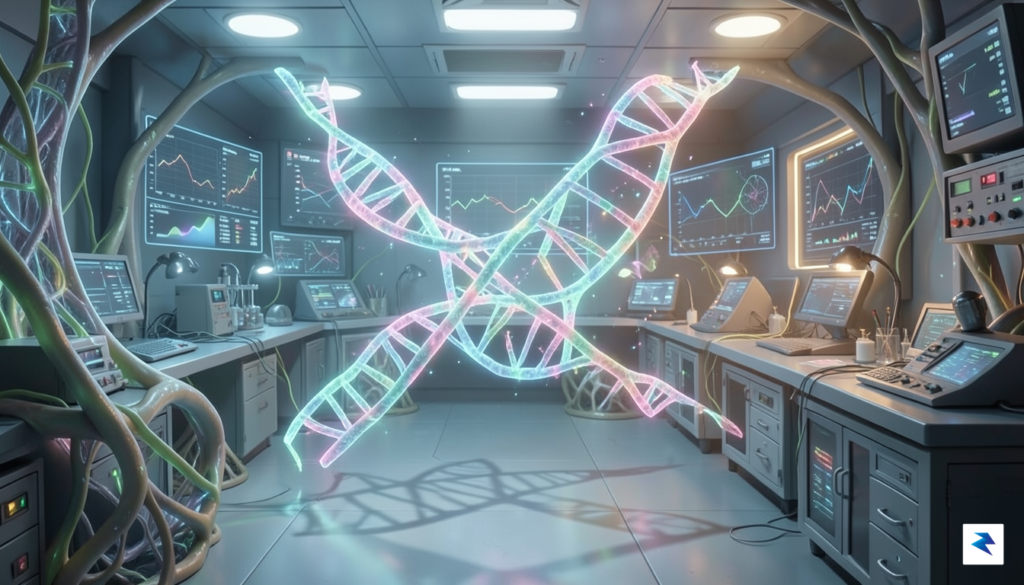
The true value of de-extinction lies not in the resurrection of the past, but in the creation of a proprietary genetic toolkit capable of solving modern ecological and biological crises.
Furthermore, the market’s confidence in this astronomical valuation is bolstered by the company’s dual-track business model. By effectively commercializing the “byproducts” of their research, Colossal is positioning itself as a leader in the broader synthetic biology infrastructure market. This strategy transforms the narrative from a speculative scientific curiosity into a concrete industrial play; stakeholders are essentially investing in the future of the bio-economy. As the cost of DNA synthesis continues to plummet and computing power becomes increasingly integrated with genomic data, Colossal’s ability to turn long-term genetic restoration goals into near-term, patentable biotech breakthroughs provides a compelling hedge against the volatility typically associated with frontier science. Ultimately, this capital round underscores a new era where the perceived impossibility of a project is no longer a deterrent, but a primary driver of investment appeal.

To understand how a company focused on de-extinction can command a valuation rivaling established tech giants, one must look past the headline-grabbing spectacle of the woolly mammoth. While the mission to bring back lost species captures the public imagination, institutional investors are betting on the underlying foundational technology that Colossal Biosciences has meticulously built. The company has moved beyond basic research, scaling a proprietary synthetic biology infrastructure that functions as a platform rather than a single-product venture. By standardizing the process of genome editing and multiplexing—the ability to edit multiple genes simultaneously—Colossal is effectively creating a blueprint for the future of genetic engineering that can be applied to nearly any organism on the planet.
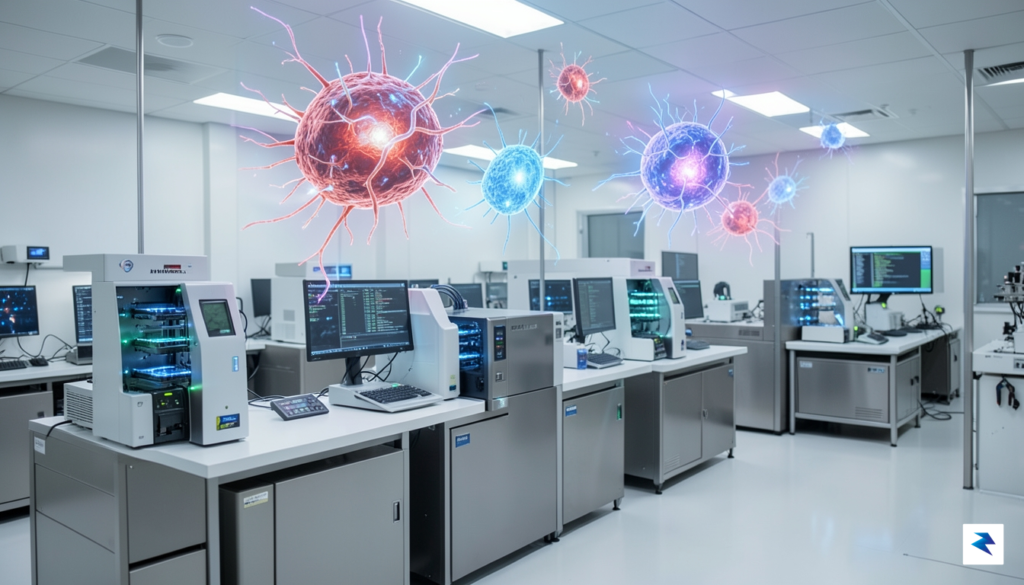
The justification for this massive jump in valuation lies in the company’s dual-track business model, which balances long-term scientific moonshots with immediate, high-value commercial applications. On one hand, the de-extinction efforts—such as the revival of the thylacine and the mammoth—serve as the ultimate stress test for their genetic toolset. However, the true economic engine resides in the secondary track: the creation of commercializable spin-off technologies. These tools are being engineered to disrupt industries as diverse as human healthcare, sustainable agriculture, and ecological restoration. By developing proprietary CRISPR applications and advanced cell-reprogramming techniques, Colossal is positioning itself as a platform provider that other biotech firms will eventually rely upon to solve complex genetic challenges.
The valuation reflects a shift in market perception: Colossal is no longer being categorized as a conservation project, but as a core infrastructure company for the next century of biological manufacturing.
Investors are viewing the current $20 billion to $30 billion valuation range through the lens of long-term scalability. In the startup world, reaching such a milestone is exceptionally rare, yet it signals a fundamental belief that the company’s genetic editing suite will become a standard utility in the bio-economy. As Colossal continues to refine its ability to sequence, edit, and synthesize DNA at record speeds, they are capturing the value of intellectual property that could redefine how we treat hereditary diseases or how we cultivate crops to withstand a changing climate. Ultimately, the capital interest suggests that the market views these genetic editing capabilities not merely as a way to bring back the past, but as a transformative toolkit for building a more resilient and biologically advanced future.
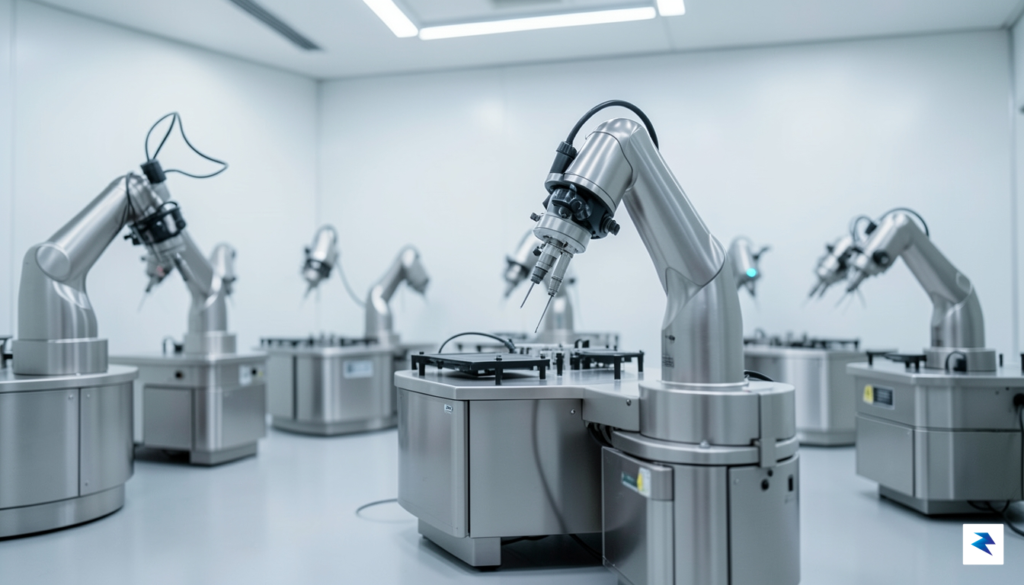
While the prospect of a woolly mammoth roaming the Arctic tundra captures the public imagination, the true engine driving Colossal Biosciences’ staggering valuation lies in the rigorous engineering of its genetic toolkit. At the heart of this endeavor is the development of advanced multiplex CRISPR editing, a technology that allows scientists to perform dozens of precise genetic modifications simultaneously. This capability is lightyears ahead of traditional, single-gene editing methods, enabling the team to synthesize complex traits—such as cold tolerance or hemoglobin adaptation—into a single genome. By mastering the ability to rewrite the code of life at scale, the company is not merely chasing extinct species; it is creating a proprietary platform for synthetic biology that could revolutionize how we approach species conservation and ecological restoration.
Beyond gene editing, the company is pushing the boundaries of developmental biology through its work on artificial womb technology, or ex-utero gestation. This research addresses one of the most significant hurdles in de-extinction: the lack of surrogate mothers for species that have been lost to history. By developing a sophisticated, scalable environment that mimics the gestational conditions of a mammal, Colossal is pioneering a breakthrough that has profound implications for modern medicine. This technology could eventually offer life-saving support for premature human infants or provide a controlled environment for testing pharmaceutical therapies without the need for animal models, creating a high-value intellectual property portfolio that extends far beyond the realm of mammoths.

The transition from academic research to commercial viability is anchored by a series of precise genome reconstruction milestones. By utilizing advanced computational models to “fill in the blanks” of fragmented ancient DNA, Colossal is setting a new standard for genomic accuracy and bioinformatics. These milestones serve as essential proof-of-concept demonstrations that maintain investor confidence, proving that the company’s R&D efforts are yielding tangible, reproducible results. Each step—from the initial sequencing of a specimen to the successful expression of cold-adaptation genes in living cells—functions as a validation of their underlying platform.
The true value of Colossal Biosciences is not found in the final creature, but in the proprietary biological software and hardware developed to bring that creature into existence.
Ultimately, these breakthroughs are being packaged into “spin-off” technologies that carry significant market potential in the pharmaceutical and agricultural sectors. For instance, the same tools developed to increase the heat resistance of an elephant could be repurposed to create crops capable of thriving in a warming climate, or to engineer specialized cells for human regenerative medicine. By diversifying its applications, Colossal is hedging its bets, ensuring that its technological infrastructure remains indispensable to global industries long before the first mammoth is born. This strategic pivot from pure science to versatile biotechnology is what transforms a speculative de-extinction project into a powerhouse of sustainable, multi-billion dollar innovation.

The prospect of resurrection biology often triggers a visceral reaction, balancing the awe of science fiction against the sober reality of ecological stewardship. Critics frequently argue that pouring billions into de-extinction is a vanity project that diverts essential capital away from the urgent, ground-level needs of currently endangered species. There is an inherent fear that our ability to recreate the past might foster a dangerous complacency regarding the present, suggesting that extinction is no longer a permanent state, but rather a temporary glitch that technology can patch. This ethical friction creates a complex landscape for companies like Colossal Biosciences, which must navigate the scrutiny of conservationists who worry that introducing genetically engineered proxies could fundamentally disrupt fragile, modern ecosystems that have evolved in the absence of their ancient counterparts.

However, the economic argument for these massive valuations rests on the premise that de-extinction is not merely about curiosity, but about active, large-scale ecosystem engineering. By reintroducing “proxy” species—animals genetically modified to fill the functional niches of those lost—proponents argue that we can jumpstart the recovery of natural carbon sinks. For instance, the reintroduction of megafauna to the arctic could theoretically alter soil compaction and vegetation patterns, potentially slowing permafrost thaw and preserving massive stores of trapped carbon. In this framework, the technology is framed as a long-term hedge against climate collapse, turning biodiversity restoration into a quantifiable, high-stakes investment in planetary health. The goal shifts from simple preservation to the active, systemic maintenance of the biosphere.
The true value of synthetic biology in conservation lies in its ability to provide high-leverage tools for environmental repair that traditional policy and manual intervention simply cannot achieve at scale.
Ultimately, Colossal Biosciences is positioning itself at the nexus of a new “restoration economy,” where technological innovation serves as a catalyst for environmental impact. By framing their mission as a necessary evolution of conservation science, they seek to attract the massive venture capital required to solve biological puzzles that were previously thought to be unsolvable. This strategy suggests that if we can create the tools to bring back species, we simultaneously create the tools to bolster the resilience of existing ones. Whether this investment will yield the desired ecological dividends remains to be seen, but the sheer scale of the ambition signals a paradigm shift: we are moving toward a future where our economic systems are increasingly integrated with the biological ones we have spent centuries dismantling.

The potential valuation of Colossal Biosciences, reaching into the tens of billions, serves as a monumental turning point for the synthetic biology sector. For years, the industry has operated within the shadow of traditional pharmaceutical development, often struggling to prove that biological engineering could deliver both radical scientific breakthroughs and outsized financial returns. By commanding such a massive influx of capital, Colossal is effectively establishing a new benchmark for what a deep-tech company can achieve. This shift signals to venture capitalists and institutional investors that the era of “moonshot” biology—projects that were once dismissed as science fiction—is now a legitimate and investable asset class that can command premium valuations similar to those of high-growth software enterprises.
This “Colossal Effect” is poised to ripple across the entire biotech landscape, fundamentally altering how startups in CRISPR, gene therapy, and synthetic biology approach their own fundraising journeys. We are likely to see an increased appetite for high-risk, high-reward platforms that leverage gene editing to address environmental and ecological challenges rather than just human health. As more capital flows into these ambitious projects, it creates a rising tide that lifts the entire sector, encouraging founders to think bigger and operate on more aggressive timelines. However, this level of capital intensity also brings a heightened expectation for transparency and tangible milestones, as investors will be less forgiving of companies that promise revolution but fail to deliver scalable, replicable results.

The true measure of this investment will not be found in its valuation, but in its ability to transform biological engineering from a speculative research pursuit into a foundational pillar of the global economy.
Despite the excitement, a balanced outlook remains essential. The risks associated with such capital-intensive experimental science are significant; should a company of this scale fail to meet its ambitious targets, it could trigger a cooling effect on future investment across the synthetic biology ecosystem. High valuations demand high performance, and the pressure to demonstrate progress in complex, unmapped territory—such as de-extinction or large-scale genetic restoration—is immense. If Colossal succeeds, it will validate a new model for biotech innovation that prioritizes long-term ecological impact alongside commercial viability. Conversely, any stumble could serve as a cautionary tale about the dangers of over-leveraging speculative science before the underlying technology has fully matured. Ultimately, the industry is now in a “show me” phase, where the massive influx of cash must be matched by a corresponding leap in scientific achievement to prove that synthetic biology is ready to reshape the natural world.
You must be logged in to post a comment.