The 50% Tariff on Canadian Goods: What You Need to Know
The 50% Tariff Proposal: Understanding the Scope The proposal to levy a 50% tariff on a broad spectrum of Canadian imports marks a departure…

For centuries, the global movement of cultural artifacts has resulted in a profound state of displacement, leaving countless objects sequestered within the walls of Western museums, far removed from the communities and landscapes that birthed them. When an artifact is separated from its context—its shrine, its tomb, or its cultural center—it often becomes a static object, stripped of the historical narrative that gives it meaning. Researchers and the public alike currently face the daunting challenge of navigating a fractured digital landscape; provenance data is trapped in siloed, proprietary databases that rarely communicate with one another. This fragmentation makes it nearly impossible to trace the journey of a single item, let alone understand the broader systemic patterns of displacement that have defined global heritage collections.
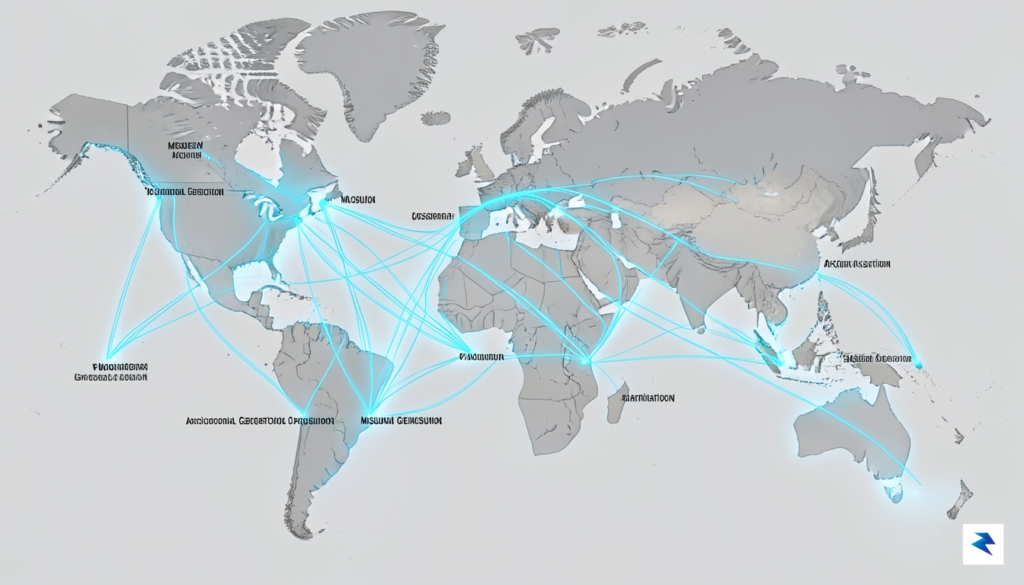
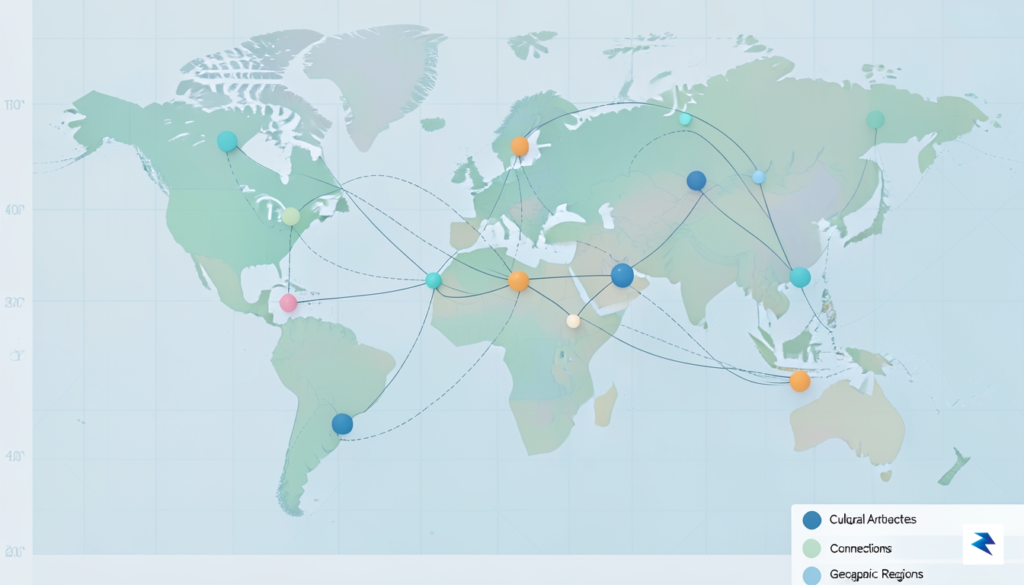
Ex Situ emerges as a vital intervention, functioning as a connective tissue for these disparate archives. By creating a unified, open-source spatial index, the project bridges the gap between cold, bureaucratic museum records and the living, breathing geography of the objects they hold. Rather than merely cataloging items, Ex Situ visualizes the spatial relationships between a collection and its point of origin, effectively mapping the “geographic migration” of heritage. This approach transforms the way we perceive museum holdings, shifting the focus from the institution that currently possesses the item to the rich, historical environment where the artifact truly belongs.
Ex Situ does not just catalog where an object is; it insists on identifying where it came from, effectively re-anchoring displaced heritage within its original, intended context.
The scope of this project is intentionally ambitious, focusing on a diverse array of collections that have been most significantly impacted by historical shifts in power and trade. By prioritizing Islamic, Asian, African, and ethnological collections, Ex Situ addresses a critical need to centralize data that is often overlooked or poorly indexed in traditional Western archiving systems. As the project continues to grow, it serves as a digital map that invites users to explore these complex spatial histories with newfound clarity. By democratizing access to this information, Ex Situ empowers scholars, activists, and source communities to reclaim the narratives of these artifacts, ensuring that their history is no longer defined solely by the distance between their origin and their current shelf.
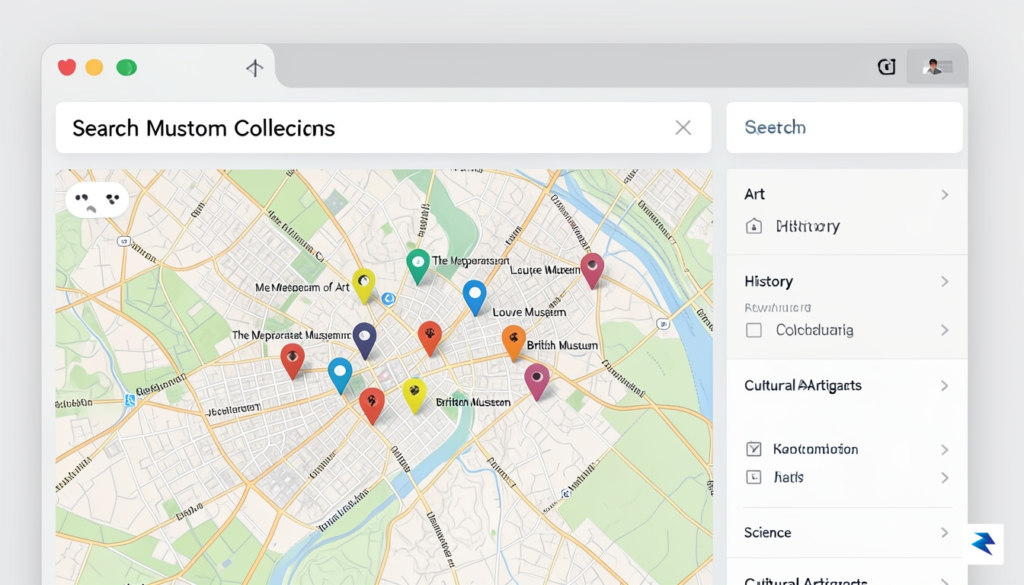
At its core, Ex Situ flips the traditional museum database model on its head by prioritizing the origin site over the current holding institution. While standard institutional databases are designed to help curators manage their specific inventories, they often leave researchers struggling to track the complex, multi-century journeys of cultural objects. By placing the geographic and cultural point of origin at the center of the user experience, Ex Situ allows scholars and the general public to visualize the trajectory of displacement. This origin-first search interface creates a more intuitive way to navigate history, transforming abstract archival data into a tangible map of global movement.
The platform currently manages an index of over 100,000 artifacts, aggregating data from eight major international collections, including heavyweights like the Metropolitan Museum of Art and the Victoria and Albert Museum. Managing a dataset of this magnitude requires more than just a central repository; it demands a robust, scalable architecture that can cross-reference disparate metadata standards. By unifying these diverse records, the platform effectively dismantles the digital walls that have historically kept provenance information trapped within isolated institutional silos. Researchers no longer need to conduct fragmented searches across a dozen different websites; instead, they can trace an artifact’s path from its creation to its current location through a single, cohesive interface.
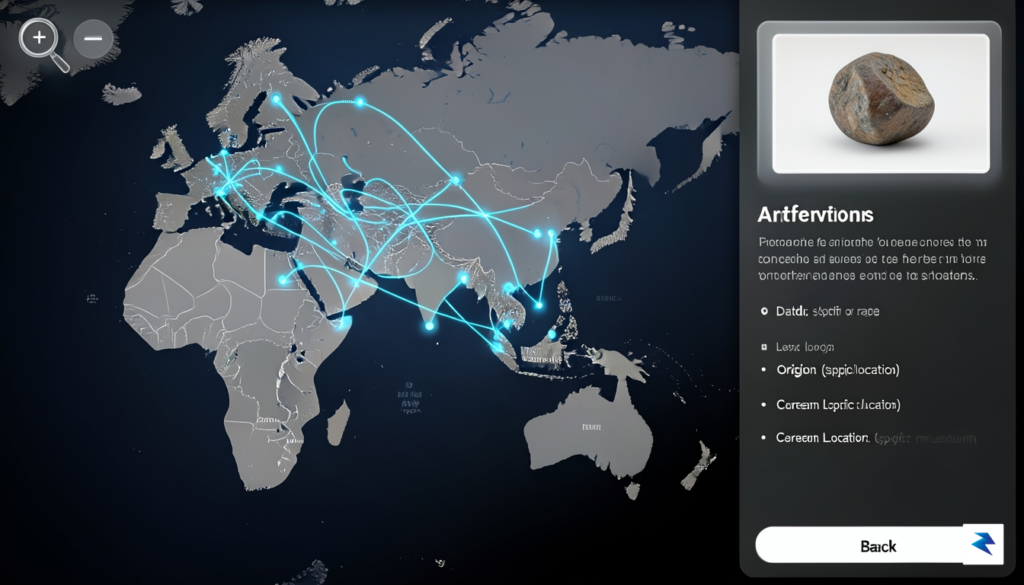
By centralizing fragmented provenance data, Ex Situ transforms the way we perceive the global distribution of cultural heritage, turning static records into a dynamic, searchable map of history.
The significance of this open-source approach extends beyond simple convenience; it serves as a vital bridge for researchers who are attempting to reconstruct the histories of displaced items. Because institutional records are often inconsistent, fragmented, or difficult to query, the task of connecting the dots has traditionally been an arduous, manual process. Ex Situ automates this synthesis, providing a clear, visual representation of how items left their original contexts and ended up in current collections. This transparency is essential for fostering ethical discourse regarding repatriation, cultural heritage, and the long-term stewardship of global treasures.
Furthermore, the technical implementation of the platform ensures that this vast collection remains accessible and performant. By leveraging efficient spatial indexing, the system can handle complex queries across 100,000+ entries without sacrificing speed or clarity. As the project continues to scale and incorporate data from additional institutions, it promises to become an indispensable tool for historians, archaeologists, and advocates alike. By democratizing access to this sensitive information, Ex Situ empowers a broader audience to engage with the complex realities of how cultural identity has been shaped, moved, and preserved across borders.

At its core, Ex Situ is engineered as a lightweight, performant bridge rather than a centralized repository. The platform is built on a modern, robust open-source stack designed to handle complex geospatial data with precision. On the frontend, we utilize Next.js to deliver a responsive, fast-loading interface, while Deck.gl provides the heavy lifting required for high-performance data visualization. This combination allows users to interact with vast datasets of global artifacts without experiencing the latency typically associated with map-heavy applications. The backend is powered by Strapi, a flexible headless CMS that manages the metadata layer, while a series of automated Python ETL pipelines work continuously to ingest, normalize, and extract data from the disparate APIs of museums and archival institutions worldwide.

The philosophy driving this architecture is rooted in the principle of “indexer, not hoster.” By design, Ex Situ does not store high-resolution images, proprietary documentation, or sensitive provenance files on its own servers. Instead, the platform functions as a decentralized index, maintaining live links that point directly back to the source institutions. This approach is critical for preserving data sovereignty; it ensures that the original custodians of these artifacts—often the communities from which they were displaced—retain full control over how their cultural heritage is represented and accessed. By avoiding the duplication of assets, we minimize the risk of “data rot” and ensure that any updates, corrections, or deaccessioning events performed at the source level are immediately reflected in our map.
The strength of the indexer model lies in its humility: it acknowledges that the most accurate information about an object resides with the institution that stewards it, not with the platform that maps it.
This decentralized methodology also solves a significant ethical and logistical hurdle in the cultural heritage sector. When a third-party platform hosts copies of sensitive artifacts, it often creates a fragmented digital record that can drift away from the official institutional narrative. Our stack mitigates this by acting as a dynamic window into those official records. When a user clicks on an artifact within our interface, they are not viewing a static cached version; they are engaging with the most current data provided by the source. This architecture not only preserves the integrity of the information but also fosters a more sustainable digital ecosystem where institutional expertise remains the primary authority, allowing us to focus our resources on the visualization and discovery layers that make these displaced histories visible and accessible to the public.
For centuries, the classification systems used by major museums and cultural institutions have functioned as a form of “data colonialism.” Traditional taxonomies often rely on rigid, Western-centric hierarchies that categorize artifacts based on acquisition dates, donor names, or colonial-era geographic designations that frequently obscure the object’s true cultural history. By imposing a top-down structure, these systems force diverse, complex objects into narrow metadata buckets, often erasing the original context, creator intent, and the circumstances under which the item was removed from its home. This structural bias doesn’t just mislabel items; it actively hinders provenance research by burying the most critical information beneath layers of administrative convenience.
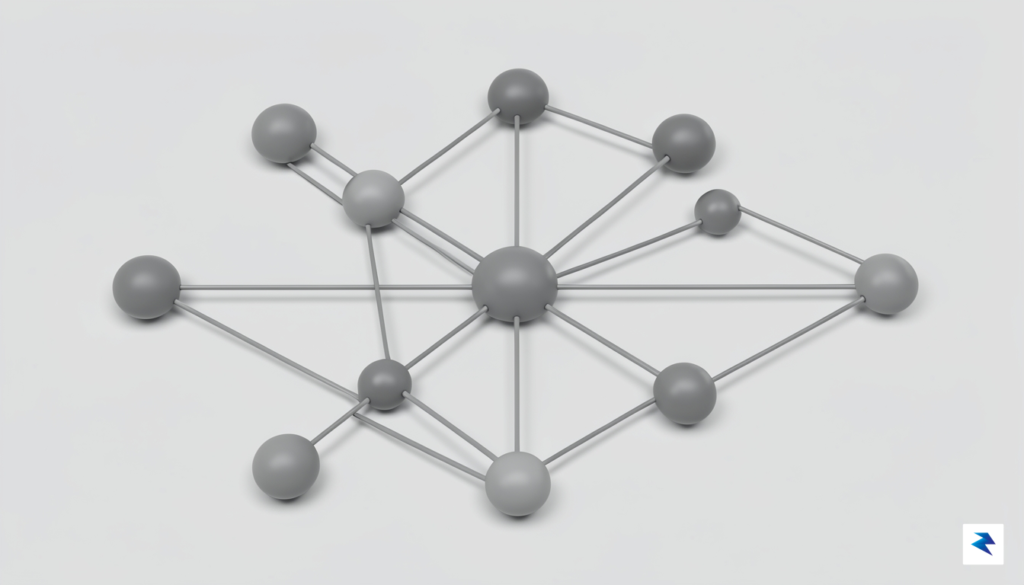
Ex Situ breaks away from this legacy by adopting a deliberately flat data model. Instead of forcing objects into a pre-existing, prescriptive hierarchy, this framework treats every artifact as an independent node linked directly to its source institution. By refusing to categorize artifacts through a centralized, biased lens, the project places the agency of description back where it belongs: with the communities and institutions that hold the most intimate knowledge of the object’s history. This neutrality is not merely a technical choice; it is a fundamental shift in how we handle cultural records. A flat model ensures that no metadata schema is imposed onto an object, allowing the data to remain as fluid and multifaceted as the artifact itself.
The power of an origin-first, flat data structure lies in its refusal to sanitize history. By keeping the records tethered to their primary institutional sources without forcing them into a universal classification, we preserve the messy, often painful, and essential truths of provenance.
This design choice has profound implications for the ethical mandate of digital archives. When data is siloed within hierarchical museum databases, it becomes difficult for researchers—and the original source communities—to trace the lineage of displaced items across borders. By maintaining a flat, open-source framework, the project ensures that metadata remains linked to its primary source, creating a transparent network of information that is easier to verify and challenge. This decentralized approach creates a more equitable landscape for provenance research, as it prevents the consolidation of “official” narratives by large, powerful institutions. Ultimately, by decoupling the data from outdated taxonomic constraints, we create a more honest digital map of cultural heritage, one that acknowledges the displacement of artifacts rather than masking it through bureaucratic categorization.


Transitioning from a focused MA thesis to a public-facing, collaborative infrastructure represents a significant evolution for Ex Situ. While the initial development was driven by the specific research needs of a single scholar, the project’s future viability rests on its capacity to evolve into a collective repository. Scaling a solo-developed project introduces complex technical hurdles, particularly regarding the optimization of data pipelines that handle massive, disparate datasets of artifact histories. As the project opens its doors to the broader research community, we are actively seeking feedback on how to best architect these pipelines for high-performance spatial querying, ensuring that the tool remains responsive as the volume of tracked cultural objects grows exponentially.
The decision to adopt the AGPL-3.0 license is foundational to this next phase, acting as both a legal safeguard and a philosophical commitment to transparency. By mandating that any modifications or improvements to the codebase remain open, we ensure that the democratization of provenance research is not merely a temporary state, but a permanent feature of the project. This licensing structure is essential for holding large institutions accountable; it prevents the privatization of knowledge regarding the movement of cultural heritage and forces a level of openness that is historically rare in the art and archaeology sectors. When research tools are shared under a copyleft framework, it creates a feedback loop where institutional data, once siloed and opaque, becomes subject to rigorous, community-driven audit and verification.
True accountability in cultural heritage requires that the tools used to uncover history remain as transparent as the records themselves.
Looking ahead, the goal is to cultivate a robust ecosystem of contributors—ranging from historians and data scientists to digital humanities students—who can help expand the project’s technical boundaries. We envision a modular future where the community can propose new data schema, build custom visualization plugins, or integrate new spatial datasets that highlight previously overlooked narratives of displacement. By fostering this collaborative culture, we move away from a top-down scholarly model toward a distributed network of knowledge. This shift not only accelerates the pace of discovery but also ensures that the digital map of displaced artifacts remains a living, evolving resource that belongs to the public, rather than being confined to the private servers of elite institutions.
You must be logged in to post a comment.