The AI Czar Revolving Door: Why CAISI Leadership Keeps Failing
The CAISI Leadership Crisis: A Pattern of Instability The promise of a stable, guiding hand for federal artificial intelligence strategy has…
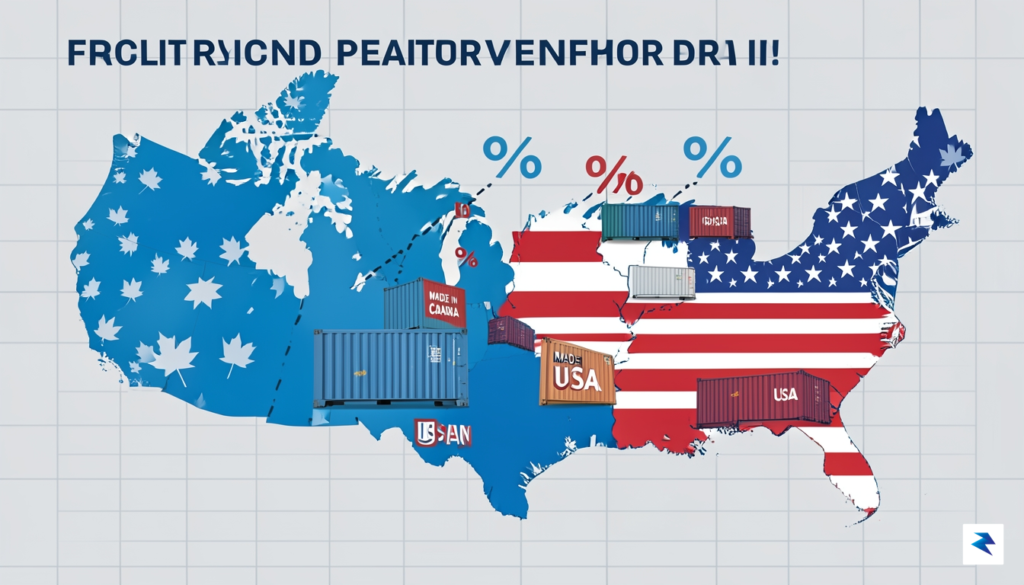
The proposal to levy a 50% tariff on a broad spectrum of Canadian imports marks a departure from the established norms of North American commerce, representing a seismic shift in how the United States approaches its largest trading partner. Unlike typical trade adjustments that often focus on specific, narrow categories like softwood lumber or aluminum, this expansive policy targets an array of goods essential to the integrated supply chains of both nations. By setting such a staggering 50% threshold, the administration is moving well beyond the incremental tax adjustments seen in previous disputes, effectively creating a barrier that is designed to radically alter the cost structure of cross-border business. This move is fundamentally different from the standard ad valorem duties often used in anti-dumping cases, as it functions less as a corrective measure for market imbalances and more as a blunt instrument of economic pressure.
To understand the gravity of this escalation, one must look at the historical context established by the North American Free Trade Agreement (NAFTA) and its successor, the United States-Mexico-Canada Agreement (USMCA). For decades, the guiding principle of these frameworks was the reduction or elimination of tariffs to foster a seamless “just-in-time” manufacturing environment. Under the USMCA, the vast majority of goods flow duty-free; therefore, a 50% tax is not merely an increase—it is a punitive measure that dwarfs historical norms. While traditional trade barriers are usually calibrated to protect specific domestic industries from unfair competition, this proposal acts as a comprehensive levy that would instantly render many Canadian-made components and finished products prohibitively expensive for American consumers and manufacturers alike.
The imposition of a 50% duty on Canadian goods represents an unprecedented departure from the integrated trade model that has defined the North American economy for over thirty years.
The immediate market reaction has been one of significant concern, as industries ranging from automotive manufacturing to energy and agriculture rely heavily on the frictionless nature of the current border. Because these supply chains are deeply intertwined, a 50% tax does not simply penalize Canadian exporters; it effectively acts as a domestic tax on American companies that rely on Canadian inputs. By escalating trade hostilities to this magnitude, the proposal forces a fundamental reassessment of North American supply chain resilience. Analysts suggest that such a move would likely trigger retaliatory measures, further complicating the logistical landscape and creating a period of sustained volatility that businesses on both sides of the border are currently scrambling to hedge against.

At the heart of this aggressive trade maneuver lies the administration’s reliance on the International Emergency Economic Powers Act (IEEPA), a statute that grants the executive branch broad authority to regulate commerce following the declaration of a national emergency. While this law has been utilized periodically for targeted sanctions against adversarial regimes, its application to a close democratic ally like Canada represents a dramatic departure from historical norms. Legal scholars are particularly focused on the “untested” nature of this specific invocation, as the law has never been subjected to the rigors of a judicial challenge involving a comprehensive, blanket tariff on a North American partner. Because the statute delegates significant power to the President to bypass standard legislative trade procedures, critics argue that the administration is effectively circumventing the traditional constitutional check-and-balance system that typically requires Congressional oversight for major shifts in trade policy.
The label “untested” carries profound weight in the legal community, signaling that the administration is venturing into uncharted territory where existing precedents offer little comfort or guidance. Constitutional experts warn that by categorizing these tariffs as a response to an emergency, the White House is testing the limits of executive authority to manage the national economy without explicit approval from the legislative branch. If the courts eventually determine that this use of IEEPA exceeds the scope intended by Congress, it could trigger a landmark constitutional clash that defines the boundaries of presidential power for decades to come. The central question remains whether a president can unilaterally declare an “economic emergency” to override established trade agreements, or if such actions must be tempered by the procedural norms of international commerce legislation.

The application of IEEPA in this context represents a pivotal test of executive authority, potentially reshaping how future administrations navigate international trade disputes without direct legislative consent.
Anticipated legal challenges are expected to focus heavily on the criteria for what constitutes a genuine “national emergency” under the law. Industry groups and international trade experts are currently preparing to seek court injunctions, arguing that the tariffs are arbitrary, capricious, and lack the requisite evidentiary support to qualify as an emergency measure. Should these lawsuits gain traction, we may see a flurry of emergency hearings aimed at pausing the implementation of the 50% tariff while the judiciary scrutinizes the administration’s underlying rationale. Furthermore, there is a distinct possibility of legislative pushback, where members of Congress—concerned about the erosion of their constitutional mandate to regulate commerce—could attempt to pass joint resolutions or amendments to constrain the president’s emergency powers. This brewing conflict ensures that the path to these tariffs will be paved with complex litigation, leaving businesses and consumers in a state of prolonged uncertainty as the legal system grapples with this unprecedented assertion of authority.

For decades, the United States and Canada have operated under a model of economic symbiosis that defies traditional international trade boundaries. Nowhere is this more apparent than in the automotive, energy, and construction sectors, where components often cross the border multiple times before a finished product ever reaches a consumer. A 50% tariff threatens to dismantle this carefully calibrated system, effectively penalizing the very manufacturers who rely on cross-border logistics to remain competitive. When a vehicle engine is assembled in one country, shipped to another for electronic integration, and then sent back for final assembly, the imposition of massive new duties transforms a streamlined process into a financial bottleneck that could cripple regional output.

The logistical reality of modern manufacturing relies heavily on “just-in-time” delivery, a methodology designed to minimize inventory costs by having parts arrive exactly when they are needed on the assembly line. Introducing a 50% tariff necessitates rigorous, time-consuming inspections and customs assessments for every incoming shipment, which will inevitably lead to massive backlogs at land ports of entry. This is not merely a matter of increased costs; it is a fundamental disruption of the production cycle. If a critical component is held up at the border for days, entire assembly lines could grind to a halt, leading to secondary layoffs and a cascade of supply shortages that ripple through the North American economy.
The integration of the North American supply chain is so profound that a unilateral tariff of this magnitude acts less like a trade barrier and more like a systemic shock to the domestic industrial base.
While some proponents argue that such measures will incentivize a shift toward domestic production, the reality of global supply chain constraints suggests a much more difficult path. Modern manufacturing requires specialized facilities, highly skilled labor pools, and access to raw materials that cannot be replicated overnight simply by closing a border. Shifting production away from Canadian steel, aluminum, and energy resources would require years of capital investment and infrastructure development, during which time domestic manufacturers would likely face significantly higher operating costs. Furthermore, many U.S. industries are inherently dependent on Canadian energy exports and raw materials to maintain their current production volumes; attempting to source these inputs domestically or from overseas may prove either physically impossible or prohibitively expensive in the current global climate.
Ultimately, companies are now forced into a difficult period of strategic reassessment. Firms that have spent years optimizing their operations for a seamless North American market must now weigh the risks of maintaining their existing Canadian dependencies against the unpredictable costs of restructuring their entire supply chain. As boardrooms scramble to model the impact of these tariffs, the stability of the North American manufacturing sector hangs in the balance, caught between the desire for localized production and the harsh, interconnected realities of international trade.

At its core, a tariff is not a tax paid by the exporting nation, but rather a levy imposed on the importing business. When the U.S. government applies a 50% tariff on Canadian goods, domestic companies that rely on those imports face a sudden, massive increase in their operational costs. Because these businesses generally cannot absorb such significant financial hits without facing bankruptcy, they almost invariably pass those costs down to the end consumer. This mechanism triggers what economists call “cost-push inflation,” a scenario where the rising price of raw materials and intermediate goods forces finished products to become more expensive across the entire retail landscape.
The immediate impact of such a policy would be felt most acutely in the housing and construction sectors. Canada is a primary supplier of softwood lumber to the United States, and a 50% tariff would effectively price thousands of renovation projects and new home builds out of reach for the average middle-class family. As the cost of framing lumber, plywood, and other wood-based building materials surges, builders will be forced to raise the final sale price of homes. Consequently, the dream of homeownership could become significantly more expensive, further straining a market already grappling with high interest rates and limited inventory.
“Tariffs act as a hidden consumption tax. When you disrupt the deeply integrated supply chains between the U.S. and Canada, the price tag at the checkout counter is the ultimate barometer of that friction.”
Beyond construction, the inflationary pressure would quickly permeate the grocery aisle and the gas pump. Canada is a vital source of agricultural products, including wheat, potatoes, and various livestock, as well as a massive provider of crude oil and refined petroleum. Because these commodities are foundational to daily life, price hikes in these sectors are notoriously difficult for consumers to avoid. For example, if the cost of importing crude oil increases, that expense ripples through the economy, raising the price of gasoline and transportation, which in turn increases the cost of shipping everything from fresh produce to electronics. Ultimately, the cumulative effect of these tariffs is a broad-based reduction in household purchasing power, forcing families to allocate a larger portion of their monthly budget toward essential goods, leaving less room for discretionary spending and savings.
The imposition of a 50% tariff on a broad spectrum of Canadian imports represents more than just a fiscal adjustment; it signals a profound, potentially permanent fracture in a bilateral relationship that has historically served as a global archetype for stability. For decades, the United States and Canada have functioned as an integrated economic bloc, underpinned by shared security objectives and a seamless supply chain. By unilaterally upending this status quo, the current administration is testing the limits of North American cooperation. Canadian leadership has signaled that they view this policy not as a routine trade negotiation, but as a direct affront to the sovereignty and economic security of their nation. Consequently, the diplomatic channels that once facilitated open dialogue are quickly becoming conduits for tense, high-stakes standoffs.
This deterioration is already reverberating through the halls of government, with Ottawa signaling that retaliatory measures are not just possible, but inevitable. Should Canada move to impose reciprocal tariffs on American agricultural and manufactured goods, the resulting trade war would likely paralyze critical sectors, from automotive manufacturing to energy exports. Beyond the immediate economic damage, there is a tangible risk that this policy shift will erode the deep-seated trust required for effective border management and continental security. Cooperation on intelligence sharing, defense infrastructure, and environmental policy relies on a foundation of mutual goodwill that is rapidly evaporating under the pressure of these protectionist demands.

The global community is watching these developments with increasing alarm, particularly among our G7 allies. Many international partners view the U.S. move toward aggressive protectionism as a departure from the rules-based international order that the United States historically championed. If the world’s largest economy abandons its long-standing commitment to free trade with its closest neighbor, it may prompt other G7 nations to reconsider their own reliance on American markets. This could trigger a broader, global shift toward economic nationalism, where countries prioritize domestic self-sufficiency over international alliances. The potential ripple effects are significant:
The true cost of these tariffs will likely be measured in decades of lost diplomatic capital rather than just immediate quarterly earnings.
Ultimately, the long-term geopolitical cost of this policy may far outweigh any short-term economic gains. When allies begin to treat each other as adversaries, the structural integrity of international organizations is placed under immense strain. As the situation evolves, the focus will likely shift from the specific percentage of the tariff to the broader question of whether the United States still intends to lead through partnership or whether it has chosen to pivot toward an era of transactional, isolationist diplomacy.

In an era defined by rapid geopolitical shifts, trade policy uncertainty has become a permanent fixture of the global economic landscape. When the threat of a 50% tariff on Canadian imports looms, businesses and individual investors must move past reactive panic and instead embrace a strategy of calculated resilience. Volatility, while uncomfortable, is not inherently destructive if your financial architecture is designed to absorb the shock. The key lies in shifting from a “just-in-time” operational model to one that prioritizes strategic agility, ensuring that your organization or portfolio remains robust even when trade corridors are disrupted.
For businesses heavily reliant on cross-border inputs, the prospect of aggressive tariffs necessitates an immediate audit of supply chain dependencies. Relying on a single source or a single geographic corridor is no longer a viable risk-mitigation strategy; instead, companies should aggressively explore near-shoring or regional diversification to spread their exposure. By identifying alternative suppliers in non-impacted regions or domestic markets, firms can create a buffer that prevents a single policy shift from crippling their entire production cycle. While diversifying a supply chain requires upfront capital and logistical complexity, the cost of this transition is often significantly lower than the long-term expense of paying a massive tariff premium on essential raw materials.
Investors must also account for the inevitable interplay between trade policy and currency markets. As tariffs threaten the flow of goods, the USD/CAD exchange rate often experiences heightened sensitivity; a weakening Canadian dollar can occasionally serve as a natural, albeit partial, hedge against tariff costs for American buyers, but it simultaneously increases the volatility of corporate earnings for Canadian exporters. To navigate this, investors should consider hedging strategies, such as using currency forwards or options, to lock in exchange rates and mitigate the risk of sudden fluctuations. Furthermore, maintaining a portfolio that is geographically diverse allows for a natural balancing act—where gains in one region can help offset the localized economic pressure caused by sudden border duties.
Success in volatile markets is rarely about predicting the next policy announcement; it is about building a structure that remains functional regardless of the specific regulatory outcome.
Finally, the importance of maintaining a vigilant information cycle cannot be overstated. Policy shifts often happen with little warning, meaning that businesses must establish an internal task force dedicated to monitoring government bulletins, trade association updates, and legislative progress in real-time. By preparing a “contingency playbook”—a set of pre-approved responses to various tariff scenarios—leadership teams can act decisively when news breaks, rather than losing valuable time in deliberation. Staying informed allows you to pivot your procurement strategy or adjust pricing models before your competitors do, transforming a potential crisis into a manageable hurdle.
You must be logged in to post a comment.