Godox C100 Review: Can a Transparent Screen Change How We Shoot?
The Resurgence of the Dedicated Point-and-Shoot For years, the industry narrative suggested that the smartphone would be the final word in…
When General Motors first teased the Silverado EV, the automotive world buzzed with the promise of a revolution. On paper, the truck is nothing short of a technical marvel, boasting an impressive 400-plus miles of range, a versatile mid-gate design that expands cargo capacity, and the kind of raw towing power that makes traditional internal combustion engines look like relics of the past. Yet, as these vehicles finally hit dealership lots in earnest, the initial roar of excitement has been dampened by a surprisingly tepid market response. The fundamental disconnect lies in the fact that while GM engineered a superior piece of hardware, they may have miscalculated the cultural and economic friction that currently defines the American pickup truck segment.
The current sales struggle highlights a classic “first-draft” syndrome, where the ambition of the technology outpaces the immediate needs and comfort levels of the core demographic. While early adopters and tech enthusiasts might appreciate the seamless integration of GM’s Ultium platform, the average truck buyer remains deeply tethered to the ritualistic aspects of ownership: the roar of a V8, the simplicity of a quick fuel stop, and the perceived reliability of established mechanical architectures. For many, the Silverado EV represents a significant leap into the unknown, requiring a shift in lifestyle—such as home charging infrastructure and route planning—that many traditionalists are simply not ready to adopt.
“Innovation is rarely just about the specs on a spec sheet; it is about the bridge between current habits and future necessities.”
Beyond the technical hurdles, brand loyalty acts as a formidable barrier that engineering prowess alone cannot overcome. The truck market is notoriously tribal, with buyers often staying loyal to a specific badge for decades. When Chevrolet introduces an electric variant that looks drastically different from its gas-powered siblings, it risks alienating the very people who built the brand’s reputation. Furthermore, the pervasive skepticism surrounding EV longevity and resale value has created a “wait-and-see” atmosphere among potential buyers. Until GM can prove that the Silverado EV offers a tangible, stress-free advantage over the reliable gas trucks already in driveways across the country, this electric powerhouse will likely continue to struggle in finding a home in the American mainstream.
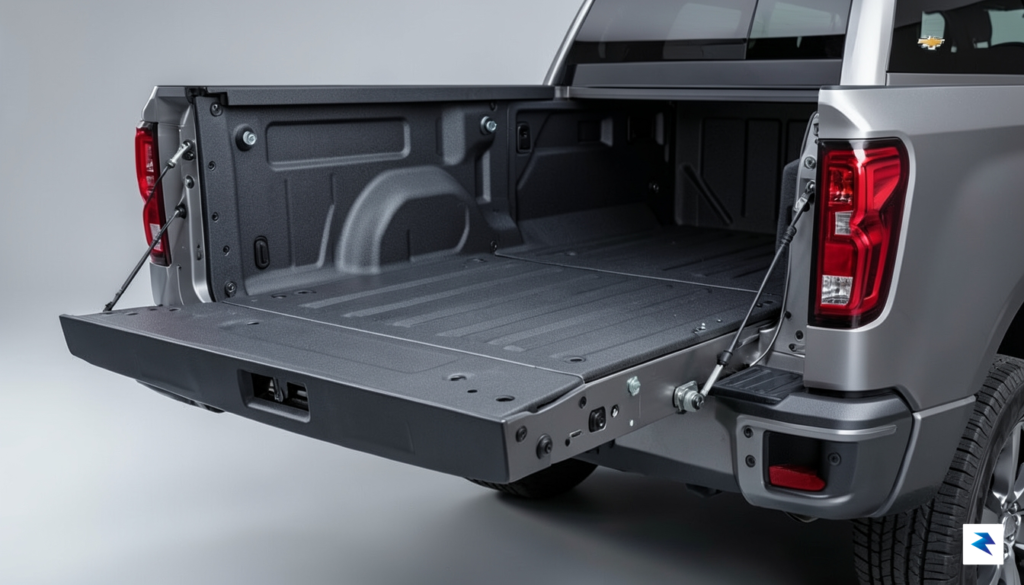
At its core, the Silverado EV is a masterclass in modern engineering, largely thanks to General Motors’ flexible Ultium platform. By ditching the constraints of a traditional internal combustion engine and a transmission tunnel, Chevrolet has reclaimed significant real estate that was previously off-limits in truck design. This architectural shift allows for a “skateboard” chassis that lowers the center of gravity, improving handling without sacrificing the ground clearance necessary for off-road environments. It is not merely about replacing gas with electrons; it is about rethinking how a truck’s internal volume is allocated to maximize efficiency for both the weekend warrior and the heavy-duty fleet operator.
Perhaps the most compelling piece of evidence for this innovative packaging is the return of the Midgate. Borrowed from the legacy of the Chevrolet Avalanche, this feature allows the rear wall of the cabin to fold down, effectively extending the cargo bed into the interior of the truck. This design choice transforms the Silverado EV from a standard crew cab into a versatile hauler capable of transporting oversized items like lumber, kayaks, or piping that would otherwise require a trailer. When combined with the tailgate’s multi-flex capabilities, the vehicle offers a level of load-carrying adaptability that traditional trucks—which are often limited by fixed bed lengths—simply cannot match.
Beyond the cabin, Chevrolet has leaned into the advantages of an electric powertrain by perfecting the front-trunk, or “frunk.” Unlike some competitors who offer frunks that feel like an afterthought, the Silverado EV provides an impressively spacious, weather-tight, and lockable storage compartment. This area is specifically designed to handle the rigors of a job site, featuring drain plugs for easy cleaning and integrated power outlets, making it a functional workspace rather than just a place to store groceries. Whether you are charging power tools at a remote location or keeping expensive equipment out of sight, this front storage area represents a significant upgrade in utility over the traditional engine bay.
The integration of the Ultium platform doesn’t just improve range; it fundamentally reimagines the relationship between a truck’s footprint and its functional capacity.
For fleet buyers, these design choices represent a massive operational advantage. The combination of a massive storage capacity, a highly configurable bed, and the ability to act as a mobile power station means that a single Silverado EV can replace multiple pieces of specialized equipment. By prioritizing clever interior packaging and modular utility, Chevrolet has created a vehicle that is arguably more functional than its gas-powered counterparts. It is a testament to the idea that electrification is not a limitation, but rather an invitation to design a more capable, smarter, and significantly more efficient tool for the modern world.
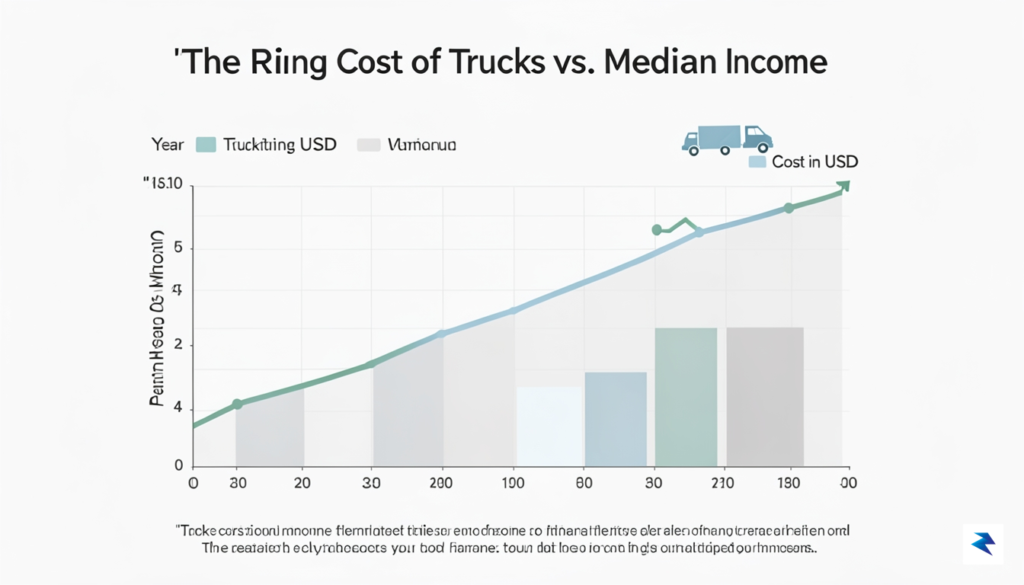
When Chevrolet first teased the Silverado EV, the brand promised a revolutionary “work truck” that would marry electric efficiency with the blue-collar utility that defined the nameplate for decades. However, the current reality of the retail market tells a much different story. While the entry-level Work Truck (WT) models were theoretically slated for fleet and budget-conscious buyers, the initial wave of units hitting dealership lots has been dominated by high-end, luxury-trimmed variants with six-figure price tags. For the average consumer who views a truck as a tool rather than a status symbol, these astronomical costs create an insurmountable barrier to entry.
The core of the issue lies in the widening chasm between Chevy’s initial promise and the actual consumer experience. Many traditional truck buyers have historically measured value through a lens of durability, towing capacity, and cost-to-own ratios—not through the inclusion of massive infotainment screens, ambient lighting, or cutting-edge autonomous driving suites. By positioning the early Silverado EV models as premium luxury vehicles, Chevrolet has effectively alienated the very audience that built the Silverado’s reputation. When a utilitarian vehicle is priced in the same bracket as a luxury SUV or a high-performance sports car, the value proposition vanishes for the working professional who needs a reliable hauler for their daily business.
Compounding this pricing problem is the unforgiving economic environment of the current automotive market. High interest rates have made financing a six-figure vehicle a daunting prospect, with monthly payments reaching levels that even high-earning households find difficult to justify. For a truck buyer, the math simply does not hold up; if the electric fuel savings are immediately offset by an exorbitant monthly loan payment, the primary economic argument for transitioning to an EV disappears. As long as the Silverado EV remains tethered to these premium price points, it will likely remain a niche product for early adopters rather than the mainstream fleet powerhouse that the market desperately needs.
The transition to electric utility cannot succeed if affordability is sacrificed for tech-centric luxury, especially when the target demographic prioritizes ROI and durability above all else.
Ultimately, the “affordable” electric truck remains a myth for the average driver. Unless Chevrolet can successfully pivot its production to deliver a stripped-down, cost-competitive model that aligns with the price points of internal combustion engine counterparts, the Silverado EV will struggle to break out of the luxury segment. The market is clearly signaling that consumers are ready for electrification, but they are not willing to pay a luxury tax for the privilege of driving a truck that still needs to get the job done in the dirt, the mud, and the heat of the workday.
The primary barrier to widespread electric truck adoption remains the persistent specter of range anxiety, particularly for those who view a pickup as a workhorse rather than a lifestyle accessory. While the Silverado EV boasts an impressive EPA-estimated range of over 400 miles on a single charge under ideal conditions, these figures inevitably plummet when the truck is put to real-world tasks. Towing a heavy trailer introduces significant aerodynamic drag and rolling resistance, which forces the battery to deplete at a much faster rate than highway cruising. For a contractor hauling equipment across state lines or a rancher pulling a loaded horse trailer, this “towing penalty” means that a truck capable of 400 miles unladen might struggle to maintain even half that distance under a heavy load, forcing frequent, time-consuming stops that simply aren’t feasible for many professionals.
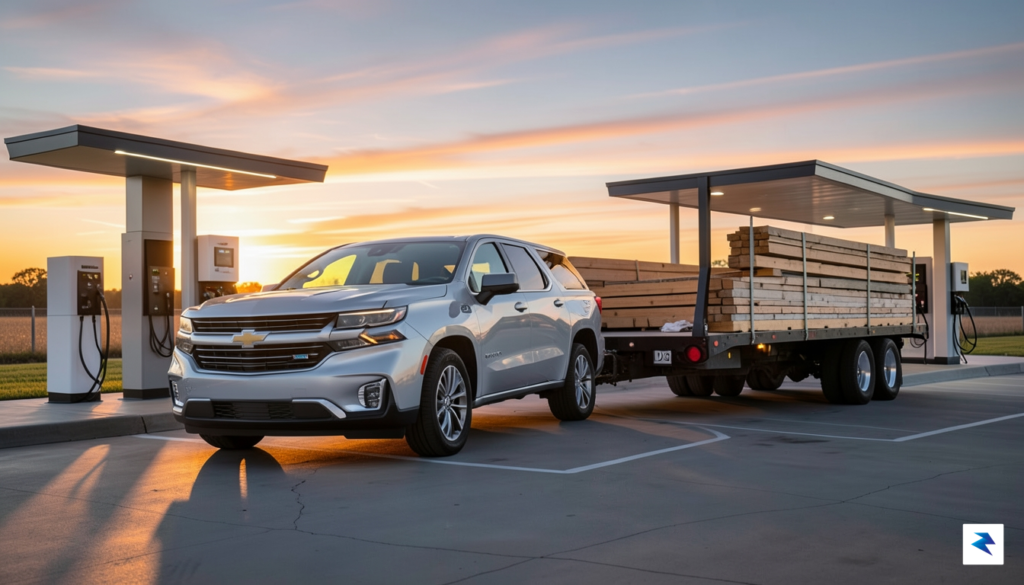
To mitigate these concerns, Chevrolet has equipped the Silverado EV with a sophisticated 800-volt electrical architecture, a critical piece of technology that separates it from many first-generation electric vehicles. This high-voltage system is designed to handle DC fast charging at rates of up to 350 kW, theoretically allowing the driver to regain 100 miles of range in roughly 10 minutes. By slashing the time spent tethered to a charging station, the 800V architecture attempts to bridge the gap between internal combustion engine convenience and electric efficiency. However, the efficacy of this technology is entirely dependent on the availability and reliability of public charging infrastructure, which often remains the weakest link in the EV ownership experience.
The true test of an electric truck isn’t its peak performance on a smooth, empty road, but its ability to maintain operational uptime when faced with the harsh realities of heavy-duty labor and inconsistent charging networks.
The reality is that while the truck itself is a marvel of modern engineering, the current state of public charging stations often fails to accommodate the unique physical footprint of a full-size pickup. Many charging stalls are positioned in tight configurations or are located in parking lots where maneuvering a truck with a trailer attached is functionally impossible. Furthermore, the fragmented nature of charging networks—where broken hardware, software handshake failures, and varying payment apps remain common—creates a psychological barrier for buyers who need their vehicle to be a reliable, predictable tool. Until the infrastructure evolves to provide “pull-through” charging stalls and consistent, high-speed performance, the Silverado EV will continue to face skepticism from the very demographic it was designed to serve: the traditional American truck buyer who values utility and reliability above all else.
The modern electric pickup truck market is a high-stakes arena where legacy engineering pedigree clashes directly with digital-first disruption. When the Chevrolet Silverado EV entered the fray, it didn’t land in a vacant lot; it arrived in a crowded, hyper-competitive space dominated by the Ford F-150 Lightning and the polarizing Tesla Cybertruck. While the Silverado EV boasts an impressive range—often eclipsing its rivals on paper—it struggles to distinguish itself in a consumer landscape where brand identity and aesthetic philosophy are just as important as battery capacity or towing torque.
Ford’s F-150 Lightning represents the most direct threat to the Silverado EV’s market share. By leveraging the familiar, workhorse architecture of the best-selling truck in America, Ford made the transition to electric seem like an evolutionary step rather than a revolutionary leap. For the traditional buyer, the Lightning feels like an F-150 that simply happens to be electric, which effectively lowers the barrier to entry. In contrast, the Silverado EV utilizes a bespoke platform that prioritizes futuristic design and unibody-like proportions. While this engineering approach offers superior versatility for some, it alienates the very segment of the market that demands a truck look and feel like a traditional, body-on-frame machine.
Then there is the “Tesla effect.” The Cybertruck has successfully captured the cultural zeitgeist, turning the electric truck into a lifestyle accessory rather than just a utility vehicle. Buyers looking for an EV truck are often split between those who want a traditional work tool and those who want a statement piece. The Silverado EV sits awkwardly in the middle of these two extremes. It lacks the deep-rooted, decades-long comfort of the Ford brand, yet it also lacks the software-integrated, cult-like allure of Tesla’s ecosystem. It is a highly capable, technologically advanced machine, but it lacks a clear “identity” that defines exactly who its target buyer should be.
The challenge for Chevrolet is that truck buyers are perhaps the most loyal demographic in the automotive world. Switching from a brand that has served a family for generations requires more than just a spec sheet victory; it requires a compelling emotional narrative that the current Silverado EV has yet to articulate.
Ultimately, the Silverado EV’s “legacy” feel is a double-edged sword. On one hand, it benefits from the vast dealership network and service infrastructure that companies like Tesla struggle to replicate at scale. On the other hand, the corporate design language feels like a compromise that fails to satisfy either the purist or the innovator. If Chevy hopes to turn the tide, it must bridge the gap between its traditional performance roots and the new, digital-first expectations of a generation that views the truck not just as a tool, but as a mobile computer.
The history of automotive innovation suggests that the first iteration of any groundbreaking technology is rarely its final form. While the Silverado EV boasts impressive engineering under the skin, it currently occupies a precarious middle ground between an aspirational luxury toy and a practical work tool. To secure its future, Chevrolet must prioritize a rigorous software-first evolution. The current infotainment and battery management systems, while functional, need to become more intuitive and responsive to bridge the gap between traditional truck owners and the digital-native audience. Seamless over-the-air updates that not only fix bugs but actively enhance charging curves and regenerative braking efficiency will be essential to keeping the platform competitive as battery chemistry continues to advance.
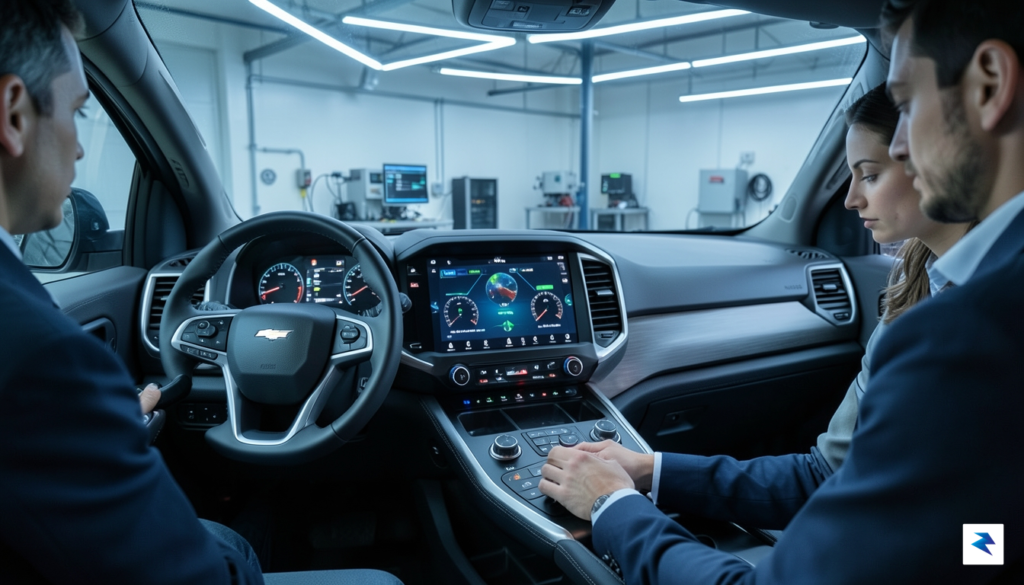
Beyond software, the physical lineup requires a significant shakeup to address the current pricing disconnect. Currently, the truck feels like a premium experiment rather than a fleet-ready workhorse, which limits its appeal to a narrow demographic of early adopters. Chevrolet needs to aggressively introduce a wider range of trim levels—specifically entry-level “work truck” configurations that prioritize utility, durability, and a more accessible price point over high-end aesthetics. By shedding some of the non-essential luxury features that drive up costs, Chevy can entice the commercial buyers and contractors who are currently sticking with internal combustion engines because the math simply hasn’t made sense for them yet.
To win the loyalty of the American truck market, the Silverado EV must transition from a technological showpiece into a reliable, no-nonsense utility asset that justifies its premium price through long-term operational savings.
Hardware refinements will also play a critical role in the long-term viability of the nameplate. As the market matures, users will demand better towing efficiency and more robust charging infrastructure integration. Future iterations should focus on weight reduction and aerodynamic optimizations that don’t compromise the iconic, boxy silhouette that truck buyers value. If Chevrolet can successfully refine the build quality to ensure it feels as “tough” as a traditional Silverado, while simultaneously offering the quiet, smooth, and powerful performance unique to an electric drivetrain, they will likely overcome the current sales slump. The potential for a dominant electric truck exists, but it requires Chevy to pivot from selling a luxury novelty to delivering a perfected, essential tool for the modern worker.
You must be logged in to post a comment.