
The Cube: Jim Henson’s Mind-Bending Precursor to Black Mirror
The Forgotten Surrealism of Jim Henson To most of the world, the name Jim Henson is synonymous with the felt-covered warmth of the Muppets,…


For years, the TOP500 list—the definitive barometer of global high-performance computing (HPC) power—has served as a primary theater for the ongoing technological rivalry between major global superpowers. Since 2018, the leaderboard has been characterized by a distinct trend: a steady, dominant ascent by systems based in the United States, culminating in the reign of the record-shattering El Capitan. However, the arrival of the LineShine supercomputer has abruptly interrupted this narrative, marking the first time in over half a decade that a Chinese-built machine has claimed the number one position. This shift is far more than a mere change in rank; it represents a fundamental recalibration of the global computational hierarchy and signals a level of engineering resilience that many international observers previously considered stifled by restrictive trade policies.

The significance of this milestone cannot be overstated, particularly when viewed against the backdrop of increasingly stringent international trade dynamics and semiconductor export controls. Industry analysts had widely predicted that such restrictions on high-end chip architecture would severely hamper China’s ability to compete at the exascale level. Yet, the development of LineShine suggests that China has successfully pivoted toward a strategy of massive-scale architectural innovation and domestic hardware integration. By unseating the reigning champion, LineShine proves that the nation’s HPC ecosystem has moved beyond a reliance on off-the-shelf imports, leaning instead into specialized, indigenous technology that is capable of delivering world-class performance metrics.
The emergence of LineShine serves as a definitive signal that the global race for computational supremacy is far from settled, regardless of geopolitical barriers.
Furthermore, the ascent of this new system forces a re-evaluation of the current landscape of scientific and strategic research. Supercomputers are the engines of modern progress, powering everything from complex climate modeling and pharmaceutical discovery to the training of next-generation artificial intelligence models. Because LineShine has reclaimed the top spot, the international community is now forced to confront a reality where the fastest tools for national defense and fundamental scientific discovery are once again being developed outside of the Western sphere of influence. This development is not merely a benchmark victory; it is a strategic awakening that will undoubtedly influence future funding priorities, research partnerships, and the global race for technological autonomy for years to come.

For years, the United States has systematically tightened export controls on high-end semiconductors, specifically targeting the advanced graphics processing units and specialized silicon essential for high-performance computing (HPC) and artificial intelligence. By restricting access to flagship hardware—most notably from dominant American manufacturers—Washington aimed to create a bottleneck in China’s ability to train large-scale models and simulate complex scientific phenomena. However, the emergence of the LineShine supercomputer suggests that these trade barriers may have functioned more as a catalyst for domestic innovation than as an impenetrable blockade. Instead of halting progress, the limitations have spurred a comprehensive national effort toward technological sovereignty, forcing Chinese engineers to rethink hardware architecture from the ground up.
The pursuit of technological sovereignty is no longer just a policy goal; it is a fundamental shift in how the country approaches digital infrastructure. Rather than relying on a singular, monolithic processor design, Chinese researchers have leaned into aggressive optimization of existing resources to compensate for the absence of cutting-edge Western chips. By pivoting toward domestic foundries and focusing on highly efficient chiplet-based architectures, they have managed to bridge the performance gap. This strategy emphasizes the integration of multiple, slightly less powerful processors working in near-perfect synchronization, effectively turning a collection of constrained components into a world-class powerhouse.
The true hallmark of LineShine’s success lies not in the raw power of a single transistor, but in the brilliance of its system-level coordination and interconnect technology.
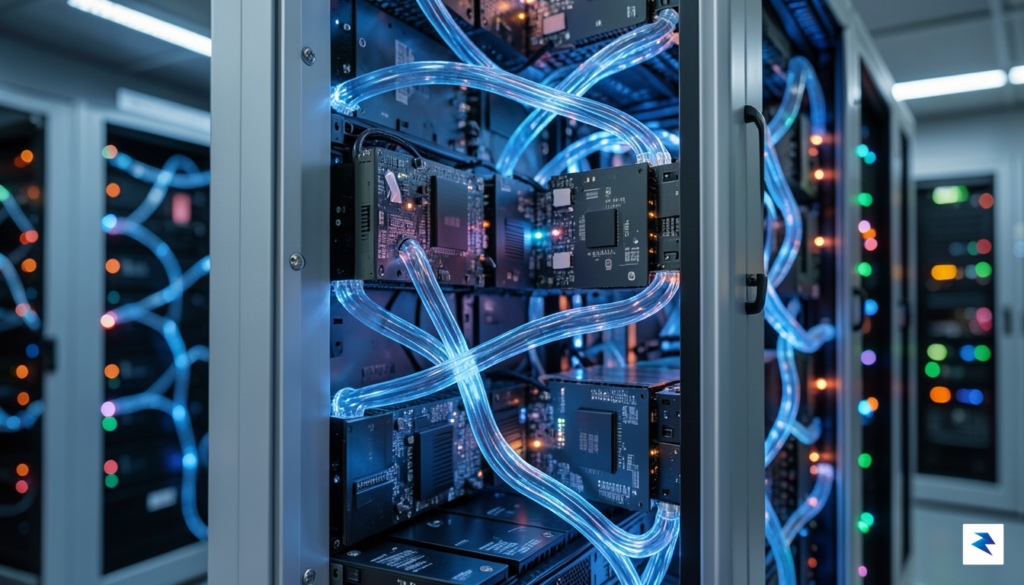
To overcome the performance ceiling imposed by restricted access to leading-edge nodes, Chinese developers have directed significant capital into proprietary interconnects and cooling architectures. High-speed data transfer between nodes is often the primary bottleneck in supercomputing, and by developing domestic low-latency interconnects, LineShine achieves throughput speeds that rival or exceed those found in Western clusters. Furthermore, the implementation of sophisticated liquid cooling systems allows these domestic processors to operate at higher sustained clock speeds without the thermal throttling that typically plagues less optimized hardware. These innovations demonstrate that even when deprived of the latest global silicon, architectural ingenuity can redefine the boundaries of what is possible in the race for computational supremacy.
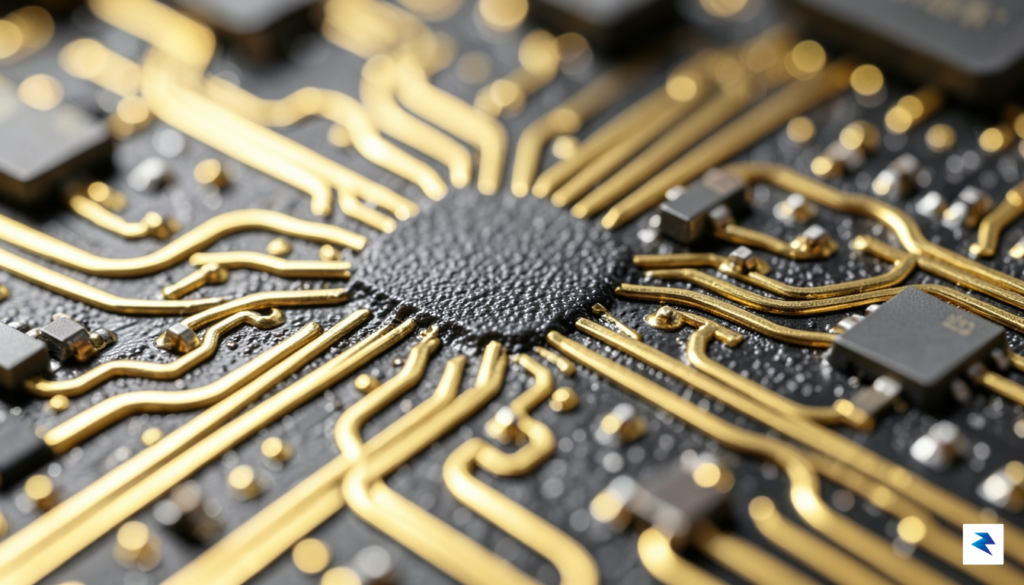

At the heart of the LineShine supercomputer lies a sophisticated design philosophy that prioritizes total system synergy over the brute-force reliance on imported silicon. While Western giants like El Capitan rely heavily on massive clusters of high-end GPUs to achieve exascale performance, LineShine demonstrates that architectural harmony can yield similar, if not superior, results. By focusing on a highly tuned, custom-designed processor stack, the engineers have achieved a level of data throughput that minimizes the “bottleneck effect” often seen in conventional high-performance computing (HPC) environments. This approach effectively proves that when hardware is designed in tandem with its specific software ecosystem, the system can extract every ounce of potential from its underlying transistors, regardless of the limitations imposed by global supply chain constraints.
The secret to this record-breaking speed resides in the system’s interconnect fabric, which serves as the central nervous system of the machine. In traditional architectures, the speed of data moving between nodes is frequently hindered by latency, but LineShine utilizes a proprietary, high-bandwidth interconnect that allows for seamless parallel processing at an unprecedented scale. This is not merely about raw clock speed; it is about the efficiency of the message-passing interface and the ability of the system to distribute complex mathematical loads across thousands of nodes without creating “traffic jams” in the data streams. By optimizing the path of least resistance for information, the architecture ensures that no single processor sits idle while waiting for instructions, effectively maximizing the utility of every compute cycle.
Performance is no longer defined by the sheer count of units, but by how intelligently those units communicate within the machine’s internal environment.
Furthermore, the integration of custom software stacks plays a critical role in this performance hierarchy. Rather than relying on generic, off-the-shelf libraries that may carry unnecessary bloat, the LineShine team has implemented a lightweight, highly specialized operating environment that streamlines kernel execution. This software-hardware co-design allows the system to achieve remarkable energy efficiency, which is a vital metric in an era where power consumption can limit the operational lifespan of a supercomputer. By reducing the energy cost per floating-point operation, the design team has created a machine that is not only faster than its predecessors but also significantly more sustainable, setting a new benchmark for how future exascale systems should be conceptualized and deployed.

The race for supercomputing dominance has evolved into the definitive arms race of the 21st century, transcending the traditional metrics of academic curiosity to become a cornerstone of national security and economic sovereignty. These machines are far more than mere calculators; they are the engines of discovery that underpin a nation’s ability to decode complex cryptographic signals, simulate nuclear stockpiles, and engineer next-generation stealth technology. By securing the top spot on the TOP500 list, China is not simply boasting about raw processing speed; it is signaling a structural shift in the global balance of technological power, demonstrating an indigenous capacity to circumvent supply chain restrictions and master the intricate architecture of exascale computing.
Beyond the realm of defense, this achievement serves as a force multiplier for scientific and economic advancement. The strategic utility of a world-class supercomputer is most visible in its ability to compress decades of research into months, particularly in fields like pharmaceutical development and climate modeling. When a nation possesses the computational power to simulate molecular interactions at scale, it gains an insurmountable advantage in drug discovery and biotechnology, effectively allowing it to set the pace for global healthcare innovation. Simultaneously, the mastery of high-fidelity climate simulations provides policymakers with the data necessary to navigate resource scarcity and environmental shifts, transforming raw math into a tool of geopolitical foresight.

The mastery of high-performance computing is no longer an auxiliary technological goal; it is the primary infrastructure upon which the digital empires of the future will be built.
The implications of this success extend deeply into the trajectory of domestic artificial intelligence. Modern AI development is inherently resource-intensive, requiring the massive parallel processing power that only top-tier supercomputers can provide. By reclaiming this title, China effectively provides its domestic AI researchers with a high-octane sandbox to train large language models and autonomous systems without relying on foreign-designed hardware. This vertical integration—from the silicon layer up to the algorithmic application—creates a self-sustaining ecosystem that is increasingly insulated from external sanctions or trade volatility. As global powers continue to decouple their technological supply chains, the ability to build, maintain, and innovate these massive machines becomes the ultimate marker of a state’s ability to define its own digital destiny.

The history of the TOP500 list serves as a testament to the fleeting nature of technological supremacy; no machine sits atop the throne indefinitely. As innovation cycles in high-performance computing (HPC) accelerate, the window for claiming the title of the world’s fastest supercomputer continues to shrink. With the United States, Europe, and Asia all pouring billions into the next frontier of Exascale and beyond, the competition is no longer just about raw processing power. It is becoming an arms race defined by architectural ingenuity, energy efficiency, and the ability to integrate artificial intelligence workloads seamlessly into traditional scientific simulations.
Looking ahead, the next generation of supercomputing projects will likely shift focus away from mere peak floating-point operations per second (FLOPS) toward the “intelligence-per-watt” metric. We are witnessing the dawn of a new era where hardware must handle massive data-intensive tasks, such as training large-scale foundation models, while simultaneously solving complex physics problems. As these nations push toward Zettascale computing, the potential for breakthroughs in climate modeling, drug discovery, and nuclear fusion research is immense. However, the path forward is complicated by the tightening web of international trade restrictions and export controls on high-end semiconductors. While these barriers were initially designed to curb technological dominance, they have ironically acted as a catalyst for domestic self-reliance, forcing nations to reinvent their supply chains and develop bespoke silicon architectures that bypass traditional bottlenecks.
The future of global HPC will likely be defined by a delicate balance: the necessity of collaborative open-science standards versus the strategic drive toward technological sovereignty.
Ultimately, the global HPC landscape remains a high-stakes arena where hardware restrictions serve as both a hurdle and a catalyst. While sanctions may cause short-term friction, they are arguably compelling developers to innovate faster, exploring novel cooling systems, photonic interconnects, and non-von Neumann computing architectures that were previously relegated to theoretical papers. Whether this competitive pressure will drive unprecedented advancements or lead to a fractured landscape of incompatible ecosystems remains the defining question of the next decade. If the past is any indication, the relentless pursuit of speed will continue to break boundaries, ensuring that the next “world’s fastest” machine is always just around the corner.

You must be logged in to post a comment.