
Phia Under Fire: Allegations of Cookie Stuffing and Affiliate Fraud
Understanding the Controversy: What is Cookie Stuffing? To understand the gravity of the accusations facing Phia, one must first grasp the…


Even the most meticulously prepared organizations can find themselves navigating truly uncharted territory when a breach occurs. The recent revelation that a leading US cybersecurity agency had to formulate its incident response playbook while actively managing a data exposure highlights a fundamental, unsettling challenge in modern cybersecurity: the significant gap that can exist between theoretical preparedness and practical, high-pressure execution. This scenario isn’t just an isolated incident; it underscores the “fog of war” that often descends during a cyberattack, transforming well-rehearsed plans into mere guidelines in the face of unforeseen complexities.
The ‘fog of war’ in incident response is a potent metaphor for the chaos, confusion, and incomplete information that characterize the initial hours and days of a significant cyber incident. Imagine a battlefield where vital intelligence is fragmented, communication lines are strained, and the adversary’s next move is unknown. In this environment, documented Standard Operating Procedures (SOPs) and generic playbooks, while foundational, can quickly prove insufficient. They are designed for known threats and common attack vectors, offering a clear path for familiar scenarios. However, the reality of a sophisticated or novel breach often involves unexpected twists, unique vulnerabilities, and previously unencountered attack methods that fall outside the scope of pre-written scripts, demanding immediate, creative problem-solving under immense pressure.
Relying on generic playbooks becomes particularly problematic when an incident deviates significantly from expected patterns. Many established playbooks focus on common threats like ransomware, phishing, or direct network intrusions. Yet, the cybersecurity landscape is constantly evolving, introducing new vectors such as supply chain compromises, zero-day exploits impacting specific vendor technologies, or complex data exposures stemming from intricate third-party integrations. When an organization faces an exposure related to a specific vendor’s technology, for instance, and that particular scenario hasn’t been explicitly mapped out, generic steps may not only be unhelpful but could potentially exacerbate the situation by misdirecting resources or delaying critical actions. This forces responders to improvise, essentially writing the rules of engagement in real-time, which is a high-stakes gamble.
Building an incident response playbook during an active crisis is, therefore, a critical vulnerability that no organization wishes to confront. It dramatically increases the cognitive load on an already stressed response team, diverting precious time and mental resources from containment and recovery to fundamental strategy development. Each decision made on the fly carries heightened risk, as there’s less time for peer review, expert consultation, or careful consideration of long-term impacts. Such improvisation can lead to slower containment, potential missteps that could damage data integrity or trust, and an overall prolonged incident lifecycle. The very act of designing a structured response demands a calm, analytical environment—a stark contrast to the urgency and ambiguity of an unfolding cyberattack. It highlights the indispensable need for proactive, comprehensive planning that anticipates not just common threats, but also the more unusual, vendor-specific, or novel exposure events that inevitably arise in our interconnected digital world.

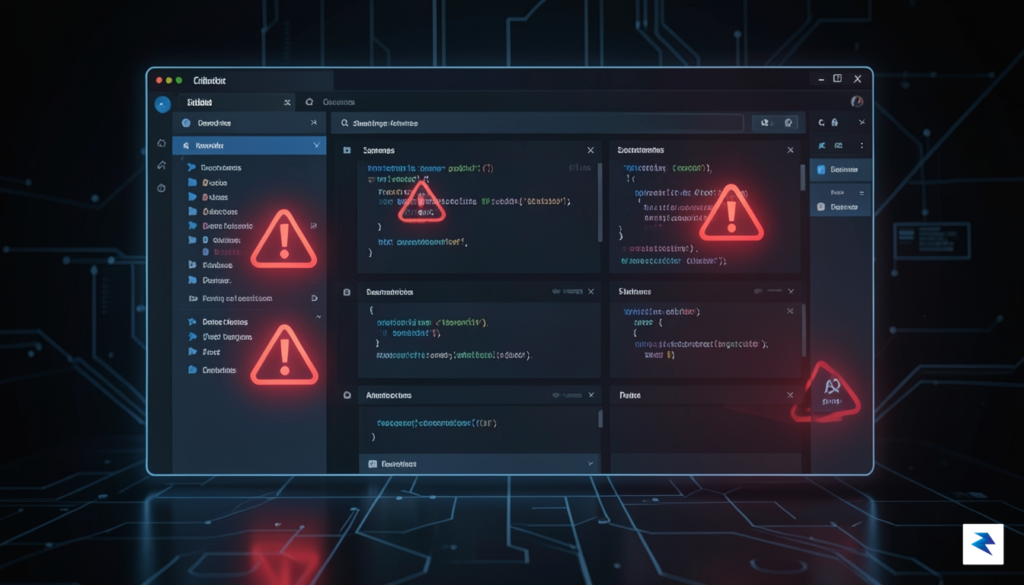
The vulnerability that placed CISA in the crosshairs did not stem from a sophisticated zero-day exploit or a multi-stage breach of the agency’s internal firewalls. Instead, it originated from a common but devastating oversight: the accidental exposure of sensitive credentials within a public GitHub repository. When a third-party contractor inadvertently pushed code containing hardcoded secrets to a public-facing platform, the traditional digital perimeter effectively evaporated. This incident serves as a stark reminder that in the modern ecosystem of software development, the security of an entire agency is only as strong as the weakest link in its supply chain.
Hardcoded secrets, such as API keys, cryptographic tokens, and administrative passwords, remain one of the most persistent and dangerous threats to organizational integrity. Developers often embed these credentials into source code during the rapid iteration phase, intending to remove them before the code goes live. However, human error frequently intervenes, and these secrets are pushed to version control systems where they become searchable, indexed, and immediately exploitable by automated bots scouring the internet. Once a secret hits a public repository, the window for remediation is nearly non-existent; attackers can harvest, test, and weaponize those credentials in a matter of seconds, granting them unauthorized access to production environments long before the original developer realizes a mistake was made.

The discovery of these secrets by external security researchers highlights a critical reality: if you don’t find your exposed credentials first, someone with malicious intent surely will.
The role of third-party visibility cannot be overstated in this context. The breach was only brought to light through the proactive secret-scanning capabilities of platforms like GitGuardian, which monitor public repositories for signs of sensitive data leakage. This underscores a mandatory shift in how organizations must view contractor security. It is no longer sufficient to demand secure development practices from internal teams alone; agencies must enforce rigorous, automated security controls across all third-party development environments. Without integrated scanning tools that act as a safety net—automatically detecting and blocking commits containing secrets before they reach public view—the risk of “secret sprawl” remains an existential threat to even the most highly secured government entities.
Moving forward, the lesson for security leaders is clear: the perimeter now extends to every line of code written by every contractor with access to the codebase. Implementing a “shift-left” security strategy is essential, where automated detection is woven into the commit process itself. By treating code security as a foundational element of the development lifecycle rather than an afterthought, organizations can prevent these trivial, yet catastrophic, lapses from becoming the entry point for a full-scale incident. Secure coding is not just about writing clean logic; it is about ensuring that the keys to the kingdom are never treated as part of the public record.

While government agencies meticulously prepare for a myriad of cyber threats, often developing robust defenses against common adversaries like phishing campaigns or distributed denial-of-service (DDoS) attacks, the recent admission from the US cybersecurity agency (CISA) highlights a critical, often overlooked vulnerability. The agency revealed that it had to construct its incident playbook in real-time during a significant breach, a scenario aptly described as “building the plane while flying it.” This immediate, agile response was necessitated not by a conventional cyberattack, but by a more insidious and less anticipated vector: a contractor-induced credential exposure. Such an event starkly underscores that even the most prepared organizations can find themselves navigating uncharted waters when a novel threat emerges, particularly one originating from within their extended supply chain.
Traditional government-standard incident response frameworks, while comprehensive in their design, frequently face limitations when confronted with the rapidly evolving threat landscape. These frameworks typically excel at providing structured protocols for known attack patterns, focusing on internal system vulnerabilities, direct network intrusions, or well-documented external threats. However, they may not always contain granular, pre-defined procedures for highly specific, nuanced scenarios, such as a third-party contractor’s system inadvertently exposing sensitive agency credentials. This gap isn’t necessarily a flaw in the frameworks themselves, but rather a reflection of the immense challenge in anticipating every conceivable attack vector, especially those that leverage complex interdependencies and human error within a vast ecosystem of partners and vendors. The inherent complexity of modern IT environments demands a more adaptable approach than static, one-size-fits-all documentation can provide.
Consequently, the incident at CISA powerfully illustrates the necessity of developing “living” playbooks – dynamic documents that are constantly reviewed, updated, and refined. Static incident response plans, however well-intentioned, rapidly become obsolete in the face of ever-changing tactics, techniques, and procedures (TTPs) employed by adversaries. A truly effective playbook is not merely a collection of theoretical steps but a practical guide informed by recent intelligence, technological advancements, and lessons learned from both internal and external incidents. This commitment to continuous evolution ensures that an agency’s defensive posture remains agile and relevant, capable of addressing not only historical threats but also emergent and unconventional challenges.
The maturation of these living playbooks is critically dependent on rigorous, proactive testing through sophisticated red teaming and tabletop exercises. Red teaming involves simulating real-world attacks against an organization’s defenses, pushing systems and personnel to their limits to uncover hidden vulnerabilities and procedural weaknesses. Tabletop exercises, on the other hand, are discussion-based sessions where teams walk through hypothetical incident scenarios, evaluating their response strategies, communication protocols, and decision-making processes in a low-stress environment. Both methods are invaluable for identifying blind spots, testing the efficacy of existing protocols for unique scenarios (like a contractor-induced breach), and ensuring that all team members understand their roles and responsibilities long before an actual crisis unfolds. Had such specific, contractor-related credential exposure scenarios been thoroughly tested, CISA might have had a more immediate and structured response framework at hand.

The operational and psychological strain placed on teams forced to improvise during a high-stakes crisis cannot be overstated. When a pre-existing, mature playbook is absent, incident responders are compelled to make critical decisions under immense pressure, with incomplete information, and often without the benefit of established protocols. This environment is ripe for missteps, delays, and heightened stress, potentially leading to burnout and reduced overall effectiveness. The mental toll of “building the plane while flying” during a cyberattack significantly impacts team cohesion, communication clarity, and the ability to execute a coordinated response. Conversely, a well-rehearsed plan, forged through careful preparation and scenario-based testing, empowers teams to act decisively, minimizing the cognitive load and allowing them to focus on remediation rather than fundamental strategy development.
Ultimately, CISA’s experience serves as a profound reminder that comprehensive cybersecurity preparedness extends far beyond merely defending against common threats. It necessitates an unwavering commitment to developing adaptable, ‘living’ playbooks that account for the full spectrum of potential incidents, including novel attack vectors originating from third-party relationships. The lessons learned underscore the critical importance of continuous scenario-based testing, through red teaming and tabletop exercises, to validate and refine these playbooks. This proactive approach ensures that when the unexpected inevitably occurs, agencies are not caught off guard, but rather possess the tools and processes to respond effectively, protecting national security and public trust.

For too long, the industry has relied on a “compliance-first” approach to vendor management, where security is measured by the thickness of a contractor’s policy manual rather than the integrity of their technical infrastructure. As recent agency experiences demonstrate, static documentation provides a false sense of security that crumbles the moment an actual incident unfolds. To shift from this legacy “trust-based” model toward a robust “verification-based” framework, organizations must stop treating contractors as external entities and start integrating them directly into the internal security fabric.

True security requires moving beyond spreadsheets and moving toward deeply integrated technical controls. Organizations should mandate that third-party developers utilize the same CI/CD pipelines as internal teams, ensuring that every line of code is subjected to the same rigorous scanning and automated gatekeeping. This means implementing mandatory pre-commit hooks that prevent developers from pushing code containing hardcoded credentials or insecure libraries. By forcing these technical guardrails, you remove the burden of human error and ensure that compliance is a byproduct of the development process rather than an afterthought.
The most dangerous security failures occur when a contractor’s local environment deviates from the organization’s hardened production standards. Verification must be automated, continuous, and non-negotiable.
In addition to technical gatekeeping, modern vendor management requires a cultural shift in how source code and environment variables are handled. Contractors should be required to operate within isolated, containerized environments where access to sensitive production data is restricted by the principle of least privilege. Furthermore, continuous monitoring tools—such as secret scanners that actively hunt for exposed API keys in repositories—should be extended to cover all third-party contributors. Consider the following strategies for enforcing these protocols:
Ultimately, the goal is to create a digital ecosystem where security is enforced by architecture rather than expectation. When we rely on policies, we rely on the hope that contractors will prioritize our security as much as we do; when we rely on technical enforcement, we eliminate the room for ambiguity. By embedding these controls directly into the developer workflow, organizations can ensure that their security posture remains resilient, regardless of who is writing the code or where they are located.

The recent challenges faced by CISA highlight a critical reality for modern enterprises: the traditional, static incident response (IR) plan is increasingly obsolete. Too often, organizations treat IR documentation as a “check-the-box” compliance exercise, drafting lengthy manuals that gather dust until a crisis emerges. However, when a genuine, novel security incident strikes, these rigid procedures often fail to account for the chaotic, unpredictable nature of a real-world breach. Resilience today requires moving away from static checklists toward adaptive, strategy-driven frameworks that prioritize decision-making agility over rigid adherence to outdated protocols. Organizations must accept that their ability to innovate during an incident—building the playbook while the clock is ticking—is just as vital as the defenses they have in place before the breach occurs.
To cultivate true operational maturity, security leaders must shift toward an “assume breach” mindset that extends deep into their software supply chain and partner ecosystem. It is no longer sufficient to secure only your own perimeter; you must rigorously scrutinize the security practices of the vendors and developers who manage your code. This involves continuous monitoring and a proactive posture where you treat your own systems as if they have already been compromised. By assuming that a threat actor may already be lurking within the environment, teams are forced to focus on rapid detection, containment, and lateral movement prevention, rather than relying solely on preventative measures that can be bypassed by sophisticated adversaries.

True resilience is not found in the perfection of an initial plan, but in the speed and coordination with which an organization can adapt its strategy when that plan inevitably encounters the unexpected.
Ultimately, the transition from reactive to resilient necessitates a culture of rigorous, exercise-driven training. Tabletop exercises should not be treated as annual social events; they must be frequent, challenging, and designed to test the limits of your incident response team under high-pressure scenarios. By simulating realistic, worst-case disruptions, organizations can identify critical gaps in communication, technical visibility, and decision-making authority long before an actual crisis forces those weaknesses into the light. This ongoing commitment to testing ensures that when the unexpected occurs, your team is not just following a script, but leveraging a well-honed intuition and a battle-tested process that allows them to respond with calm, decisive action.
To begin improving your organizational maturity, consider these foundational steps:
You must be logged in to post a comment.