
Are Grocery Prices Really Falling? What Shoppers Need to Know
The Shifting Landscape of Grocery Pricing After years of relentless price hikes that left many household budgets strained, the tide is finally…


For over a decade, the technical interview was synonymous with the whiteboard. Candidates were routinely asked to derive complex algorithms or manipulate data structures on a blank surface while an interviewer watched, often critiquing every stroke of the marker. This era of hiring prioritized raw academic recall and the ability to perform under high-pressure, artificial conditions. While this method successfully identified those who had spent countless hours memorizing competitive programming patterns, it frequently failed to account for the practical, day-to-day realities of software engineering, such as debugging, system design, and collaborative problem-solving.
As the demand for software engineers exploded, the limitations of the manual, in-person whiteboard interview became glaringly apparent. Scaling a hiring process that relied on high-touch, synchronous technical evaluations proved impossible for rapidly growing organizations. Consequently, the industry pivoted toward automated coding platforms. These tools promised a standardized, objective, and efficient way to filter thousands of candidates before they ever set foot in an office. By shifting the initial assessment to a remote-first, browser-based environment, companies gained the ability to cast a wider net while minimizing the initial time investment from their engineering teams.

However, the widespread adoption of these automated platforms has led to a new kind of crisis: the commoditization of the candidate. Because many of these assessments rely on a limited bank of standardized problems, the process has become a game of pattern recognition rather than a genuine measure of engineering capability. Candidates often spend weeks practicing on sites like LeetCode, optimizing for a specific subset of algorithmic challenges rather than developing the nuanced technical judgment required for building scalable, maintainable software. This creates a dangerous feedback loop where companies measure how well a candidate can navigate a testing platform, rather than how well they can navigate a codebase.
The most significant challenge in modern hiring is recognizing that a high score on an automated test often measures test-taking efficiency rather than architectural foresight or emotional intelligence in a team setting.
Today, we find ourselves at a turning point. The industry is beginning to realize that signal is being drowned out by the noise of repetitive, high-stakes testing. Organizations are now questioning whether these automated filters are actually identifying top-tier talent or simply screening out developers who possess deep, practical experience but lack the time or inclination to memorize niche algorithmic edge cases. As we move forward, the focus is shifting away from purely quantitative performance metrics and toward more holistic, work-sample-based evaluations that better reflect the complex, messy reality of modern software development.

The modern technical hiring landscape is frequently dominated by standardized, LeetCode-style assessments that prioritize algorithmic performance over practical engineering acumen. These tests often function as a filter for speed and syntax memorization, rewarding candidates who have spent countless hours drilling specific patterns rather than those who possess deep architectural intuition. By focusing on narrow, high-pressure tasks, organizations inadvertently introduce a significant amount of noise into their recruitment pipeline. This noise manifests as false negatives—where truly talented engineers who struggle with artificial constraints or performance anxiety are rejected, while those who have simply memorized common problem-solving shortcuts breeze through the process.
A primary pitfall of these time-constrained environments is the inherent conflict between competitive speed and the deliberate, thoughtful nature of real-world development. In a professional setting, writing maintainable code is an exercise in restraint, documentation, and system design, none of which are adequately measured by a forty-five-minute timer. When engineers are forced to solve complex problems under intense scrutiny, the evaluation shifts from assessing their ability to build robust software to measuring their capacity for rapid-fire recall. This environment actively disadvantages brilliant, methodical thinkers who prefer to weigh trade-offs and consider edge cases before committing to a solution, ultimately favoring a specific “type” of candidate rather than the best engineer for the role.

The true signal of a great engineer is not their ability to solve a recursive puzzle in minutes, but their capacity to maintain, scale, and debug complex systems over years.
Furthermore, there is a fundamental disconnect between passing a high-pressure coding test and succeeding in the long-term maintenance of a codebase. The “signal” that hiring managers truly need—system design capability, collaborative communication, and the ability to navigate legacy debt—is almost entirely absent from standardized assessments. A candidate might be able to invert a binary tree perfectly, yet they may struggle to refactor a monolithic service or design a fault-tolerant microservices interaction. By relying on these flawed metrics, companies effectively optimize for test-taking ability rather than the specific skills required to build products that survive in the wild.
Ultimately, the reliance on these rigid frameworks creates a homogenous hiring culture that misses out on diverse problem-solving perspectives. When the evaluation process ignores the nuances of day-to-day engineering, it stops being a measure of competence and becomes a measure of conformity to a very specific, limited style of programming. To move beyond this, teams must recognize that the most meaningful insights into a developer’s potential come from observing their approach to open-ended, collaborative, and persistent technical challenges.

The traditional approach to technical screening often prioritizes algorithmic speed and syntax recall, yet these metrics rarely correlate with long-term engineering success. To identify true high-impact developers, we must pivot our focus from the correctness of a final output toward the nuance of the process itself. Meaningful signal is not found in a candidate’s ability to recite textbook patterns under pressure; rather, it emerges when a candidate encounters a complex problem and demonstrates a structured, thoughtful approach to navigating its inherent ambiguity. A productive engineer understands that code is a long-term liability, not just a transient solution, and their work should reflect a deep-seated commitment to sustainability.
When assessing a candidate, we should prioritize three core competencies that distinguish a high-impact contributor from a test-taker: maintainability, debugging tenacity, and technical empathy. A developer who prioritizes maintainability writes code that serves as a roadmap for future team members, anticipating potential edge cases and abstracting logic to prevent technical debt. Conversely, a candidate who simply passes tests often leaves behind fragile, unreadable blocks of code that work in isolation but fail under the weight of real-world production demands. By evaluating how a candidate frames their solution—and whether they take the time to comment on their trade-offs—we gain a much clearer picture of how they will function within a collaborative environment.

True technical proficiency is defined less by the velocity of a completed task and more by the architectural foresight applied to prevent the need for future rework.
The hallmark of a senior-level engineer is their comfort with ambiguity. In real-world software development, requirements are rarely static, and constraints often shift mid-project. A top-tier candidate approaches an ambiguous prompt by asking probing questions, identifying hidden assumptions, and validating their understanding before writing a single line of code. This diagnostic phase provides a powerful signal: it reveals whether the developer is genuinely interested in solving the correct business problem or if they are merely rushing to implement the first solution that comes to mind. By observing how a candidate handles a curveball or a missing requirement, we can effectively measure their ability to think critically when the path forward is not explicitly defined.
Ultimately, technical screening should mirror the actual day-to-day work of an engineering team. If the daily reality involves debugging legacy systems, collaborating on pull requests, and reconciling conflicting requirements, then the evaluation process must prioritize these specific behaviors. When we shift our focus toward these qualitative signals—communication, clarity, and architectural integrity—we stop hiring people who are simply good at taking tests and start building teams composed of engineers who can actually build, scale, and maintain software in the wild.

To move beyond the limitations of traditional whiteboard interviews, engineering leaders must adopt a framework of “context-aware” assessment. This approach moves away from abstract algorithmic puzzles—which rarely reflect the day-to-day reality of a software engineer—and toward tasks that mirror the specific technical environment the candidate will actually inhabit. By simulating the constraints and complexities of your production codebase, you shift the evaluation from a test of memorization to a demonstration of practical problem-solving. This framework relies on the premise that a developer’s ability to navigate ambiguity, interpret legacy architecture, and leverage existing tools is far more predictive of success than their ability to invert a binary tree on command.
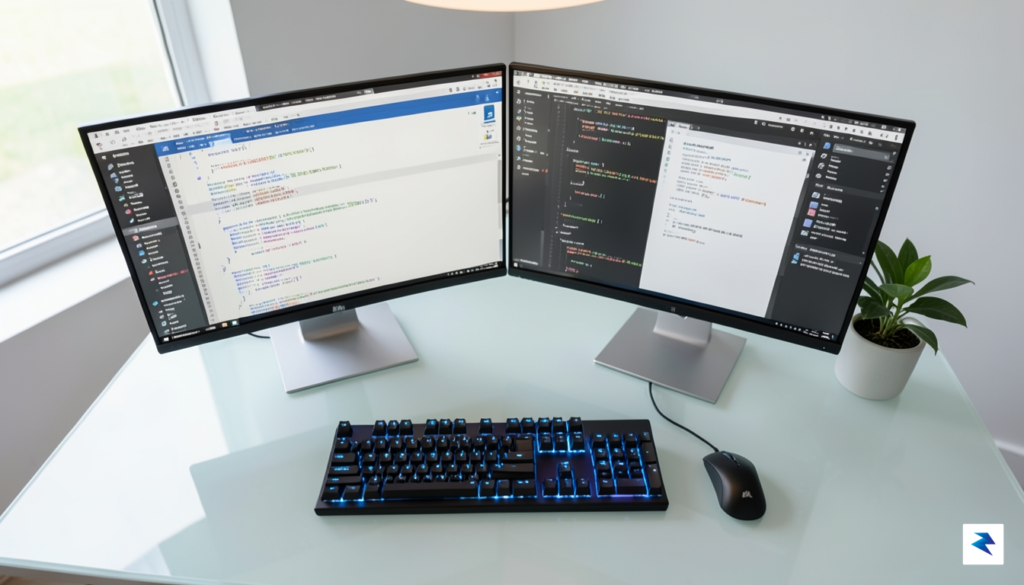
The foundation of context-aware assessment lies in the selection of the technical challenge. Rather than asking a candidate to implement a generic data structure, provide them with a small, representative slice of your actual codebase. This allows you to observe how they interpret existing design patterns, how they handle technical debt, and whether they can identify where to insert new functionality without breaking existing integration points. When candidates are permitted to access standard documentation or even search engines during the session, you mirror the reality of the profession, where the ability to synthesize information is more valuable than the ability to recall syntax from memory.
The goal of a technical assessment should not be to see if a candidate can solve a problem in isolation, but to see how they integrate into a living, breathing software project.
To implement this effectively, consider the following structural elements for your assessment process:
Ultimately, by grounding your assessment in the specific technical challenges your team faces daily, you create a two-way street of evaluation. The candidate gains a genuine preview of the work they will be performing, and you receive an accurate signal of their readiness to contribute to your specific stack. This alignment minimizes the “hiring gap” that often occurs when a strong candidate fails a generic test, or conversely, when a candidate who is good at test-taking struggles once they are actually onboarded and forced to deal with real-world complexity.
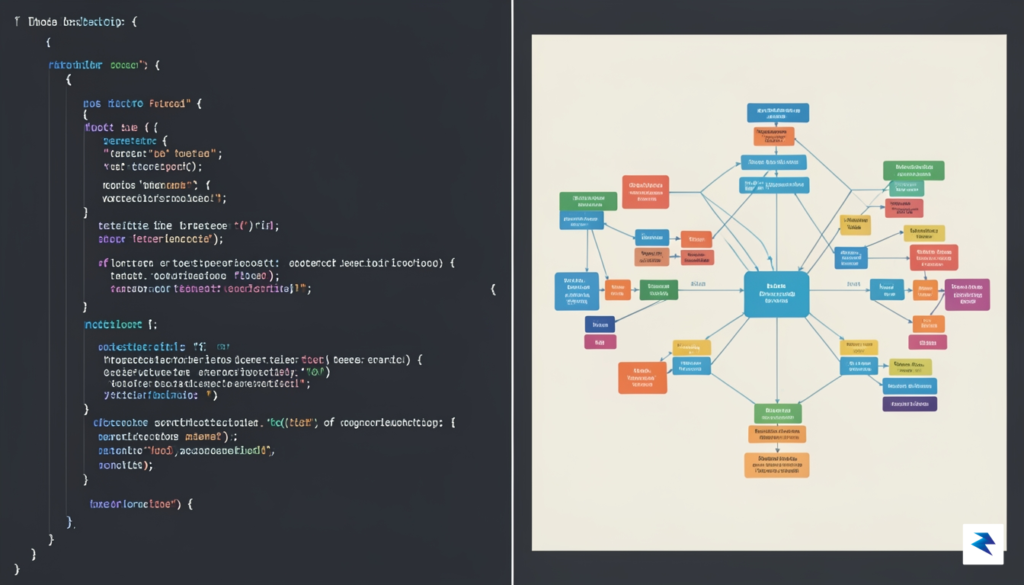
For too long, the software engineering interview has been synonymous with high-pressure algorithmic puzzles that bear little resemblance to the daily reality of building production software. While there is intrinsic value in testing a candidate’s grasp of data structures and computational complexity—after all, a foundational understanding of Big O notation prevents catastrophic performance bottlenecks—the industry has historically over-indexed on these metrics. Treating algorithmic proficiency as the primary “gatekeeper” creates a dangerous signal-to-noise imbalance. It effectively filters for candidates who have memorized specific patterns while potentially sidelining experienced engineers who possess a deep, intuitive grasp of how systems evolve over time.
To correct this, we should treat algorithmic competency as a baseline requirement—a “table stakes” skill—rather than the ultimate measure of a developer’s worth. Once a candidate proves they can write clean, logical code, the focus of the evaluation must shift toward systems thinking. Systems thinking is the art of understanding tradeoffs: recognizing when a microservices architecture introduces unnecessary latency, identifying where a cache might cause data consistency nightmares, or knowing when to favor maintainable, readable code over hyper-optimized logic that is prone to bugs. This shift requires moving away from the “whiteboard solution” and toward collaborative, open-ended scenarios that mimic the ambiguity of real-world engineering.
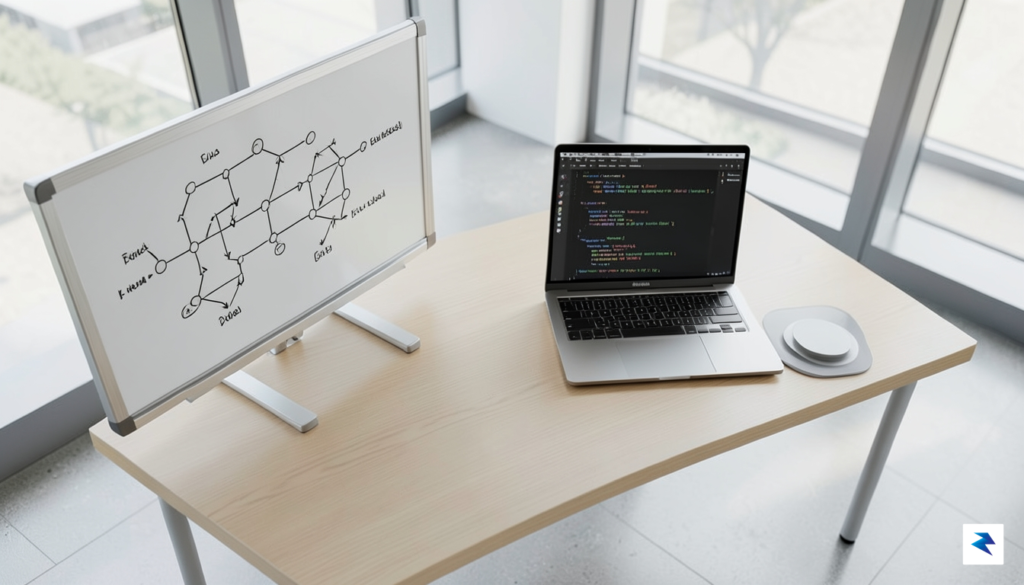
Assessing systems thinking effectively requires us to present candidates with complex, multi-layered problems. Instead of asking how to invert a binary tree, we might ask a candidate to design a rate-limiting service for a high-traffic API. This allows the evaluator to observe how the developer navigates critical trade-offs, such as:
True engineering talent is not measured by the ability to solve a puzzle in isolation, but by the ability to foresee how a single line of code will impact the reliability, scalability, and maintainability of a system years down the road.
By shifting the emphasis to these architectural considerations, we move from testing “coding speed” to testing “engineering judgment.” An engineer who can explain why they chose a specific database index based on expected read/write patterns is infinitely more valuable than one who can recite a sorting algorithm but lacks the foresight to consider the system’s long-term health. Ultimately, a balanced interview process acknowledges that while algorithms provide the building blocks, systems thinking provides the blueprint, and a successful hire requires the wisdom to understand how both must work in harmony.
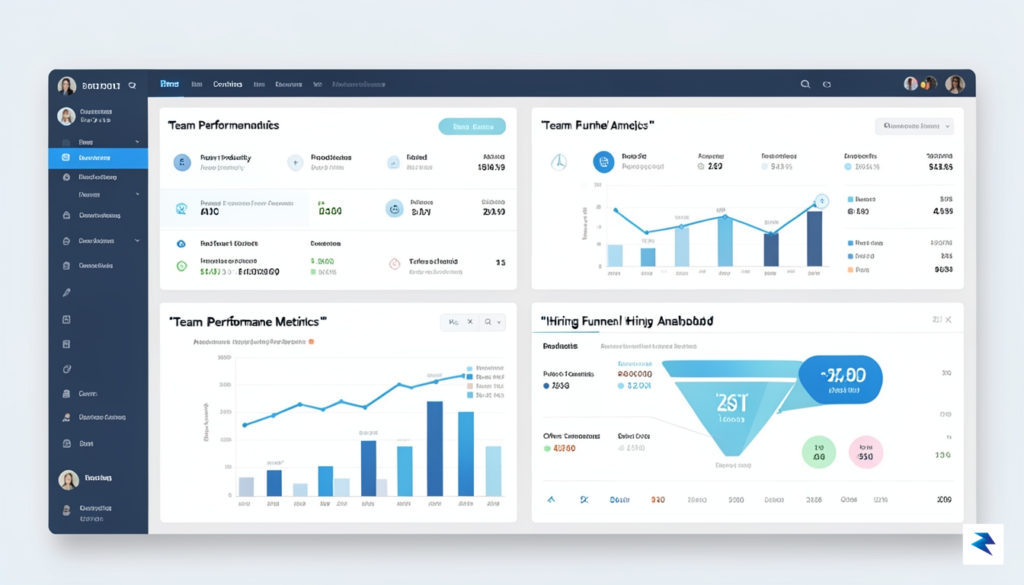
Transitioning away from legacy, high-pressure testing platforms requires more than just swapping one software tool for another; it demands a fundamental shift in how your team perceives the value of a candidate’s time. Begin by auditing your current pipeline to identify where your assessment criteria currently drift into “noise”—such as prioritizing algorithmic speed over architectural clarity or practical debugging skills. Instead of relying on generic platforms that emphasize rote memorization, move toward work-sample tests that mirror the actual challenges your engineers face on a daily basis. By treating these evaluations as a collaborative design exercise rather than a high-stakes examination, you signal to candidates that your culture values pragmatic problem-solving and psychological safety over performative coding.

To ensure these changes are sustainable, you must establish robust internal feedback loops that connect the hiring process to long-term performance. It is not enough to simply change how you interview; you must actively track whether these new assessment methods correlate with success once an engineer joins the team. Regularly solicit qualitative feedback from your hiring managers regarding the “signal” they received during the evaluation and compare those notes with the engineer’s performance during their first six months. If your process consistently identifies candidates who struggle with real-world system design but excel at whiteboard puzzles, use that data to recalibrate your evaluation rubrics immediately.
The goal of a sustainable evaluation framework is not to find a “perfect” candidate, but to build a system that consistently surfaces individuals who can grow, adapt, and thrive within your specific engineering ecosystem.
Implementing these changes effectively requires a commitment to iterative improvement. Consider the following roadmap for your transition:
Ultimately, your hiring process serves as the first chapter of an engineer’s experience with your company. When you replace arbitrary barriers with meaningful, work-based evaluations, you are not just improving your hiring yield; you are actively shaping a culture that attracts high-caliber talent who value substance over theater. By investing the time to refine these systems, you transform hiring from a tedious administrative burden into a competitive advantage that secures the longevity and health of your engineering organization.
You must be logged in to post a comment.