
Why Max Planck’s 1940s Papers Were Finally Retracted
The Historical Context: Physics in the Shadow of War To grasp the necessity of retracting scientific work from an era long past, one must…
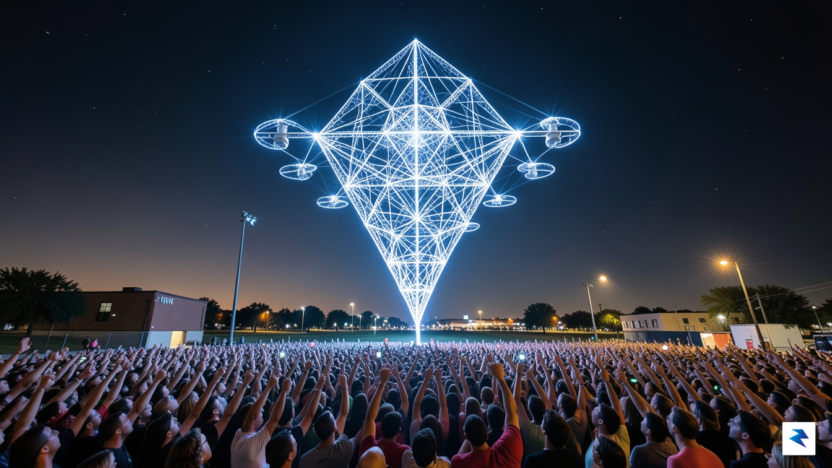

For centuries, the night sky has served as a canvas for our grandest celebrations, marked predominantly by the explosive brilliance of fireworks. From ancient China, where gunpowder was first harnessed for dazzling displays, to the global New Year’s Eve countdowns and national holidays of today, the crackle, boom, and vivid bursts of pyrotechnics have been synonymous with collective joy and awe. These spectacular events have woven themselves into the fabric of human tradition, creating shared memories and marking significant moments with a visceral, multi-sensory experience that few other spectacles could rival, cementing their place as an indispensable element of public gatherings across cultures.
The sensory impact of a traditional fireworks display is undeniably powerful; the smell of sulfur lingering in the air, the concussive force of a thunderous shell, and the fleeting, vibrant patterns that illuminate the darkness captivate audiences of all ages. This age-old artistry relies on precise chemical reactions and controlled explosions to paint fleeting masterpieces against the celestial backdrop. Indeed, the thrill of witnessing such a raw, uncontrolled spectacle has long been a part of its charm, fostering a sense of wonder and shared excitement that strengthens communal bonds and leaves a lasting impression on all who gather to watch.
However, the beauty of pyrotechnics comes with inherent drawbacks that have become increasingly scrutinized in our modern, environmentally conscious world. The explosive nature of fireworks releases significant amounts of smoke, particulate matter, and harmful chemicals—including heavy metals like barium, copper, and strontium—into the atmosphere. This atmospheric pollution can contribute to smog, degrade air quality, and even settle into water sources, posing risks to both human health and delicate ecosystems, particularly in urban areas or near sensitive natural habitats.
Beyond environmental concerns, traditional fireworks present considerable safety and logistical challenges. The risk of accidental fires, especially in dry conditions, is ever-present, leading to widespread bans and restrictions during drought periods. Furthermore, the intense noise pollution generated by fireworks can be distressing for pets, wildlife, and individuals sensitive to loud sounds, including veterans suffering from PTSD. The sheer effort involved in setting up, ensuring safety perimeters, and subsequently cleaning up the debris also adds to the operational complexity and cost, making these grand displays less feasible for frequent or small-scale events.
Amidst these growing concerns, a silent, precise revolution has begun to redefine what is possible in the night sky: the advent of drone light shows. This innovative technology offers a compelling and sophisticated successor to pyrotechnics, transforming the aerial spectacle from an exercise in controlled explosions into an elegant ballet of programmable light. Instead of fleeting bursts of fire and smoke, audiences are now treated to intricate, dynamic formations crafted by hundreds or even thousands of synchronized drones, each carrying an LED light.
The true marvel of drone light shows lies in their unparalleled precision and versatility. These intelligent swarms can be meticulously choreographed to form virtually any three-dimensional shape, animate complex sequences, or even project company logos and messages with breathtaking clarity and fluidity. Unlike the pre-set patterns of fireworks, drones enable real-time customization and storytelling, offering an entirely new dimension of artistic expression. This allows for narratives to unfold in the sky, creating deeply personal and thematic displays that resonate more profoundly with specific audiences or occasions.
Crucially, drone light shows address many of the limitations inherent in traditional fireworks. They produce no smoke, emit no harmful chemicals, and eliminate the risk of fire, making them a far safer and more environmentally friendly alternative. The noise generated is minimal, typically just a subtle hum, ensuring that the spectacle can be enjoyed by everyone without causing distress. Moreover, the drones are reusable, meaning that once an event concludes, the “magic” can be packed away and prepared for the next performance, significantly reducing waste and offering a more sustainable approach to aerial entertainment.
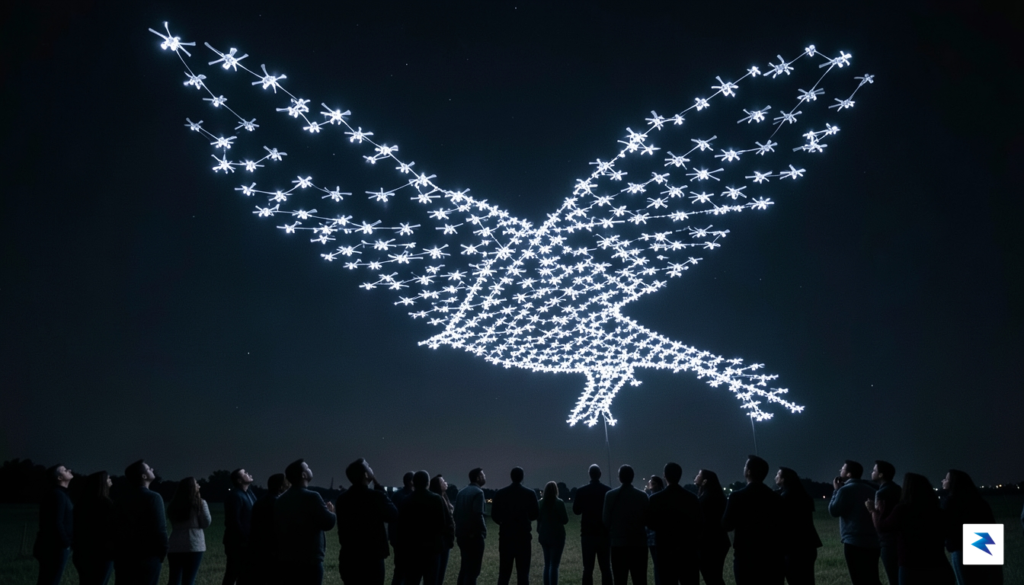
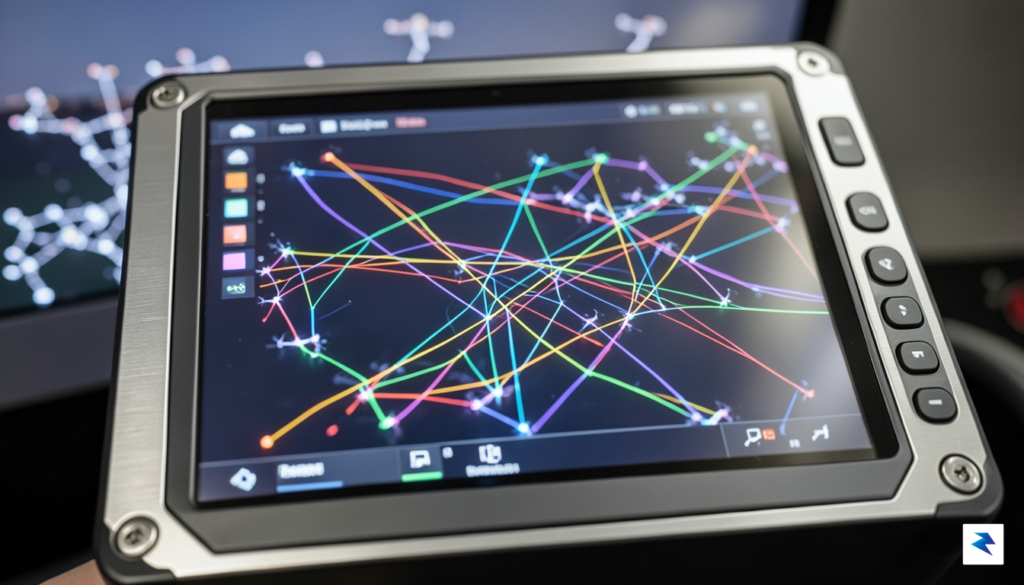
What initially appears to be a supernatural manifestation in the night sky is, in reality, a masterclass in swarm robotics and precision engineering. Unlike the chaotic, unpredictable nature of traditional pyrotechnics, which rely on chemical reactions and gravity to create fleeting bursts of light, drone swarms operate through a sophisticated network of synchronized intelligence. Each individual drone acts as a single pixel in a massive, three-dimensional digital canvas, governed by high-precision GPS-RTK (Real-Time Kinematic) technology. This system allows the drones to maintain centimeter-level accuracy even while moving at significant speeds, ensuring that every formation remains structurally sound and perfectly aligned with the choreographed vision.
The magic of the performance is dictated by complex swarm intelligence algorithms, which manage the spatial relationships between hundreds or even thousands of individual units. Rather than being controlled by a human pilot for each device, the entire fleet follows a pre-programmed flight path where every drone constantly communicates with its neighbors to avoid collisions and maintain its assigned coordinate. This fluid, deliberate choreography stands in stark contrast to the erratic sparks of a fireworks display; where fireworks scream and scatter, the drones glide with a silent, haunting grace. Because the movement is so intentional and structured, the viewer experiences a sense of order that feels almost meditative, transforming the sky from a backdrop of explosions into a theater of living geometry.

This precision triggers a deeper, more visceral sense of awe than traditional spectacles because it bridges the gap between cold, hard technology and ethereal artistry. When we watch a fireworks display, we are essentially observing a controlled combustion, a sensory overload that plays upon our primal excitement toward fire and noise. However, drone shows tap into a different psychological frequency—the human fascination with pattern, symmetry, and the impossible made real. Because the light is static and controllable, the drones can form recognizable shapes, fluid animations, and complex narratives that linger in the air, allowing the brain to process the image as a deliberate, conscious creation rather than a momentary accident of physics.
The true power of the drone swarm lies not in the brightness of its LEDs, but in the collective intelligence that allows metal and silicon to mimic the fluidity of a murmuration of starlings.
Ultimately, the transition from pyrotechnics to aerial robotics represents a significant shift in how we perceive the night sky. We are moving away from the era of the “explosion” and entering the era of the “installation,” where the sky is no longer just a canvas for debris, but a medium for data-driven storytelling. By stripping away the smoke and the thunder, these shows force us to focus entirely on the artistry of the movement, leaving us to marvel not just at the light itself, but at the incredible human ingenuity required to orchestrate such a delicate, soaring dance.
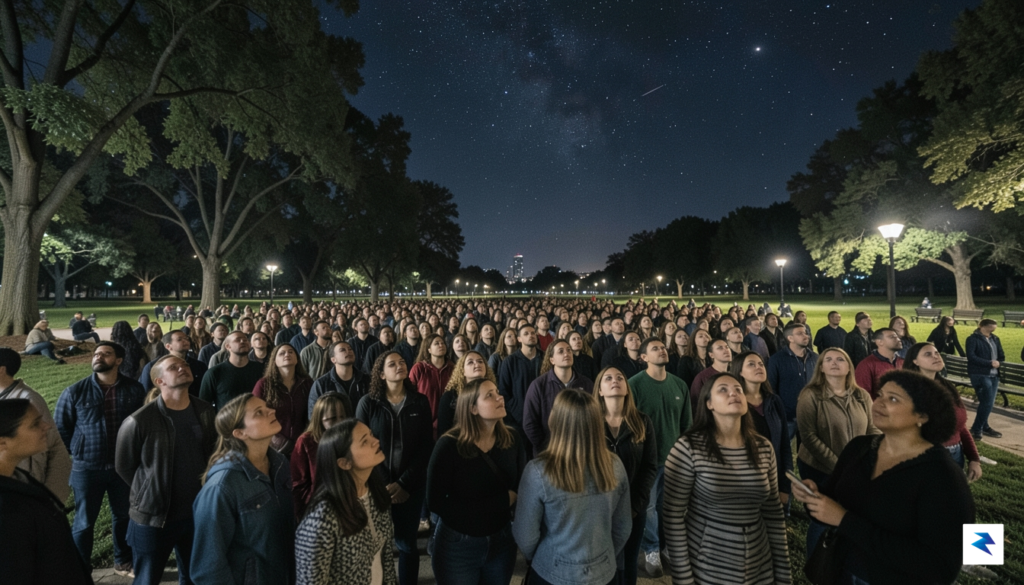
There is a profound, almost primal shift that occurs when a crowd of thousands collectively pivots their gaze toward the heavens. As the darkness of the night sky serves as a blank canvas, the sudden illumination of a choreographed drone swarm does more than just entertain; it triggers a phenomenon sociologists call collective effervescence. Originally coined by Émile Durkheim, this concept describes the moments when a community comes together to perform a shared action, creating a state of heightened emotional intensity that transcends the individual ego. In that stillness, the boundaries between self and stranger begin to blur, replaced by a singular, synchronized heartbeat of awe.
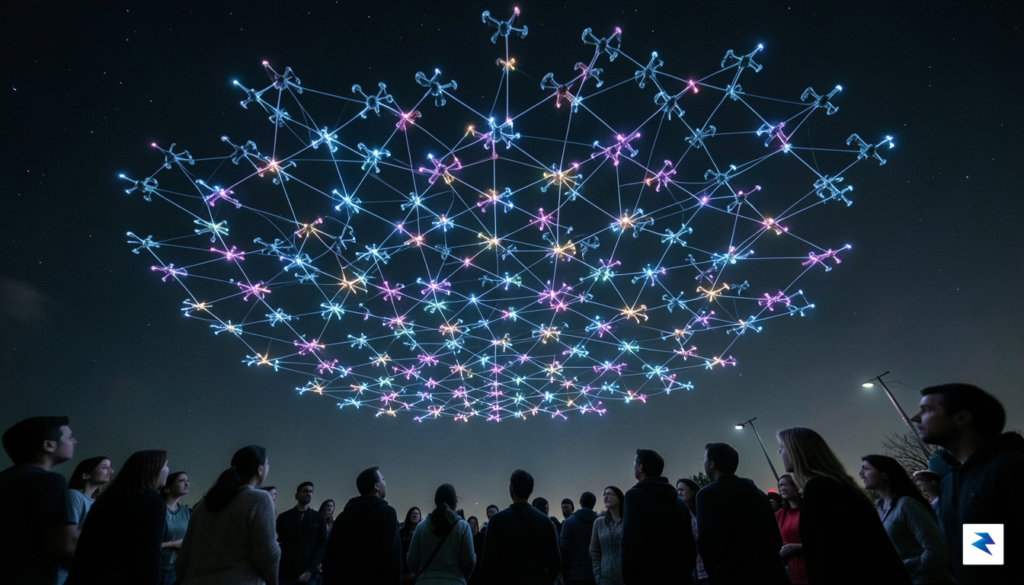
The visual scale of such a spectacle acts as a psychological catalyst, shrinking our personal anxieties while expanding our sense of belonging. When we are confronted with something gargantuan and luminous—something that occupies the vastness of the horizon—our brains move past analytical thinking and enter a state of non-verbal reverence. This is the same neurological mechanism triggered by the soaring arches of gothic cathedrals or the hushed silence of a mountain peak. By projecting intricate stories and symbols into the air, the drones act as a secular altar, demanding a communal pause in the frantic pace of modern life. It is in this suspended moment that we find a common language, one that requires no speech to articulate a shared experience of the sublime.
The true power of the aerial spectacle lies not in the technology itself, but in the way it forces us to inhabit the same present moment, effectively silencing our private distractions in favor of a unified, outward-looking wonder.
Furthermore, the shift from traditional fireworks to the precision of light-based drone displays represents a new frontier in how we curate collective memory. While fireworks are chaotic and fleeting, drones offer a deliberate, narrative-driven experience that mimics the structural storytelling found in ancient traditions. By watching these lights move in perfect harmony, we are subconsciously reminded of the beauty of order and the potential for human cooperation. We are not just watching machines; we are participating in a modern liturgy of light that reinforces our inherent need for connection. In a world increasingly defined by digital isolation and siloed perspectives, these aerial displays provide a rare, tangible opportunity to feel part of something larger, more beautiful, and infinitely more profound than the sum of our individual lives.
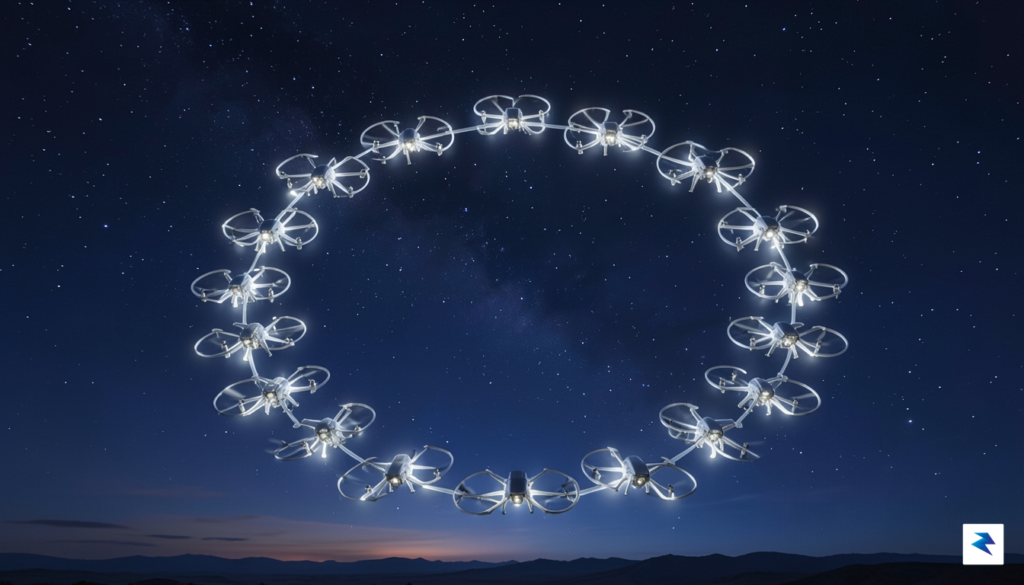
When the sky erupts into a choreographed symphony of light, controlled not by celestial forces but by lines of binary code, we find ourselves standing on the precipice of a new ontological reality. Arthur C. Clarke famously posited that any sufficiently advanced technology is indistinguishable from magic, but in the case of modern drone shows, it feels less like sorcery and more like a secular manifestation of the divine. As hundreds of luminous points converge to form intricate, shifting icons above our heads, the communal gasp of the crowd mirrors the hushed reverence found in ancient cathedrals. We are witnessing a transition where the digital spectacle serves as a surrogate for the sublime, filling the spiritual voids left behind by an increasingly mechanized and disenchanted world.
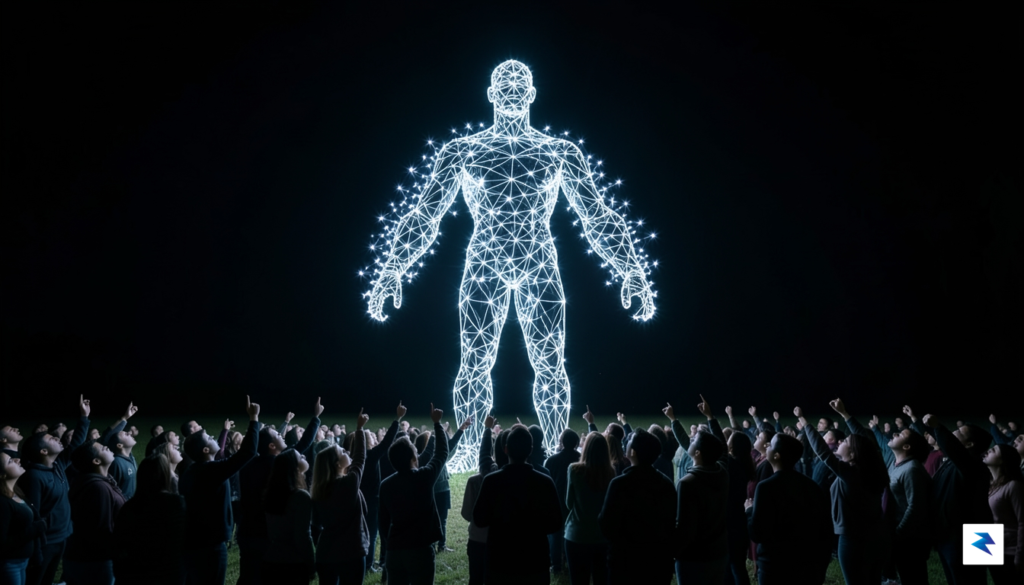
This fascination with grand, luminous displays suggests a deep-seated human desire to anthropomorphize the infinite. Just as early civilizations looked to the stars to map their gods, we now look to our own creations to reflect our deepest yearnings for order and meaning. When a drone swarm mimics the fluidity of a bird flock or the precision of a celestial body, it taps into a primal aesthetic response that we equate with holiness. It is not necessarily that we mistake the hardware for a deity, but rather that the sheer scale of the coordination invokes a sense of “technological transcendence.” In these moments, the machine ceases to be a tool and becomes a medium—a bridge between our limited human perspective and the boundless, complex possibilities of the digital future.
The search for the divine in the digital age is perhaps less about finding a literal savior and more about reclaiming a sense of wonder in a world that has been largely explained away by science.
However, we must critically examine whether such a programmed spectacle can ever offer genuine spiritual fulfillment. Can a pre-scripted sequence of light truly provide the soul-deep resonance of traditional religious ritual, or are we merely mistaking high-fidelity dopamine hits for authentic enlightenment? The danger lies in the passive consumption of these wonders; if our transcendence is merely a product of corporate engineering and algorithmic precision, it risks becoming a hollow echo of the very thing it seeks to replicate. While these aerial displays successfully capture our collective attention, the challenge remains to ensure that our awe does not end when the batteries die. Ultimately, the question is not whether technology can perform the work of the divine, but whether we are willing to settle for a flickering light in the sky when we could be searching for a deeper, more permanent connection to the mysteries that lie beyond the reach of any software.
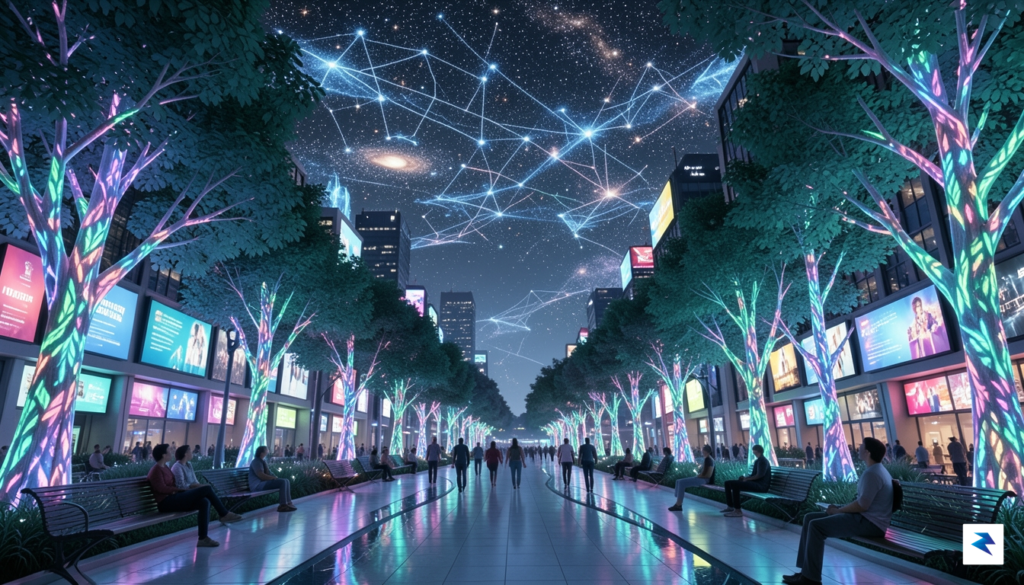
The transition from traditional pyrotechnics to sophisticated drone swarms represents one of the most significant shifts in the landscape of live entertainment in decades. We are witnessing a move away from the chaotic, noise-heavy explosions of the past toward a medium that offers precision, sustainability, and near-infinite scalability. While early drone displays were limited to small, local venues, the technology has rapidly matured to meet the demands of global stages like the Olympic Games. This scalability means that the sky is no longer just a backdrop for random bursts of color, but a digital canvas capable of rendering high-definition, three-dimensional narratives that can be synchronized perfectly with music, geography, and local history.
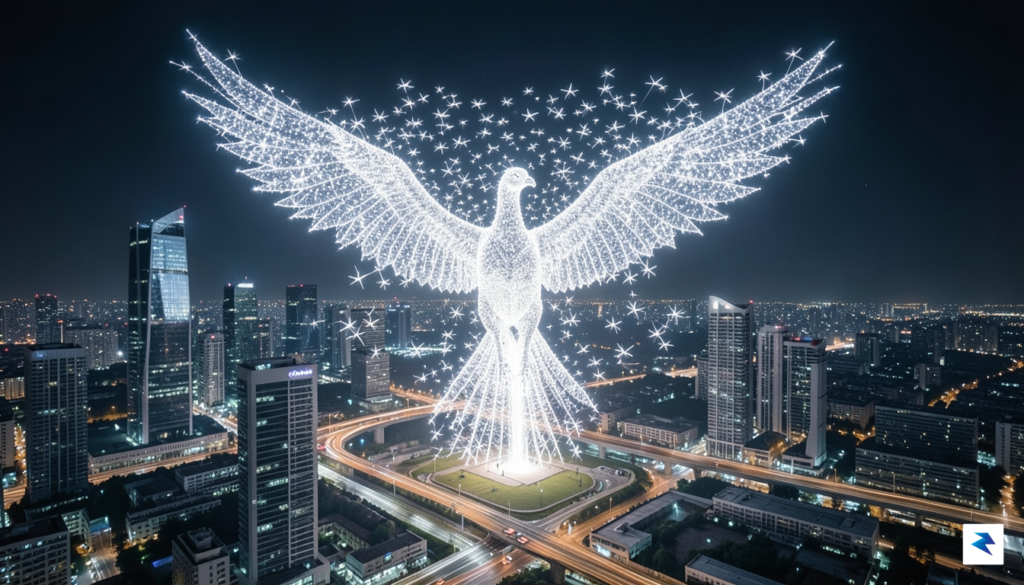
As we look toward the horizon, the next evolution of this technology will likely move beyond the passive observation of a pre-programmed light show. We are approaching an era of interactive aerial displays, where the crowd itself becomes an active participant in the storytelling process. Imagine a festival where collective movement, vocal input, or mobile app integration allows the audience to influence the shapes, colors, and themes unfolding above them in real-time. This creates a bidirectional relationship between the observer and the spectacle, transforming a static performance into a collaborative, community-driven event that bridges the gap between technology and human connection.
The true power of the drone swarm lies not in the machinery itself, but in its unique ability to turn the vast, empty canvas of the night sky into a shared, living memory for thousands of people at once.
Ultimately, while the tools we use to mark our milestones and celebrate our collective identity continue to advance at a breakneck pace, the underlying human impulse remains unchanged. Whether we were once gathering around a primitive bonfire or now looking up at a synchronized constellation of LEDs, our search for wonder is a constant thread in the human experience. By replacing the smoke and debris of fireworks with the clean, silent, and highly programmable dance of drones, we are not losing the magic of the spectacle; rather, we are refining our ability to express it. The future of public celebration is not merely about the sophistication of the tech, but about how effectively we can use that technology to remind ourselves of the stories that unite us.
You must be logged in to post a comment.