
Strait of Hormuz Tensions: Why Shipping Traffic is Dropping Amid Strike Risks
The Strategic Importance of the Strait of Hormuz The Strait of Hormuz functions as the literal jugular vein of the global energy market, a…


To grasp the necessity of retracting scientific work from an era long past, one must first confront the stifling reality of German academia during the Second World War. By the 1940s, the landscape of scientific inquiry had been fundamentally altered by the Nazi regime, which prioritized ideological alignment over the objective pursuit of knowledge. Institutions like the Kaiser Wilhelm Society—the predecessor to today’s Max Planck Society—found themselves caught in a harrowing tug-of-war between maintaining their international scientific prestige and navigating the brutal demands of a totalitarian state. For researchers of that period, every publication was scrutinized not only for its technical merit but for its potential utility to the war effort or its adherence to the narrow, often xenophobic, dictates of Nazi policy.
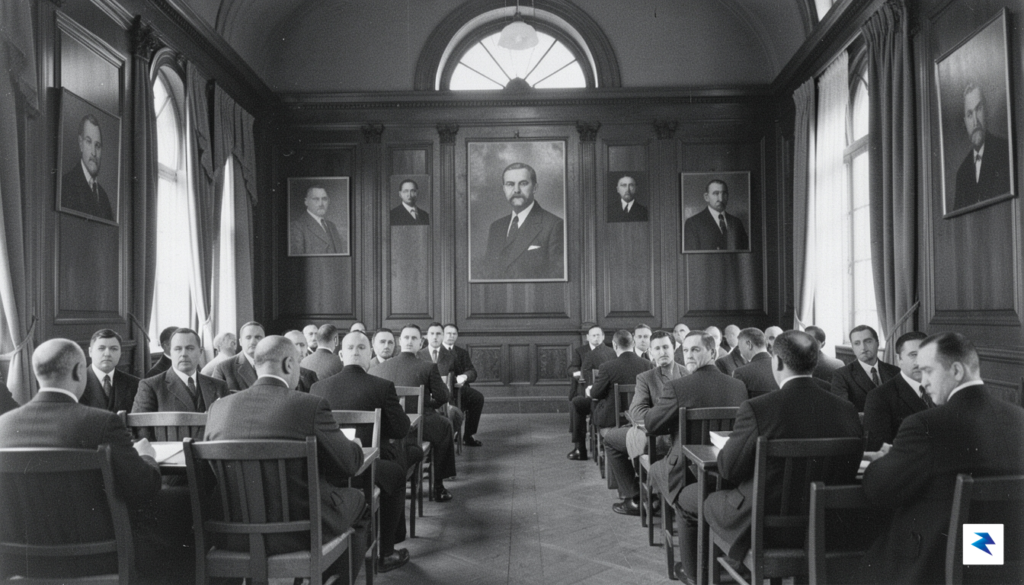
The academic environment was defined by a profound and forced isolation. As the war escalated, communication between German researchers and the global scientific community became increasingly severed, leading to a “siloing” of information. This isolation was compounded by the institutional pressure placed on figures like Max Planck, who, while often viewed as a moderate, remained an influential figurehead during a time when his organization was forced to purge Jewish members and conform to the shifting priorities of the Ministry of Education. Consequently, the research papers produced during this era were not created in a vacuum; they were artifacts of a compromised system where professional survival often required silence, compliance, or the repurposing of work to satisfy regime mandates.
The tragedy of 1940s science lies in the erosion of autonomy; when the state dictates the parameters of inquiry, the integrity of the scientific record inevitably suffers, leaving behind a legacy that requires modern reconciliation.
Today, the process of re-evaluating these historical documents has become a priority, driven by the unprecedented access provided by digitized archives. As historians and scientific organizations scour long-overlooked records, they are finding that what was once accepted as standard academic output often masked deeper ethical transgressions or systemic manipulation. The retraction of these 1940s papers is not merely an administrative correction; it is a vital part of a broader, ongoing effort to hold the history of science accountable to the truth. By systematically re-examining these files, the scientific community is attempting to rectify the historical record, ensuring that the shadows of the past do not continue to obscure the ethical boundaries of modern research.

The decision to retract two papers authored by Max Planck during the Second World War centers on the articles “Zur Quantentheorie des Ferromagnetismus” and “Beobachtungen über das Verhalten von Ferromagnetika”—both published in the journal Annalen der Physik in the early 1940s. These retractions are not a commentary on the validity of Planck’s foundational contributions to quantum mechanics, nor do they suggest that the underlying mathematical physics contained within these specific texts are fundamentally incorrect. Instead, the editorial board’s decision stems from a meticulous re-examination of the administrative and ethical irregularities that defined academic publishing in Nazi-controlled Germany. By subjecting these historical artifacts to the rigorous transparency standards of the 21st century, the journal aims to clarify that the circumstances of their dissemination were deeply compromised by the institutional pressures of the era.
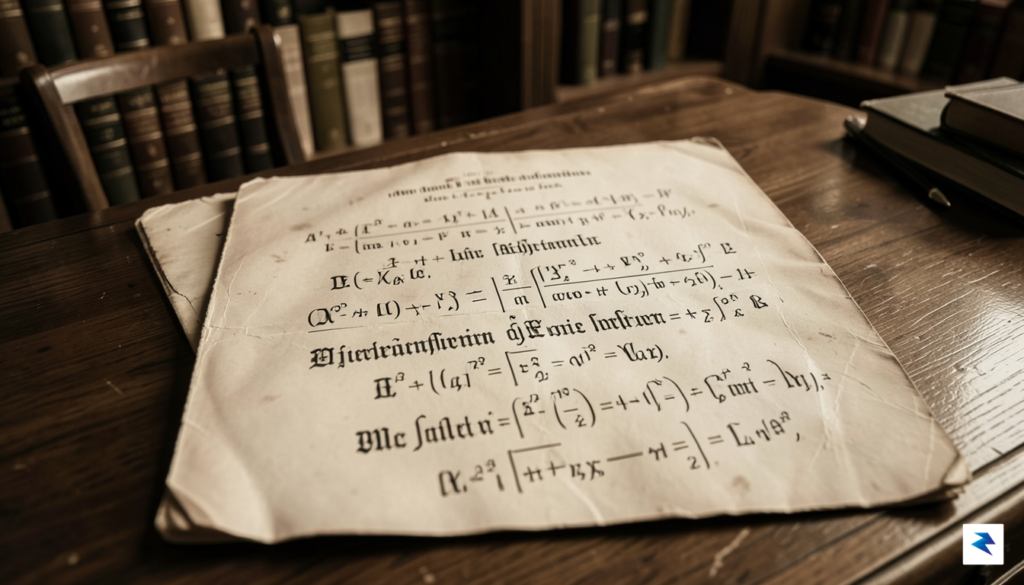
The primary concern regarding these papers involves the integrity of the peer-review process and the editorial oversight during a time when scientific discourse was heavily influenced by ideological mandates. Historical records indicate that the standard, rigorous vetting processes typically employed by Annalen der Physik were effectively bypassed or severely altered to serve the interests of the regime, casting doubt on the administrative legitimacy of the work. The retraction serves as a formal acknowledgment that the papers were published under conditions that lacked the necessary academic independence, rendering them incompatible with modern standards of scholarly integrity. As the editorial leadership noted in their public statement regarding the move:
“The retraction is intended to distance the current record from the compromised editorial practices of the 1940s, ensuring that the legacy of scientific publication remains anchored in transparency and independent peer review, rather than the political directives of a totalitarian state.”
It is crucial to distinguish between the scientific content and the procedural history of these documents. The retraction does not negate the fact that Planck was a pioneer whose work reshaped our understanding of the subatomic world; rather, it highlights the importance of institutional accountability. By formally retracting these papers, the journal is performing an act of historical correction, acknowledging that the administrative history of a paper is just as important as the data it contains. Ultimately, this action serves as a reminder that science does not exist in a vacuum; it is inextricably linked to the institutions that house it and the ethical frameworks that govern its publication.
Max Planck stands as a titan of modern physics, his discovery of the quantum of action effectively dismantling the constraints of classical mechanics and ushering in a new era of scientific inquiry. Yet, the recent decision to retract two of his papers from the 1940s forces the academic community to confront an uncomfortable reality: the intersection of monumental genius and the moral decay of the institutions that housed it. Planck operated within the Kaiser Wilhelm Society during the darkest chapters of German history, a period where scientific output became inextricably linked with the apparatus of a totalitarian state. By revisiting these papers decades later, we are not merely correcting the scientific record; we are acknowledging that the neutrality of research is often an illusion when the researcher functions as a high-ranking representative of an compromised regime.
The core of this ethical dilemma lies in the tension between historical preservation and institutional accountability. Retraction is a tool typically reserved for scientific fraud or catastrophic methodology errors, which raises the question of whether it is the appropriate mechanism for addressing the moral failings of a bygone era. Critics argue that applying modern ethical standards—often referred to as ‘presentism’—to figures of the past risks distorting history rather than clarifying it. If we begin to purge the archives of every scientist who operated under duress or within a corrupt bureaucracy, we may inadvertently erase the complex context that allows us to understand how such institutions collapse. However, proponents of the retraction argue that the prestige associated with these papers served as a form of implicit validation for the state-controlled science of the time, making their removal an act of symbolic restoration.
The challenge of historical reconciliation is not to erase the past, but to ensure that our reverence for scientific progress does not serve as a shroud for the complicity that often accompanied it.
Ultimately, the goal of this academic reckoning should be one of nuance rather than total cancellation. We must learn to hold two competing ideas in our minds simultaneously: that Planck’s work on thermodynamics and quantum theory remains a fundamental pillar of human knowledge, and that the circumstances under which he published during the 1940s were deeply tainted by the complicity of his professional environment. Instead of viewing the retraction as a final judgment, we should interpret it as an invitation to study the history of science more critically. By examining why these papers were published and how they were used to bolster the legitimacy of a regime, we gain a more holistic, if painful, understanding of what it means to be a scientist in a fractured world. This approach allows us to honor the intellectual advancement of the individual while refusing to shield the institutional failures of the past from the scrutiny of the present.

The decision to retract two papers authored by Max Planck in the 1940s serves as a poignant case study for the evolution of scientific oversight in the digital age. In an era where vast archives have been digitized and made instantly searchable, the vulnerabilities of long-buried research are no longer shielded by the passage of time or the obscurity of physical library shelves. This newfound digital transparency forces modern editorial boards to grapple with the complexities of historical records, moving away from a passive acceptance of legacy literature toward a more rigorous, active auditing process. When we discover that influential works were published under the shadow of ethical compromises or political coercion, the modern scientific community must decide whether to erase these documents or contextualize them, ensuring that the integrity of the record reflects our current understanding of both the data and the circumstances of its production.
Current standards for journal retractions have shifted significantly from the ad-hoc approaches of the mid-20th century, which often left controversial findings to languish in uncertainty. Today, the focus has moved toward a model of rigorous preservation that favors the “historical footnote” over the act of complete deletion. By retaining the original document while attaching a clear, permanent notice of retraction, journals can acknowledge the flaws—whether they stem from scientific error or moral failure—without pretending the paper never existed. This approach acknowledges that science is a human endeavor deeply embedded in the historical moment; erasing the past does not strengthen the future, but rather creates a sanitized version of history that prevents researchers from learning how external pressures can distort objective inquiry.

The goal of scientific record-keeping is not to curate a perfect history, but to maintain an honest one.
Ultimately, the retraction of Planck’s work underscores the necessity of maintaining an accurate, albeit complex, scientific history. When we allow historical papers to remain in the canon without addressing their problematic origins, we risk tacitly endorsing the conditions under which they were written. Conversely, by applying modern editorial scrutiny to these older texts, journals demonstrate that scientific integrity is not a static concept but a living responsibility. This process of re-evaluation ensures that the scientific record serves as a comprehensive map of human knowledge—including the detours and mistakes—thereby providing future generations with the full context required to understand the evolution of scientific thought and the moral weight of those who shaped it.
You must be logged in to post a comment.