
Sakana AI’s Fugu: A Breakthrough in LLM Inference Efficiency
Introduction: The Evolution of Large Language Model Efficiency The rapid ascent of Large Language Models (LLMs) has fundamentally reshaped our…


To understand the modern Federal Reserve, one must look beyond the familiar headlines regarding the federal funds rate and peer directly into the central bank’s balance sheet. For decades, the Fed operated with a relatively modest portfolio, but the financial crisis of 2008 fundamentally altered this trajectory. When traditional interest rate cuts reached their limit, the Fed pivoted toward large-scale asset purchases—a policy known as quantitative easing—which acted as a massive stimulus to keep credit flowing when the private banking system had effectively seized up. This shift transformed the balance sheet from a passive record-keeping document into the Fed’s primary lever for steering the national economy.
The mechanics of this process are rooted in the dual nature of the Fed’s assets and liabilities. On the asset side, the central bank holds a vast collection of U.S. Treasuries and mortgage-backed securities (MBS). By purchasing these assets in the open market, the Fed injects cash into the financial system, thereby increasing the supply of reserves held by commercial banks. Conversely, when the Fed decides to reduce its balance sheet—a process often called quantitative tightening—it allows these holdings to mature without reinvestment, effectively draining liquidity from the system. These movements serve as the plumbing of the global financial order, dictating how much capital is available for lending and investment.

The reason this strategy matters so deeply for the average household and business is that the size of the Fed’s balance sheet acts as a gravitational force on the cost of borrowing. When the Fed is an aggressive buyer of bonds, it lowers long-term interest rates, making it cheaper for companies to expand their operations and for families to secure affordable mortgages. However, when the central bank shrinks its footprint, it can inadvertently tighten financial conditions, leading to higher borrowing costs that ripple across the entire economy. As Kevin Warsh and other policy experts have noted, the sheer scale of these holdings means that even small adjustments can lead to significant market volatility.
The Federal Reserve’s balance sheet is effectively the control center for systemic liquidity; as its size fluctuates, the cost of capital throughout the entire economy adjusts in tandem, influencing everything from corporate investment cycles to the interest rates paid on consumer debt.
Ultimately, the era of “easy money” enabled by an expanding balance sheet has created a complex environment where market participants are hyper-sensitive to the Fed’s every move. Because the central bank’s holdings are so large, they exert a persistent influence on the prices of financial assets, often decoupling them from traditional economic fundamentals. For investors and policymakers alike, the path forward is not just about where the Fed sets its short-term interest rates, but how it intends to manage the unwinding of this massive portfolio without destabilizing the very markets it is tasked with protecting.

As a former member of the Federal Reserve Board of Governors, Kevin Warsh has long been a voice of intellectual rigor within the halls of monetary policymaking. His perspective carries significant weight, not merely because of his past tenure, but because he consistently challenges the central bank’s modern reliance on blunt, short-term instruments. While the financial media remains hyper-focused on the daily fluctuations of the federal funds rate, Warsh argues that this obsession misses the forest for the trees. To him, the true engine of market stability—or instability—lies in the sheer scale and composition of the Fed’s massive balance sheet, which he views as a more structural and potent lever than any incremental adjustment to borrowing costs.
Warsh’s primary concern centers on the unintended consequences of “quantitative easing” and the persistent liquidity that has defined the post-2008 era. He contends that by keeping the balance sheet bloated with trillions of dollars in assets, the Federal Reserve has inadvertently fostered a culture of market dependence. In this environment, investors have become conditioned to expect central bank intervention at the slightest sign of volatility, effectively dulling the natural price-discovery mechanisms of the free market. By prioritizing interest rate tweaks over the gradual shedding of these assets, Warsh believes the Fed is merely treating the symptoms of an over-stimulated economy rather than addressing the underlying structural reliance on artificial liquidity.

“The balance sheet is not merely an accounting artifact; it is a mechanism that dictates the cost of capital and the risk appetite of the entire global financial system.”
Furthermore, Warsh highlights that the normalization of the balance sheet is a far more delicate and consequential operation than the setting of interest rates. When the Fed sells off assets or allows them to mature without reinvestment, it directly removes the “excess reserves” that have been sloshing through the banking system for over a decade. He warns that if this process is handled poorly or communicated unclearly, it could lead to sudden liquidity crunches that are far more difficult to manage than a simple shift in the overnight rate. Consequently, he advocates for a more transparent and systematic approach to reducing the Fed’s footprint, arguing that a bloated balance sheet acts as a permanent thumb on the scale, distorting everything from corporate bond yields to equity valuations.
Ultimately, Warsh’s critique serves as a call for a return to more traditional monetary discipline. He suggests that by focusing too heavily on the federal funds rate, the Federal Reserve risks being trapped in a cycle of reactive policy that ignores the structural imbalances created by years of asset accumulation. For investors and policymakers alike, his message is clear: the path to a sustainable economic recovery requires more than just adjusting the price of money; it demands a fundamental reassessment of the central bank’s role as the primary provider of market stability.

To understand the current economic landscape, one must view Quantitative Tightening (QT) as the metaphorical “drain” being pulled on the massive pool of liquidity the Federal Reserve created during years of crisis management. While interest rate hikes act as a blunt instrument to influence the cost of borrowing, QT is a more surgical reduction of the monetary base itself. When the Fed engages in QT, it stops reinvesting the proceeds from the maturing bonds it holds on its balance sheet. Instead of rolling these assets over into new debt, the central bank allows them to “roll off,” effectively retiring that money from circulation and shrinking its overall footprint in the financial markets.
The distinction between adjusting interest rates and conducting QT is fundamental to how the economy breathes. Interest rate policy dictates the “price” of money, signaling to businesses and consumers how expensive it should be to take on debt. Conversely, QT targets the “quantity” of money. By reducing its holdings of Treasury securities and mortgage-backed securities, the Fed drains reserves from the banking system. When banks have fewer reserves held at the central bank, their capacity to extend credit and manage day-to-day liquidity shifts, creating a tighter environment that can dampen inflationary pressures but also restrict the flow of capital to productive sectors.

This process is not without its perils, particularly regarding the stability of the broader financial ecosystem. The primary risk inherent in this withdrawal of liquidity is the potential for “market accidents”—sudden, unexpected periods of volatility where the supply of cash fails to meet the demand of market participants. Because the financial system has become accustomed to an environment of excess reserves, removing that cushion too rapidly can cause stress in critical funding markets, such as the overnight repo market. If liquidity dries up too quickly, it can lead to spikes in borrowing costs that the Fed did not intend, potentially forcing a defensive pivot that complicates their broader inflation-fighting goals.
Quantitative Tightening represents a delicate balancing act: removing the excess stimulus of the past without triggering a liquidity crunch that could destabilize the present.
Ultimately, the challenge for policymakers is determining the “neutral” level of reserves required for the system to function smoothly. If they stop the balance sheet reduction too early, they risk leaving behind inflationary pressures; if they persist for too long, they risk breaking the plumbing of the financial markets. As observers like Kevin Warsh have pointed out, we are currently navigating an era where the size of the central bank’s balance sheet is arguably as influential as the target federal funds rate. Investors must therefore look beyond simple interest rate projections and pay close attention to the pace of this runoff, as it serves as a primary indicator of how much “fuel” is being removed from the economic engine.

The Federal Reserve’s deliberate move to shrink its colossal balance sheet signals a profound shift in the underlying mechanics of financial markets, ushering in a new era distinct from the “easy money” policies that largely defined the post-2008 landscape. For over a decade, the Fed’s expansive asset purchases, known as Quantitative Easing (QE), injected vast amounts of liquidity into the system, suppressing borrowing costs and inflating asset prices. Now, through Quantitative Tight

While the intricacies of central banking often feel disconnected from the day-to-day reality of personal finance, the Federal Reserve’s balance sheet acts as the foundational plumbing for the entire global economy. When the Fed expands its balance sheet, it essentially injects liquidity into the system, which can artificially suppress interest rates and inflate asset prices. Conversely, as the Fed pursues a strategy of balance sheet normalization, it drains that excess liquidity, creating a far more challenging environment for borrowers and investors alike. For the average individual, this shift represents a move away from the “easy money” era that defined the last decade, necessitating a more disciplined approach to managing personal capital.
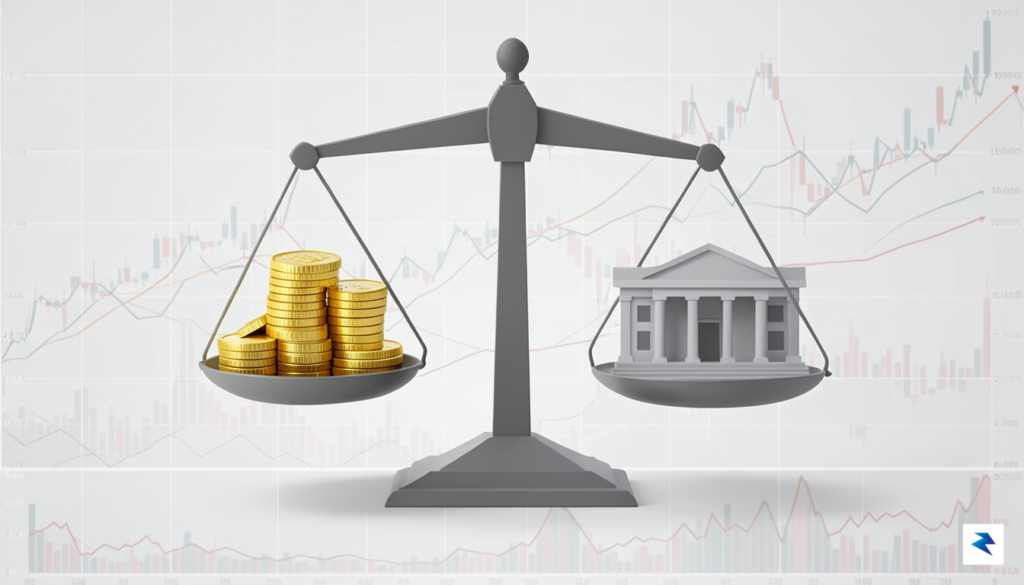
To navigate this transition, it is essential to adopt a defensive financial posture that prioritizes stability over speculative growth. In an environment where liquidity is constrained, market volatility often increases, making it vital to maintain a robust emergency fund that can withstand unexpected economic headwinds. Rather than reaching for high-risk assets in search of yield, savers should look toward high-quality, liquid instruments that can provide a buffer against potential market corrections. Furthermore, it is a prudent time to stress-test your debt obligations; if you carry variable-rate debt, consider the implications of a sustained high-interest-rate environment and prioritize paying down those liabilities before the cost of borrowing climbs even higher.
“The transition from a state of abundant liquidity to one of scarcity is not merely a technical adjustment; it is a fundamental shift in the gravitational pull of the economy that requires investors to rethink their risk appetite.”
Beyond individual defensive tactics, staying informed about the Federal Reserve’s exit strategy is no longer just for professional economists. The central bank’s communications serve as the primary roadmap for how quickly they intend to shrink their holdings of government bonds and mortgage-backed securities. By paying close attention to the minutes from Federal Open Market Committee (FOMC) meetings and official policy statements, you can gain a better understanding of the trajectory for credit availability and potential shifts in market interest rates. Ultimately, those who remain vigilant and prepared for the reality of a leaner balance sheet will be far better positioned to preserve their purchasing power, regardless of how the broader economic cycle unfolds.
You must be logged in to post a comment.