
Fed Holds Steady: What Warsh’s First Meeting Means for Your Wallet
The Fed’s Stance: Navigating Inflationary Pressures In a move that signals a deliberate pivot toward patience, the Federal Reserve opted to…

While the Federal Reserve’s interest rate decisions frequently grab the loudest headlines, often reducing complex economic strategy to a simple ‘hold’ or ‘raise,’ the true depth of monetary policy unfolds within the accompanying policy statement. This meticulously crafted document, issued after each Federal Open Market Committee (FOMC) meeting, is far more than a mere formality; it serves as a critical tool for managing economic expectations, guiding market participants, and signaling potential shifts in the central bank’s strategy long before any actual rate change occurs. Understanding the nuances of this ‘Fed Speak’ is paramount for anyone seeking to decipher the future direction of the economy.
This carefully constructed language is designed to convey the FOMC’s collective outlook and intentions with precision, minimizing the risk of misinterpretation that could otherwise trigger unwarranted market volatility. The committee understands that every word, every comma, and every deleted or added phrase will be dissected by economists, analysts, and investors worldwide. Consequently, the statement becomes a high-stakes communication exercise, where the Federal Reserve aims to achieve a delicate balance: providing sufficient transparency to foster stability, while retaining the flexibility to adapt to evolving economic conditions without causing undue alarm.

Through carefully chosen words, the Fed uses its statement to manage inflation expectations, a cornerstone of stable economic growth. By reiterating its commitment to price stability and full employment, and by outlining its assessment of current economic conditions, the FOMC attempts to anchor public and market beliefs about future inflation rates. This forward guidance is an immensely powerful tool, as it can influence borrowing and lending decisions, consumer spending, and business investment, all without a single percentage point adjustment to the federal funds rate. Market participants, from institutional investors to individual savers, scrutinize every sentence, looking for clues about the economic outlook and the Fed’s reaction function.
Furthermore, subtle shifts in phrasing within these statements can signal significant policy pivots, often months in advance of their implementation. For instance, a change from “the committee expects inflation to remain subdued” to “the committee notes upside risks to inflation” could indicate a shift towards a more hawkish stance, even if rates remain unchanged. Similarly, altering language regarding the pace of future rate adjustments—moving from “gradual increases” to simply “future adjustments”—can hint at greater flexibility or a faster timeline. These seemingly minor linguistic alterations are not accidental; they are deliberate signals intended to prepare markets for potential future actions, allowing for an orderly adjustment rather than a sudden shock.
Indeed, in an economic landscape increasingly defined by data dependency, the ‘what’ of the rate decision—whether rates were held or moved—often becomes secondary to the ‘why’ and ‘how’ articulated in the written statement. The accompanying text provides the crucial context, explaining the committee’s rationale, its assessment of economic data, and its outlook on risks. It is here that the true pulse of monetary policy is felt, offering a comprehensive narrative that informs, guides, and ultimately stabilizes the financial system far more effectively than any headline rate change could on its own.

The most recent Federal Reserve policy statement serves as a definitive departure from the dense, often opaque language that defined the institution’s communications for the better part of a decade. Under the influence of Kevin Warsh, the narrative has shifted away from the predictable, formulaic cadence of “data-dependent” caveats and toward a tone characterized by surgical precision. Where previous iterations of the statement were laden with layers of hedging—designed to keep market reactions muted—this document prioritizes clarity, forcing the central bank to confront the economic reality of a dual mandate in a state of flux. By stripping away the bureaucratic padding, Warsh is signaling a commitment to a new rhetorical strategy that values institutional accountability over the comfort of ambiguity.

Warsh’s economic philosophy, which often emphasizes the importance of market signaling as a tool for stability rather than a mechanism for obfuscation, is clearly reflected in the structural changes of this latest release. The document is notably shorter, eschewing the expansive and frequently repetitive prose that historically left analysts parsing single adjectives for signs of a pivot. Instead, the language is direct, focusing on core economic indicators without relying on the dense, technical jargon that often obscured the Fed’s true policy intentions. This move toward brevity is not merely a stylistic preference; it is a calculated effort to minimize “Fed-speak” and reduce the noise that has historically contributed to market volatility whenever the central bank speaks.
The mark of effective leadership in monetary policy is not the ability to say everything, but the courage to say only what is necessary to anchor expectations.
The shift in tone suggests that the Fed is attempting to reconcile its long-standing reliance on forward guidance with the unpredictable nature of today’s economic landscape. By adopting a more concise and candid style, Warsh is establishing a framework where the central bank’s logic is transparent, even when the future path of interest rates remains uncertain. This recalibration serves as a reminder that transparency is not about revealing every future move, but about clearly explaining the decision-making process behind current ones. As investors and economists continue to analyze these changes, it becomes clear that the “Warsh Effect” is fundamentally about restoring the Fed’s voice as a reliable instrument of economic communication, rather than an enigma that requires constant decryption.

A meticulous line-by-line comparison between the most recent Federal Reserve statement and its predecessor reveals a fundamental shift in the central bank’s rhetorical architecture. Where previous communications relied on a “wait-and-see” framework—a passive posture characterized by vague assurances that data would dictate the path forward—the new language signals a transition toward a “proactive but cautious” stance. By replacing ambiguous qualifiers with more precise, policy-oriented terminology, the Fed is essentially recalibrating market expectations. This evolution suggests that the current leadership is less concerned with maintaining a predictable status quo and more focused on signaling a high-alert sensitivity to emerging volatility in the broader economy.
One of the most significant linguistic pivots is found in the treatment of inflationary persistence versus labor market health. Previously, the committee frequently leaned on the term “transitory” or implied that cooling in the job market was a natural, manageable byproduct of restrictive policy. The latest statement, however, strips away those comforting descriptors, adopting a more clinical tone regarding the stickiness of price pressures. Instead of framing labor market cooling as a secondary concern, the updated language elevates it to a primary risk, suggesting that policymakers are no longer willing to view employment data through a singular lens of necessary adjustment. This subtle change confirms that the Fed’s internal calculus has shifted to prioritize the stability of the workforce just as heavily as the target inflation rate.

The shift from passive observation to active framing indicates that the Fed is no longer simply reading the economic weather; it is preparing for the possibility of a storm by tightening the vocabulary surrounding its dual mandate.
Furthermore, the removal of certain “balanced risks” phrasing marks a departure from the previous consensus-driven narrative. By choosing to highlight specific downside risks to growth rather than treating all economic indicators as equally weighted, the statement invites a more granular analysis of how the Fed views current policy constraints. This shift toward “proactive caution” implies that the committee is actively testing the boundaries of its current restrictive settings, looking for signs of strain before they manifest in headline data. For market observers, this is a clear signal that the era of relying on autopilot policy is over; the new communication strategy demands that participants pay closer attention to the nuance of each word, as the Fed is now signaling its intent to maneuver with greater precision and far less hesitation than in the recent past.
When the Federal Reserve updates its official statement, the reaction in Treasury markets is often instantaneous, acting as a high-speed barometer for investor sentiment. Following the release of the latest policy language, bond yields have demonstrated a newfound sensitivity to even the subtlest shifts in phrasing. Institutional investors, armed with algorithmic tools that parse every syllable for signs of hawkish or dovish intent, often drive volatility in the short-term before a broader stabilization occurs. This initial turbulence highlights a fundamental truth: the bond market no longer simply reacts to the interest rate decision itself, but rather to the nuanced, evolving narrative of how the central bank views the horizon of inflation and economic health.
The concept of “forward guidance” has become the primary mechanism through which the Fed attempts to anchor market expectations, yet this tool is increasingly double-edged. By signaling a potential path for future rates, the Fed seeks to stabilize long-term borrowing costs; however, this creates a rigorous accountability trap. If the central bank commits too firmly to a specific trajectory, it risks losing the agility required to respond to unforeseen economic shocks. Consequently, we are seeing a shift toward more guarded, conditional language. This evolution is designed to retain policy flexibility, ensuring that the Fed is not forced into a corner by its own previous promises when data points begin to deviate from forecasted models.
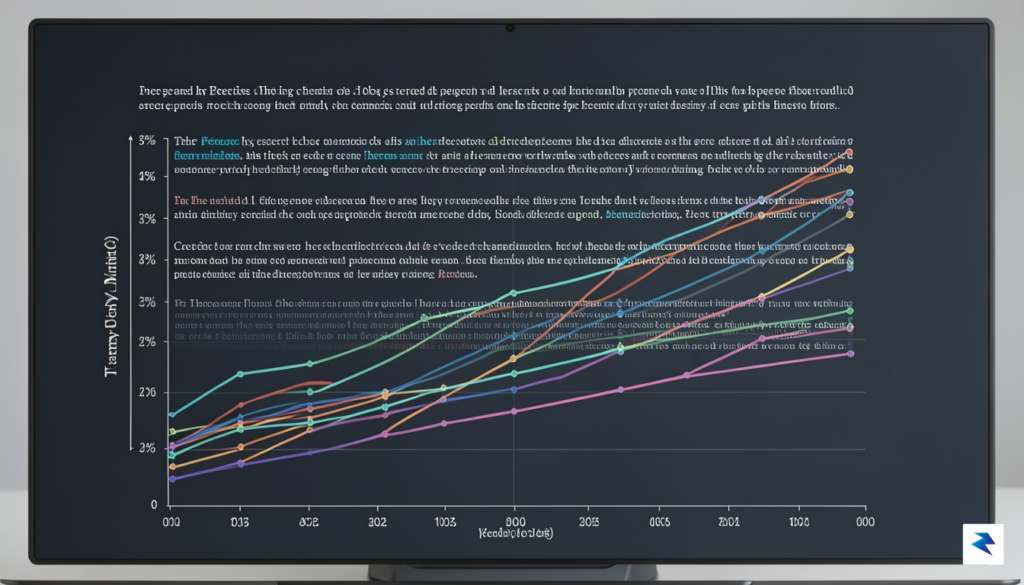
This tactical ambiguity often leads to a visible disconnect between Wall Street’s aggressive pricing and the official, measured prose emanating from Washington. While the Fed may emphasize a “data-dependent” approach that keeps all options on the table, equity markets often attempt to “price in” a definitive pivot months before officials are willing to commit. This friction occurs because institutional traders are inherently forward-looking, constantly discounting future risks into current asset prices. When the Fed’s statement is intentionally opaque, it forces these market participants to interpret silence as a signal, often leading to rallies or sell-offs that the Fed neither intended nor predicted.
The core challenge for modern monetary policy lies in the delicate balance between providing enough clarity to soothe volatile markets and maintaining enough mystery to avoid being shackled by outdated guidance.
Ultimately, the future trajectory of monetary policy will likely be defined by this ongoing tug-of-war between the Fed’s desire for linguistic precision and the market’s insatiable demand for certainty. As we move deeper into this cycle, the importance of the official statement has transcended its role as a simple summary of policy; it has become a strategic instrument of communication. Investors who can successfully decode the evolving lexicon—distinguishing between mere rhetorical adjustments and fundamental shifts in the Fed’s reaction function—will be the ones best positioned to navigate the complexities of the current macroeconomic landscape.

The Fed’s latest policy communication serves as a window into a high-stakes balancing act, where every shift in syntax is designed to manage market expectations without triggering volatility. By opting for precise, measured rhetoric, the central bank is attempting to navigate the precarious terrain between persistent inflationary pressures and the looming threat of a cooling labor market. This strategic choice of words reveals an institution acutely aware that its influence is as much about psychological signaling as it is about interest rate adjustments. The challenge lies in the delicate equilibrium of conveying resolve against rising prices while acknowledging the fragility of the current expansion, a task that requires a masterful command of tone and timing.
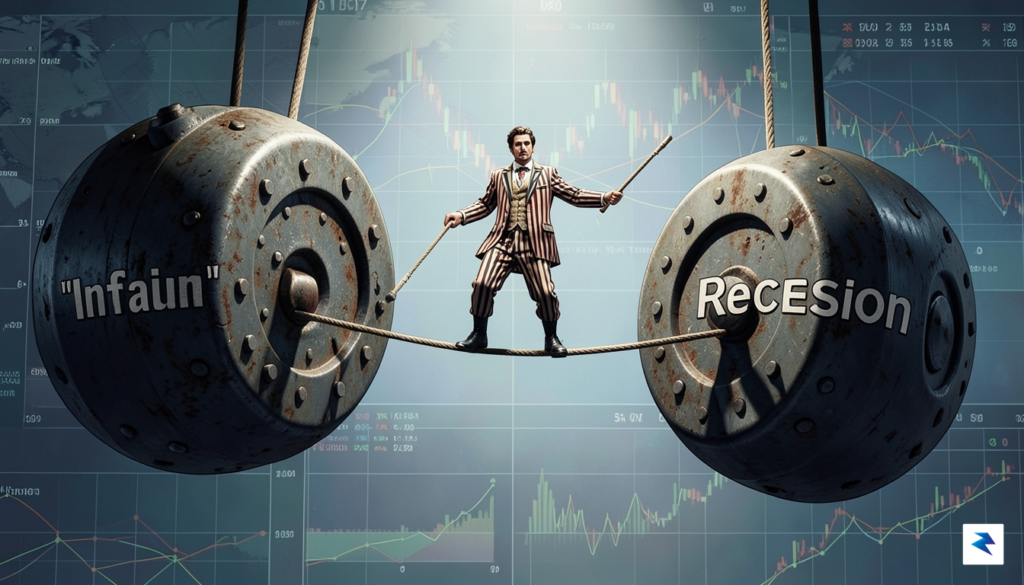
There is an inherent risk in this modern era of hyper-transparency, where the Fed risks “over-communicating” and inadvertently spooking investors with every minor tweak to its guidance. If the language becomes too granular or reactionary, it may invite unnecessary market turbulence, forcing the Fed to spend more time clarifying its stance than actually executing policy. Conversely, remaining too silent risks leaving the public in a state of speculative anxiety, which can be equally destabilizing. Finding the “Goldilocks” zone—where the message is clear enough to provide confidence but broad enough to remain flexible—has become the defining challenge for leadership in the current administration.
Ultimately, the strength of the Fed’s messaging lies not in its ability to predict the future, but in its capacity to anchor market stability while remaining humble in the face of unpredictable economic shocks.
Moving forward, investors and the general public should prioritize the underlying economic data—specifically employment figures, consumer spending habits, and core inflation metrics—as the true North Star for policy shifts. While the nuances of the Fed’s statements will continue to be parsed by analysts for clues about the next meeting, it is vital to remember that words are merely reactive to the hard evidence of the marketplace.
In the coming months, watch for three key indicators that will signal the Fed’s next move:
Ultimately, while the rhetorical evolution of these statements offers a roadmap of the Fed’s mindset, the journey remains tethered to the ground truth of the national economy. As the central bank treads this narrow path, observers should focus on the data as the primary driver of policy, using the Fed’s language as a secondary guide to how the institution perceives the shifting winds of the global financial landscape.
You must be logged in to post a comment.