Why Privacy Advocates Are Fighting X’s Latest FTC Waiver Request
The X vs. FTC Consent Order: A Privacy Battleground The current legal friction between X—formerly known as Twitter—and the Federal Trade…
After years of intense legal scrutiny and a protracted battle across European courts, the European Court of Justice (ECJ) has delivered its definitive verdict, upholding a significant antitrust fine against Google. This ruling marks the culmination of a case initiated by the European Commission, cementing a pivotal moment in the ongoing global efforts to regulate the expansive power of digital markets. The ECJ, serving as the highest court in the European Union, has effectively put an end to Google’s appeals, confirming the substance of the Commission’s findings regarding the tech giant’s practices with its Android operating system.
The saga began in 2018 when the European Commission first imposed a staggering €4.34 billion fine on Google. At the heart of the Commission’s accusations was the assertion that Google had abused Android’s dominant position to illegally strengthen its search engine’s market power. Specifically, the Commission found that Google required device manufacturers to pre-install the Google Search app and the Chrome browser as a condition for licensing its Play Store, an essential component for Android devices. Furthermore, Google allegedly made payments to large manufacturers and mobile network operators on condition of exclusive pre-installation of Google Search on their devices, effectively stifling competition and consumer choice in the mobile search market.
Google, naturally, mounted a robust defense, arguing that Android is an open-source platform that has fostered innovation and competition, allowing device makers significant flexibility and offering consumers a wide array of choices. The company contended that its agreements with manufacturers were voluntary and necessary to ensure a consistent user experience across the Android ecosystem, ultimately benefiting both users and developers. Google also highlighted the fierce competition it faces from Apple’s iOS, asserting that consumers are free to choose between different operating systems and customize their devices with alternative apps.
However, the European Commission’s legal arguments focused heavily on the concept of “tying” – where the dominant position in one market (Android) is leveraged to gain an unfair advantage in another (search and browser services). The Commission maintained that Google’s practices created an insurmountable barrier for rival search engines and web browsers, effectively denying them the opportunity to compete on merit. This, they argued, limited consumer choice and hindered innovation in the broader digital landscape, undermining the very principles of a free and fair market.
The ECJ’s final decision, while slightly reducing the original fine to €4.125 billion on technical grounds related to specific elements of the Commission’s calculations, overwhelmingly affirmed the core findings of abuse of dominance. This judgment is legally binding and cannot be appealed further, sending an unequivocal message to all major tech players about the strict enforcement of antitrust laws in the EU. It underscores the Commission’s firm resolve to ensure that even dominant digital platforms operate within the boundaries of fair competition, potentially paving the way for similar regulatory actions in other jurisdictions and against different tech giants.

At the heart of the European Commission’s massive antitrust case was the assertion that Google leveraged the ubiquity of the Android operating system to protect its search engine monopoly. Rather than competing solely on the merits of its software, regulators argued that the company utilized its market power to create an environment where rivals had virtually no chance to gain a foothold. By conditioning the access to its most essential services on the adoption of its entire software suite, Google effectively turned Android into a private walled garden that prioritized its own revenue streams over consumer choice.
The first pillar of this anticompetitive strategy involved mandatory bundling. Manufacturers wishing to offer the Google Play Store—a non-negotiable requirement for any commercially viable Android device—were forced to pre-install the Google Search app and the Chrome browser. This “all-or-nothing” approach ensured that Google’s primary traffic drivers were present on virtually every device sold in Europe, granting them an immediate and massive advantage over third-party alternatives. Because most casual users rarely seek out or install competing browsers or search tools, this practice effectively cemented Google’s dominance in mobile search queries, creating a self-reinforcing cycle of data collection and ad revenue.
Furthermore, Google implemented strict measures to prevent the fragmentation of the Android ecosystem, effectively stifling innovation in alternative operating systems. Under the terms of their “Anti-Fragmentation Agreements,” OEMs were prohibited from selling devices running “forked” versions of Android—modified versions of the open-source code that did not include Google’s proprietary services. By penalizing manufacturers who dared to experiment with these alternative operating systems, Google successfully eliminated potential competitors before they could even gain traction in the market. This limitation meant that even if a hardware maker wanted to pivot toward a different software experience, the threat of losing access to the essential Google Play Store served as a powerful deterrent.
Finally, the Commission highlighted the use of lucrative financial incentives to solidify this control. Google engaged in “revenue-sharing agreements” that paid manufacturers and mobile network operators to exclusively pre-install Google Search on their devices. These payments were specifically contingent on the manufacturer agreeing not to bundle any competing search engines on those same handsets. By effectively buying out the competition’s distribution channels, Google ensured that their search engine remained the default, making it prohibitively expensive and logistically difficult for any rival to achieve meaningful market penetration on the most popular mobile platforms.
The core of the issue was not that Google created a successful product, but that they used contractual obligations to eliminate the possibility of a fair, competitive marketplace for mobile software and search services.
Together, these three practices functioned as a comprehensive mechanism for maintaining market dominance. By controlling the app store, restricting software variety, and incentivizing exclusivity, Google managed to neutralize competitive threats from smaller, specialized technology firms. The EU ruling serves as a landmark acknowledgment that even in a digital ecosystem built upon open-source foundations, contractual leverage can be used to stifle the very competition that drives technological progress and consumer utility.

While a €4.1 billion penalty is staggering by any objective standard, it represents only a fraction of the massive cash reserves held by Google’s parent company, Alphabet. To put this figure into perspective, the fine represents less than a quarter of the company’s quarterly net income during its most profitable periods. Because Alphabet operates on such a gargantuan scale, there is a persistent, heated debate among market analysts and policymakers regarding whether these financial levies act as genuine deterrents or if they have simply been relegated to the status of a routine “cost of doing business.” When a fine, no matter how record-breaking, fails to fundamentally alter the underlying profit model of a tech giant, regulators fear that the penalty becomes little more than a tax on market dominance rather than a corrective measure.

The strategic weight of this ruling extends far beyond the bank balance of the company. Investors and market watchers often monitor such antitrust decisions with keen interest, as they can trigger shifts in stock sentiment and long-term valuation models. Although Alphabet’s stock price has shown a remarkable degree of resilience in the face of previous regulatory crackdowns, the finality of this court ruling sends a clear, unmistakable signal to the market: the European Union is entering a new, more aggressive era of digital enforcement. This change in the regulatory climate may force institutional investors to recalibrate their risk assessments, moving away from viewing antitrust litigation as a manageable legal nuisance and toward seeing it as a recurring structural threat to future growth and expansion.
The true impact of this ruling lies not in the immediate cash outflow, but in the precedent it sets for the future of digital competition policy in Europe and beyond.
Furthermore, the long-term economic repercussions are tied to the operational changes forced upon the company. By requiring Google to decouple its search and browser apps from the Android operating system, the EU is effectively dismantling the “walled garden” strategy that has long underpinned the company’s mobile dominance. If these forced changes result in a measurable loss of market share for Google services, the cumulative financial impact will eventually dwarf the initial €4.1 billion fine. Ultimately, this ruling is a watershed moment that suggests regulators are no longer content with merely collecting fines; they are increasingly focused on restructuring how digital ecosystems function to ensure a more competitive landscape for smaller developers and rival platforms.
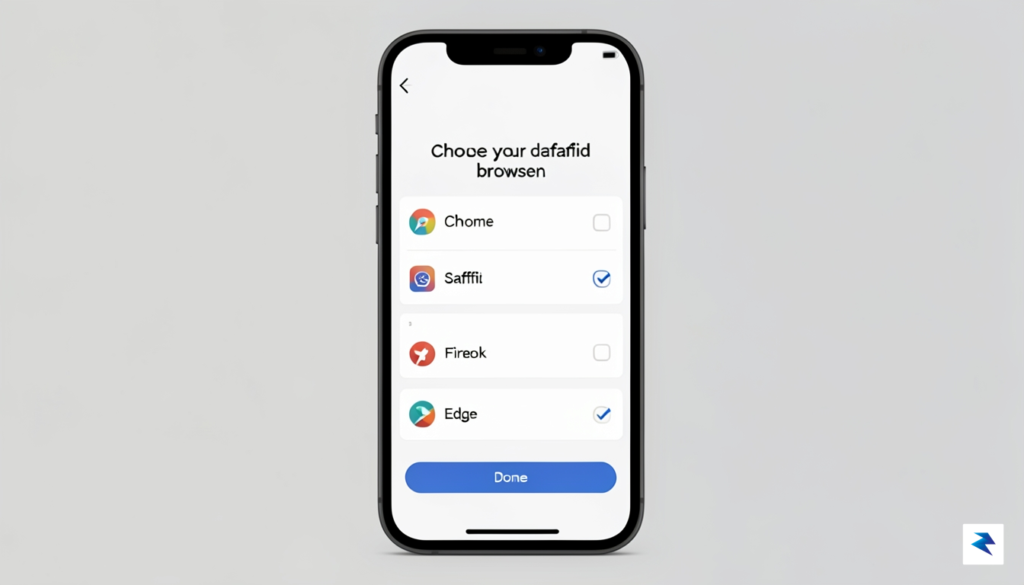
The most immediate and tangible outcome of this legal battle is the introduction of the Android Choice Screen for European users. When setting up a new device, owners are no longer automatically funneled into Google’s own search and browser ecosystem. Instead, they are presented with a randomized list of competing alternatives, such as DuckDuckGo, Ecosia, or Firefox. This shift represents a fundamental change in the power dynamics of the mobile web, effectively stripping Google of its role as the sole gatekeeper for the first digital impressions a new user experiences on their smartphone.
For alternative browsers and search engines, this ruling acts as a long-awaited leveling of the playing field. Historically, Google’s practice of bundling its apps and requiring pre-installation for access to the Play Store acted as an insurmountable barrier to entry for smaller competitors. By mandating a choice screen, the European Union has forced a more competitive environment where visibility is no longer bought through corporate integration alone. Consequently, smaller players now have a direct line to millions of potential users, providing them with the opportunity to convert market share based on privacy features, user interface preferences, or specialized search capabilities rather than just factory-installed convenience.
However, navigating this newfound freedom introduces a unique set of challenges regarding the delicate balance between user agency and seamless software integration. While choice is inherently positive for a healthy ecosystem, it can also lead to decision fatigue. For developers, the goal is now to ensure that their apps perform just as reliably and intuitively as those that were previously “baked into” the operating system. Achieving this parity is difficult, as Google’s native apps historically benefited from deep-level system permissions and optimized battery management that third-party developers struggle to replicate with the same level of efficiency.
True competition in the mobile space requires more than just a list of options; it demands an ecosystem where third-party apps can operate with the same speed and stability as native software.
Moving forward, the tech industry will be watching closely to see if this model of mandatory choice scales or if it creates a disjointed user experience. If third-party browsers and search engines can successfully prove their value through this choice screen, it could set a global precedent for how mobile operating systems are regulated. Ultimately, the success of this ruling will not be measured by the size of the fine, but by whether the average user feels empowered to customize their digital experience without sacrificing the quality or performance they have come to expect from modern smartphones.

The finalization of this massive fine against Google serves as far more than a simple punitive measure; it acts as a foundational blueprint for the European Union’s aggressive new era of digital oversight. By successfully navigating the highest courts, Brussels has signaled that the era of “move fast and break things” is definitively over for the world’s largest tech conglomerates. This ruling provides the necessary legal momentum for the enforcement of the Digital Markets Act (DMA), a sweeping piece of legislation designed to prevent “gatekeeper” platforms from abusing their structural advantages to stifle competition. The EU has effectively moved from reactive, case-by-case litigation to a proactive, rules-based framework that forces tech giants to prove their business practices are fair before they are even challenged.
Emboldened by this judicial victory, EU regulators are already turning their sights toward other concentrated sectors of the digital economy. The precedent set by the Android case provides a clear path for scrutinizing cloud computing services, real-time advertising technologies, and the walled-garden ecosystems of proprietary app stores. Regulators are no longer content with merely monitoring individual incidents of market abuse; they are now actively mapping entire supply chains and integrated services to identify where dominance is being leveraged to block market entry. Consequently, companies that operate under the “gatekeeper” designation under the DMA should expect a significantly higher degree of scrutiny regarding how they bundle services, share data across internal divisions, and prioritize their own offerings over those of third-party developers.
The Android ruling transforms the EU from a spectator into a primary architect of global tech business models, forcing companies to prioritize compliance over unfettered expansion.
For the long-term, this legal landscape demands a profound strategic shift from Big Tech firms operating within the European Economic Area. Rather than treating potential antitrust fines as a mere cost of doing business—an assumption that has historically allowed firms to delay reform—these companies must now fundamentally re-engineer their product architectures to ensure interoperability and open access from the outset. This “compliance-by-design” strategy is no longer optional; it is a prerequisite for maintaining access to the lucrative European market. As the EU continues to sharpen its regulatory tools, the burden of proof has shifted, placing the responsibility on tech giants to demonstrate that their platforms remain open, competitive, and free from the restrictive practices that once defined the early internet age.
You must be logged in to post a comment.