The New York Times Faces EEOC Lawsuit Over Promotion Practices
Understanding the EEOC Lawsuit Against The New York Times The legal conflict between the Equal Employment Opportunity Commission (EEOC) and…

The Justice Department’s recent decision to compel The New York Times to reveal confidential sources regarding reporting on Air Force One represents a profound departure from the customary friction that has historically defined the relationship between the executive branch and the press. While administrations dating back to the founding of the republic have frequently found themselves at odds with investigative journalists, the current legal maneuvers suggest a transition from mere public hostility to the proactive utilization of federal judicial power as a tool of intimidation. By targeting the sanctity of the reporter-source relationship, the administration is not simply challenging the accuracy of a specific story; it is attempting to dismantle the infrastructure of independent oversight that allows for the exposure of government malfeasance.
Historically, the government has occasionally sought to uncover anonymous sources in matters of profound national security, yet these efforts were typically tempered by internal guidelines and an understanding of the press as a necessary democratic check. What we are witnessing now, however, is a more aggressive legal strategy that treats mainstream investigative journalism as an adversary to be neutralized rather than a cornerstone of a free society. Where previous administrations might have engaged in private grumbling or public criticism, the modern playbook involves the use of subpoenas to force reporters to surrender their notes and reveal their contacts. This shift signals a dangerous erosion of the norms that have long protected journalists from being treated as state agents or compelled witnesses, effectively turning the courtroom into a venue for suppressing unfavorable coverage.
The institutionalization of legal pressure against journalists creates a chilling effect that extends far beyond the newsroom, threatening the public’s fundamental right to know how their government operates behind closed doors.
This escalating conflict raises urgent constitutional questions regarding the limits of executive authority. When the state wields the power of the subpoena to silence potential whistleblowers, it effectively cuts off the oxygen supply for investigative journalism. If sources fear that their identities will be unmasked through federal legal action, they will inevitably retreat into silence, leaving citizens in the dark about the inner workings of their own government. By framing the press as an enemy of the administration, the current approach seeks to redefine the role of the media as a mouthpiece rather than a watchdog, fundamentally altering the fragile balance of power that has sustained the American democratic experiment for centuries.
The recent escalation in legal pressure against journalists rests on a precarious foundation: the reality that, in the United States, there is no comprehensive federal shield law to protect newsgatherers from being forced to reveal their confidential sources. While the Justice Department often frames these subpoenas as essential tools for national security or the pursuit of justice, they fundamentally rely on the government’s ability to treat the press as an extension of its own investigatory apparatus. By leveraging the grand jury process to compel testimony, federal prosecutors can effectively turn reporters into witnesses against their own subjects, a practice that risks eroding the firewall between independent journalism and state power. Because the federal judiciary lacks a uniform standard for when this privilege can be pierced, each new subpoena creates a volatile case-by-case scenario where the survival of a source’s anonymity depends entirely on the temperament of the presiding judge.
This legal instability stands in stark contrast to the patchwork of protections found at the state level. Currently, the vast majority of states and the District of Columbia have enacted some form of “reporter’s privilege” through either statutes or court-recognized common law. These state-level shields provide a vital layer of security, signaling a regional consensus that the public interest is best served when journalists can guarantee confidentiality. However, these protections offer little comfort when federal authorities intervene. Because the Supremacy Clause generally dictates that federal law takes precedence in matters of federal criminal procedure, a reporter shielded by a state law may find those protections rendered entirely moot the moment a federal prosecutor issues a subpoena. This creates a dangerous “federal vacuum,” where journalists operating within the same geography are subject to wildly inconsistent standards depending on whether they are facing a local district attorney or a federal agent.
The ongoing push to break these protections tests the absolute limits of the First Amendment in an era where digital footprints make anonymity harder to maintain than ever before. Historically, courts have been reluctant to recognize a constitutional privilege for journalists, often relying on the 1972 Supreme Court decision in Branzburg v. Hayes, which held that the First Amendment does not grant newsmen a testimonial privilege that other citizens do not possess. In the modern digital age, this precedent is being stretched to its breaking point. As government entities increasingly utilize sophisticated tracking methods to identify whistleblowers, the subpoena has become a weapon of choice to circumvent the very transparency that the press exists to provide.
The absence of a federal shield law is not merely a technicality; it is a structural vulnerability that allows for the systematic chilling of investigative reporting, effectively turning the act of gathering information into a legal liability.
Ultimately, the current legal battle is a clarion call for a standardized, federal approach to source protection. Without a codified shield law that clearly defines the rare and narrow circumstances under which a reporter’s privilege might be overcome—such as an immediate, life-threatening danger—the press remains permanently exposed to the whims of executive branch priorities. As subpoenas continue to target newsrooms, the judiciary must determine whether the First Amendment remains a robust check on government overreach or if it has been reduced to an empty promise that fails whenever the state demands silence from those who seek the truth.
The integrity of investigative journalism relies on a fragile, unspoken pact: the absolute guarantee that a source’s identity will remain protected, even under the threat of legal coercion. When the state begins to treat reporters as extensions of its own investigative arm, that pact is not merely strained—it is shattered. The resulting “chilling effect” is not an abstract legal concept but a tangible psychological barrier that prevents vital information from ever reaching the public. Potential whistleblowers, observing the aggressive pursuit of journalists, are forced to weigh their moral duty to expose wrongdoing against the terrifying prospect of losing their careers, their freedom, or their security. When the government turns its gaze toward the newsroom, the silence that follows is deafening.

Consider the complexity of high-stakes reporting, such as investigations into the internal protocols of Air Force One or other sensitive government operations. These stories are rarely built on official press releases; they are constructed from the deep-background insights of individuals within the system who recognize that transparency is essential for democracy. Without the promise of confidentiality, these individuals would simply remain silent. If a reporter is compelled by subpoena to reveal a source, the pipeline of information dries up immediately. The government’s desire for internal secrecy—often framed under the guise of national security—frequently clashes with the public’s fundamental right to know how their government is operating, who is held accountable, and whether power is being abused.
The erosion of source protection transforms journalists from watchdogs into informants, effectively insulating the state from the very scrutiny that prevents corruption and overreach.
Public accountability requires a robust, independent press that can operate outside the reach of executive branch intimidation. When the legal system is weaponized to uncover sources, it creates an environment where fear dictates the flow of information rather than the public interest. Ultimately, the public is the greatest victim of this dynamic. If journalists are no longer able to guarantee the anonymity of those who witness government malfeasance, we lose the ability to see behind the curtain of bureaucracy. Protecting the confidentiality of sources is not an act of defiance against the state; it is a necessary structural safeguard that ensures the government remains accountable to the people it serves, rather than the other way around.
In response to the escalating wave of subpoenas, media organizations—led prominently by The New York Times—are mounting a robust legal defense that emphasizes the fundamental necessity of source confidentiality in a functioning democracy. Rather than acquiescing to government demands for internal communications and reporter notes, these institutions are signaling a readiness to pursue lengthy litigation to prevent the erosion of the First Amendment. By challenging the legal basis of these subpoenas, press advocates are asserting that the reporter’s privilege is not merely a professional courtesy, but a cornerstone of government accountability. Without the guarantee of anonymity, the flow of information regarding systemic corruption or state overreach would effectively dry up, leaving the public in the dark about the very operations they have a right to scrutinize.
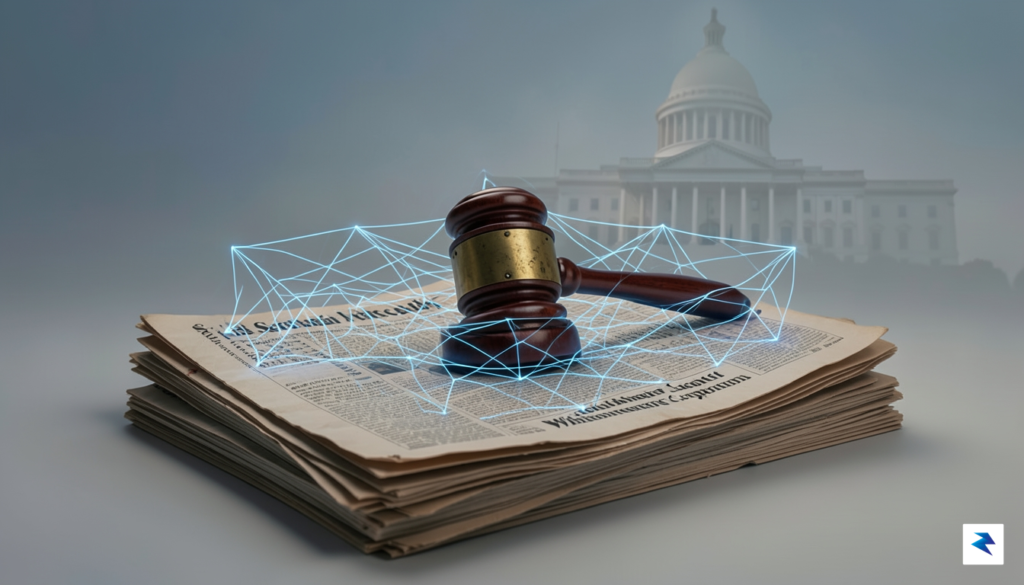
Legal experts and press freedom advocacy groups, such as the Reporters Committee for Freedom of the Press, are currently strategizing on how to frame these confrontations as constitutional crises rather than routine discovery disputes. The primary defense strategy involves invoking the “qualified privilege” doctrine, which requires the government to demonstrate that the sought-after information is essential, unavailable through other means, and carries a compelling interest that outweighs the public’s right to an unfettered press. As these cases move through the judiciary, the outcomes will likely serve as a defining precedent for the next decade. Should the courts side with the government, it could create a chilling effect that effectively criminalizes investigative journalism; conversely, a victory for the press would reaffirm the judiciary’s role as a check on executive power.
The strength of a free society depends on the press’s ability to act as a watchdog, a task that becomes impossible if whistleblowers fear that their identities will be unmasked by the very institutions they seek to hold accountable.
Moving forward, the journalism industry must fundamentally adapt to a landscape of heightened legal hostility. This evolution requires more than just reactive litigation; it necessitates a shift in how newsrooms manage sensitive data and secure communications. Journalists are increasingly adopting advanced encryption tools and decentralized storage methods to protect their sources from the reach of overzealous subpoenas. However, technology alone is not a panacea. The long-term survival of investigative reporting depends on a societal recognition that the protection of sources is a public good. If media organizations fail to win these legal battles, the future of the fourth estate may be forced into an era of extreme caution, where the most important stories remain untold because the risks to both the source and the journalist have become prohibitively high.
You must be logged in to post a comment.