France Orders ISP Block on Polymarket: What You Need to Know
The Crackdown: France vs. Polymarket The regulatory landscape for decentralized finance and prediction markets in Europe has shifted…
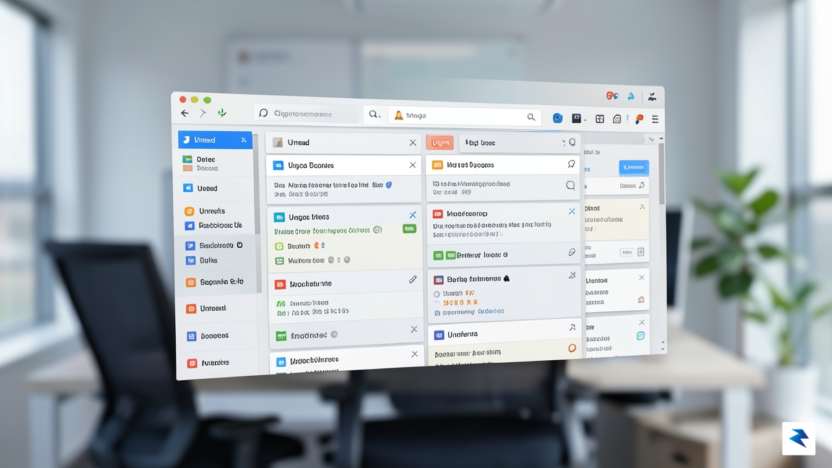

We often operate under the subconscious assumption that our digital workspace is a realm of absolute instantaneity, where the timestamp on an email represents the precise moment a colleague sat down to hit the send button. However, the reality of modern network architecture is far more complex and significantly less synchronized than our perception suggests. When an email hits your inbox at 3:30 PM, you are likely viewing the culmination of a staggered journey involving server queues, cloud synchronization delays, and background protocol handshakes. This technical latency means that your inbox has become an unreliable narrator, presenting events as though they are happening in real-time when they are actually the result of cached data being released from a server bottleneck.
This technical disconnect fosters what can be described as “phantom urgency,” a psychological state where the appearance of a fresh message triggers an immediate, visceral demand for attention. Because we perceive the email as having originated at the very moment it arrived, we feel a social and professional pressure to respond with equal immediacy. This forces employees into a constant state of reactive anxiety, where focus is sacrificed at the altar of an imaginary timeline. By treating every notification as a “just-in-time” event, we inadvertently allow these silent technical delays to dictate our priorities, shifting our workflow from proactive deep work to a perpetual cycle of triage.
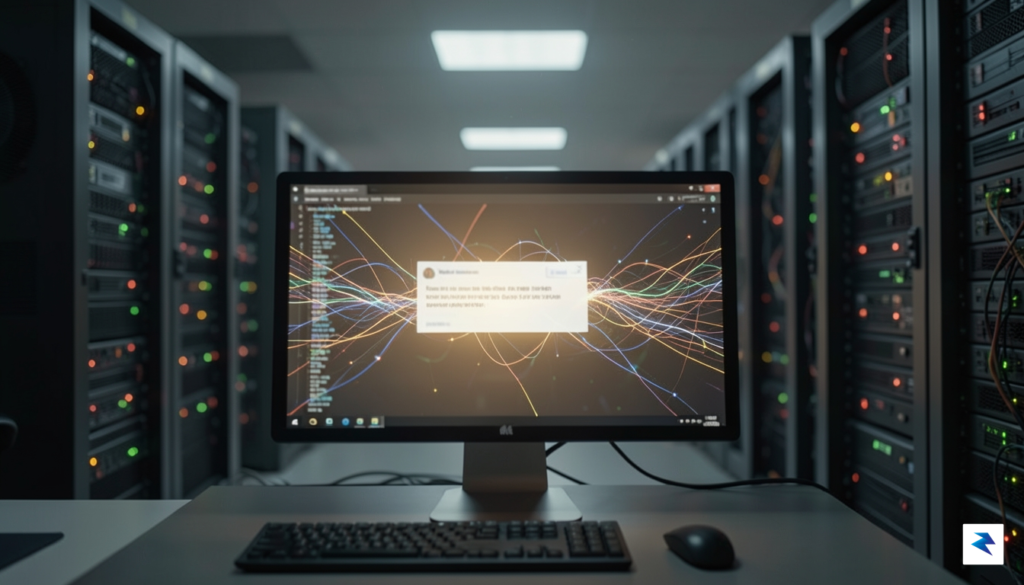
The friction between digital reality and human perception creates a performance trap: we are reacting to the arrival of the message rather than the intent of the sender, effectively handing control of our productivity over to a server’s processing queue.
Furthermore, these timestamp discrepancies introduce a subtle but corrosive element of doubt into workplace accountability. When a project deadline is tight, a delay in email delivery can be weaponized or misinterpreted, leading to unnecessary friction between team members. If a sender believes they sent a request at 2:00 PM but the recipient receives it at 3:30 PM, the gap creates a misalignment in expectations that is rarely attributed to cloud sync issues or server lag. Instead, it is often internalized as a failure of responsiveness or punctuality. Understanding that our inboxes are subject to the messy, non-linear realities of network traffic is the first step toward reclaiming our focus. By recognizing that the timestamp is a suggestion rather than an absolute truth, we can begin to decouple our stress levels from the arbitrary arrival of notifications, allowing us to manage our time with intentionality rather than reactive urgency.
The exhaustion we feel by mid-afternoon isn’t merely a byproduct of screen glare or the sedentary nature of remote work; it is the direct result of a high-stakes performance we are forced to enact every time we click “join.” In a physical boardroom, attention is naturally diffuse. We can glance at our notes, look out a window, or shift our posture without signaling disinterest. However, the virtual environment imposes what researchers call the “Zoom Gaze”—a relentless, claustrophobic pressure to maintain constant eye contact and perform hyper-engaged facial expressions. Because we are constantly looking at our own video feeds while simultaneously monitoring the static heads of our colleagues, our brains are forced to process a distorted reality where eye contact is unnaturally sustained and magnified.

This performance of attention requires a massive cognitive overhead. In face-to-face interactions, we rely on a subconscious stream of non-verbal cues—micro-expressions, subtle shifts in body language, and spatial awareness—that our brains process effortlessly. Virtual meetings strip away these natural shortcuts, forcing our prefrontal cortex to work double-time to interpret intent from pixelated thumbnails. We are not just listening to the content of a presentation; we are actively decoding a flat, digitized version of human connection. This creates a state of “continuous partial attention,” where we are never fully relaxed and never fully absorbed, leaving us in a state of perpetual cognitive depletion.
The cost of performing attention is far higher than the cost of actually paying it; when we spend our mental energy signaling that we are present, we have significantly less capacity left to actually think.
The long-term consequence of this neurological tax is a measurable degradation in decision-making quality. When our cognitive resources are drained by the performative aspect of digital presence, our ability to engage in deep, strategic work—the kind required to tackle complex problems or clear a difficult inbox—evaporates. By the time 3:30 PM arrives, the brain is essentially operating on fumes, retreating to the simplest, most reactive tasks possible: clearing emails. We reach for our inboxes not because we are productive, but because our executive function is so frayed from the day’s performance that we can no longer sustain the focus required for meaningful work. Consequently, the inbox becomes a sanctuary of low-stakes busywork, a place to hide when the cognitive cost of “being seen” has finally become too high to bear.

The transition to remote work was sold as the ultimate liberation of the professional schedule, promising a world where output mattered more than hours clocked at a desk. However, as the physical office has dissolved into a scattered network of home setups, we have inadvertently traded the organic, messy magic of the watercooler for a sterile digital echo chamber. In this new landscape, the spontaneous “aha!” moment—that brief, unplanned conversation by the coffee machine that often solved a complex problem—has been replaced by the rigid formality of scheduled video calls and the relentless ping of instant messaging platforms. We are finding that while we have gained autonomy, we have lost the connective tissue that binds a group of individuals into a cohesive, high-functioning team.
The tension between the desire for radical flexibility and the necessity of real-time collaboration has created a paradoxical “always-on” culture. Because we no longer inhabit the same physical space, there is a pervasive, often subconscious, anxiety that if we are not visible in our digital tools, we aren’t actually working. This leads to a performative style of communication where the goal is no longer to drive a project forward, but to signal one’s own presence and responsiveness. We send that 3:30 PM email not because the task requires immediate attention, but because we fear the silence of our absence might be interpreted as a lack of engagement. Consequently, our inboxes have become archives of performative busywork rather than hubs of genuine progress.
The loss of shared synchronous time has transformed our digital interactions from collaborative exchanges into a series of disconnected, high-stakes status updates.
To bridge this divide, organizations must move beyond the illusion that digital availability is equivalent to team cohesion. Attempting to replicate the office experience by mandating constant connectivity only succeeds in burning out employees and fragmenting their deep-work cycles. Instead, we need to acknowledge that genuine synchronization—the kind that fosters trust and innovation—requires intentionality rather than constant surveillance. We must learn to distinguish between the superficial metrics of “being online” and the actual depth of collaborative connection. Without a deliberate effort to create space for meaningful, synchronous interaction that doesn’t feel like a performance, we risk drifting further apart, leaving our teams more connected by fiber optics but increasingly disconnected by culture and shared purpose.

Reclaiming your day requires a fundamental shift from a reactive model of communication to a proactive one. We have spent years training ourselves to treat every incoming digital notification as an urgent demand, effectively allowing our calendars to be dictated by the whims of others. To dismantle this “always-on” culture, you must begin by implementing strict boundaries that protect your cognitive bandwidth. This is not about disappearing from the grid, but rather about choosing when and how you engage with it so that your work is driven by intention rather than interruption.
One of the most effective tactical shifts is the practice of email batching. Instead of keeping your inbox open as a persistent background tab, designate two or three specific windows throughout the day to process correspondence. By closing the application entirely between these sessions, you eliminate the “ping-pong” effect of constant task-switching, which research shows can degrade your IQ and focus for minutes after a single interruption. Complement this by turning off “read receipts” and ephemeral notification banners; these features are designed to create a sense of social pressure that forces an immediate, often suboptimal, response.
The goal of digital communication should be the exchange of information, not the demonstration of constant availability.
Beyond individual habits, teams must adopt formal communication protocols to ensure everyone is on the same page. Without clear expectations regarding response times, employees often assume that an email sent at 3:30 PM requires an answer before they leave for the day. Establishing a team charter that defines “urgent” versus “asynchronous” communication is vital. For example, clarify that internal emails are expected to be answered within 24 hours, while instant messaging is reserved for time-sensitive blockers. When these boundaries are documented, they provide the necessary social cover for team members to focus on deep work without the lingering anxiety of an ignored inbox.
Finally, we must normalize the concept of digital silence. There is a profound power in intentionally disconnecting to engage in deep work—periods of uninterrupted concentration that allow for the high-level problem solving that modern businesses desperately need. By signaling your status clearly—such as setting an “Out of Office” auto-responder during your deep work hours or utilizing “Do Not Disturb” modes—you teach your colleagues that your focus is a professional asset, not a personal slight. Embracing this silence doesn’t just improve your personal productivity; it creates a permission structure that allows your entire team to breathe, perform, and eventually escape the burnout cycle that defines the modern workplace.
The sustainability of remote work hinges on a fundamental departure from the industrial-era obsession with “presence.” For too long, organizations have conflated the ability to respond to a notification within seconds with actual productivity. This culture of instant availability is a fast track to collective burnout, as it forces employees to exist in a state of constant, low-level vigilance that fragments focus and degrades the quality of deep, creative work. If we continue to treat every email as an emergency, we will inevitably reach a point of diminishing returns where our cognitive resources are entirely depleted by the mere act of managing our communication channels rather than executing our primary responsibilities.
To create a truly sustainable future, companies must pivot toward an “asynchronous-first” mindset. This shift requires more than just a change in software; it demands a radical redefinition of professionalism that prioritizes tangible output over the performative appearance of being “always on.” When we decouple our worth from our response time, we grant ourselves and our colleagues the mental space required for complex problem-solving. True professional maturity is found in the ability to clearly document processes, provide comprehensive updates in advance, and trust that work is being completed effectively without the need for constant, real-time digital surveillance.
The goal of a modern workplace should not be to optimize for speed of reply, but to optimize for depth of thought and clarity of intent.
This cultural transformation necessitates a shared commitment to respecting cognitive limits. Organizations must normalize the idea that an email sent at 3:30 PM does not necessitate a reply by 3:35 PM, or even by the end of the business day. By establishing clear norms around communication—such as utilizing project management tools for status updates and reserving synchronous meetings for genuine collaboration—we can eliminate the persistent anxiety that currently defines the remote experience. Ultimately, the future of work rests on our ability to prioritize intent over the illusion of digital presence. When we move away from the frantic pace of the reactive inbox, we create an environment where employees can thrive, sustain their energy, and contribute the high-level work that truly drives organizational success.
You must be logged in to post a comment.