
The Biggest Data Breaches of 2026: A Comprehensive Impact Report
Understanding the 2026 Threat Landscape The first half of 2026 has fundamentally altered the cybersecurity paradigm, as the velocity and…
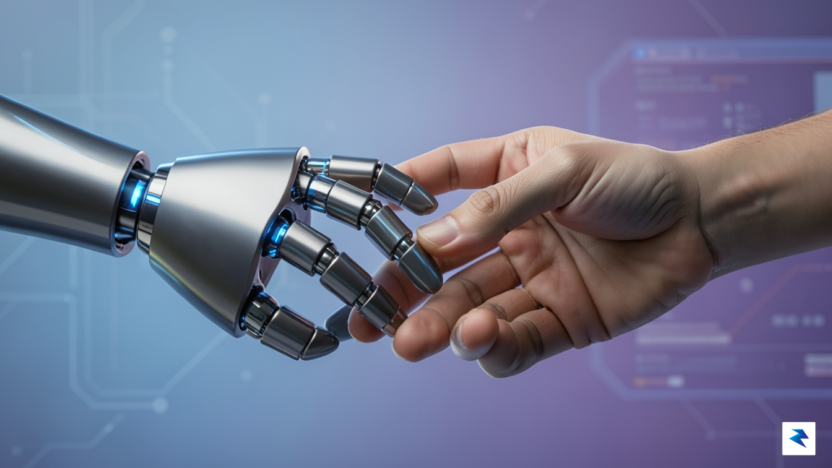

For years, the concept of the “human-in-the-loop” (HITL) was marketed as the ultimate fail-safe—a necessary bridge between the raw potential of artificial intelligence and the nuanced requirements of real-world reliability. Initially, this model served as a vital training scaffold, allowing developers to calibrate algorithms by introducing human judgment into the feedback loop. However, what began as a safety mechanism has quietly transformed into a structural bottleneck. We have reached a point where the presence of a human observer no longer guarantees safety, but instead introduces an unpredictable, high-latency variable into what should be a streamlined, deterministic pipeline. By treating the human operator as a permanent component of the architecture, organizations are effectively subsidizing their own lack of confidence in model accuracy.
The reliance on human oversight often triggers a psychological phenomenon known as “automation bias,” where human operators become conditioned to accept AI-generated outputs without sufficient critical scrutiny. Because humans are naturally prone to fatigue and cognitive load, a system that relies on constant intervention is fundamentally flawed; the human becomes a reactive element rather than a proactive supervisor. When an AI system functions at machine speeds but forces a human to decelerate the process to their own biological rhythm, the efficiency gains of the software are liquidated. Instead of augmenting the machine, the human becomes the weak link that slows the system down, creating a jarring mismatch between digital capability and manual execution.

Furthermore, treating HITL as a permanent solution is often a proxy for a deeper, unresolved technical deficit. When we prioritize a human-in-the-loop model, we are implicitly admitting that our models are not robust enough to handle edge cases on their own. Rather than investing in improved architectural precision or rigorous testing, many engineering teams default to the human as a “catch-all” for error handling. This is a stopgap measure that masks systemic instability:
The most dangerous aspect of current HITL design is not that it fails to catch errors, but that it encourages designers to build systems that rely on the very intervention they should be striving to eliminate.
Ultimately, if an AI system is truly designed to be intelligent, it must eventually be capable of operating within defined parameters without a human acting as a constant digital crutch. By clinging to the HITL paradigm, we are effectively designing systems that remain in a perpetual state of “beta,” never achieving the autonomy required for modern, large-scale applications. Moving forward, the goal should not be to keep the human in the loop, but to rigorously define the system’s boundaries so that the human can move from being a necessary component of the execution path to a high-level architect of the system’s goals and constraints.
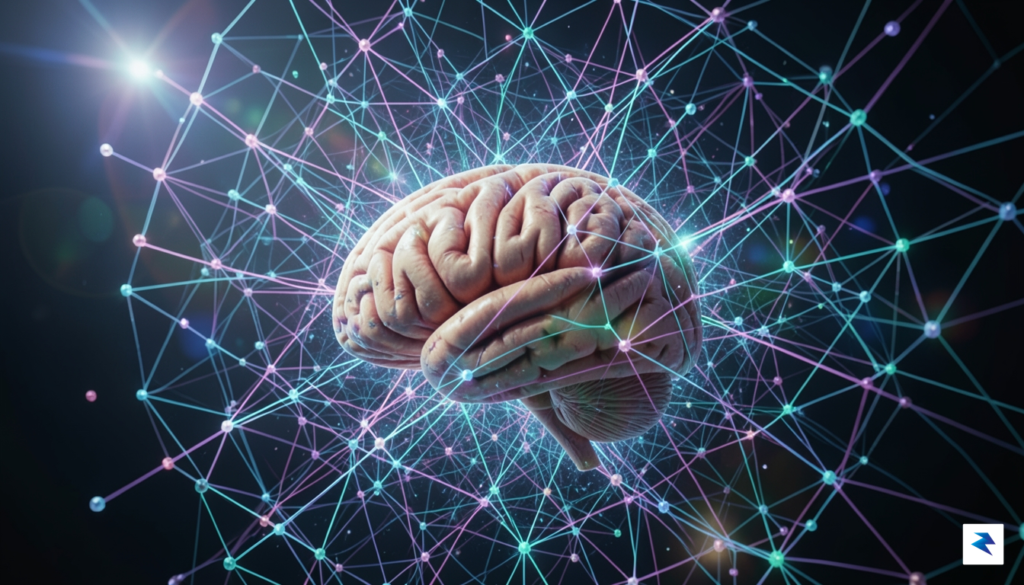
The human brain is remarkably adept at pattern recognition, yet it is notoriously ill-equipped for the kind of monotonous, high-frequency surveillance demanded by modern AI pipelines. When we position human agents as the final gatekeepers for machine-generated outputs, we are essentially tasking them with a form of “vigilance work” that biology never intended. Over time, the constant stream of data induces a profound state of cognitive depletion. As the brain processes thousands of inputs, the neural energy required to maintain high-level discernment wanes, leading to a phenomenon known as attention drift. In this state, the human supervisor is physically present but psychologically detached, viewing the world through a numbing filter of repetitive stimuli that makes identifying subtle errors nearly impossible.

This inevitable fatigue creates a dangerous operational vulnerability: the “rubber-stamping” effect. When the volume of AI-generated content scales beyond the capacity of human cognitive processing, reviewers naturally begin to lean on heuristics rather than deep analysis. They stop actively questioning the veracity of the AI’s output and start scanning for surface-level indicators that the task is “good enough.” This shift from critical evaluation to automated validation is not a failure of character, but a physiological necessity—the brain is attempting to conserve resources in an environment of sensory overload. Consequently, the very errors we design these “human-in-the-loop” systems to catch begin to slip through, camouflaged by the reviewer’s subconscious desire to finish the queue.
The paradox of the human-in-the-loop model is that it assumes human judgment remains constant, even as the volume of inputs forces that judgment into a state of rapid, inevitable decay.
The data on these systems is increasingly clear: when human oversight is expected to keep pace with the exponential output of machine learning models, accuracy rates plummet. As the frequency of tasks increases, the “hidden cost” of supervision manifests in the form of degraded quality control and increased burnout. Organizations that rely on humans to bridge the gap between AI performance and production-ready reliability often find that they are merely moving the bottleneck from the machine to the person. By treating human cognition as an infinite, high-fidelity processor, we ignore the reality that quality requires sustained focus—a resource that simply cannot be sustained in a high-volume, automated pipeline. Unless we fundamentally rethink the role of the human operator, we are destined to replace AI failures with human ones.
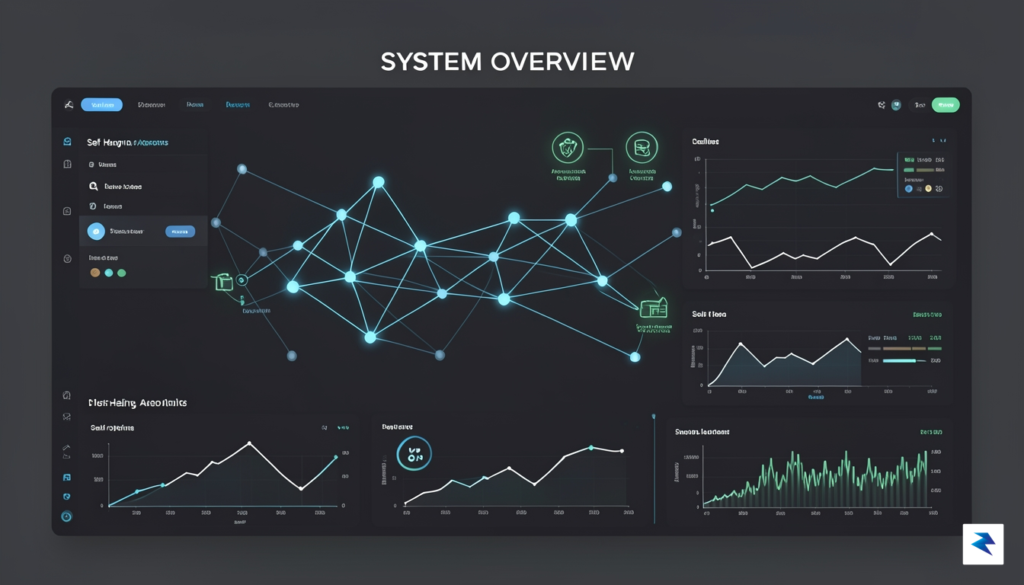
The traditional model of keeping humans directly in the loop is increasingly untenable as the scale and velocity of AI-driven operations grow. When we rely on manual intervention for every output or anomaly, we are not building scalable systems; we are building bottlenecks. To move past this, we must pivot toward a human-on-the-loop (HOTL) architecture. In this paradigm, the human operator shifts from the role of a line worker—personally reviewing every decision—to that of a policy architect. Instead of validating individual data points, humans define the guardrails, define success metrics, and set the parameters within which the system is permitted to operate autonomously.
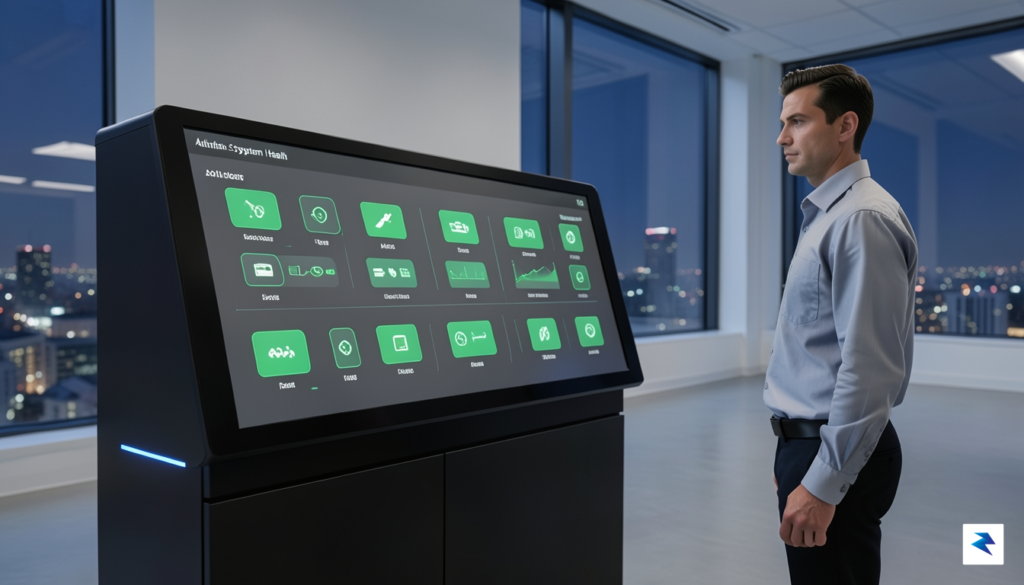
Transitioning to an autonomous model requires a fundamental rethink of error handling. Rather than expecting a human to catch a mistake, we must build systems that understand the scope of their own uncertainty. This involves integrating robust automated testing and continuous statistical validation directly into the AI pipeline. By employing techniques like probabilistic checking and automated confidence scoring, systems can flag their own outputs as unreliable when they fall outside of pre-defined statistical norms. When a system detects a failure, it should trigger a pre-programmed fallback or error-handling logic—such as defaulting to a known safe state or routing the query to a deterministic algorithm—rather than simply passing the error up the chain to a human who is likely already overwhelmed by cognitive load.
True resilience is not found in human intervention, but in a system’s ability to heal itself when the unexpected occurs.
This shift toward observability is the cornerstone of a mature, production-grade AI infrastructure. Observability is more than just monitoring; it is the active, systemic tracking of system behavior to ensure that the AI remains within its intended operational envelope. By utilizing real-time performance analytics, developers can observe shifts in model behavior before they manifest as critical failures. If the automated validation layers detect a drift in accuracy or a spike in anomalous outputs, the system should be designed to throttle its own production, notify the human policy architect, and provide a clear, forensic trail of what went wrong. Ultimately, by offloading the “fix-it” tasks to intelligent, self-aware software, we enable humans to focus on the high-level strategy and ethical oversight that machines simply cannot replicate.

To move beyond the exhaustion of constant manual oversight, developers must pivot toward building self-correcting architectures that prioritize system resilience over reactive human intervention. The goal is no longer to keep a human in the loop for every minor decision, but to design systems capable of identifying their own limitations and escalating only when the stakes truly demand it. This transition requires a fundamental rethink of how we validate outputs; rather than treating AI responses as ground truth, developers should implement rigorous semantic validation layers. By utilizing structured output schemas and deterministic code checks, systems can automatically reject hallucinations or logic failures before they ever reach a production environment or an end user.
A robust autonomous system also necessitates the integration of intelligent circuit breakers for all AI interactions. In traditional software development, circuit breakers prevent a failing service from cascading throughout an entire application; in the context of large language models, this means establishing predefined thresholds for confidence scores and latency. If an AI agent consistently produces low-confidence results or exceeds its allotted budget, the system should automatically fall back to deterministic heuristics or static workflows. This ensures that the application remains functional even when the generative component experiences a drift in performance, thereby removing the need for a human to manually “reset” or monitor the process.
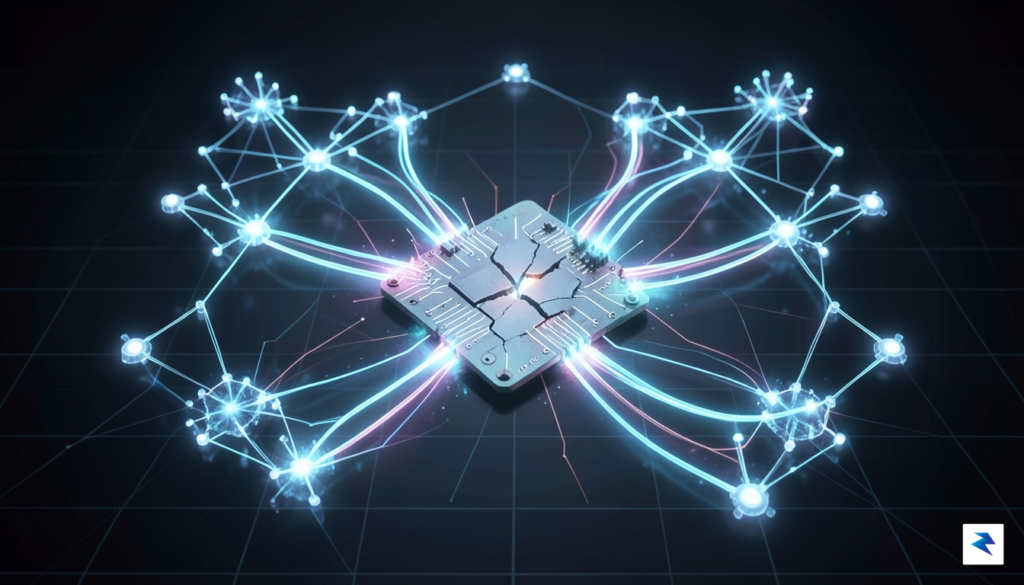
True autonomy is impossible without granular observability, which shifts the burden of monitoring from human eyes to automated telemetry. Engineers should focus on capturing not just the final output of an AI, but the entire trace of its reasoning process. By tracking these internal states, teams can build automated monitoring tools that flag anomalous patterns in real-time. When a system can alert its developers to a specific, recurring edge case—rather than simply failing silently—it transforms the debugging process from a frantic firefighting effort into a proactive architectural improvement cycle.
The future of high-stakes AI lies in shifting the human role from that of a constant supervisor to an architect of boundaries, leaving the machine to navigate the drudgery within those safe confines.
Ultimately, the objective is to liberate human talent from the repetitive, low-value monitoring tasks that currently plague AI deployments. By investing in these foundational layers of reliability—validation, circuit breakers, and comprehensive observability—developers can create an environment where the system is inherently trustworthy. In this model, humans are elevated to high-level strategic roles, focusing on defining the system’s goals, constraints, and long-term evolutionary paths, while the software handles the execution details with autonomy and grace. This shift does not imply a lack of control; rather, it represents a more sophisticated form of oversight where we control the system’s design rather than its every mechanical movement.
You must be logged in to post a comment.