
Meet the Likweli: A Remarkable New Monkey Species Found in the Congo
Introduction: The Unveiling of the Likweli In the heart of the dense, mist-shrouded rainforests of the Congo Basin, a scientific revelation…


At its core, Reinforcement Learning (RL) is a paradigm shift in how we conceive of machine intelligence. While traditional machine learning often relies on a static collection of labeled examples—where a computer is told exactly what a cat or a stop sign looks like—RL discards the notion of a pre-defined “correct” answer. Instead, it mirrors the way biological entities navigate the world: through a continuous loop of trial, error, and cumulative feedback. By interacting with a dynamic environment, an RL agent learns to make a sequence of decisions that maximize a long-term reward, rather than simply matching a pattern in a dataset.
To understand the magnitude of this shift, one must compare it to the more familiar supervised and unsupervised learning models. In supervised learning, the algorithm is essentially a passive pupil, absorbing patterns from an instructor who provides the ground truth for every input. Conversely, unsupervised learning seeks to find hidden structures within unlabeled data, acting more like a data analyst looking for correlations. Reinforcement Learning occupies a fundamentally different space; it is the study of agents that must take action to influence their surroundings. Because there is no teacher providing a label for every move, the agent must develop its own internal logic to determine which actions lead to success and which lead to failure.
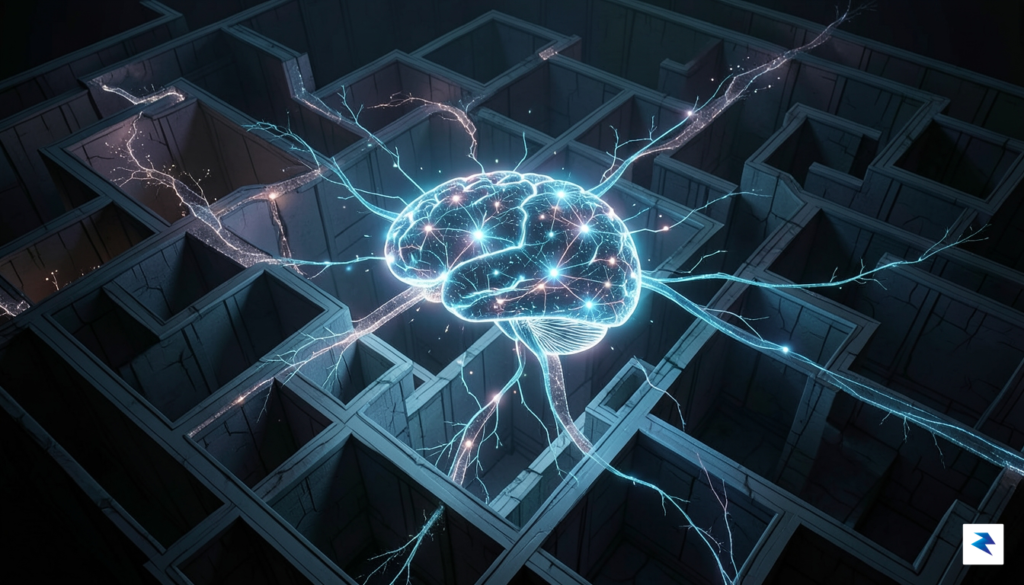
Unlike supervised learning, which is about finding the right pattern, reinforcement learning is about finding the right strategy.
This transition from “learning from labels” to “learning from experience” is precisely why many researchers view RL as the necessary bridge toward Artificial General Intelligence (AGI). Modern AI models are often brittle, failing the moment they encounter a scenario not represented in their training data. RL, however, empowers systems to adapt in real-time to novel challenges, essentially allowing them to “practice” and refine their capabilities in simulation or the real world. By focusing on the pursuit of goals rather than the imitation of examples, we are moving closer to creating machines that possess a form of agency, capable of navigating the complexities of our world with the same flexibility and persistence that defines human learning.
Ultimately, the power of RL lies in its ability to handle delayed gratification. An agent might perform a dozen actions that seem neutral or even negative in the short term, only to reach a massive reward at the end of a long chain of events. This capacity to understand the relationship between a sequence of choices and a final outcome is what sets RL apart from almost every other branch of artificial intelligence. It transforms the computer from a simple calculator of probabilities into a strategic planner, capable of mastering everything from intricate board games to the complex logistics of autonomous robotics.

At the fundamental core of every intelligent system built using reinforcement learning lies a continuous, iterative dance between a decision-making entity and its surrounding world. This elegant, yet powerful, interaction forms what we call the agent-environment loop, a mechanism through which systems learn to master complex tasks without explicit programming for every scenario. Understanding this foundational cycle—how an intelligent agent perceives its reality, chooses an action, and receives feedback—is absolutely crucial to grasping the profound capabilities of modern AI.</p
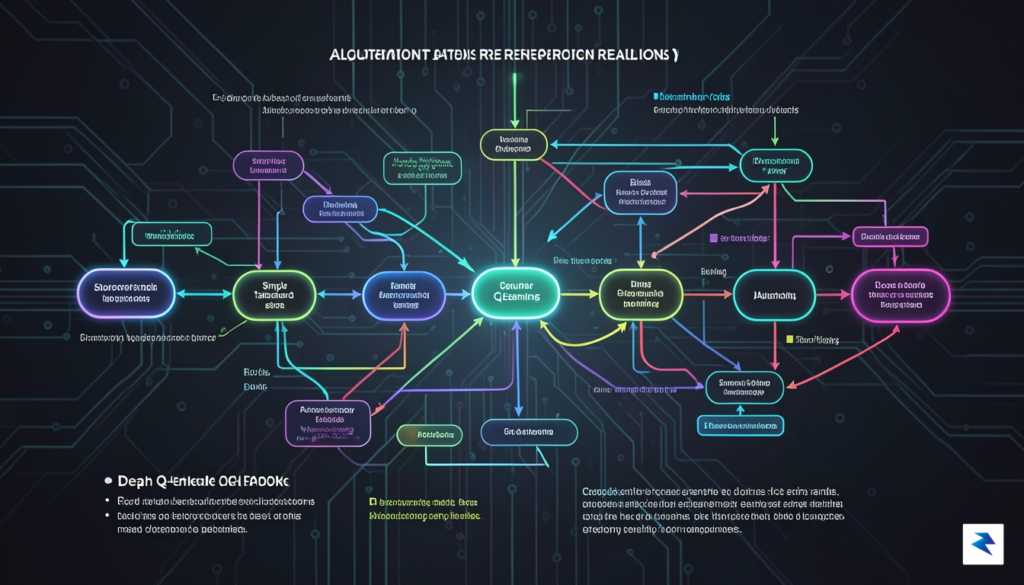
The journey of reinforcement learning begins with the bedrock of decision-making: Dynamic Programming. At its core, this approach relies on the Bellman Equation, a mathematical framework that breaks down complex optimization problems into simpler recursive sub-problems. By establishing a relationship between the value of a state and the potential value of its successors, Dynamic Programming allows an agent to calculate the optimal path through an environment, provided it possesses a perfect map of the world’s rules. However, this requirement for a complete model of the environment often proves to be an impractical limitation, setting the stage for more flexible, experience-based learning methods.
To overcome the limitations of needing a perfect model, researchers turned to Temporal Difference (TD) learning, a revolutionary bridge that allows agents to learn directly from raw experience. Unlike Dynamic Programming, which waits for an entire episode to conclude before updating its knowledge, TD learning updates estimates based on other estimates—a process known as bootstrapping. This enables the agent to learn incrementally, adjusting its internal expectations after every single action. From this foundation emerged two cornerstone algorithms: SARSA and Q-Learning. While both utilize TD methods, they differ in their philosophy; SARSA is an “on-policy” algorithm that learns the value of the policy it is currently following, including its exploratory mistakes, whereas Q-Learning is “off-policy,” greedily seeking the absolute best possible action regardless of the agent’s current behavior.
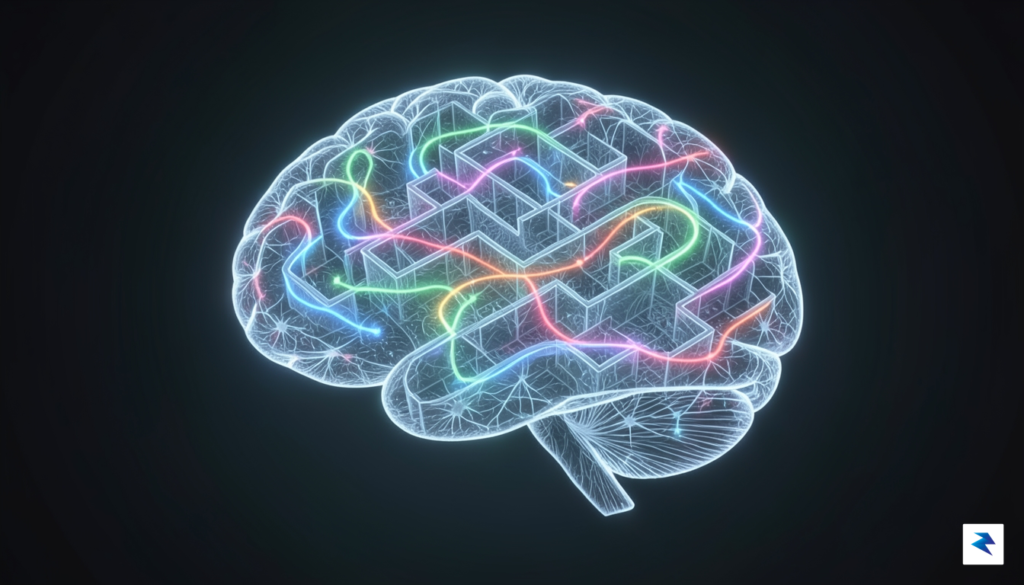
While tabular methods like Q-Learning excel in simple, discrete environments, they falter when faced with the vast, continuous complexity of the real world. A table can easily store the values for a simple grid-world game, but it cannot possibly hold the data required to navigate a high-resolution video game or a self-driving car scenario. This realization led to the profound leap into Deep Reinforcement Learning (DRL). By replacing the traditional lookup table with a deep neural network, researchers gained the ability to approximate value functions in high-dimensional spaces. The neural network acts as a powerful function approximator, learning to generalize from past experiences to predict the outcomes of actions in states it has never encountered before.
The integration of deep learning with reinforcement learning marks the transition from simple calculation to true pattern recognition, enabling machines to perceive the environment and decide on strategies with superhuman intuition.
This fusion of neural networks and reinforcement learning has unlocked capabilities once relegated to the realm of science fiction. Modern agents no longer merely memorize sequences; they “see” the environment through pixels and “reason” about long-term goals by mapping complex inputs to optimal action strategies. As these deep architectures continue to evolve, they provide the backbone for autonomous systems capable of handling the inherent uncertainty and scale of the physical world, proving that the synergy between statistical learning and goal-oriented decision-making is one of the most potent tools in modern artificial intelligence.
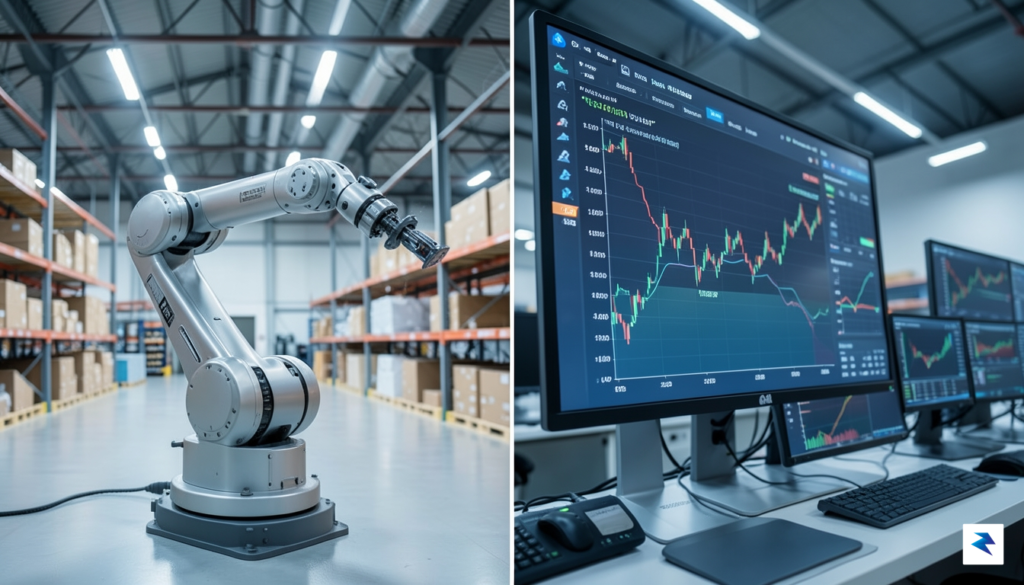
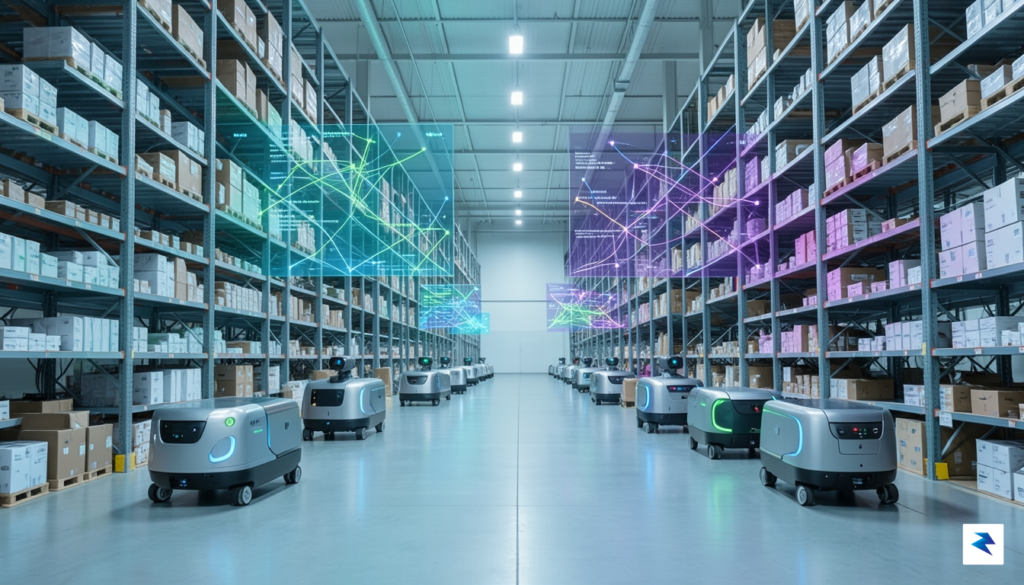
Beyond the high-profile victories in board games and digital simulations, reinforcement learning (RL) has matured into a cornerstone of modern industrial strategy. In the realm of industrial automation, RL is fundamentally altering how machines interact with their environments. Unlike traditional programmed robotics that require rigid, rule-based instructions, RL-enabled robots learn to navigate complex warehouse layouts and manipulate diverse objects through trial and error within a safe simulation environment. This capability has revolutionized supply chain management, where autonomous mobile robots now optimize pathfinding in real-time, drastically reducing the latency between order placement and fulfillment while adapting to the unpredictable nature of busy distribution centers.
The ubiquity of RL extends deep into our digital consumption habits, particularly within the recommendation engines that power platforms like Netflix, YouTube, and Amazon. These systems treat the user experience as an ongoing series of interactions, where the algorithm acts as an agent maximizing the cumulative “reward” of user engagement—measured by clicks, watch time, or purchase conversion. By continuously learning from billions of user data points, RL models can predict preferences with startling accuracy, shifting from static content suggestions to dynamic, personalized sequences that evolve alongside the user’s changing tastes. This transition represents a shift from simple pattern matching to a sophisticated, predictive modeling approach that anticipates intent before a search query is even typed.
In the high-stakes world of quantitative finance, reinforcement learning is increasingly deployed to navigate the volatility of global markets. Algorithmic trading systems utilize RL to develop sophisticated execution strategies that must balance the need for profit against the constraints of market impact and slippage. By training agents to operate in simulated market environments that mimic historical conditions, firms can identify complex, non-linear relationships that traditional statistical models often miss. These agents learn to adjust their positions dynamically, managing risk in real-time as they interpret subtle shifts in sentiment and liquidity, thereby providing a significant edge in high-frequency trading scenarios where human decision-making is simply too slow.
The true power of reinforcement learning lies in its ability to solve sequential decision-making problems where the optimal path is not known in advance, but discovered through continuous interaction.
However, the transition from simulated success to real-world deployment is rarely seamless. Applying RL to physical systems, such as self-driving vehicles or complex industrial machinery, introduces significant safety considerations that are non-existent in digital games. Because an agent must explore to learn, it inherently risks taking actions that could lead to equipment damage or safety violations in the real world. Consequently, modern research is heavily focused on “safe RL” and constrained optimization, ensuring that agents operate within strictly defined guardrails. By combining robust simulators with rigorous verification methods, engineers are successfully bridging the gap, enabling machines to learn autonomously while guaranteeing the reliability and safety that critical industry infrastructure demands.

Embarking on the journey into Reinforcement Learning (RL) has never been more accessible, thanks to a burgeoning ecosystem of high-quality educational materials and robust open-source tools. The perceived complexity of RL, once a significant barrier, has steadily diminished, making it an exciting field for developers eager to build intelligent systems. A fantastic starting point for anyone looking to grasp the foundational concepts is a resource like The Little Book of Reinforcement Learning, which distills intricate ideas into digestible insights, laying a solid theoretical groundwork before diving into practical implementation.
To translate theoretical understanding into tangible results, developers need reliable and efficient tools. The modern RL landscape is significantly shaped by two cornerstone libraries: Gymnasium (the maintained successor to OpenAI Gym) and Stable Baselines3. Gymnasium provides a standardized API for creating and interacting with diverse environments, ranging from simple grid-worlds to complex physics simulations. This standardization is crucial, as it allows researchers and practitioners to develop and test algorithms consistently across different problem domains without rewriting environment interaction code each time. It acts as the universal playground where your RL agents learn to behave.
Complementing Gymnasium is Stable Baselines3, a suite of reliable and high-performance implementations of state-of-the-art RL algorithms. Instead of building every algorithm from scratch, which can be a time-consuming and error-prone process, Stable Baselines3 allows you to quickly experiment with algorithms like PPO (Proximal Policy Optimization), A2C (Advantage Actor-Critic), and DQN (Deep Q-Network) with just a few lines of code. This library significantly accelerates the prototyping phase, enabling you to focus more on understanding agent behavior and environment design rather than intricate algorithm mechanics. Together, these libraries form a powerful duo, empowering developers to quickly set up environments and train sophisticated agents.

A structured approach is vital for effective learning in RL. We recommend a step-by-step roadmap that progressively introduces complexity:
CartPole-v1 environment within Gymnasium. Here, an agent must balance a pole on a cart by moving left or right. This problem introduces a continuous observation space (though discrete actions), making it an ideal candidate for delving into policy gradient methods or more advanced value-based approaches. It serves as a benchmark for many introductory RL implementations and provides a tangible sense of an agent learning a continuous control task.Gymnasium environments or, more excitingly, begin designing your own custom environments. This could involve simulating a robot, optimizing a logistical process, or even creating an AI for a simple game. Building custom environments forces you to rigorously define states, actions, and reward functions, deepening your understanding of the entire RL pipeline.While the availability of powerful libraries makes it tempting to jump straight into coding, resist the urge to treat RL algorithms as black boxes. A deep, comprehensive understanding of the underlying mathematical intuition is paramount for true mastery. Knowing why an algorithm works, what its assumptions are, and how its parameters influence learning will empower you to debug effectively, adapt algorithms to novel problems, and even innovate new solutions. Simply copying code without comprehending the principles behind policy gradients, value iteration, or temporal difference learning will limit your ability to truly leverage the power of Reinforcement Learning. Invest time in understanding the mathematical foundations; it will pay dividends in your RL journey.
You must be logged in to post a comment.