
SpaceXAI Shifts to Open-Source: The Grok Build Privacy Pivot
Understanding the Shift to Open-Source The transition toward an open-source framework for Grok Build marks a pivotal departure from the…


At its core, tokenization is the process of converting rights to an asset into a digital token on a blockchain. Historically, the financial industry has relied on a complex web of intermediaries—including clearinghouses, custodians, and transfer agents—to verify ownership and facilitate the movement of traditional equities. This legacy infrastructure is notoriously slow, often adhering to a “T+2” settlement cycle that keeps capital locked in transit for days. By shifting these equities onto a distributed ledger, firms like Alpaca are effectively digitizing the asset itself, transforming it into a programmable unit that can be tracked, traded, and verified in real-time without the friction of multiple manual handoffs.
The mechanics of tokenizing U.S. equities involve creating a digital representation that mirrors the underlying asset’s value and economic rights. When a stock is tokenized, the blockchain acts as a single, immutable source of truth for ownership, which eliminates the need for the redundant reconciliation processes that currently plague institutional finance. Because these tokens operate on global networks, they are no longer tethered to the traditional opening and closing hours of centralized stock exchanges. This transition allows for a 24/7, borderless market where liquidity is not interrupted by time zones or banking holidays, fundamentally changing the accessibility of capital markets.

Institutional investors are increasingly drawn to this infrastructure because it solves some of the most persistent inefficiencies in modern trading. By utilizing smart contracts to automate compliance and settlement, firms can drastically reduce the overhead costs associated with intermediary fees and back-office administrative burdens. Furthermore, tokenization unlocks the potential for true fractional ownership, enabling investors to purchase tiny slivers of high-value assets that were previously restricted by price or lot-size requirements. This democratizes investment strategies while providing institutional-grade security and transparency.
The shift toward tokenized infrastructure is not merely a technological upgrade; it represents a fundamental re-engineering of the financial plumbing that has supported global markets for decades, favoring speed, security, and lower systemic risk.
Ultimately, the move toward a tokenized ecosystem offers several tangible benefits that go beyond simple convenience. Investors gain from near-instant settlement times, which frees up working capital that would otherwise be sidelined during the clearing process. Additionally, the inherent transparency of blockchain technology allows for automated auditing and real-time reporting, which satisfies the rigorous regulatory requirements expected in the institutional sector. As this infrastructure matures, the barrier between traditional brokerage and decentralized finance will continue to blur, ushering in an era where ownership is as fluid and accessible as the information that powers the modern digital economy.

The recent infusion of $135 million represents a transformative milestone for Alpaca, signaling a clear shift toward becoming the foundational layer for the next generation of financial markets. By securing this substantial capital, the company is not merely expanding its headcount or marketing reach; rather, it is aggressively doubling down on the complex, heavy-lift infrastructure required to support tokenized assets at a global scale. This strategic move directly addresses the growing demand for 24/7 market accessibility and programmable finance, positioning Alpaca to bridge the gap between traditional brokerage services and the decentralized blockchain ecosystem.
Currently, Alpaca supports an impressive $1.5 billion in underlying stock custody, a figure that serves as a robust bedrock for its future aspirations. This existing volume provides the firm with the regulatory pedigree and operational data necessary to innovate safely within the highly scrutinized financial services sector. By leveraging this substantial custody base, the company can now transition into a more sophisticated role, effectively acting as the “plumbing” for developers and institutions who wish to offer tokenized equities without the burden of building the underlying clearing and settlement systems from scratch.

A significant portion of this funding is earmarked for deep research and development, specifically targeting the technological bottlenecks that have historically hindered institutional-grade tokenization. To move beyond experimental phases, Alpaca is focusing on two critical pillars:
The $135 million injection is designed to turn Alpaca into the standard infrastructure provider for the tokenized asset market, essentially democratizing access to complex clearing and settlement services for a new generation of fintech innovators.
Ultimately, this capital empowers Alpaca to resolve the friction between legacy financial systems and the instantaneous nature of blockchain technology. As they refine their backend capabilities, the focus remains on ensuring that the tokenization process is not only compliant and transparent but also scalable enough to handle the volatility and volume of global equity markets. By successfully integrating these advanced security and interoperability features, Alpaca is setting the stage to lead the transition toward an era where traditional stocks function with the speed and flexibility of modern digital assets.

The core challenge facing modern financial infrastructure lies in the friction between the rigid, slow-moving architecture of legacy Wall Street clearinghouses and the instantaneous, 24/7 nature of blockchain networks. Alpaca has successfully navigated this divide by building a sophisticated middleware layer that reconciles the two worlds. By functioning as a regulated broker-dealer while simultaneously providing the API-driven flexibility required by crypto-native platforms, the company ensures that tokenized assets do not sacrifice regulatory compliance for the sake of speed. This operational duality is what currently allows Alpaca to manage a staggering 94% of the market for tokenized U.S. equities, proving that institutional-grade oversight can coexist with decentralized innovation.

At the heart of this integration is a robust custody model designed to mitigate risk while maintaining transparency. When a user purchases a tokenized stock, the underlying asset is held in a segregated, SEC-regulated account, ensuring that the token functions as a verified digital representation of a real-world security. This structure provides a crucial safety net for institutional and retail investors alike, as it prevents the “paper-only” risks often associated with poorly backed digital assets. By anchoring tokenized stocks to actual equities held in traditional custody, Alpaca creates a bridge of trust that satisfies both the stringent requirements of financial regulators and the efficiency demands of blockchain developers.
The true innovation of this infrastructure is not just the tokenization itself, but the seamless reconciliation engine that updates traditional ledgers and distributed blockchain databases in near real-time.
Furthermore, the technical architecture addresses the inherent mismatch between traditional market hours and the continuous, non-stop operation of crypto exchanges. Because traditional stock markets operate within specific windows of time, Alpaca’s system employs a sophisticated queuing and settlement mechanism that allows for continuous trading on the frontend while managing the necessary batch settlement processes on the backend. This allows users to experience a crypto-like interface—complete with immediate execution and global accessibility—without violating the fundamental rules of the national market system. Through this hybrid approach, Alpaca is effectively transforming legacy infrastructure from a bottleneck into a programmable utility, paving the way for a financial ecosystem where tokenization is the standard rather than the exception.

The transition toward tokenized financial assets is currently navigating a complex maze of global regulatory uncertainty, which remains the single most significant barrier to widespread institutional adoption. While blockchain technology offers the promise of near-instant settlement and fractional ownership, regulators—most notably the U.S. Securities and Exchange Commission (SEC)—have maintained a cautious stance. They are tasked with ensuring that tokenized securities do not bypass the investor protections that have defined traditional markets for decades. As the industry evolves, the tension between the borderless nature of decentralized networks and the localized requirements of national financial laws creates a challenging environment for early movers.

For a firm like Alpaca, the path forward is paved by a strict, compliance-first methodology that treats regulatory adherence not as a hurdle, but as a core product feature. By embedding robust Anti-Money Laundering (AML) and Know-Your-Customer (KYC) protocols directly into the tokenized infrastructure, Alpaca provides a secure bridge for institutional partners who are otherwise hesitant to engage with digital assets. These layers of verification ensure that every tokenized transaction is transparent, traceable, and fully compliant with existing securities law, effectively mitigating the risks of illicit activity that often worry traditional financial institutions. By aligning its technological architecture with the stringent expectations of global regulators, the firm creates a reliable framework that can withstand the scrutiny of audits and oversight.
The integration of compliance-grade identity verification into blockchain infrastructure is the essential prerequisite for bringing traditional capital markets into the digital era.
Furthermore, Alpaca’s strategy serves as an emerging blueprint for how the broader fintech industry should approach the digitization of securities. Rather than attempting to operate in the gray areas of the law, the firm focuses on working within the established parameters of broker-dealer regulation. This commitment to transparency helps alleviate the concerns of institutional partners who must navigate their own internal legal and compliance departments. As the market for tokenized assets continues to mature, Alpaca’s emphasis on regulatory integrity is likely to become a competitive advantage, setting the standard for how high-velocity, blockchain-based trading can coexist with the foundational principles of investor protection and market stability.

The convergence of traditional finance and blockchain technology promises to dismantle the barriers that have historically kept retail investors on the sidelines of premium market opportunities. By transforming conventional equities into digital tokens, platforms like Alpaca are laying the groundwork for a financial ecosystem where ownership can be fractionalized down to the smallest increment. This shift effectively democratizes access, allowing an investor with limited capital to participate in the same high-performing assets that were once the exclusive domain of institutional players or high-net-worth individuals. As these tokenized infrastructures mature, we are moving toward a reality where geographic boundaries become irrelevant, enabling a globalized retail base to participate in U.S. market growth with unprecedented ease.
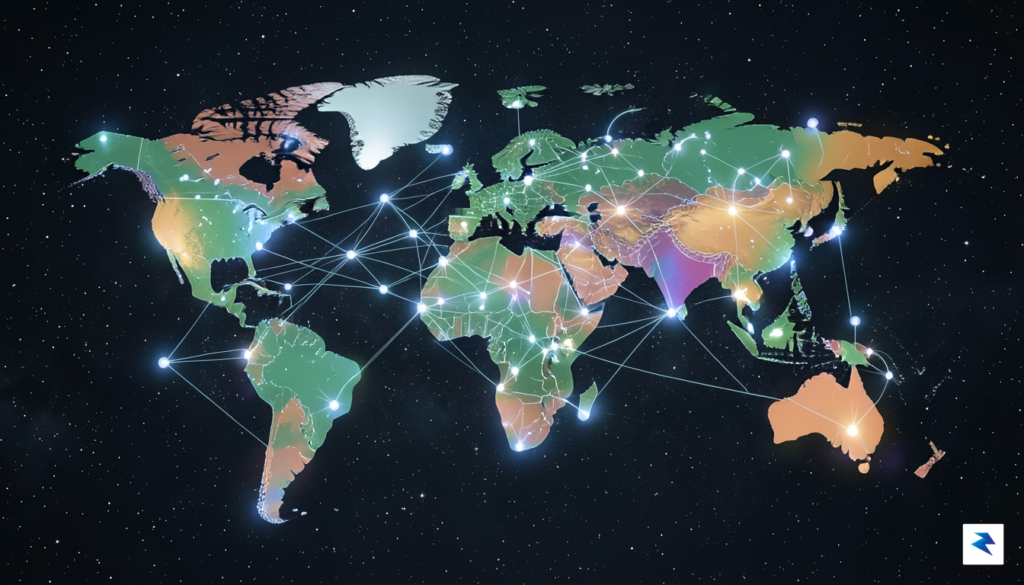
Beyond simple accessibility, the transition to a tokenized infrastructure heralds the end of the antiquated “market hours” paradigm. Currently, retail investors are tethered to the rigid operating windows of centralized exchanges, which often leaves them vulnerable to overnight volatility without the ability to react in real-time. Tokenization facilitates a 24/7 trading environment, mirroring the continuous liquidity seen in the cryptocurrency markets. This evolution ensures that price discovery is constant and that investors can manage their portfolios around their own schedules, regardless of time zone. For the global retail participant, this represents a significant leap in autonomy, effectively placing institutional-grade trading tools into the hands of the individual user.
The true promise of tokenized infrastructure lies in its ability to transform stagnant capital into active, liquid assets that flow seamlessly across international borders, regardless of legacy banking constraints.
Looking toward the next decade, the broader economic implications of this transition point toward a massive increase in market efficiency and liquidity. By removing the friction associated with clearing and settlement times, tokenized stocks allow for near-instantaneous ownership transfers, which significantly reduces counterparty risk and operational overhead. As this infrastructure scales, we can expect to see deeper pools of liquidity, which in turn will narrow bid-ask spreads and encourage more robust participation from both retail and institutional cohorts. Ultimately, this technological leap is not merely about digitizing stocks; it is about reconstructing the global financial plumbing to be faster, more transparent, and infinitely more inclusive for every market participant.
You must be logged in to post a comment.