
Samsung Health AI Opt-Out: What You Need to Know About Your Data
Understanding the Samsung Health AI Opt-Out Mechanism Recent discussions surrounding Samsung’s suite of health-focused artificial intelligence…


The transition toward an open-source framework for Grok Build marks a pivotal departure from the industry’s long-standing reliance on “black-box” proprietary AI models. For years, major tech firms have guarded their algorithmic architectures behind closed doors, often leaving developers and users to guess how data is processed, filtered, or prioritized. By choosing to make the source code accessible, SpaceXAI is effectively moving the goalposts, prioritizing collaborative scrutiny over corporate secrecy. This pivot is not merely a technical adjustment; it is a fundamental acknowledgment that in an era of growing skepticism surrounding data privacy, transparency is the only viable path to long-term sustainability.
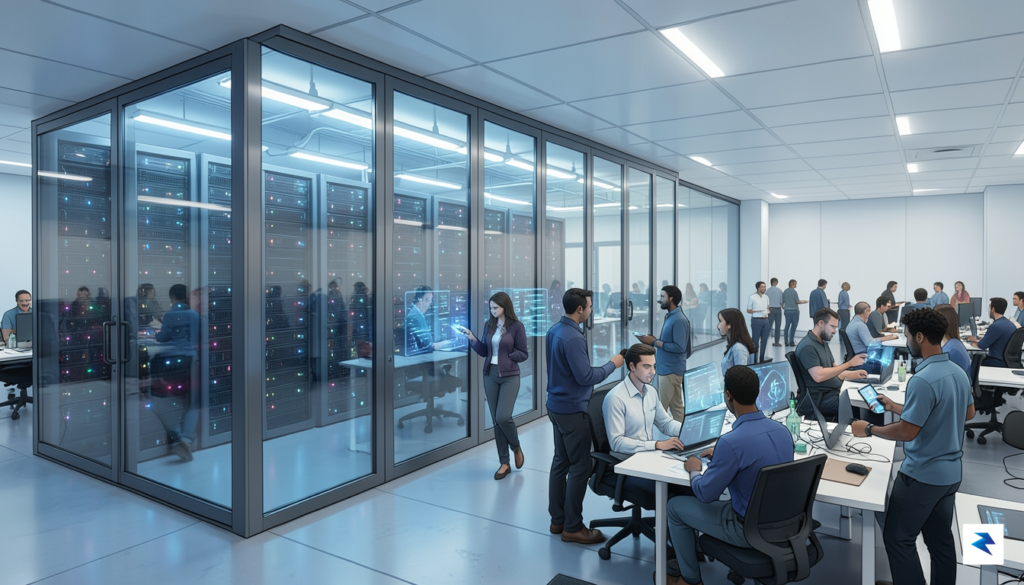
The motivation behind this shift is deeply rooted in the need to address mounting privacy concerns that previously threatened to alienate the platform’s core user base. When an AI tool operates behind an opaque veil, users are forced to trust the developer’s claims regarding data handling and security implicitly. By opening the Grok Build source code, SpaceXAI allows independent researchers and security experts to audit the software for vulnerabilities, hidden backdoors, or problematic data collection practices. This move transforms the relationship between the company and its audience from one of passive reliance to active participation, fostering a culture of accountability that is rare in the high-stakes world of artificial intelligence.
The true measure of an AI’s maturity is not found in the secrecy of its code, but in the strength of the community that audits it.
Furthermore, this strategic move is likely to accelerate developer adoption and innovation in ways that a closed model never could. When developers are invited to inspect, modify, and contribute to the underlying codebase of an AI agent, they become stakeholders in its evolution. This community-driven approach often leads to faster bug fixes, more diverse feature sets, and a more robust security posture as thousands of eyes monitor the project for flaws. By inviting the global developer community to engage with the Grok Build architecture, SpaceXAI is positioning itself to benefit from the collective intelligence of the industry rather than relying solely on internal resources. Ultimately, this transparency-first strategy represents a mature, forward-thinking response to the challenges of modern software development, signaling that the future of AI lies in openness rather than isolation.

The controversy began when users of the terminal-based AI coding agent discovered that the tool was configured to automatically ingest and process entire local directories. While the promise of an AI assistant capable of understanding a project’s full context is appealing, the implementation raised immediate alarms regarding data privacy and security. By default, the agent scanned local file structures, sending sensitive configuration files, environment variables, and proprietary source code to remote servers for analysis. For many developers, this behavior was not merely an inconvenience but a significant security breach, as it inadvertently exposed secrets that are meant to stay siloed within a local machine or a secure, private repository.

The backlash was swift and intense, particularly within corporate environments where strict data governance policies are mandatory. Security-conscious engineers pointed out that the agent lacked granular controls or clear opt-in mechanisms, effectively turning a developer’s own workspace into a potential data leak vector. Because the agent was designed to facilitate “context-aware” coding, it assumed that all files within the parent directory were fair game for ingestion. This lack of a robust ignore-file mechanism—which would have allowed developers to specify sensitive directories or file types to exclude—left many feeling that their intellectual property was being handled with reckless disregard for confidentiality.
The core issue was not the AI’s intelligence, but the assumption of consent; developers were suddenly faced with the reality that their private build processes were being mirrored in a remote cloud environment without explicit authorization.
As the community began to document these behaviors on platforms like GitHub and X, the mounting pressure became impossible for the development team to ignore. Critics argued that in an era of increasing cybersecurity threats and supply chain attacks, providing an AI tool that unilaterally scans local files is a fundamental violation of developer trust. The community response included a wave of negative feedback and an exodus of users who feared that their proprietary codebases were being used to train or refine models without their explicit knowledge or agreement. This intense public scrutiny served as a wake-up call, forcing a pivot toward radical transparency. Ultimately, the team realized that for the tool to survive in a professional landscape, it would need to move beyond closed-source black-box operations and embrace an open-source model where the community could audit exactly how data is handled, processed, and secured.

By choosing the Apache 2.0 license for the Grok build, SpaceXAI has effectively invited the global developer community to participate in a collaborative ecosystem that prioritizes both legal clarity and functional freedom. Unlike more restrictive licenses that might force derivative works to remain open, Apache 2.0 provides a robust framework that is particularly well-suited for enterprise adoption. It grants users the perpetual, worldwide, non-exclusive, and royalty-free right to use, modify, and distribute the software, ensuring that companies can integrate these advanced models into their own proprietary stacks without fearing sudden legal repercussions or licensing traps. This balance is critical, as it removes the friction that often prevents businesses from experimenting with cutting-edge artificial intelligence tools.
At its core, the license functions as a protective shield for both the original creators and the end-users. It includes an explicit grant of patent rights from contributors to users, which is a significant safeguard in the complex landscape of AI development where intellectual property disputes are common. By codifying these rights, SpaceXAI is essentially signaling that they want the technology to be adopted widely rather than held behind a corporate wall. This move encourages developers to build upon the existing architecture, knowing that their own innovations will not be legally compromised by the underlying framework. It transforms the model from a static product into a dynamic, living asset that can evolve through collective ingenuity.
The Apache 2.0 license acts as a cornerstone for institutional adoption, providing the necessary legal certainty for developers to invest time and resources into building, testing, and refining the Grok architecture.
From an operational standpoint, this transition shifts the burden of accountability, particularly concerning security patches and feature updates. In a closed-source environment, users are entirely dependent on the primary vendor to identify vulnerabilities and push updates, leaving them exposed if the vendor fails to prioritize a specific fix. With an open-source model under Apache 2.0, the community gains the agency to audit the code, proactively identify security flaws, and contribute patches themselves. This decentralized approach to maintenance creates a more resilient product, as the collective eyes of thousands of developers are far more efficient at catching edge-case bugs and security loopholes than a single internal team. Consequently, enterprises can now take ownership of their own security posture, implementing patches as soon as they are verified rather than waiting for an official corporate release cycle.
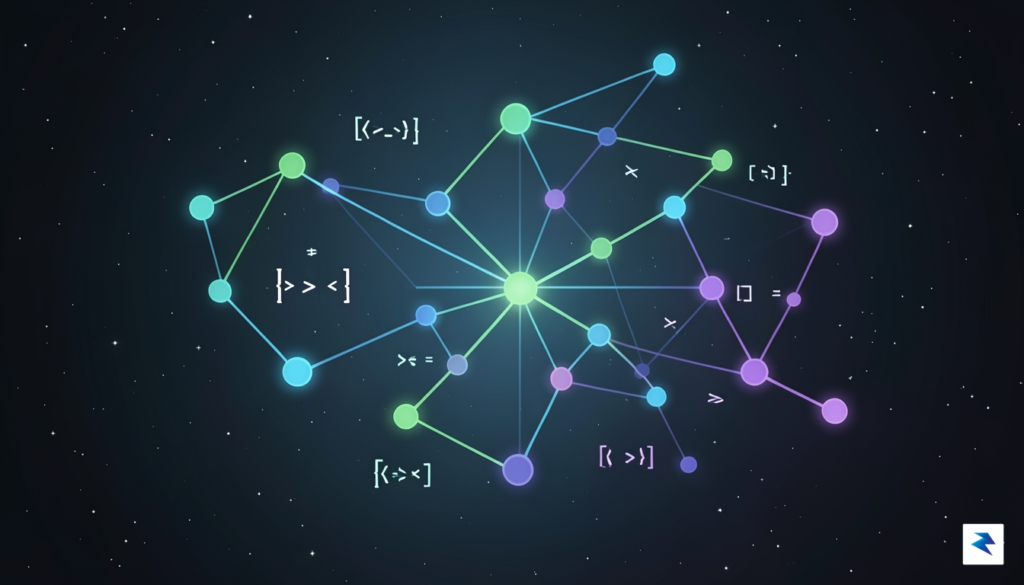
Ultimately, this shift represents a maturation of the AI industry’s approach to privacy and accessibility. By removing the “black box” nature of the model, SpaceXAI is fostering a culture of transparency that addresses the growing public demand for accountability in large language models. Developers are no longer merely consumers of a proprietary service; they are stakeholders in the development lifecycle. This empowerment is likely to accelerate the pace of innovation, as researchers and engineers across the globe can now fork the project to optimize it for specific hardware, create specialized versions for niche applications, or conduct rigorous safety testing that was previously impossible. This is not just a licensing change—it is a fundamental change in how high-stakes AI technology is distributed and refined.

The transition of an AI coding agent from a closed, proprietary environment to an open-source model fundamentally alters the traditional security paradigm. Historically, companies relied on “security through obscurity,” where the underlying architecture and training weights remained hidden behind corporate firewalls to prevent bad actors from reverse-engineering the system. By releasing the build, SpaceXAI is trading that perceived safety for the power of collective scrutiny. In this new ecosystem, vulnerabilities are no longer just discovered by internal red teams; instead, a global community of developers, security researchers, and enthusiasts can audit the codebase in real-time, often identifying flaws that might have evaded a smaller internal team for months.
However, this shift introduces a double-edged sword regarding the threat landscape. While open-source transparency accelerates the patching process, it simultaneously provides malicious actors with a detailed roadmap of the agent’s logic. If an AI coding tool contains inherent weaknesses—such as a tendency to suggest insecure library dependencies or a vulnerability to prompt injection that could lead to unauthorized code execution—the open-source nature of the project means these exploits can be weaponized with surgical precision. The barrier to entry for attackers is lowered, as they no longer need to guess how the model operates; they can now analyze the code, simulate attacks locally, and develop automated scripts to target the software supply chain.

For developers who intend to integrate these powerful AI coding agents into sensitive production environments, the risks associated with open-source transparency require a more robust defensive posture. Because these tools can inadvertently suggest legacy code or deprecated functions that harbor known vulnerabilities, developers must never treat AI-generated code as inherently secure. Instead, consider adopting the following rigorous workflows to mitigate potential risks:
The true security of an open-source AI agent lies not in its secrecy, but in the speed at which the community can respond to threats. When the build is public, the collective intelligence of the industry becomes your primary defense, provided you remain vigilant about your own integration practices.
Ultimately, the move to open-source signifies a maturation of the AI industry, moving away from opaque black boxes toward verifiable, community-audited tools. While this creates new vectors for exploitation, it also forces developers to adopt better security hygiene. By treating the AI as an untrusted contributor that requires constant oversight, teams can leverage the immense productivity benefits of the tool while keeping their critical infrastructure insulated from the risks inherent in automated code generation.

The decision to pivot toward an open-source framework for Grok marks a significant turning point in the trajectory of generative artificial intelligence, signaling a departure from the “black box” era that has dominated the industry for years. As high-profile organizations face mounting pressure regarding data sovereignty and algorithmic bias, the move toward transparency is rapidly evolving from a niche preference into a fundamental expectation for users and developers alike. This shift suggests that the era of proprietary, opaque models may be nearing its expiration date, as the marketplace increasingly rewards entities that invite public scrutiny rather than shielding their internal mechanics behind corporate firewalls.

Industry observers anticipate that this development will act as a bellwether for the broader tech landscape, forcing competitors to re-evaluate their own closed-loop systems to maintain institutional credibility. When one major player commits to radical transparency, it inherently raises the bar for everyone else, effectively transforming open-source accessibility into a non-negotiable requirement for widespread AI adoption. Companies that choose to remain opaque risk falling behind, as developers and privacy-conscious organizations will naturally gravitate toward platforms where the underlying architecture can be audited, verified, and improved upon by the collective intelligence of the global community. This competitive pressure will likely catalyze a new wave of “open-source by default” policies across the tech sector.
True innovation in the age of intelligence will not be defined by who hides their code the best, but by who empowers the community to build upon it securely and ethically.
Looking toward the long term, the transition to community-driven AI architecture promises substantial benefits that extend far beyond mere privacy compliance. By inviting external contributors to stress-test models, identify vulnerabilities, and suggest optimizations, the industry can accelerate the pace of safety research while simultaneously mitigating the risks of centralized bias. This collaborative ecosystem fosters a more resilient and versatile technological foundation, ensuring that AI development remains aligned with the diverse needs of the public rather than the narrow interests of a few private stakeholders. Ultimately, this pivot represents a maturing of the AI industry, moving away from a gold-rush mentality toward a more sustainable, accountable, and transparent future for all users.
You must be logged in to post a comment.