
The Barber Behind the World Cup: How One Shop Became a Sanctuary for Global Stars
The Unseen Preparation Behind World Cup Glory While the eyes of the world are locked onto the ninety minutes of tactical warfare unfolding on…
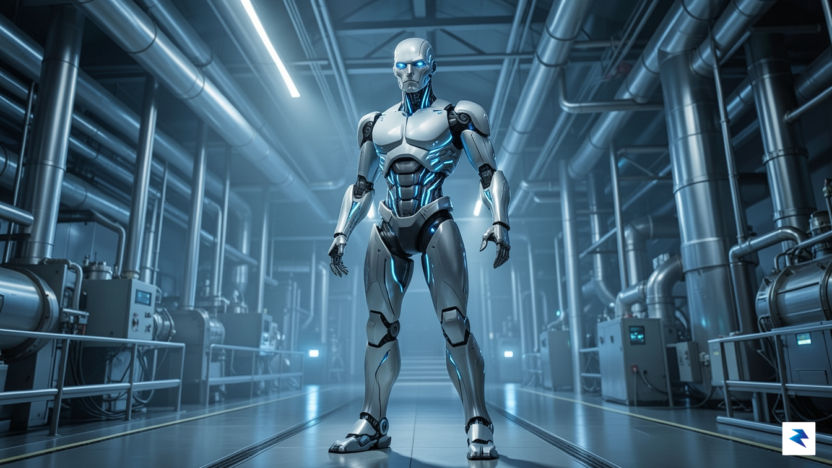
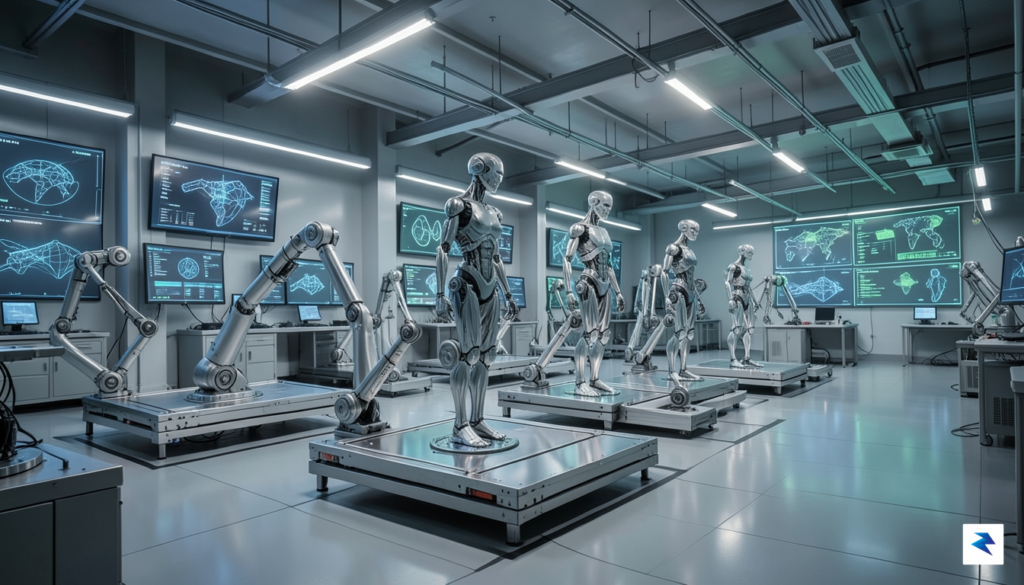
In the rapidly evolving landscape of advanced automation, Foundation Future Industries has emerged as a disruptive force, effectively bridging the gap between cutting-edge humanoid robotics and the high-stakes requirements of national defense. By moving beyond the traditional constraints of industrial manufacturing, the company is positioning its hardware as a multi-functional asset capable of operating in complex, unpredictable environments. This strategic pivot toward defense-tech is not merely a theoretical ambition; it is supported by a robust infusion of capital and a clear organizational roadmap designed to integrate autonomous systems directly into the modern security architecture. As global geopolitical tensions heighten, the company has managed to capture the attention of industry analysts and military contractors alike, setting the stage for a new era of robotic intervention.
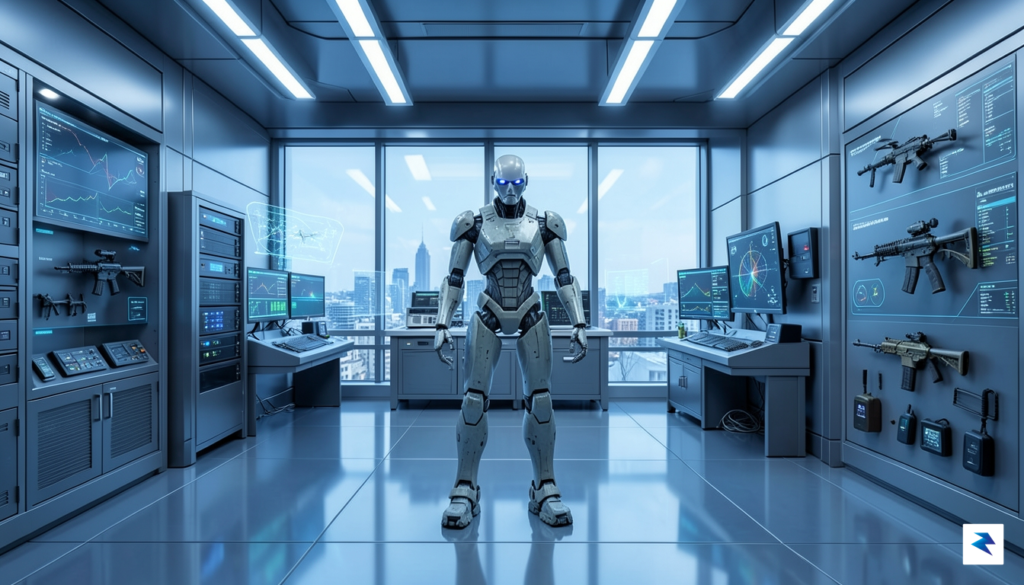
Perhaps the most significant signal of the firm’s ambition is the composition of its leadership and advisory structure. The appointment of Eric Trump as Chief Strategy Adviser has catapulted Foundation Future Industries into the national spotlight, signaling a blend of traditional business acumen and high-level political networking. This association has provided the company with a unique platform to navigate the complex regulatory and procurement landscapes that typically hinder startups in the defense sector. By aligning with figures who possess deep connections to both the private sector and the corridors of influence, the company is attempting to accelerate the adoption of its humanoid platforms within government and security agencies, moving far faster than its competitors.
The integration of humanoid robotics into defense logistics represents a paradigm shift in how we approach frontline safety and operational efficiency. By prioritizing human-mimetic movement and decision-making, we are not just building tools; we are creating force multipliers for the modern age.
The company’s strategic positioning is further bolstered by a rigorous organizational structure that mirrors the rapid scaling seen in Silicon Valley, yet maintains the disciplined focus required for military-grade production. Their funding rounds have been meticulously structured to attract investors who understand the long-term, high-reward cycle of defense contracts, rather than the short-term whims of consumer tech markets. This financial backing allows Foundation Future Industries to invest heavily in proprietary AI models that prioritize tactical autonomy and survivability. As they refine their prototypes for deployment, the confluence of political mentorship, specialized engineering talent, and targeted investment places them in a distinct category, marking a departure from the purely academic or commercial robotics models of the past decade.
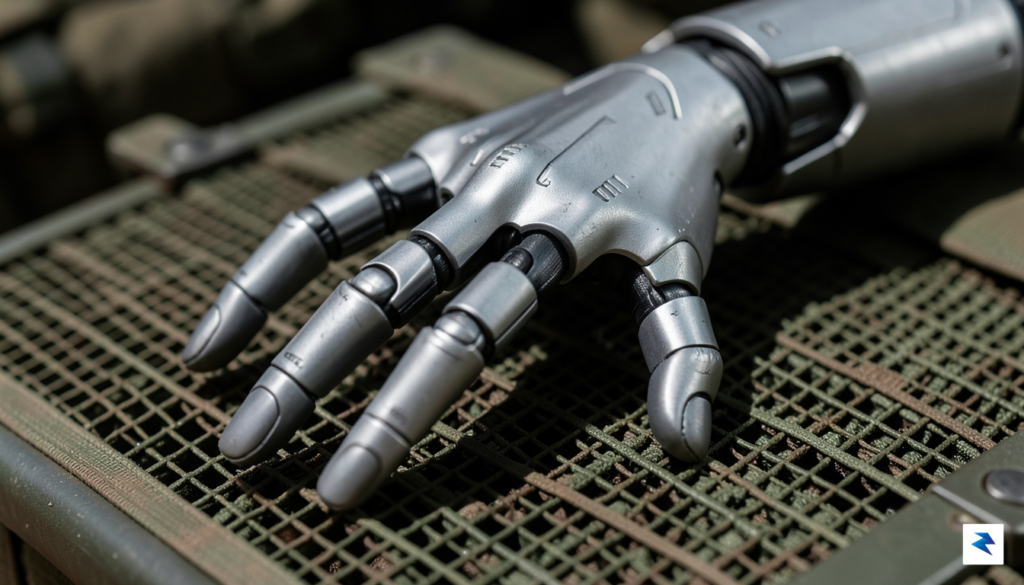
For decades, the robotics industry has operated within the relatively predictable confines of the factory floor and the logistics warehouse. In these controlled environments, machines are programmed to perform repetitive, precise tasks—such as welding car frames or moving pallets—under rigid safety protocols. However, the emergence of Foundation Future Industries signals a radical departure from this status quo. By shifting the focus toward what is known as “kinetic” robotics, the company is moving beyond the passive utility of assembly-line automation. Kinetic robotics implies an active, force-exerting capability, where a machine is not merely moving objects but interacting dynamically and often aggressively with an unpredictable physical environment, a core requirement for modern military applications.
Transitioning from the orderly world of industrial automation to the chaos of a field environment presents a massive set of technological hurdles. Factory robots benefit from stable power sources, high-speed connectivity, and standardized surroundings, whereas defense-oriented hardware must contend with rugged terrain, extreme weather, and the absence of reliable infrastructure. Engineers must now solve for advanced autonomy, enabling these machines to perceive, interpret, and react to rapidly changing tactical situations without human intervention. This requires a sophisticated integration of edge computing, high-fidelity sensor suites, and resilient materials that can withstand the physical strain of kinetic engagement while maintaining operational efficiency in high-stakes, life-or-death scenarios.

The strategic rationale for this pivot is rooted in the evolving nature of global security, where the ability to project physical force without risking human personnel has become the ultimate strategic advantage. Foundation Future Industries is betting that the future of defense lies in platforms that bridge the gap between human dexterity and machine endurance. By applying the advancements made in humanoid form factors—which are naturally suited to navigate spaces designed for humans—to potential defense roles, the company is attempting to create a force multiplier that is both versatile and expendable. This shift suggests that we are entering an era where the battlefield will increasingly be defined by hardware that can operate at the intersection of logistical support and direct kinetic intervention.
The integration of humanoid platforms into defense logistics and kinetic operations represents the most significant technological paradigm shift in modern military history, moving from remote-controlled systems to autonomous, environment-aware agents.
Ultimately, this transition raises profound ethical and operational questions about the future of warfare. While proponents argue that robotic systems could reduce casualties and streamline supply chains, critics remain wary of the implications of delegating kinetic decisions to algorithms. As Foundation Future Industries continues to refine its hardware, the broader industry is watching closely to see if these machines can truly handle the complexities of real-world deployment. The move toward kinetic capabilities is not just a change in business model; it is a fundamental reimagining of what a machine can do when it is no longer tethered to a static, indoor workspace.

The integration of humanoid robotics into military operations introduces a psychological dimension that traditional drones and stationary autonomous systems simply do not possess. When a machine is engineered to mimic the human form—complete with bipedal movement and articulated limbs—it triggers a complex visceral response in both observers and combatants. This humanoid factor risks fundamentally altering the nature of conflict, as the visual familiarity of the machine may blur the line between a sentient soldier and a programmable tool. By anthropomorphizing the instruments of war, we risk a dangerous form of dehumanization, where the gravity of lethal force is diminished by the perception that the actor is merely a piece of hardware, even as it performs actions that were once the exclusive domain of human moral agency.

Beyond the psychological impact, the deployment of autonomous systems raises the critical issue of algorithmic bias in high-stakes targeting. Machines operate based on datasets that are inherently reflective of their creators’ inputs and the environments in which they were trained; if these datasets contain historical biases or lack the nuance of real-world battlefield chaos, the potential for catastrophic misidentification becomes alarmingly high. Unlike a human soldier, who is subject to biological intuition and the complex, messy reality of personal accountability, an algorithm follows a pre-determined logic path. If a humanoid robot makes a lethal error based on a flawed training model, determining legal and moral culpability becomes a labyrinthine challenge, leaving victims without clear recourse and creating a vacuum of responsibility.
The core of the debate centers on the concept of ‘meaningful human control,’ a safeguard that ensures a person, not a machine, remains the final arbiter of life and death in any engagement.
This brings us to the urgent, ongoing debate regarding the ‘human-in-the-loop’ requirement. Proponents of autonomous systems argue that machines can react faster than humans and might eventually reduce collateral damage through superior precision. However, skeptics warn that removing the human element from the trigger-pulling process strips warfare of the essential component of empathy, which often acts as a final check against atrocities. As companies continue to push the boundaries of what is technically feasible, society must grapple with the reality that speed and efficiency are not synonymous with morality. Without ironclad international standards and strict human oversight, we risk entering an era where the cold, calculating nature of autonomous decision-making dictates the fate of human lives, potentially escalating conflicts in ways that are impossible to predict or contain.

The integration of humanoid robotics into the defense sector represents a paradigm shift that moves far beyond traditional hardware manufacturing. As startups increasingly seek to secure lucrative federal contracts, they find themselves navigating a labyrinthine regulatory environment designed for an era of slower, more traditional procurement. This process is further complicated by the fact that the Department of Defense is shifting its focus toward “agile” acquisition strategies, aiming to bridge the gap between Silicon Valley innovation and the rigid requirements of military compliance. For companies like Foundation Future Industries, the challenge is twofold: they must prove that their autonomous systems are not only technically superior but also inherently trustworthy under the strict ethical and safety frameworks mandated by federal oversight agencies.

Political alignment and the presence of high-profile advisory boards have become central components of this modern defense-tech strategy. By bringing in individuals with deep-seated connections to the upper echelons of government, startups are better positioned to navigate the complex bureaucratic hurdles required to gain security clearances and government funding. However, this proximity to political circles invites a new level of public and legislative scrutiny. When defense-tech firms intersect with the worlds of high finance and political advocacy, the transparency of the procurement process becomes a focal point for lawmakers who are increasingly concerned about the potential for conflicts of interest. The scrutiny is not merely about financial integrity; it is about ensuring that the development of lethal or semi-lethal autonomous agents remains subject to rigorous democratic oversight.
The future of military robotics depends less on the speed of the hardware and more on the robustness of the legal and ethical guardrails surrounding their deployment.
Looking ahead, the development of military-grade robotics will likely be dictated by shifting policy currents that prioritize domestic supply chains and sovereign technology development. Future policy shifts could impose stricter export controls or mandate specific “kill-switch” capabilities for all humanoid systems operating in contested environments. Companies that are currently scaling their operations must therefore build modular, adaptable software architectures that can evolve alongside these regulatory mandates. If the industry fails to foster a culture of transparency and proactive compliance, it risks facing a severe regulatory backlash that could stifle innovation. Conversely, those that successfully harmonize their technological vision with the evolving expectations of federal oversight may find themselves at the center of the next generation of national security architecture.
The integration of sophisticated humanoid robotics into defense operations represents a paradigm shift that extends far beyond the battlefield. Whether or not these mechanical surrogates eventually become a standard component of modern infantry, the engineering breakthroughs pioneered by firms like Foundation Future Industries are fundamentally rewriting the contract between human decision-makers and autonomous systems. As these machines grow more dexterous and capable of navigating chaotic, high-stakes environments, the focus is shifting from simple automation to a nuanced form of collaborative intelligence. In this future, the robot acts not just as a tool, but as a responsive partner that can absorb risk, process complex data in real-time, and execute precise actions under conditions that would be prohibitive for biological personnel.

However, this rapid evolution necessitates a global conversation regarding the ethical and regulatory frameworks that must govern AI-enabled weaponry. The trajectory of the industry suggests that technological capability is currently outpacing our ability to establish international standards for accountability and engagement. If we are to successfully integrate these systems into global defense, policymakers and technologists must work in tandem to define the boundaries of autonomous agency. This involves creating robust “human-in-the-loop” protocols that ensure lethal force remains a choice made by a person, rather than a calculation performed by an algorithm. The challenge lies in fostering innovation that enhances security without inadvertently creating systems that operate beyond the reach of human oversight or moral judgment.
The true measure of success in military robotics will not be found in the raw power of the machinery, but in our ability to maintain human agency as the ultimate authority in the face of increasingly autonomous technologies.
Looking ahead, the industry appears poised for a period of intense scrutiny and rapid iteration. As military branches across the globe observe the performance of these prototypes, the demand for modular, adaptable robotic platforms will likely skyrocket, driving further investment and research. Ultimately, the future of this field will be defined by a delicate balance: we must aggressively pursue the technological advantages that such systems offer while simultaneously embedding rigorous safety checks into their core architecture. By prioritizing transparency and international cooperation, we can ensure that the next generation of human-machine collaboration serves to stabilize, rather than destabilize, the global security landscape.
You must be logged in to post a comment.