
Inside the High-Stakes World of Foundation Future Industries and Military Robotics
The Rise of Foundation Future Industries In the rapidly evolving landscape of advanced automation, Foundation Future Industries has emerged as…

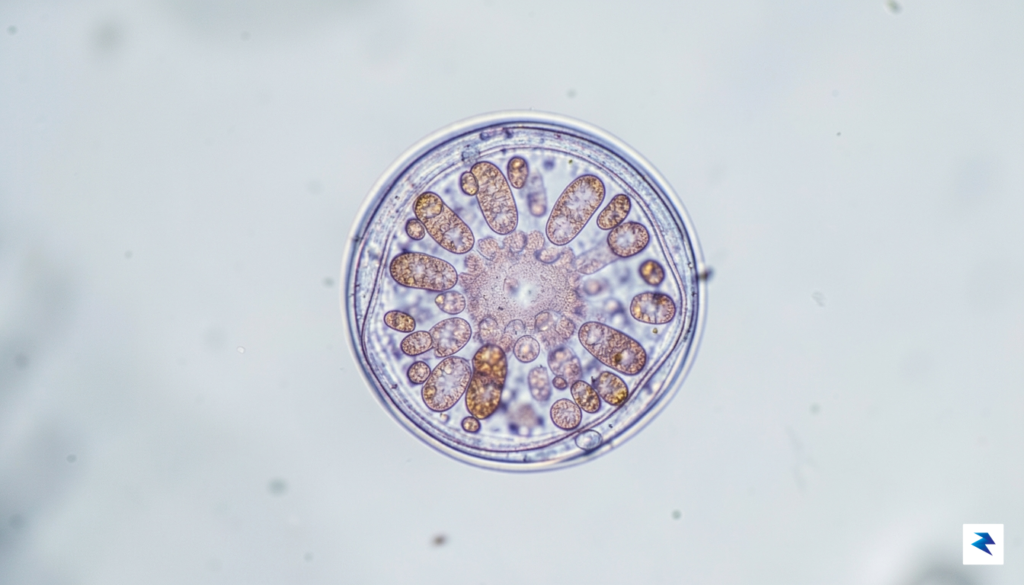
At its core, Cyclospora cayetanensis is a microscopic, single-celled parasite that acts as a formidable adversary to public health. Unlike common foodborne pathogens that strike quickly, this parasite is known for causing cyclosporiasis, an intestinal infection characterized by severe, watery diarrhea, explosive bowel movements, cramping, and prolonged fatigue. Because the parasite is typically transmitted through the ingestion of contaminated fresh produce—such as cilantro, raspberries, or pre-packaged salad mixes—it can easily infiltrate the food supply chain before any contamination is ever detected. For the average consumer, an infection often means weeks of physical misery, but for the immunocompromised or the elderly, the resulting dehydration and nutritional deficit can escalate into a serious medical emergency requiring hospitalization.

Identifying Cyclospora presents a unique set of hurdles that standard clinical diagnostic tools are often ill-equipped to handle. While traditional stool culture panels are highly effective at flagging common bacterial culprits like Salmonella or E. coli, they are frequently blind to this specific parasite. Because Cyclospora is notoriously difficult to visualize under a standard microscope—often requiring specialized acid-fast staining techniques—many laboratories simply miss it during routine testing. This diagnostic gap means that outbreaks can simmer undetected in the general population for weeks, allowing contaminated products to circulate widely across state lines while health officials struggle to pinpoint the origin of the illness.
The insidious nature of Cyclospora lies in its resilience; it is not merely a transient bacteria, but a robust oocyst that can survive in water and soil for extended periods, making it an incredibly persistent environmental threat.
This is precisely where the specialized laboratory infrastructure at the Centers for Disease Control and Prevention (CDC) has historically provided a critical safety net. By maintaining dedicated teams focused on molecular subtyping and environmental sample analysis, the CDC has been able to bridge the gap between sporadic cases reported by local doctors and the larger, multi-state outbreaks that demand federal intervention. These labs do not just identify the presence of the parasite; they perform genomic sequencing to link seemingly unrelated clusters of illness to a single source of distribution. Without this centralized, high-level expertise, the ability to trace an outbreak back to a specific farm or processing facility is severely compromised, leaving the public vulnerable to a cycle of recurring infections that could otherwise be mitigated by swift, data-driven food recalls.

For years, the Centers for Disease Control and Prevention (CDC) maintained a specialized laboratory that served as the nation’s primary defense against Cyclospora cayetanensis, a microscopic parasite responsible for debilitating intestinal infections. This facility functioned as the ultimate arbiter in clinical diagnostics, providing a level of molecular precision that most state and local public health labs simply could not replicate. When an outbreak occurred, local health departments were often the first to notice a spike in cases, but they lacked the high-level genomic sequencing technology required to confirm the presence of the parasite and match it to specific contaminated food sources. By acting as a centralized hub, the CDC ensured that disparate data points from across the country were synthesized into a coherent, actionable narrative, effectively mapping the path of a pathogen from farm to table.

The operational workflow relied on a sophisticated “hub-and-spoke” model designed to maximize efficiency during public health crises. In this arrangement, state labs acted as the spokes, collecting samples from patients and performing preliminary screenings, while the CDC lab served as the vital hub. Once the CDC received these samples, experts would conduct advanced molecular testing to identify the specific strain of the parasite. This process was not merely an academic exercise; it was a high-stakes race against time. Because Cyclospora is frequently transmitted through fresh produce like cilantro, basil, and leafy greens—items with a notoriously short shelf life—the speed of detection was the single most important factor in stopping a contaminated shipment from reaching store shelves and restaurant kitchens.
The effectiveness of food safety intervention is directly proportional to the speed at which a source is identified; every hour spent waiting for verification is another hour that contaminated inventory remains in the supply chain.
Without the centralized expertise of this dedicated laboratory, the burden of investigation shifts heavily onto local jurisdictions that often lack the specialized resources to conduct complex genomic analysis. When the CDC’s internal capacity is downsized, the resulting delay in identification can lead to larger, more widespread outbreaks, as public health officials are forced to rely on slower, less precise testing methods. This fragmentation creates a dangerous gap in the nation’s surveillance infrastructure, where the inability to quickly pinpoint the origin of an outbreak allows contaminated products to circulate for longer periods. Consequently, the role of the lab was far more than just testing; it was the backbone of a rapid-response system that protected the food supply, maintained consumer confidence, and, most importantly, prevented thousands of avoidable illnesses each year.

The Department of Government Efficiency (DOGE) was established with a primary mandate to identify and eliminate bureaucratic redundancies, streamline federal agencies, and reduce overall government spending. Tasked with auditing the sprawling administrative state, the initiative focused on identifying programs perceived as duplicative or low-priority to achieve a leaner federal budget. As part of this comprehensive review, the Centers for Disease Control and Prevention (CDC) underwent a series of rigorous budgetary assessments aimed at reallocating resources toward what policymakers deemed more essential operational mandates. This initiative sought to fundamentally reshape how federal health agencies balance administrative austerity with their core missions of public protection.

Among the specific areas impacted by these fiscal shifts was the CDC’s environmental health and laboratory division, which oversees the tracking of foodborne parasites like Cyclospora cayetanensis. Under the new budgetary guidelines, this specialized laboratory unit faced significant downsizing, resulting in a reduction of both funding and available personnel. Proponents of the initiative argued that such cuts were necessary to improve fiscal responsibility and prevent the proliferation of redundant research functions within federal offices. However, the move has triggered a sharp debate regarding the long-term trade-offs of prioritizing immediate cost savings over specialized investigative capacity.
The public health community has expressed mounting concern that these reductions may inadvertently sacrifice vital institutional knowledge. Because tracking complex pathogens requires years of specialized training and high-level technical expertise, the departure of veteran scientists and the contraction of laboratory resources could hamper the agency’s agility during future outbreaks. Critics of the downsizing warn that when a specialized team is hollowed out, the ability to respond swiftly to emerging health threats is inevitably compromised.
The primary challenge of austerity in public health is ensuring that efficiency initiatives do not inadvertently dismantle the highly technical infrastructure required to monitor microscopic threats to our food supply.
Ultimately, the friction between the government’s pursuit of fiscal efficiency and the specialized needs of disease surveillance highlights a classic administrative dilemma. While streamlining operations can arguably eliminate waste, the loss of granular, mission-critical capabilities—such as the rapid identification of Cyclospora clusters—creates a different kind of risk. As the agency adjusts to these leaner operational parameters, policymakers and health officials remain at odds over whether these cuts represent a necessary modernization of the federal government or a dangerous weakening of the nation’s public health frontline.
The reduction of the CDC’s dedicated Cyclospora laboratory capacity represents more than just a bureaucratic line-item adjustment; it signals a potential systemic vulnerability in the nation’s food safety infrastructure. Former laboratory directors have voiced significant concern, noting that the agency’s “diminished capacity” directly undermines the speed at which specialized diagnostics can be performed. When an outbreak of Cyclospora cayetanensis occurs, every hour lost in the laboratory translates into additional contaminated produce remaining on supermarket shelves and in consumer kitchens. Because this parasite is notoriously difficult to detect and requires highly specific molecular techniques, the loss of experienced, long-tenured staff inevitably leads to longer diagnostic turnaround times that can leave public health officials flying blind during the critical early days of an investigation.

“When you remove the experts who have spent decades mastering the nuances of rare pathogen identification, you aren’t just losing headcount—you are losing the institutional memory that prevents minor clusters from spiraling into nationwide recalls.”
The logistical burden of these downsizing efforts is increasingly being offloaded onto state-level public health laboratories, many of which are already operating under severe budgetary and staffing constraints. While these local labs are essential partners in the public health ecosystem, they often lack the specialized equipment and high-throughput capabilities found at the federal level. By shifting the diagnostic weight away from the CDC’s centralized hub, the agency is creating a fragmented response chain. If a state lab encounters a complex case or a suspected outbreak that exceeds their technical resources, the delay caused by shipping samples to a secondary facility or waiting for federal assistance can be the difference between a contained incident and a widespread public health crisis.
Furthermore, the precision of outbreak tracking is inherently tied to the availability of specialized personnel. Rapid identification allows investigators to pinpoint the exact source of contamination—whether it be a specific farm, a regional packing house, or a contaminated water supply—with greater accuracy. Without the deep bench of experts that previously populated the Cyclospora unit, the CDC may face increased difficulties in distinguishing between unrelated sporadic cases and a true, linked outbreak. This ambiguity forces officials to cast a wider net when issuing public health alerts, which can lead to unnecessary economic disruption for the agriculture industry while simultaneously increasing the risk that the actual source of the pathogen remains unidentified and active in the supply chain.

The recent downsizing of the CDC’s Cyclospora laboratory highlights a fundamental friction in modern governance: the ongoing struggle to reconcile the desire for fiscal efficiency with the non-negotiable requirement for robust public health defense. On one side of the ledger, proponents of administrative downsizing argue that government agencies must operate with the same lean, agile mindset as the private sector, eliminating redundant processes and narrowing the scope of federal involvement to ensure taxpayer dollars are not wasted on bureaucratic bloat. From this perspective, trimming specialized lab functions is framed as a necessary exercise in fiscal discipline, aimed at streamlining operations and reducing the overall footprint of federal oversight.
However, this approach frequently fails to account for the asymmetric nature of public health threats, where small, specialized units often provide outsized protection against catastrophic risks. When we view the health of our national food supply as a matter of security, the arithmetic of short-term savings begins to look significantly more precarious. While a budget report might show a reduction in headcount or equipment costs, it often overlooks the astronomical long-term expenses associated with a widespread outbreak. These costs extend far beyond the immediate medical bills for infected patients; they encompass a ripple effect of lost workforce productivity, massive product recalls, and a fundamental erosion of consumer confidence in the safety of the food chain.
The true cost of public health infrastructure should not be measured by the savings of a single fiscal year, but by the avoidance of multi-billion dollar crises that arise when surveillance capabilities are eroded.

Moving forward, the challenge for policymakers is to move beyond a binary choice between “cutting” and “spending” toward a model of strategic resilience. True efficiency is not simply about removing staff or closing facilities; it is about ensuring that the scientific infrastructure capable of identifying and mitigating emerging pathogens remains intact and responsive. If the government is to refine its operations, it must do so with a rigorous understanding of which capabilities are truly essential for national stability. Protecting the public from foodborne illness is not merely an administrative service—it is a core function of a functioning state. By ignoring the specialized scientific expertise required to monitor threats like Cyclospora, we risk exchanging minor budgetary savings today for much larger, more volatile public health liabilities tomorrow.
You must be logged in to post a comment.