
Rippling Wants to Be Your Entire Data Stack: What It Means for AI Governance
The Rise of Shadow AI and the Data Silo Dilemma The modern workplace is undergoing a quiet but seismic shift as employees increasingly bypass…

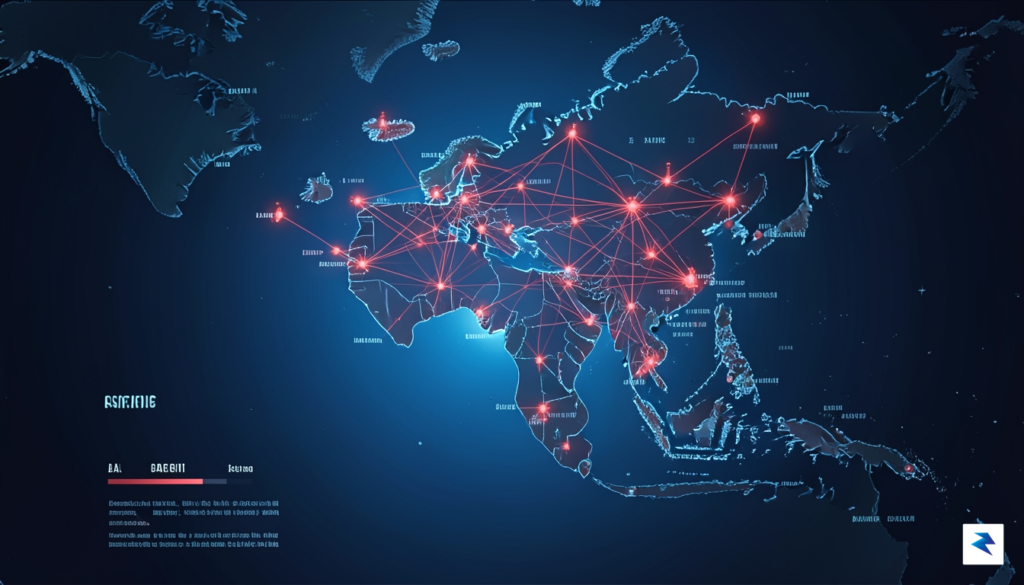
The digital evolution of the Asia-Pacific region has been nothing short of meteoric, yet this rapid modernization has introduced a profound vulnerability that criminal syndicates are quick to exploit. According to a recent assessment by Interpol, the transformation of the threat landscape has reached a critical tipping point: cybercrime now constitutes nearly 30% of all recorded criminal activity across the surveyed nations. This staggering statistic is not merely a data point but a clear indicator that the scales have tipped away from physical, traditional offenses toward illicit digital operations. As connectivity becomes the backbone of regional economies, the barrier to entry for cybercriminals has lowered significantly, allowing them to target high-value assets with unprecedented efficiency and relative anonymity.

The shift from conventional crime to digital-first offenses is driven by the sheer scale of the region’s expanding attack surface. With millions of new users coming online across APAC every year—often without robust security infrastructure—the potential for exploitation has grown exponentially. Organizations and individuals alike are struggling to keep pace with sophisticated phishing campaigns, ransomware attacks, and large-scale data breaches that bypass older, legacy defense systems. Because cybercrime offers a higher return on investment with a lower risk of physical apprehension, criminal organizations are increasingly pivoting their resources toward the digital domain. This strategic transition has turned the internet into a primary battlefield where the security of national infrastructure and personal privacy are constantly under siege.
The 30% threshold serves as a wake-up call for stakeholders, highlighting that cybercrime is no longer a peripheral issue but a central pillar of the modern criminal economy in the APAC region.
Furthermore, the rapid digitization of critical sectors—such as finance, healthcare, and logistics—has inadvertently created a complex web of dependencies that attackers are eager to manipulate. When critical systems are interconnected, a single compromised node can trigger a cascade of failures, allowing attackers to hold entire supply chains hostage. This interconnectedness means that no industry is truly insulated from the threat, and the traditional physical security measures of the past are now largely insufficient against remote, automated, and highly persistent digital threats. To combat this crisis, regional governments and private enterprises must move beyond reactive measures and embrace a proactive, intelligence-led approach that anticipates the next evolution in the cybercriminal toolkit.

The digital landscape across the Asia-Pacific region is currently undergoing a period of intense volatility, driven by a surge in sophisticated cyber threats that prioritize volume and velocity. While traditional phishing remains a foundational element of the criminal playbook, it has evolved significantly from the generic, easily identifiable emails of the past. Today’s attackers utilize advanced social engineering tactics, often masquerading as legitimate corporate communications or urgent government notifications to deceive unsuspecting users. By embedding malicious links or macro-enabled documents, these campaigns serve as the initial entry point for more destructive activities, such as ransomware, where attackers encrypt critical data and demand exorbitant sums for decryption keys.

Beyond the immediate threat of data locking, a more silent but equally dangerous menace has gained significant traction: the rise of infostealers. These specialized malware strains are meticulously designed to operate in the background, harvesting sensitive information like saved browser passwords, session cookies, and multi-factor authentication tokens. Unlike ransomware, which announces itself with a ransom note, infostealers work stealthily to strip an organization or individual of their digital identity. Once these credentials are exfiltrated, they are frequently sold on underground marketplaces, providing other malicious actors with “turnkey” access to corporate networks and personal financial accounts without the need for complex hacking techniques.
The integration of generative AI into the cybercrime ecosystem has effectively lowered the barrier to entry for attackers, allowing them to scale their operations with unprecedented efficiency.
Perhaps the most concerning development in the APAC region is the weaponization of generative AI. Attackers are no longer limited by language barriers or a lack of writing proficiency; instead, they use large language models to craft hyper-personalized phishing lures that are virtually indistinguishable from legitimate correspondence. These AI-driven scams can mimic the tone, professional jargon, and specific contextual details of a target’s workplace, making them highly effective at bypassing traditional security filters. Furthermore, AI tools are being used to generate deepfake audio and video content, which is increasingly being deployed in Business Email Compromise (BEC) scams to manipulate employees into authorizing fraudulent wire transfers. As these technologies continue to mature, the region’s security posture faces an uphill battle against an adversary that is becoming more creative, efficient, and difficult to detect.

The Asia-Pacific region is currently experiencing a period of unprecedented digital acceleration, characterized by a massive influx of investment and a burgeoning tech-savvy population. While this transformation has unlocked immense economic potential, it has simultaneously created a “security debt” that cybercriminals are eager to exploit. In many jurisdictions, the velocity at which businesses and governments have adopted cloud computing, mobile payments, and IoT integration has drastically outpaced the implementation of comprehensive cybersecurity frameworks. Consequently, organizations are often operating on digital foundations that prioritize accessibility and growth over hardened, resilient security architectures, leaving a wide, inviting window for malicious actors to maneuver.

A primary structural challenge exacerbating this vulnerability is the persistent friction between high-speed connectivity and aging legacy infrastructure. As the region rushes to connect remote and rural populations to the global digital economy, the rapid deployment of hardware often relies on older systems that lack the built-in security features required to defend against sophisticated modern threats. This creates a fragmented environment where cutting-edge, 5G-enabled devices are frequently tethered to insecure, outdated back-end servers and unpatched software. Cybercriminals effectively leverage these hybrid environments to gain initial access through weaker, legacy entry points before pivoting laterally into high-value networks.
The rapid digitization of APAC’s economy has created a vast, heterogeneous landscape where security maturity varies wildly between borders, making it an ideal hunting ground for threat actors who specialize in exploiting systemic disparities.
Furthermore, the absence of a unified, standardized regional regulatory approach compounds the difficulty of mounting a cohesive defense. Unlike other regions that have adopted singular, sweeping data protection and cybersecurity mandates, the APAC landscape is a complex patchwork of varying national laws, compliance requirements, and enforcement capabilities. This lack of harmonization complicates cross-border threat intelligence sharing and allows digital criminal syndicates to relocate their operations across jurisdictions with relative ease. Without a synchronized regional response, businesses are left to navigate a labyrinth of conflicting security standards, which often leads to inconsistent implementation and gaps that attackers are quick to identify and weaponize.
Ultimately, the rise of cybercrime as a dominant portion of the regional criminal landscape is not merely a technical failure; it is a symptom of a systemic imbalance between growth and governance. As long as the economic engine of the region continues to outrun its regulatory and defensive infrastructure, APAC will remain a high-priority target. For businesses and stakeholders, shifting the mindset from reactive damage control to a “security-by-design” philosophy is no longer a luxury—it is an absolute necessity for survival in a volatile digital frontier.

The rise of cybercrime to nearly a third of all recorded offenses across the APAC region necessitates a radical departure from traditional perimeter-based security. Organizations can no longer rely on the outdated concept of a “trusted network” where internal traffic is automatically deemed safe. Instead, the industry is shifting toward a Zero Trust architecture, a strategic framework built on the principle of “never trust, always verify.” Under this model, every request—whether it originates from inside or outside the corporate firewall—must be authenticated, authorized, and continuously validated. By implementing granular access controls and micro-segmentation, businesses can limit the lateral movement of attackers, ensuring that even if a single account is compromised, the broader corporate infrastructure remains shielded from systemic breach.

Human error remains the most significant vulnerability, particularly as bad actors in the region increasingly leverage artificial intelligence to craft sophisticated, highly convincing phishing campaigns. Traditional, once-a-year security seminars are no longer sufficient to counter these adaptive threats; instead, organizations must cultivate a culture of constant vigilance through ongoing, interactive security training. Employees should be taught to scrutinize communication for subtle AI-generated inconsistencies—such as unnatural phrasing or manipulated imagery—that characterize modern social engineering. When every staff member is empowered as an active sensor in the security apparatus, the organization gains a powerful, decentralized defense mechanism that software alone cannot replicate.
“Resilience is not just about preventing an attack; it is about the ability to absorb a shock and continue operations with minimal disruption.”
Beyond prevention, the inevitability of modern cyber-threats demands a shift toward proactive resilience and incident response. Organizations must move beyond static recovery plans by conducting regular, high-intensity tabletop exercises that simulate the specific criminal tactics identified in current regional intelligence. Furthermore, proactive threat hunting—the practice of actively searching for intruders who may have already bypassed initial defenses—is essential for reducing the “dwell time” of attackers. By combining real-time monitoring with automated incident response playbooks, businesses can isolate threats the moment they are detected, turning a potentially catastrophic event into a manageable operational challenge. Ultimately, hardening your defenses requires an integrated approach that harmonizes robust technical protocols with a well-trained, alert, and prepared workforce.

In the digital age, the geography of crime has undergone a fundamental transformation, rendering traditional, borders-based law enforcement strategies increasingly inadequate. Because cybercriminals operate from jurisdictions thousands of miles away from their victims, they effectively exploit the gaps between disparate national legal systems to maintain their anonymity and evade capture. The recent findings regarding the prevalence of cyber-related offenses in the Asia-Pacific (APAC) region highlight a sobering reality: local authorities, regardless of their technological sophistication, are often ill-equipped to dismantle transnational syndicates acting in isolation. Consequently, the fight against these digital threats must evolve from a localized concern into a synchronized, borderless defense mechanism.
Interpol serves as the critical linchpin in this necessary evolution, acting as the global bridge that connects disparate law enforcement agencies. By facilitating the rapid exchange of actionable intelligence, Interpol empowers member nations to track, identify, and neutralize criminal networks before they can move their illicit proceeds or launch subsequent waves of attacks. Through coordinated operations, the organization helps to harmonize efforts across the APAC region, ensuring that digital evidence gathered in one country is admissible and useful in another. This collaborative approach turns the tables on criminal syndicates, transforming the internet from a sanctuary for perpetrators into a traceable landscape where their movements and communications can be monitored and intercepted.

Looking toward the future, the efficacy of global cyber-policing will depend heavily on the establishment of standardized legal frameworks and protocols. Currently, the lack of uniformity in how different nations define, investigate, and prosecute cybercrime creates safe havens that attackers exploit to their advantage. To close these loopholes, countries across the APAC region must prioritize the alignment of their domestic legislation with international standards, such as the Budapest Convention on Cybercrime. By fostering a shared legal language and a commitment to mutual legal assistance, nations can streamline the process of extradition and data sharing, making it significantly more difficult for threat actors to operate with impunity.
True cyber resilience is not achieved by hardening a single perimeter, but by building a global, interconnected wall of intelligence that no criminal syndicate can outmaneuver.
Ultimately, the objective is to move beyond reactive measures and toward a proactive, intelligence-led posture. As technology continues to lower the barrier to entry for malicious actors, the necessity for robust public-private partnerships becomes even more pronounced. Law enforcement must work in tandem with tech companies and cybersecurity firms to stay ahead of evolving attack vectors. When international cooperation becomes the default rather than the exception, the global community will be better positioned to dismantle the infrastructure that sustains these sophisticated criminal enterprises, ensuring a safer and more stable digital environment for everyone in the region.
You must be logged in to post a comment.