
Crypto Defies Equity Weakness: Bitcoin Eyes $67K as Altcoin Optimism Grows
Market Resilience: Why Crypto is Decoupling from Equities For years, the narrative surrounding digital assets was tethered tightly to the…


For generations, the Japanese household has been synonymous with a conservative, cash-centric approach to wealth preservation. Decades of deflationary pressure and a cultural aversion to market volatility fostered a system where the vast majority of personal capital remained locked in low-yield bank deposits or tucked away as physical currency. This “cash is king” mentality served as a safety net during periods of economic uncertainty, but it has ultimately left trillions of yen sitting idle, failing to generate the compounding returns necessary to combat the modern realities of rising inflation and stagnant wage growth.
Recognizing that a stagnant pool of capital acts as a drag on national prosperity, the Japanese government has launched an aggressive campaign to catalyze a transition toward an investment-driven economy. Central to this strategic pivot is the radical expansion of the Nippon Individual Savings Account (NISA). By permanently exempting investment gains from taxes and significantly increasing contribution limits, policymakers are not merely encouraging saving; they are actively engineering a shift in the national psyche. The goal is to migrate stagnant household savings into the broader financial ecosystem, effectively transforming individual citizens into active participants in the capital markets.

This cultural transition is being fueled by an urgent necessity. As the cost of living inches upward and the purchasing power of the yen fluctuates, the traditional reliance on bank deposits is increasingly viewed as a losing strategy. The government’s messaging is clear: to maintain long-term financial health, households must move beyond the safety of cash and embrace a more sophisticated, diversified approach to asset allocation. This shift represents a fundamental departure from the post-war economic model, signaling a new era where financial literacy and market participation are considered essential skills for the average citizen.
The transformation of Japan’s household balance sheets from dormant cash to productive, diversified assets is not just an economic policy—it is a necessary evolution for a nation facing demographic and inflationary challenges.
As this movement gains momentum, it is naturally influencing where Japanese investors look for value. With the traditional safety of domestic currency deposits becoming less attractive, there is a growing appetite for assets that offer a hedge against inflation and potential for long-term growth. Consequently, both traditional stores of value, such as gold, and emerging digital assets, including bitcoin, are finding a receptive audience among a population that is suddenly, and quite rapidly, learning the mechanics of active portfolio management.

For decades, the Japanese investment landscape was defined by an unwavering reliance on domestic equities and low-yield bank deposits. However, as the government’s new mandate encourages citizens to take a more proactive approach to wealth management, there is a palpable shift toward assets that exist outside the traditional financial framework. Gold, long revered in Japan as a “safe haven” during times of economic uncertainty, has seen a resurgence in popularity. Unlike paper currency, which is susceptible to the inflationary pressures of modern monetary policy, gold provides a tangible, historical store of value that has protected Japanese households through countless market cycles. Its physical nature offers a sense of security that is increasingly appealing to a demographic weary of the slow erosion of their purchasing power.

Complementing this interest in precious metals is the rapid integration of Bitcoin into the portfolios of both retail and institutional investors. While gold serves as the traditional anchor, Bitcoin is increasingly viewed as a “digital gold”—a hard money alternative that functions beyond the reach of centralized banking systems. For the Japanese investor, the appeal lies in Bitcoin’s scarcity and its borderless nature, which serve as a hedge against the domestic volatility of the yen. As investors become more financially literate and comfortable with the risk profiles associated with digital assets, they are discovering that Bitcoin’s volatility is often a trade-off for its potential to act as a non-correlated hedge against broader macroeconomic instability.
The transition toward alternative assets is not merely a speculative trend; it is a fundamental recalibration of what it means to preserve wealth in a digital-first global economy.
The growing comfort level among Japanese market participants is no accident. Increased regulatory clarity and the entry of institutional-grade custody solutions have effectively lowered the barriers to entry, making it easier for risk-conscious investors to allocate capital to these unconventional vehicles. By diversifying away from a pure reliance on the domestic equity market, Japanese investors are building more resilient financial foundations. This movement signifies a sophisticated realization: in an era of shifting fiscal policies, true wealth preservation requires a blend of time-tested physical assets and the innovative, decentralized technology that defines the modern era. As this “invest locally” momentum continues to build, the role of Bitcoin and gold will likely transition from peripheral curiosities to central pillars of the modern Japanese portfolio.
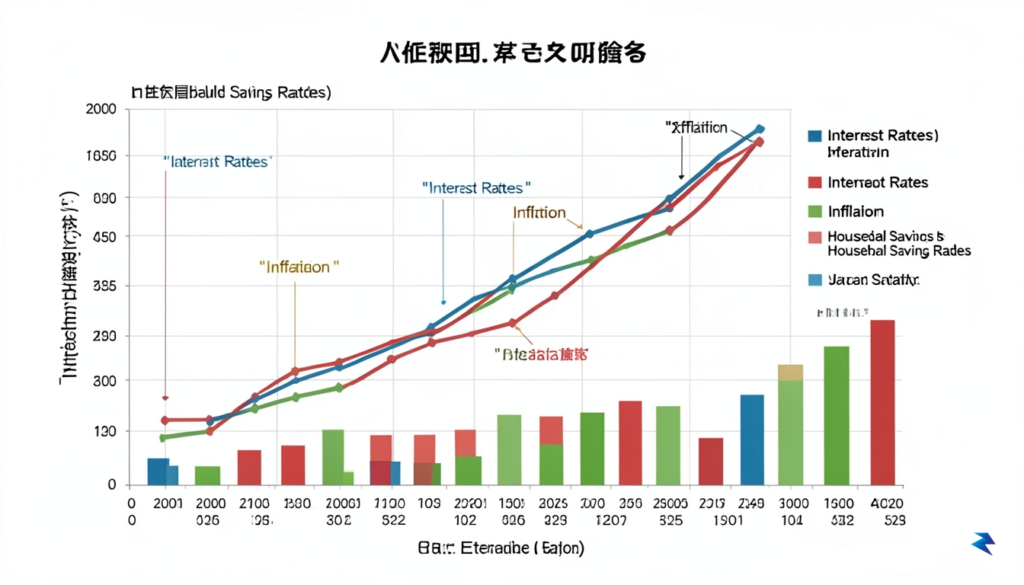
For decades, Japan has functioned as a global outlier, tethered to a low-interest-rate environment that prioritized stability over growth. While this policy initially fostered a culture of extreme risk aversion and high household savings, the structural reality has shifted beneath the feet of the average citizen. With the Bank of Japan having maintained ultra-loose monetary policies for years, stagnant bank deposits have effectively become a trap for wealth. As inflation finally begins to permeate the Japanese economy, these dormant cash reserves are witnessing a steady erosion of their real-term purchasing power. The government’s new mandate to encourage domestic investment is, therefore, not merely a policy suggestion; it is a defensive maneuver against the creeping devaluation of the yen.
The persistent depreciation of the yen has served as a primary catalyst for this sudden strategic pivot. Historically, Japanese households felt secure holding vast amounts of yen-denominated cash, viewing it as the ultimate safe haven. However, as the currency loses its relative strength on the global stage, investors are increasingly looking toward non-fiat assets and foreign-denominated holdings to hedge against domestic volatility. This flight to assets like gold and Bitcoin represents a fundamental psychological shift in the Japanese investor. They are no longer seeking safety solely in the stability of their own currency, but rather in the scarcity and global portability of assets that exist outside the traditional banking architecture.

Compounding these economic pressures is the unrelenting reality of Japan’s demographic crisis. With a rapidly aging population and a shrinking workforce, the country faces a future where the social safety net will be under unprecedented strain. Wealth preservation has transitioned from a long-term goal to an immediate, existential priority for the older generation, who must ensure that their life savings can sustain them during a prolonged period of economic transition. Because the traditional pension system is no longer perceived as a sufficient guarantee, individuals are being forced to adopt a more proactive, market-exposed investment strategy.
The structural shift toward local investment is essentially an attempt to mobilize trillions of yen in idle savings, transforming them from stagnant, depreciating cash into a dynamic engine for national economic longevity.
Ultimately, the push to revitalize the Japanese investment landscape is a recognition that the old playbook is obsolete. The government understands that to maintain a high standard of living in an era of global volatility, the citizenry must move away from the safety of the passbook savings account. By creating a regulatory environment that facilitates a move toward diversified portfolios, Japan is attempting to insulate its economy from the dual threats of currency devaluation and demographic decline. Whether this transition will be enough to modernize the financial habits of a risk-averse nation remains to be seen, but the urgency of the current macroeconomic environment leaves little room for hesitation.

Transitioning from a traditional mindset of passive saving to an active investment strategy requires a profound paradigm shift. For many Japanese households, the historical reliance on cash deposits has been a rational response to decades of deflation, yet the current economic climate demands a more dynamic approach. To thrive in this new landscape, investors must look beyond domestic equity markets, which are often subject to localized economic cycles. Diversification is no longer merely an option; it is the cornerstone of capital preservation and growth. By expanding a portfolio to include global assets—ranging from international indices to non-correlated commodities—investors can effectively hedge against the risks inherent in any single economy.

One of the most effective tools for managing the inherent volatility of digital assets like Bitcoin is the disciplined practice of dollar-cost averaging (DCA). Rather than attempting to time the market—a feat that even seasoned professionals struggle to achieve—investors should commit to investing fixed amounts at regular intervals. This strategy mitigates the emotional stress associated with sharp price fluctuations and ensures that you accumulate more assets when prices are low and fewer when prices are high. Over time, this systematic approach smooths out your average entry price, transforming short-term market noise into a long-term accumulation strategy that aligns perfectly with the government’s push toward sustained, long-term wealth building.
Success in the modern financial era is defined not by chasing the highest immediate return, but by maintaining a balanced, resilient portfolio that can withstand shifting global currents.
Constructing a robust portfolio requires finding the right equilibrium between traditional stores of value and high-growth digital instruments. Gold has long served as the ultimate hedge against currency debasement and geopolitical uncertainty, providing a necessary layer of stability to any well-rounded investment plan. Meanwhile, digital assets offer an asymmetric growth potential that traditional markets rarely provide. A sound framework for the average investor is to view gold as the foundational bedrock of their portfolio—a defensive asset that protects against inflation—while allocating a smaller, risk-managed portion of their capital to Bitcoin. By leveraging government-backed tax-advantaged accounts, such as the NISA framework, investors can optimize their returns while minimizing the tax drag on their long-term growth, ultimately securing a more prosperous financial future.

As Japan transitions from a culture of traditional savings to one of active wealth management, the regulatory landscape is being meticulously recalibrated to balance innovation with investor protection. The Financial Services Agency (FSA) has long maintained a rigorous oversight framework, particularly regarding crypto-assets, which are viewed as both a technological frontier and a potential source of systemic instability. By enforcing strict segregation of customer assets and mandating robust internal controls for exchanges, Japanese regulators have effectively created one of the world’s most stable environments for digital asset trading. However, as the government encourages citizens to diversify into more volatile asset classes like Bitcoin, the FSA faces the ongoing challenge of maintaining these high standards without stifling the very market dynamism they seek to cultivate.

For the average retail investor, the allure of potentially higher returns comes hand-in-hand with the stark reality of market volatility. Many Japanese households, accustomed to the perceived safety of cash deposits and government bonds, may find the rapid price fluctuations of assets like Bitcoin and gold disconcerting. Unlike regulated equities, which often have historical benchmarks and predictable dividend structures, decentralized assets are subject to global macroeconomic shifts, regulatory announcements, and speculative sentiment that can trigger sudden, steep corrections. Therefore, the success of this “invest locally” initiative depends heavily on financial literacy programs that emphasize risk management, portfolio diversification, and the long-term horizon required to weather the inevitable storms of the digital economy.
The integration of digital assets into mainstream financial portfolios is not merely a trend but a fundamental shift in how Japan views capital preservation; however, the transition requires a bridge built on transparency, education, and ironclad cybersecurity.
Looking ahead, Japan’s proactive strategy could serve as a blueprint for other nations grappling with aging populations and the need for greater investment yields. By creating a comprehensive ecosystem that bridges traditional finance with high-growth digital assets, Japan is positioning itself as a central hub for global capital flows. If the country successfully mitigates the risks of cybersecurity threats and retail mismanagement, its regulatory model may eventually influence international standards. Ultimately, the future of Japanese finance hinges on this delicate equilibrium—a path that seeks to empower the individual investor while safeguarding the integrity of the national economy against the unpredictable tides of the global market.
You must be logged in to post a comment.