
Why the EU is Challenging Meta’s ‘Addictive’ Social Media Design
Understanding the Digital Services Act and Meta's Compliance At the heart of the European Commission’s recent crackdown lies the Digital…

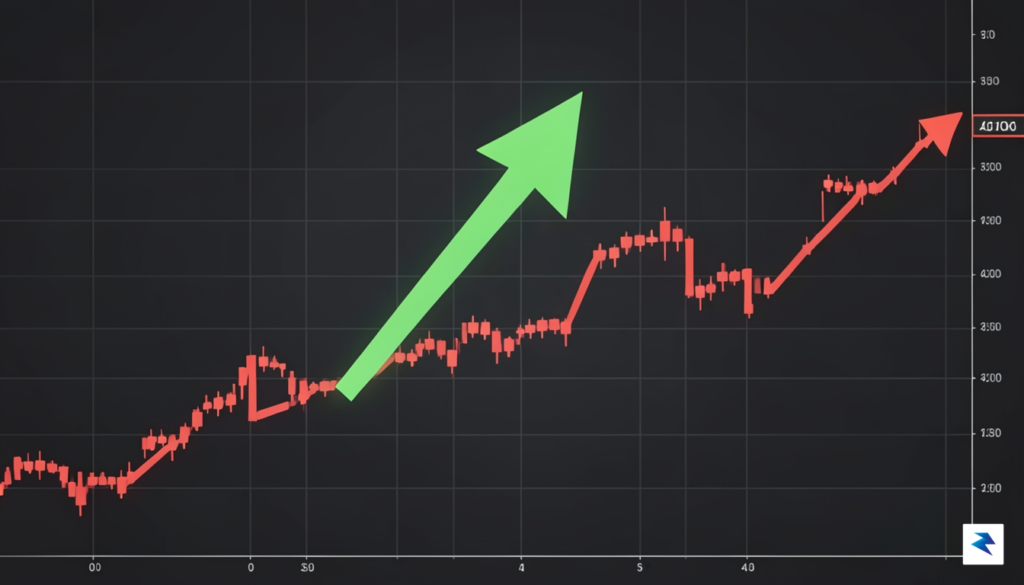
For years, the narrative surrounding digital assets was tethered tightly to the performance of the Nasdaq and other tech-heavy indices. During periods of macroeconomic uncertainty, Bitcoin and its counterparts often behaved like high-beta tech stocks, plummeting whenever interest rate fears or hawkish central bank policies spooked equity investors. However, the current market landscape suggests a fundamental shift in this relationship. As traditional markets grapple with downward pressure and stagnant growth forecasts, digital assets are demonstrating a newfound resilience, signaling that crypto is finally beginning to trade based on its own unique supply-demand dynamics rather than acting merely as a leveraged proxy for the tech sector.
This decoupling is largely driven by a profound transformation in investor sentiment. Market participants are increasingly viewing Bitcoin as a distinct asset class—a form of “digital gold”—that serves as an independent hedge against systemic fiat instability. While the equity markets are currently burdened by earnings volatility and geopolitical headwinds, the crypto ecosystem is being bolstered by a unique internal momentum. This shift is not accidental; it reflects a maturing investor base that recognizes the cyclical nature of blockchain technology, which operates on its own “halving” schedules and protocol-specific adoption waves that exist entirely outside the purview of quarterly corporate earnings reports.

Institutional inflows are playing a pivotal role in cementing this independence. The approval and subsequent integration of spot ETFs have provided a bridge for massive capital allocators to enter the space, creating a structural bid that keeps prices buoyant even when macro conditions deteriorate. These institutional players are not looking for short-term correlation with the S&P 500; they are looking for long-term exposure to a decentralized monetary network. Consequently, even as equity traders hit the sell button, institutional demand for digital assets continues to provide a solid floor for Bitcoin, preventing the kind of capitulation events that were common in previous years.
The current divergence demonstrates that crypto has evolved from a speculative retail gamble into a sophisticated asset class capable of maintaining its own gravity, independent of the traditional financial system’s volatility.
Moving forward, this internal momentum is likely to intensify. As we head into the weekend, the growing optimism within the altcoin market—driven by layer-2 scaling solutions and renewed interest in decentralized finance—further insulates the sector from the broader market’s malaise. By focusing on protocol developments and real-world utility, the crypto market is effectively creating its own weather. Investors who recognize this decoupling are positioning themselves not by watching the Nasdaq, but by tracking the on-chain metrics and liquidity trends that define the next chapter of digital asset growth.
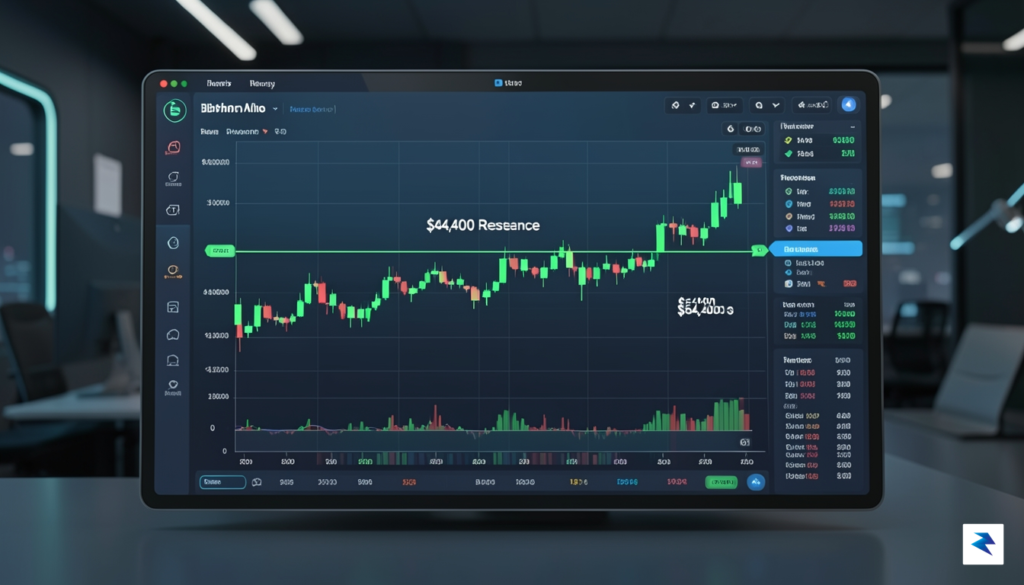
Bitcoin is currently navigating a critical inflection point as it makes a concerted effort to reclaim the $64,400 resistance level. This specific price point serves as a psychological and technical gateway; it represents the primary hurdle that bulls must clear to negate the bearish sentiment that has lingered throughout the recent consolidation phase. When the asset failed to hold this level on Monday, the subsequent pullback acted as a necessary liquidity sweep, shaking out leveraged long positions and testing the conviction of institutional buyers. By revisiting this zone with renewed vigor, the market is signaling that the underlying demand for Bitcoin remains robust despite the broader hesitancy seen in traditional equity markets.
The failure to sustain momentum above $64,400 earlier in the week was largely attributed to a lack of follow-through volume, which allowed sellers to regain temporary control and drive prices lower. However, the current retest feels fundamentally different, characterized by a more methodical accumulation pattern. As we analyze the volume profile, we can observe that the buying pressure is becoming increasingly persistent, suggesting that market participants are absorbing the sell-side liquidity at these levels rather than retreating. If this accumulation continues, a clean breakout above $64,400 would likely trigger a wave of short-covering, providing the necessary fuel to propel Bitcoin toward the next major resistance cluster near $67,250.
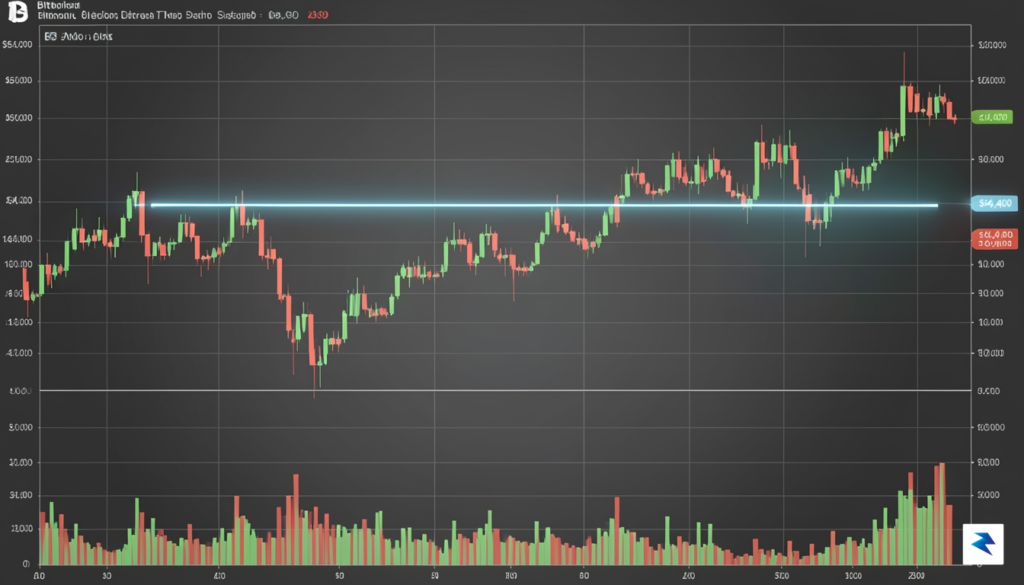
A decisive daily close above the $64,400 threshold is the singular requirement to shift the medium-term trend from a range-bound stalemate to a breakout trajectory targeting the June highs.
Moving forward, the path to $67,250 is contingent upon the strength of the breakout and the ability of bulls to convert the $64,400 resistance into a reliable floor of support. Should the asset break above this level with high volume, it would invalidate the current bearish narrative and invite a new influx of capital from participants waiting on the sidelines. Conversely, a rejection at this juncture could lead to a re-test of the lower bound of the current range, potentially testing the resolve of those who bought the dip. Investors should keep a close watch on the relationship between Bitcoin’s price movement and the total crypto market capitalization, as the current environment suggests that altcoin optimism is beginning to provide a secondary tailwind to Bitcoin’s own recovery efforts.
Ultimately, the psychological significance of $64,400 cannot be overstated. It is a benchmark that market participants use to measure the health of the current cycle. By closely observing how the price interacts with this level over the coming weekend, traders can gain valuable insights into whether the current upward momentum has the legs to sustain a broader rally or if further consolidation is required before a more significant move to the upside can take hold.

While Bitcoin’s resilience against broader equity market volatility has captured the headlines, a seismic shift is quietly taking place beneath the surface of the crypto ecosystem. For weeks, Bitcoin dominance—the metric measuring BTC’s share of the total crypto market capitalization—has acted as a gravitational anchor, often stripping liquidity from smaller assets whenever macroeconomic uncertainty loomed. However, recent price action suggests that this trend is beginning to buckle. As Bitcoin consolidates near critical resistance levels, traders are increasingly rotating their capital into mid-cap and small-cap coins, signaling that the market is finally moving beyond a BTC-only narrative.

This renewed optimism is particularly evident in sectors like decentralized finance (DeFi) and artificial intelligence-linked tokens, which have begun to decouple from the broader stock market’s sluggish performance. Unlike previous months, where any weakness in the S&P 500 would trigger a disproportionate sell-off in altcoins, these assets are now displaying a newfound “decoupled” strength. This behavior suggests that professional liquidity providers are no longer viewing altcoins as high-beta proxies for tech stocks, but rather as independent assets with unique utility and growth catalysts. By focusing on specific narratives, investors are building a floor of support that makes the market look structurally healthier than it has in recent quarters.
The “weekend effect” in crypto often acts as a catalyst for retail-driven momentum, as the absence of traditional banking hours and legacy market noise allows for more speculative, community-led price discovery.
The anticipation surrounding the upcoming weekend is palpable, as retail sentiment frequently shifts when the traditional financial markets close for their two-day hiatus. Historically, the weekend has been a playground for momentum traders, and the current setup—characterized by a cooling BTC dominance chart—is a classic precursor to an “altcoin season.” As Bitcoin enters a period of range-bound trading, capital is naturally leaking into assets with lower market caps, seeking the higher percentage gains that only smaller coins can provide during periods of consolidation. If Bitcoin can maintain its current support levels throughout Friday, the psychological barrier for risk-on behavior among retail participants will likely drop, potentially fueling a broad-based rally as liquidity continues to flow down the market cap spectrum.
Ultimately, the market is undergoing a transition from a defensive posture to a period of calculated risk-taking. While it is premature to declare the start of a full-blown altcoin bull run, the underlying data points toward a broadening of market participation. As long as BTC dominance continues to trend downward while absolute crypto market cap grows, the outlook for altcoins remains bullish heading into the next week of trading.

The recent decoupling of digital assets from traditional equity markets has caught the attention of seasoned investors and casual observers alike. While stock indices have struggled under the weight of persistent economic uncertainty, cryptocurrencies have demonstrated a surprising degree of resilience. This divergence is largely rooted in shifting interest rate expectations. As central banks begin to signal a potential cooling of aggressive monetary tightening, the market is recalibrating its outlook. The anticipation of a lower-rate environment traditionally serves as a catalyst for growth-focused assets, as the cost of capital decreases and investors seek higher yields beyond the stagnant returns of traditional bonds.

Global liquidity remains the lifeblood of the risk-on ecosystem, and its current trajectory is playing a decisive role in crypto’s recent strength. When central banks inject liquidity into the financial system, excess capital often flows into speculative assets, driving prices upward. Even in a climate of relative restraint, the mere expectation of future liquidity injections keeps market participants positioned for upside. This liquidity-driven buoyancy helps explain why altcoins, in particular, are showing signs of life; as investors rotate out of overvalued, interest-sensitive tech stocks, they are increasingly finding a home in the high-beta environment of decentralized finance and blockchain-based protocols.
The interplay between inflation data and crypto performance is no longer a simple inverse correlation; instead, the market has begun to treat digital assets as a nuanced hedge against currency devaluation rather than just a speculative tech play.
Inflation data remains the primary lens through which market participants view potential policy shifts. When inflation prints come in higher than expected, the reflexive response has historically been a sell-off in risk assets due to fears of sustained high interest rates. However, recent weeks have shown a shift in this behavior. Investors are increasingly viewing Bitcoin and its counterparts not merely as volatile risk assets, but as potential “safe-havens” against the long-term debasement of fiat currency. This evolving narrative suggests that if the economy enters a period of stagflation—where growth slows but inflation remains sticky—crypto may find a unique value proposition that differentiates it from the broader equity market, which typically suffers in such conditions.
Ultimately, the current market performance suggests that we are witnessing a maturation of the digital asset class. While crypto is far from shedding its ‘risk-asset’ label entirely, it is clearly decoupling from the short-term volatility cycles of the S&P 500 and the Nasdaq. As the macroeconomic landscape continues to shift, the ability of Bitcoin and altcoins to hold their ground despite equity weakness will be a critical indicator of long-term institutional adoption. Whether this trend persists into the next quarter will depend heavily on whether central banks can successfully manage a “soft landing,” or if the market’s search for an alternative monetary store of value accelerates in the face of continued fiscal instability.

Weekend trading in the cryptocurrency markets often presents a starkly different environment compared to the high-octane action seen during the traditional work week. Because institutional desks and major banking entities largely pause their activity, liquidity tends to thin out significantly, creating an environment where even smaller buy or sell orders can cause exaggerated price swings. For retail investors, this means the market can become prone to “flash” movements or fake-outs that lack the fundamental backing of broader trading volume. As we head into the next few days, it is essential to remain cognizant that price action observed on a Saturday or Sunday may not always represent the prevailing market sentiment that will dictate Monday’s opening bell.

To navigate these quieter periods, proactive risk management is your most valuable tool. Before stepping away for the weekend, consider reviewing your current positions and adjusting your stop-loss orders to account for the potential of increased volatility. Instead of placing tight stops that could be easily triggered by a low-liquidity “wick” or brief price dip, many experienced traders opt for slightly wider margins that align with established historical support levels. This strategy helps prevent being prematurely shaken out of a profitable position due to temporary market noise, while still protecting your capital against a genuine trend reversal.
Prudent risk management during low-liquidity periods isn’t about avoiding the market entirely; it is about sizing your positions appropriately so that weekend volatility remains a manageable variable rather than a catastrophic risk.
Monitoring the market effectively requires a structured approach to technical analysis. Rather than reacting to every flickering candle, identify key support and resistance zones on higher timeframes, such as the four-hour or daily charts. These levels act as psychological anchors for the broader market, and price action often gravitates toward them during low-volume sessions. Keep a close eye on the following checklist to maintain a grounded perspective:
Ultimately, the most successful investors during these periods are those who prioritize patience over participation. If the market becomes overly choppy or the technical indicators become muddled by thin order books, there is no shame in moving to the sidelines. Protecting your portfolio during uncertain stretches is just as important as capturing gains during a rally. By maintaining a disciplined framework and resisting the urge to over-trade during these quiet intervals, you position yourself to act with clarity and confidence when the institutional volume returns at the start of the new week.
You must be logged in to post a comment.