Megawatts via Microwave: Is Wireless Power Finally Ready for Prime Time?
The Physics of Microwave Energy Transmission The fundamental mechanics of wireless power transfer using microwaves commence with a crucial…
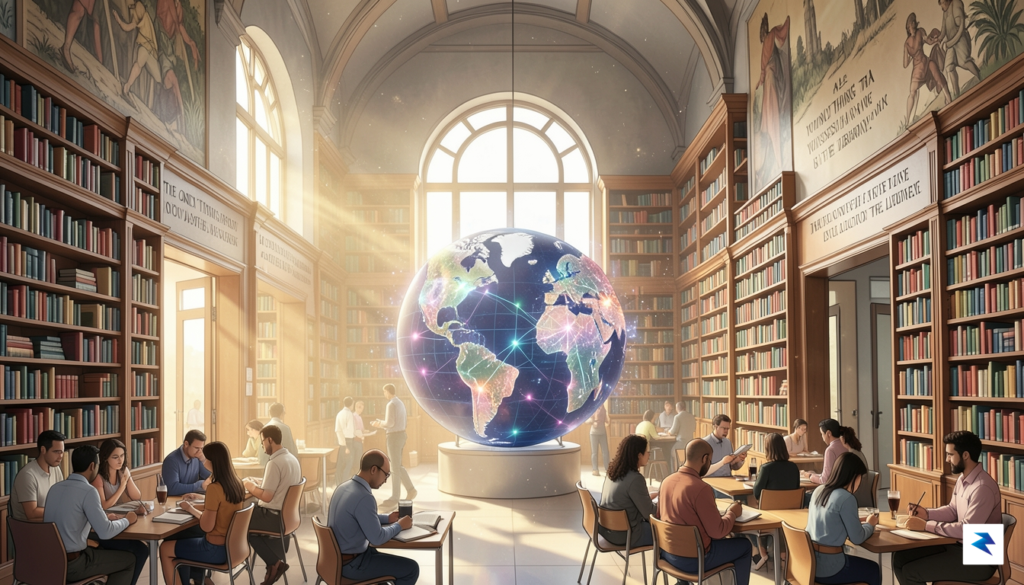
At the heart of a thriving society lies the concept of the “Information Commons”—the idea that knowledge is a collective resource, much like the air we breathe or the public roads we travel. When we treat information as a private commodity to be locked behind paywalls, subscription tiers, or institutional barriers, we effectively privatize the intellectual heritage of humanity. This hoarding of data does not merely inconvenience the individual; it creates a fragmented reality where progress is restricted to those with the capital to buy their way into the conversation. By confining discovery to the elite, we stifle the serendipitous sparks of innovation that occur when diverse minds interact with the same foundational ideas.
Historically, the scarcity of physical books and the centralized nature of academia necessitated gatekeepers who could curate and protect information. However, the modern digital landscape has rendered this model obsolete. We now live in an era of digital ubiquity where the marginal cost of sharing a discovery is effectively zero. Yet, despite this technological abundance, we see an alarming trend of intellectual hoarding, where valuable research and creative works are trapped in silos, disconnected from the public who could benefit from them most. This disconnect is not a technical failure, but a structural one—a persistent refusal to adapt our economic frameworks to the reality of an interconnected, information-driven world.
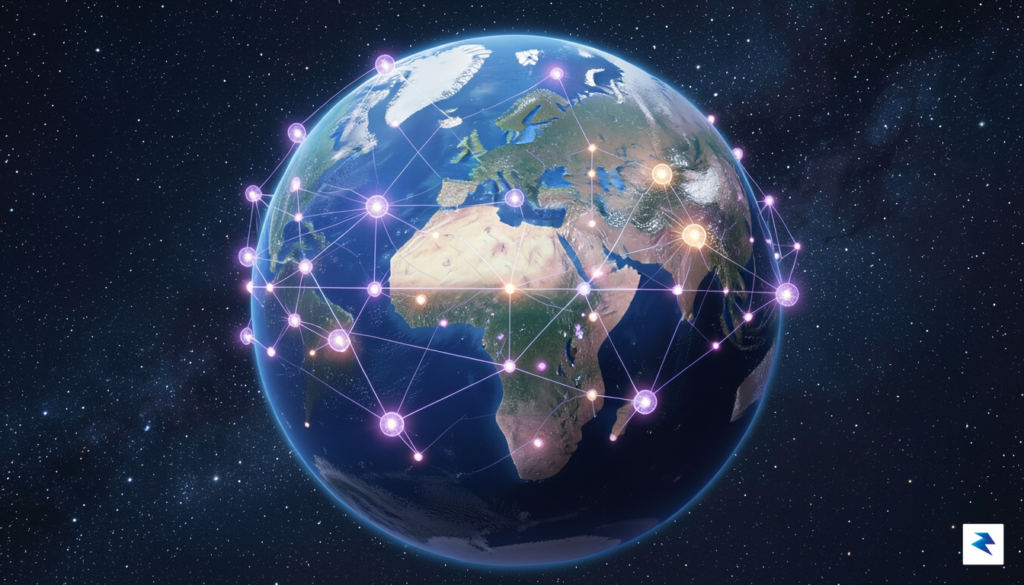
The democratization of knowledge is the primary engine of societal evolution, and its restriction acts as a brake on our collective potential. When information flows freely, it crosses cultural, economic, and geographic boundaries, allowing a student in a remote village to build upon the same breakthroughs as a researcher in a prestigious laboratory. This is how paradigm shifts occur: not by keeping secrets, but by refining and challenging ideas in the open. To maintain gates around knowledge is to bet against the compounding interest of human intelligence, favoring short-term profit over long-term advancement.
The true value of an idea is not found in its exclusivity, but in its ability to inspire, refine, and evolve through the collective scrutiny of the global community.
Ultimately, the argument for open access is an argument for human agency. When we remove the barriers to learning, we empower individuals to solve complex problems—from climate change to public health crises—that no single entity can address in isolation. A society that prioritizes the free exchange of information recognizes that we are all stakeholders in the future. By dismantling these artificial walls, we do not lose control; instead, we gain a more resilient, better-informed, and infinitely more capable civilization that is equipped to face the challenges of the future.

The modern digital landscape is increasingly defined by a widening knowledge gap, where critical insights are frequently sequestered behind rigid financial barriers. While the necessity of monetization for content creators is undeniable, the aggressive proliferation of paywalls has transformed the internet from a collaborative library into a fragmented collection of exclusive silos. This trend does not merely inconvenience the casual reader; it fundamentally obstructs the progress of human inquiry. When high-quality research, technical analysis, and profound insights are restricted to those with the deepest pockets or institutional access, we effectively disenfranchise independent researchers, students, and professionals in developing economies who simply cannot afford the subscription fees required to participate in the global conversation.
Furthermore, these artificial barriers foster deep-seated intellectual silos that stifle innovation. Academic and professional progress thrives on the cross-pollination of ideas, yet when disciplinary knowledge is gated, it becomes nearly impossible for experts in different fields to synthesize information or build upon one another’s discoveries. For instance, a breakthrough in climate science might remain isolated from the engineering sector or local policy planning simply because the research article is trapped behind a prohibitive paywall. By limiting the movement of ideas, we inadvertently slow the pace of global problem-solving and prevent the serendipitous connections that often drive the most significant technological and social advancements.

Publishers often justify these walls as a necessary survival strategy, yet they are trapped in a dangerous cycle of short-term gain versus long-term loss. While subscription revenue provides immediate financial stability, the long-term cost is a decline in authority and relevance. When critical information is hidden, it creates a vacuum that is often filled by lower-quality, sensationalist, or inaccurate content that is freely accessible to the public. As a result, the perceived value of legitimate, rigorous journalism and research diminishes because the public is denied the opportunity to engage with it directly. This creates a feedback loop where the most vital knowledge is viewed as an elite luxury rather than a public good.
The true measure of an idea’s worth is its impact, and impact is fundamentally stunted when the flow of information is restricted by the ability to pay rather than the pursuit of truth.
Ultimately, the democratization of knowledge is the bedrock of a functioning, informed society. When we treat information as a commodity to be hoarded rather than a resource to be shared, we diminish our collective capacity for growth. The future of global education and professional development depends on moving away from exclusive gatekeeping and toward models that prioritize accessibility. If we continue to prioritize immediate subscription metrics over the open circulation of ideas, we risk creating a world where the most important discoveries are locked away in digital vaults, unseen by the very people who could use them to improve our world.

Innovation has historically suffered when intelligence is siloed behind paywalls, institutional credentials, or proprietary secrecy. When knowledge is treated as an exclusive commodity rather than a public utility, the pace of discovery slows to a crawl. Conversely, the rise of open-source ecosystems and open-access repositories has proven that when information flows freely, the “network effect” takes hold. Each new contribution serves as a building block for the next, allowing researchers and developers to stand on the shoulders of giants rather than reinventing the wheel in isolation.
Consider the transformative impact of scientific preprint servers like arXiv. By allowing researchers to share their findings before the protracted process of peer review, these platforms have radically compressed the feedback loop in fields like physics, mathematics, and computer science. This transparency ensures that breakthroughs in artificial intelligence or quantum computing are not trapped in a three-year publication cycle, but are instead immediately available for global scrutiny and refinement. When a researcher in an underfunded lab can access the same foundational data as a lead scientist at an Ivy League university, the playing field levels, inviting a far more diverse range of voices to address humanity’s most pressing challenges.
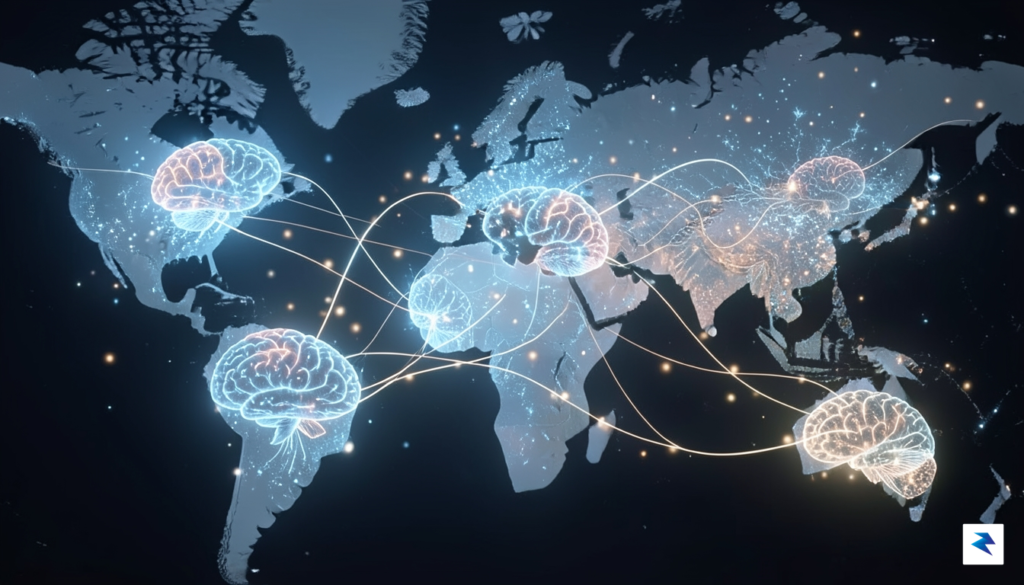
The success of open-source software development offers perhaps the most concrete evidence of this phenomenon. Projects like the Linux kernel or the Kubernetes ecosystem were not built by a single corporation acting in a vacuum; they were forged by thousands of contributors across the globe, each adding a specialized piece to a complex puzzle. This collective intelligence model thrives because it lowers the barrier to entry, allowing talented individuals from every corner of the world to contribute based on merit rather than institutional affiliation. When code is open, vulnerability discovery and security patching happen at a velocity that proprietary, closed-source models simply cannot match.
The true power of open knowledge lies in its ability to turn a singular, isolated insight into a scalable, community-driven solution that benefits society at large.
Ultimately, democratizing expertise is not just an ethical imperative—it is an economic and scientific necessity. By dismantling the gates that restrict access to human wisdom, we trigger a multiplier effect on innovation. When we shift our focus from hoarding information to fostering a collaborative environment, we transition from a landscape of limited, competing silos to a robust ecosystem of shared problem-solving. This shift does more than just accelerate the speed of technological breakthroughs; it ensures that the solutions we derive are more inclusive, more resilient, and ultimately more representative of the diverse world we inhabit.

The digital divide is far more than a technical shortfall or a simple matter of hardware availability; it is a profound barrier to human flourishing. When we allow information to be sequestered behind paywalls and proprietary software, we are effectively constructing a tiered society where intellectual growth is a luxury good rather than a shared foundation. This stratification exacerbates existing global inequalities, ensuring that those born into wealth or developed technological infrastructure maintain a permanent advantage over those residing in underserved regions. By gating knowledge, we are not merely protecting intellectual property; we are actively choosing to limit the potential of billions of people who lack the financial capital to purchase a seat at the table of global discourse.

To address this, we must shift our perspective and begin viewing the internet and its vast repositories of information as a fundamental public utility, akin to clean water or electricity. Public institutions, such as libraries, universities, and open-access research hubs, play a critical role in this mission by acting as stewards of the collective human experience. When these entities move toward open-access models, they dismantle the gatekeeping mechanisms that have historically marginalized the voices of the Global South and underprivileged communities. By treating knowledge as a common resource, we empower individuals to self-educate, innovate, and participate in the global economy, regardless of their socioeconomic starting point.
True equity in the digital age requires us to recognize that the ability to access, process, and apply information is not a privilege for the few, but a basic human right necessary for self-determination and social mobility.
The moral imperative to provide universal access is rooted in the idea that progress is a cumulative effort. When scientists, educators, and creators share their work openly, they accelerate the pace of discovery for everyone. Conversely, when that work is locked away, we lose the diversity of perspectives that are essential for solving complex, systemic problems like climate change, disease, and economic instability. Therefore, the fight for open knowledge is a fight for a more inclusive future where the barriers of geography, income, and status no longer dictate an individual’s capacity to learn. By prioritizing accessibility, we fulfill our collective responsibility to foster a world where every person has the tools to contribute their unique intellect to the common good.

Transitioning away from restrictive paywalls does not necessitate a decline in content quality or financial instability for creators. Instead, it invites us to reimagine the economics of information through diversified, community-centric models. Platforms like Patreon and Substack have already demonstrated that audiences are often willing to support creators directly when they feel a sense of ownership and connection to the work. By shifting the incentive structure from transactional access—where a reader pays a toll to read a single article—to relational support, creators can foster a loyal base that funds long-term, high-quality production without ever barring the public from the insights shared.
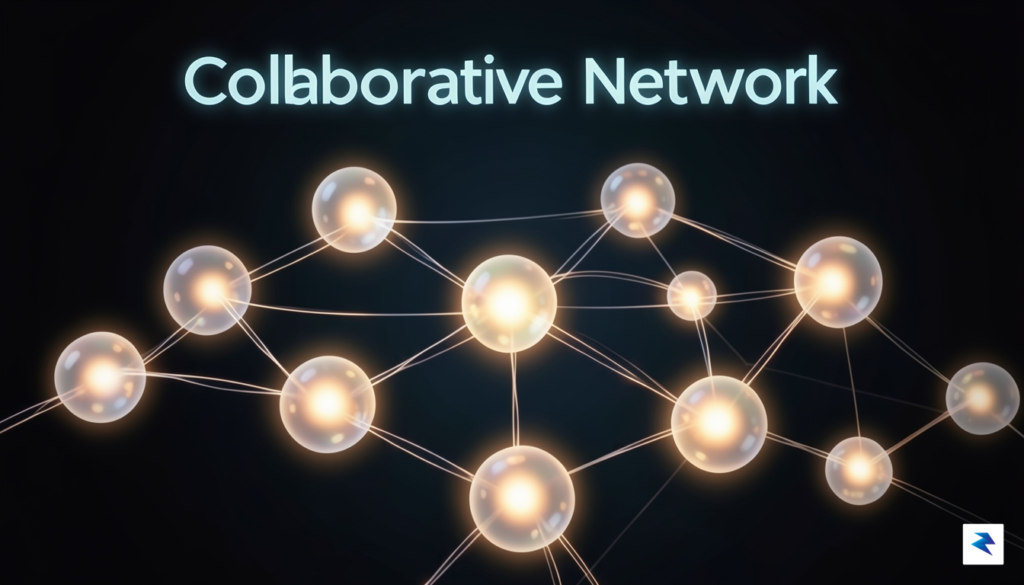
Beyond individual subscriptions, we must look toward institutional and systemic shifts to ensure the longevity of open information. Public grants, academic endowments, and non-profit models provide a robust alternative to commercial gating, particularly in fields like investigative journalism and scientific research. When funding is decoupled from the immediate need to extract revenue from the end-user, the focus naturally pivots toward impact and accuracy. Partnerships between educational institutions and independent creators can further stabilize these efforts, providing the necessary infrastructure for research to flourish in the public domain, where it can be refined by peer review and collective intelligence rather than hidden behind a corporate ledger.
True sustainability in the information age is not measured by the height of our paywalls, but by the breadth of our reach and the depth of our community engagement.
Platform design also plays a critical role in facilitating this transition toward an open internet. We must advocate for digital spaces that prioritize discoverability and communal annotation over exclusivity. When interfaces are built to reward the sharing and synthesis of ideas—rather than the hoarding of content—knowledge naturally aggregates into a common resource. By leveraging decentralized hosting and open-source tools, creators can reduce overhead costs, making it easier to sustain their work without relying on the restrictive gatekeeping mechanisms that have defined the past decade of digital media.
Ultimately, the vision for a knowledge-rich future is one where information acts as a public utility rather than a luxury good. As we embrace these alternative models, we move closer to a digital ecosystem where the quality of one’s education or the size of one’s bank account no longer determines their access to truth. By fostering environments that value contribution over extraction, we can build a resilient infrastructure that serves the collective, ensuring that the most vital human discoveries remain accessible to all, forever.
You must be logged in to post a comment.