
The Strait of Hormuz Crisis: Why Renewed Strikes Are Threatening Global Shipping Recovery
The Strategic Importance of the Strait of Hormuz Stretching just 21 miles at its narrowest point, the Strait of Hormuz serves as the world’s…

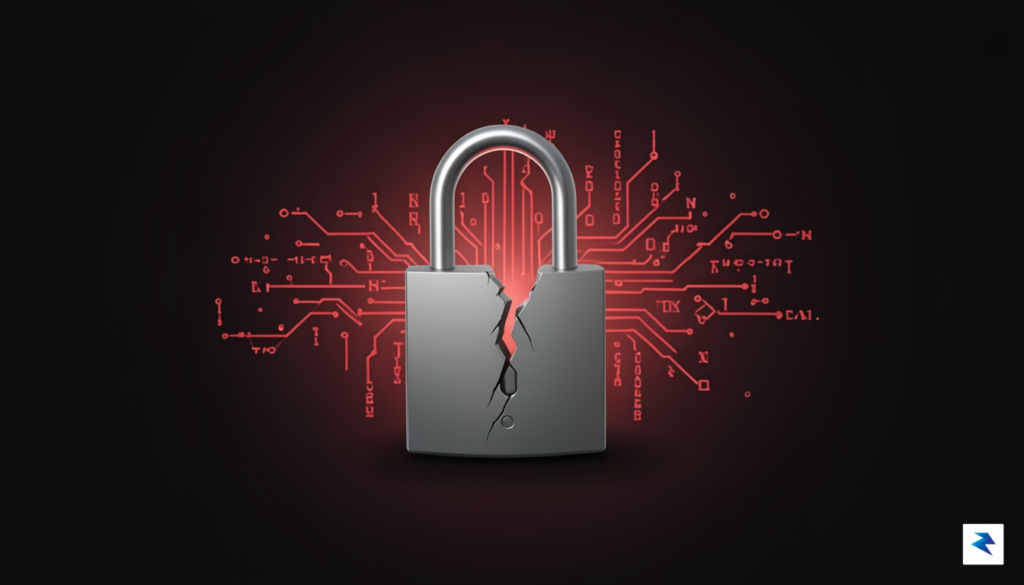
For years, LastPass has positioned itself as the gold standard for digital security, promising users a seamless way to manage complex credentials across the chaotic landscape of the modern internet. However, the company’s recent security breach—the latest in a series of troubling incidents—has shattered that veneer of invincibility. By allowing unauthorized access to encrypted vaults and sensitive metadata, this event has transformed from a mere technical glitch into a profound crisis of confidence. For a service designed to act as the ultimate digital fortress, these recurring lapses suggest that the centralized model of password management may be far more vulnerable than its architects once claimed.

The core of the frustration lies in the disconnect between the convenience LastPass offers and the fundamental expectation of absolute privacy. When users entrust a provider with their master passwords, banking information, and private notes, they are entering into an implicit contract of ironclad protection. Each time that contract is broken, the sense of betrayal deepens, moving beyond simple annoyance into genuine fear for personal data integrity. This latest incident is particularly damaging because it forces long-term loyalists to question whether the trade-off for ease of use is worth the perpetual risk of a catastrophic data leak.
The true cost of a security breach isn’t just the data lost; it is the permanent erosion of the trust that forms the bedrock of the digital identity economy.
Furthermore, the cumulative history of these security failures paints a picture of a system struggling to keep pace with increasingly sophisticated threat actors. While no software is perfectly immune to attacks, the frequency of these disclosures indicates that users must now approach centralized credential storage with a heightened level of skepticism. This pattern of behavior forces a difficult conversation about risk management: is it safer to rely on a single, albeit compromised, entity, or is the industry reaching a tipping point where users should consider decentralized or offline alternatives? As the dust settles from this recent breach, the reality is that the burden of vigilance has shifted back onto the user, who must now decide if the convenience of a password manager remains a luxury they can afford to keep.

Modern cybersecurity often relies on the defense-in-depth model, a strategy that layers multiple security measures so that if one fails, others remain to protect the core data. Ideally, this creates a resilient barrier against unauthorized access. However, the reality of high-profile breaches suggests that even the most robust architectures can suffer from “cascading failures.” When a perimeter is breached, internal systems that were once trusted implicitly can become vulnerabilities. If an attacker manages to exploit a single weak point—such as an unpatched software vulnerability in a development environment—they can potentially move laterally through the network, accessing sensitive data vaults that were never meant to be exposed to the public internet.

A significant factor in recent security incidents is the evolution of supply chain attacks. Instead of directly attacking a hardened server, threat actors often target the third-party tools, libraries, or software development lifecycles that a company relies on. By compromising a secondary component that the primary firm trusts, attackers gain a foothold inside the “front door.” This makes traditional perimeter defenses nearly irrelevant because the malicious activity appears to originate from an authorized, internal source. Once inside, the attacker does not necessarily need to “crack” a password; they simply need to escalate their privileges until they have access to the underlying storage buckets where encrypted backups are stored.
When discussing cloud-based storage for sensitive assets like master password databases, there is often a critical misunderstanding regarding the difference between encryption at rest and full exposure. While data stored in the cloud is typically encrypted using industry-standard algorithms, the protection level is only as strong as the security of the decryption keys and the surrounding infrastructure. If an attacker gains access to the database containing the encrypted blobs, they may not have the master keys immediately, but they do have the raw materials needed for offline brute-force attacks. As computing power increases, the time required to crack these encrypted files drops significantly, turning a “secure” vault into a ticking time bomb.
The core of a security failure is rarely a single moment of negligence, but rather the cumulative effect of architectural complexity and the unfortunate reality that every software system contains unknown vulnerabilities.
Ultimately, users must distinguish between data exposure and data theft. In many instances, attackers successfully exfiltrate files that are encrypted, but this is far from a harmless scenario. The goal of the attacker is to secure these encrypted assets in hopes of unlocking them over time or using metadata contained within those files to facilitate phishing campaigns. By understanding that no system is truly impenetrable, we move away from a false sense of security and toward a proactive mindset that emphasizes multi-factor authentication, unique credentials for every site, and a healthy skepticism of any platform that promises absolute, unbreakable protection.

The recent security breach at LastPass serves as a sobering reminder that the digital infrastructure we rely on daily is part of a much larger, increasingly volatile ecosystem. While the loss of user data is undoubtedly distressing, it is not an isolated incident; rather, it is a symptom of a systemic struggle between centralized platform providers and highly sophisticated threat actors. This pattern of vulnerability highlights a stark reality: our personal security is no longer just about our individual habits, but is inextricably tied to the resilience and integrity of the third-party platforms we trust to guard our digital lives.

Recent industry-wide efforts demonstrate just how expansive this battlefield has become. For instance, Microsoft recently led a coordinated effort to dismantle a massive network of “infostealer” infrastructure, which had been harvesting credentials from millions of devices globally. This operation proved that the threat landscape is not merely about individual password leaks, but about organized, industrial-scale data exfiltration that targets the very foundations of modern identity management. When tech giants and small-scale password managers alike become primary targets, it indicates that no level of digital service is immune to the persistent pressure of cyber-criminal syndicates.
The security of our personal information is becoming a shared responsibility where the failure of one provider can trigger a domino effect across the entire digital ecosystem.
Furthermore, the vulnerability of sensitive information extends well beyond private software companies and into the public sector. High-profile legal cases and government-level breaches have exposed that even the most hardened institutional databases are susceptible to exploitation. As public services continue to digitize, the potential impact of a data breach grows exponentially, affecting everything from tax records to national security intelligence. This trend underscores a critical shift in the cybersecurity paradigm: moving away from the assumption that data is “safe” once it is stored, and toward a strategy of constant vigilance, data minimization, and aggressive threat hunting.
Ultimately, the lesson for the average user is that the “set it and forget it” mentality regarding digital security is a relic of the past. Because individual security is now deeply dependent on the resilience of these complex third-party platforms, users must adopt a more proactive stance. This includes implementing multi-factor authentication (MFA) everywhere it is available, treating every digital account as a potential point of failure, and diversifying where we store our most sensitive credentials. By acknowledging that the entire landscape is under constant siege, we can better prepare ourselves for the inevitable reality that in today’s interconnected world, perfect security is a myth, but robust defense is an absolute necessity.

When news of a credential compromise breaks, the instinct to panic is natural, but it is rarely productive. Instead of reacting with fear, you should view this as a clear mandate to audit and harden your entire digital perimeter. The most immediate step is to rotate your master password, ensuring it is a unique, high-entropy passphrase that you haven’t used anywhere else. Beyond the master key, prioritize the credentials for your most critical accounts—specifically your primary email, banking portals, and cloud storage—as these serve as the master keys to your digital life. By decoupling your most sensitive access points from the password manager that was recently compromised, you create a vital layer of insulation against further fallout.
Moving away from legacy authentication methods is equally essential. While SMS-based two-factor authentication (2FA) is better than nothing, it remains vulnerable to SIM-swapping and interception attacks. Transitioning to hardware-based security keys, such as a YubiKey or similar FIDO2-compliant devices, transforms your security posture from reactive to proactive. These devices require a physical touch to authorize access, effectively rendering remote password theft useless because the attacker would need physical possession of your hardware to bypass the login process. If hardware keys aren’t an immediate option, prioritize app-based authenticators like Authy or Raivo over email or text-based codes.

The recent breach has prompted many users to reconsider the convenience of centralized, cloud-based password managers. For those who prioritize privacy and data sovereignty, migrating to open-source or local-first password managers—such as KeePassXC or Bitwarden with self-hosted options—offers a compelling alternative. These tools allow you to store your encrypted vault locally or on your own encrypted storage, ensuring that your data isn’t sitting on a third-party server waiting to be targeted by a centralized breach. While this requires a bit more technical diligence, the trade-off is total control over your encrypted database.
True security is not found in a single tool, but in the implementation of layers that protect your identity even when one component fails.
Finally, regardless of which tool you choose, you must adhere to the principle of unique, high-entropy credentials for every single site. If you are worried about the lack of “salting” in older platforms, remember that a strong, long, and unique password serves as your primary defense against brute-force attacks. Never recycle a password across platforms; if one site suffers a leak, it should never grant an attacker a key to your other accounts. By combining hardware-based authentication with a disciplined approach to credential uniqueness, you build a resilient digital identity that can withstand even the most sophisticated security failures.

As the traditional reliance on master passwords and centralized vaults begins to show signs of structural fatigue, the cybersecurity industry is undergoing a fundamental shift toward passwordless authentication. For years, password managers have been the gold standard for digital hygiene, yet incidents like the repeated vulnerabilities seen at major providers highlight a core weakness: the “honeypot” effect. When sensitive, encrypted data is stored in a single repository, it becomes an attractive target for sophisticated threat actors. Consequently, the industry is pivoting toward decentralized, biometric-forward methods that eliminate the need for users to memorize or store vulnerable strings of characters in the first place.
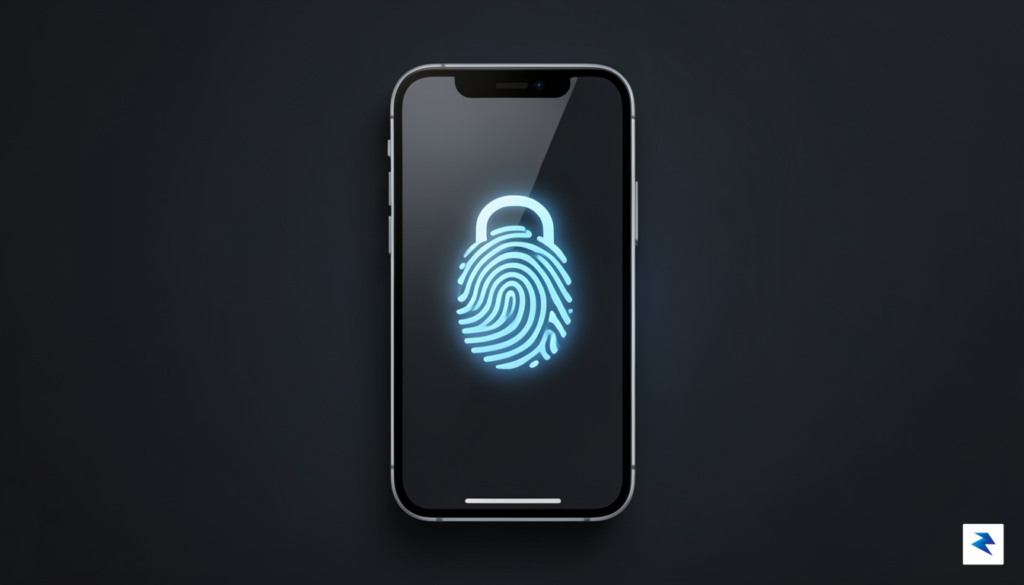
At the forefront of this evolution are passkeys, which leverage the FIDO2 and WebAuthn standards to provide a more robust defense than legacy password managers. Unlike a password that can be phished, leaked, or brute-forced, a passkey relies on a cryptographic key pair: a public key stored on a server and a private key securely locked within your local device’s hardware. When you sign into a service, your device uses biometric data—such as a fingerprint or facial recognition—to unlock that private key and verify your identity locally. Because this private credential never leaves your device, there is no master vault for a hacker to breach, effectively neutralizing the risk of a massive, centralized database leak.
The core strength of the passkey standard is that it removes the human element from the security equation; there is no password to forget, no password to reuse, and, crucially, no password to steal.
Moving forward, the average user should view this transition not merely as a convenience upgrade, but as a necessary shift in digital hygiene. While password managers may continue to serve as a bridge for legacy sites, the most secure approach in the coming years will involve adopting hardware-backed security wherever possible. This means prioritizing platforms that support FIDO-compliant sign-ins and enabling multi-factor authentication (MFA) that relies on physical security keys or native device biometrics rather than SMS-based codes. By embracing these decentralized technologies, we can move away from the precarious model of “vault-based security” and toward a future where our digital identities are inherently tied to our own physical presence, rendering the concept of a stolen master password entirely obsolete.
You must be logged in to post a comment.