
Cursor Goes Mobile: How to Manage AI Coding Agents From Your Phone
Discover how Cursor's new mobile app lets developers manage and guide AI coding agents remotely. Learn how to optimize your workflow with…


In an era defined by the breathtaking pace of AI innovation, where new large language models (LLMs) emerge with dizzying frequency, a critical challenge arose: how do developers, researchers, and enterprises objectively assess which models truly perform best in real-world scenarios? Traditional benchmarks, while useful in academic settings, often fell short, leaving a vacuum for a more dynamic and user-centric evaluation system. It was into this void that the LMSYS Chatbot Arena stepped, initially an academic experiment, but quickly evolving into the definitive North Star for AI model rankings. Its journey from a community-driven project to a venture recently valued at an impressive $100 million underscores a fundamental truth: in the complex world of LLMs, community-verified performance has become the ultimate currency.
The origins of LMSYS (Large Model Systems Organization) trace back to a collaborative effort by researchers from UC Berkeley, UC San Diego, and Carnegie Mellon University, among others. Their initial goal was to foster open research and development in large language models. They quickly recognized that existing evaluation methodologies struggled to capture the nuanced capabilities and practical utility of these rapidly advancing systems. Static, quantitative benchmarks like MMLU (Massive Multitask Language Understanding), while providing a baseline for knowledge and reasoning, often failed to reflect a model’s ability to engage in natural conversation, follow complex instructions, or generate creative and contextually relevant outputs—the very aspects critical for real-world applications. These benchmarks, often relying on fixed datasets and multiple-choice questions, could be gamed or simply didn’t mirror the subjective, open-ended nature of human-AI interaction.
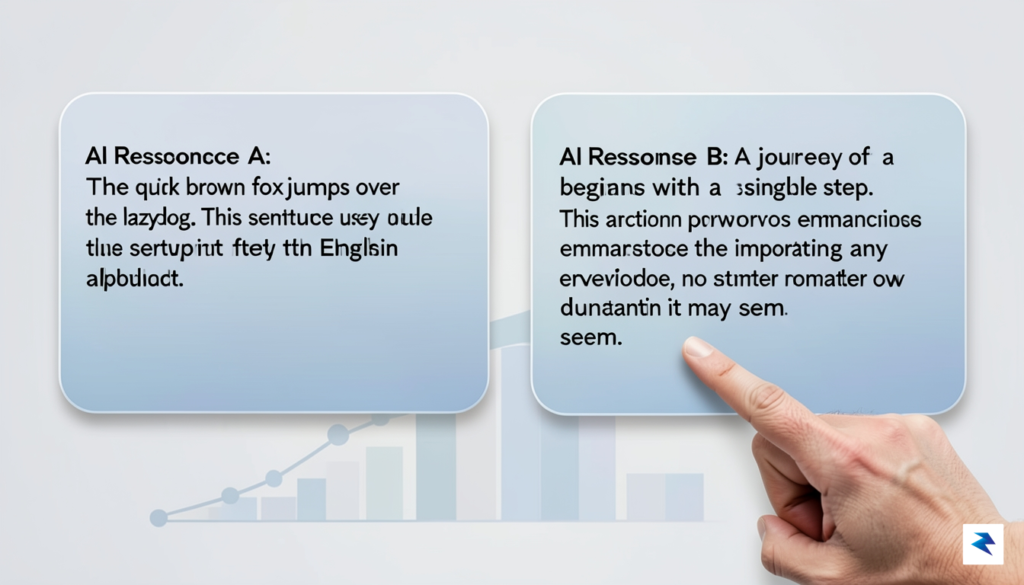
LMSYS Chatbot Arena revolutionized this paradigm by shifting the focus from static, academic metrics to dynamic, human-preference scoring. Instead of evaluating models against predetermined answers, Arena introduced a novel “blind combat” system. Users are presented with a single prompt and then see responses from two different, anonymized LLMs side-by-side, without knowing which model generated which output. After interacting with both, users vote on which response they prefer, or if they find them roughly equal. This ingenious approach tapped into the collective intelligence of thousands of users globally, creating an enormous, continuously updated dataset of human preferences. This method effectively simulates real-world usage scenarios, capturing subjective quality, coherence, helpfulness, and safety—aspects that are notoriously difficult for automated benchmarks to quantify accurately.

This commitment to community-driven, human-in-the-loop evaluation is precisely why the LMSYS Arena rapidly ascended to prominence. Developers could quickly see how their models stacked up against competitors based on genuine user feedback, gaining insights far beyond what traditional benchmarks offered. Enterprises, on the other hand, found a reliable, transparent, and constantly evolving resource to inform their decisions about which LLMs to integrate into their products and services. The trust built through this open, community-verified process became invaluable. It transformed the Arena from a mere academic curiosity into an indispensable tool, establishing it as the authoritative voice in AI rankings and demonstrating that, when it comes to understanding true AI performance, the wisdom of the crowd often surpasses the rigidity of traditional metrics.

The burgeoning field of artificial intelligence presents a unique challenge: how do we accurately measure the quality and performance of these rapidly evolving models? While traditional benchmarks exist, they often struggle to capture the nuanced, subjective aspects of what makes an AI truly helpful or impressive to a human user. This is precisely where platforms like the Arena have carved out their indispensable niche. By stripping away brand names and marketing hype, the Arena introduced a revolutionary, transparent ecosystem where large language models (LLMs) compete head-to-head, allowing their raw output to speak for itself, judged by the most discerning critics of all: everyday people. This elegant simplicity has not only democratized AI evaluation but also fundamentally shifted the focus for AI labs from mere claims to demonstrable, user-centric quality.
At the heart of this innovative evaluation system lies the Elo rating algorithm, a sophisticated statistical method originally developed for chess players to rank their relative skill levels. Adapted for the realm of AI, the process is straightforward yet incredibly powerful: users are presented with a single prompt and, in response, receive two distinct outputs generated by different, anonymously chosen LLMs. The judge then simply selects which of the two responses they deem superior. Based on this preference, the Elo ratings of the competing models are adjusted; the winning model gains points, while the losing model loses them, with the magnitude of these changes depending on the models’ existing rating differences. This dynamic, self-correcting system ensures that models consistently outperforming their peers steadily climb the ranks, providing a continuously updated, data-driven hierarchy of AI capabilities.
The brilliance of this crowdsourced approach isn’t just in its simplicity, but also in its inherent robustness against manipulation and bias. While a single human judge might have a personal preference or even attempt to game the system, the Arena’s power comes from the aggregation of thousands upon thousands of these individual comparisons. Anomalous judgments are statistically diluted by the sheer volume of data, ensuring that the overall ratings reflect a broad consensus. Furthermore, models are often pitted against a diverse range of competitors and prompts, making it incredibly difficult for any single model to exploit specific weaknesses or biases in the judging pool. This collective intelligence, combined with the anonymity of the competing models during evaluation, creates a remarkably fair and reliable environment, fostering genuine competition based purely on output quality.
The reason human preference has emerged as the unequivocal ‘gold standard’ for AI quality, particularly for generative models, stems from the very nature of AI’s application. Unlike purely factual
The journey of Arena, the widely recognized AI leaderboard, from a free, community-driven project to a venture-backed enterprise valued at $100 million, illustrates a fascinating and unique pivot in the rapidly evolving artificial intelligence landscape. Initially, the platform emerged as an invaluable public resource, offering transparent, real-time comparisons of large language models (LLMs) through human preferences. This open approach quickly established it as a neutral arbiter, a go-to benchmark for developers, researchers, and enthusiasts alike who sought objective performance metrics for the latest AI models without vendor bias. Its rapid ascent in credibility laid the groundwork for a transition that few would have initially predicted.
Unlike many AI startups whose valuations are primarily driven by exclusive access to vast, proprietary datasets or cutting-edge foundational models, the creators of Arena, LMSYS, found their goldmine in a different, equally critical commodity: objective trust. In an industry often opaque and prone to hype, the platform cultivated an unparalleled reputation for fairness, transparency, and scientific rigor in AI evaluation. This trust wasn’t accidental; it was painstakingly built through consistent methodology, public data, and a commitment to independent assessment. As the AI race intensified, the need for an unbiased referee became paramount, positioning LMSYS not just as an interesting side project, but as an indispensable pillar for the entire ecosystem.
The commercialization pivot involved extending their proven testing infrastructure beyond the public domain to offer tailored services for enterprises. This transition was a natural evolution, recognizing that the same need for objective evaluation that fueled the public leaderboard was even more acute within large organizations. Businesses grappling with the complexities of AI adoption, from model selection to performance validation, suddenly had a trusted, independent partner. LMSYS began offering bespoke benchmarking, security auditing, and continuous monitoring services, effectively turning their expertise in public evaluation into a critical, revenue-generating component of the enterprise AI supply chain.
For large corporations, integrating AI models into their operations is fraught with challenges, not least of which is the inherent difficulty in verifying performance, mitigating risks, and ensuring compliance. Relying solely on a model vendor’s self-reported benchmarks is a non-starter for serious enterprise procurement. This is where LMSYS steps in, providing the crucial third-party validation needed to de-risk AI investments. By offering an independent, rigorous evaluation framework, they enable businesses to make data-driven decisions about which models to adopt, how to fine-tune them, and whether they meet specific security and ethical standards. This role as a neutral, expert validator makes them an indispensable partner in the enterprise AI ecosystem, much like a ratings agency for financial products.

The justification for the $100 million valuation stems from this profound shift in role and the invaluable asset they possess: not just data, but a unique “data moat” built on trust and an evolving methodology. Their continuous collection of human preference data, coupled with their sophisticated evaluation techniques, represents a proprietary understanding of what constitutes effective and reliable AI performance. This isn’t merely a static dataset; it’s a dynamic, constantly refined system for assessing AI, validated by years of public scrutiny and widespread adoption. This blend of established methodology, ongoing data acquisition, and an unparalleled reputation for objectivity creates a significant barrier to entry for potential competitors, solidifying their market position.
Ultimately, LMSYS’s success highlights a fundamental truth in the AI era: while innovation drives progress, trust underpins adoption. Their $100 million valuation isn’t simply for a popular leaderboard; it’s an acknowledgement of their pivotal role in professionalizing AI deployment. By transforming a transparent public service into a comprehensive commercial offering, they have demonstrated that in the complex world of artificial intelligence, objective trust is not just a moral imperative, but a highly valuable and scalable business model.

As artificial intelligence rapidly evolves beyond its foundational role as a simple chatbot, the very definition of “performance” is undergoing a profound transformation. What once sufficed as robust evaluation metrics for text-based conversational models now appears increasingly inadequate for the sophisticated, multifaceted AI systems emerging today. Platforms that have successfully established benchmarks for a generation of AI, guiding both development and adoption, now face the daunting and essential task of evolving their evaluation frameworks to keep pace with the next wave of AI capabilities, particularly in the realms of multimodal and agentic intelligence.
The first significant hurdle involves the transition to multimodal benchmarking. Early AI models primarily processed and generated text, making human preference ratings on conversational quality a relatively straightforward, albeit complex, metric. However, modern AI can interpret and produce content across various modalities, including images, audio, video, and even 3D environments. Evaluating a model’s ability to accurately describe a complex image, generate coherent video from a text prompt, or understand nuanced emotional cues in a voice recording introduces a host of new variables and subjective judgments. A system might excel at generating photorealistic images but fail to understand the underlying semantic context, or produce compelling audio that doesn’t quite match the accompanying visual. Developing standardized, scalable, and fair evaluation methods for these diverse outputs, often requiring cross-modal coherence, is a monumental challenge.
Even more complex is the evaluation of agentic AI. Unlike traditional models that respond to discrete prompts, agentic AIs are designed to perform sequences of actions, make decisions, use tools, and pursue long-term goals in dynamic environments. Their performance isn’t measured by a single output, but by the successful completion of an entire task, which often involves planning, memory, reasoning, and adaptability. Judging such systems requires assessing not just the final outcome, but also the efficiency, safety, and ethical implications of the steps taken to achieve it. A model might eventually reach a goal but do so in an inefficient, resource-intensive, or even problematic manner, highlighting the need for a holistic assessment that transcends simple success metrics.
The complexity is further compounded by the ‘long tail’ of potential failure cases and emergent behaviors inherent in agentic tasks. An agent might navigate a simple environment flawlessly but stumble when encountering an unexpected obstacle or a novel scenario. Evaluating these nuanced interactions demands more than just human preference comparisons; it requires structured environments, predefined success criteria for complex multi-step tasks, and sophisticated logging to understand the decision-making process. Consequently, the traditional model of human annotators simply comparing two text responses becomes insufficient for assessing an agent’s ability to plan a multi-day itinerary, manage a complex project, or even solve intricate coding challenges that involve multiple steps and external tool usage.

In this rapidly evolving landscape, the role of independent, third-party arbiters for AI performance is becoming not just valuable, but absolutely essential. As AI systems integrate deeper into critical infrastructure, healthcare, finance, and daily life, the stakes of their performance and reliability soar. Regulators will increasingly demand verifiable, objective standards, while industries will need trusted benchmarks to foster innovation and ensure fair competition. Independent bodies can provide the necessary impartiality, expertise, and infrastructure to develop and enforce these new evaluation methodologies, thereby building public trust and guiding responsible AI development. Their work will extend beyond simple leaderboard rankings to establish foundational industry standards, inform policy, and ensure that AI’s impressive capabilities are matched by robust, transparent, and comprehensive performance metrics.
You must be logged in to post a comment.