
How the New Bitcoin Capital Plan Could Reshape Corporate Strategy
Understanding the New Capital Allocation Framework For years, the prevailing corporate narrative surrounding Bitcoin treasury holdings has…


Our digital lives have become increasingly tethered to a handful of dominant platforms, creating a landscape often referred to as the ‘platform economy.’ In this ecosystem, tech giants act as digital landlords, providing the infrastructure and tools for our online interactions, but ultimately dictating the terms of engagement. We create content, build communities, and share our lives within their walled gardens, yet we are merely tenants. Our profiles, posts, and personal data reside on their servers, subject to their evolving policies, algorithmic changes, and even arbitrary suspensions. This arrangement means our digital presence, built painstakingly over years, can be altered or even erased without genuine recourse, leaving us vulnerable and disempowered.
This pervasive centralization underscores a growing desire for something more fundamental: digital sovereignty. Far from advocating for technical isolation or a retreat from online connectivity, digital sovereignty is about reclaiming fundamental control over our own data and identity. It embodies the principle that individuals should have the autonomous ability to own, host, and manage their digital assets independently, rather than relying solely on third-party corporations. This means having the freedom to move your digital ‘home’ — your website, your content, your personal data — from one server to another, without permission or penalty, ensuring that your online legacy remains truly yours.
Consider the stark contrast between the current social media dominance and the vision of a truly decentralized web. Today, platforms like Facebook, X, or Instagram serve as the primary conduits for our social interactions and content sharing, each with its own set of rules, data policies, and monetization strategies. While offering undeniable convenience, they consolidate power and effectively become gatekeepers of our digital expression. In a decentralized paradigm, however, the user takes center stage. Imagine owning your primary domain name — a truly personal one — and hosting your own content on a server you control, whether it’s a small device in your home or a dedicated cloud instance. This model empowers individuals to choose how their information is presented, shared, and monetized, fostering a web where identity and content are anchored to the individual, not to a corporation.
Reclaiming this personal control matters immensely because it shifts the power dynamic from corporate entities back to the individual. When our digital selves are fragmented across various silos, each governed by external forces, our ability to express ourselves freely, maintain privacy, and ensure the longevity of our digital footprint is compromised. Digital sovereignty offers a pathway to a more resilient, censorship-resistant, and personally empowering internet experience. It promises a future where your online identity is a permanent, self-managed asset, granting you the fundamental right to determine its destiny and ensuring that your digital voice can persist, unburdened by the whims of others.

The internet, in its vastness, is structured around a fundamental concept known as the Top-Level Domain, or TLD. These are the suffixes you see at the end of web addresses, such as .com for commercial entities, .org for organizations, or .net for networks. Each TLD traditionally carries an implicit meaning, guiding users about the nature of the website they are visiting. The recent introduction of the .self TLD, however, represents far more than just another technical expansion of the domain name system; it is a profound philosophical statement and a practical tool designed to empower individuals in the digital realm.
Conceptually, .self is distinct because its very name articulates a deliberate intention: to create a dedicated, easily identifiable space for personal, self-hosted content. While other domains often signify commercial ventures, governmental bodies, or non-profit organizations, .self explicitly points to the individual. This subtle yet powerful distinction fosters a ‘human-centered’ approach to the web, encouraging a shift away from the prevailing model where personal digital identities are often subsumed by large social media platforms or commercial services. It champions the idea that individuals should own and control their data, their content, and their online presence, rather than renting it from third-party providers.
This new TLD aims to differentiate personal digital spaces in a significant way, making it inherently easier for internet users to identify authentic, self-hosted content. Imagine encountering a website ending in .self; immediately, there’s an expectation of a personal project, a blog hosted directly by its author, or a private digital archive, rather than a corporate marketing page or a platform-dependent profile. This clarity can build a new layer of trust and transparency online, as visitors can more readily discern content that is genuinely independent and curated by an individual, free from the algorithms and commercial pressures that often dictate content on mainstream platforms. It signifies a return to the web’s original ethos of decentralization and personal expression.
Ultimately, the .self TLD is a powerful symbol in the ongoing effort to reclaim our digital autonomy. By providing a clear and universally recognizable signpost for self-hosted content, it not only simplifies the act of finding genuine individual voices but also actively encourages a new generation of creators and users to embrace self-hosting. This initiative fosters a more diverse, resilient, and person-centric internet, where individuals are empowered to build their own corners of the web, express themselves authentically, and engage with others on their own terms. It’s a bold step toward a future where the internet truly serves the people who use it, rather than the platforms that host it.
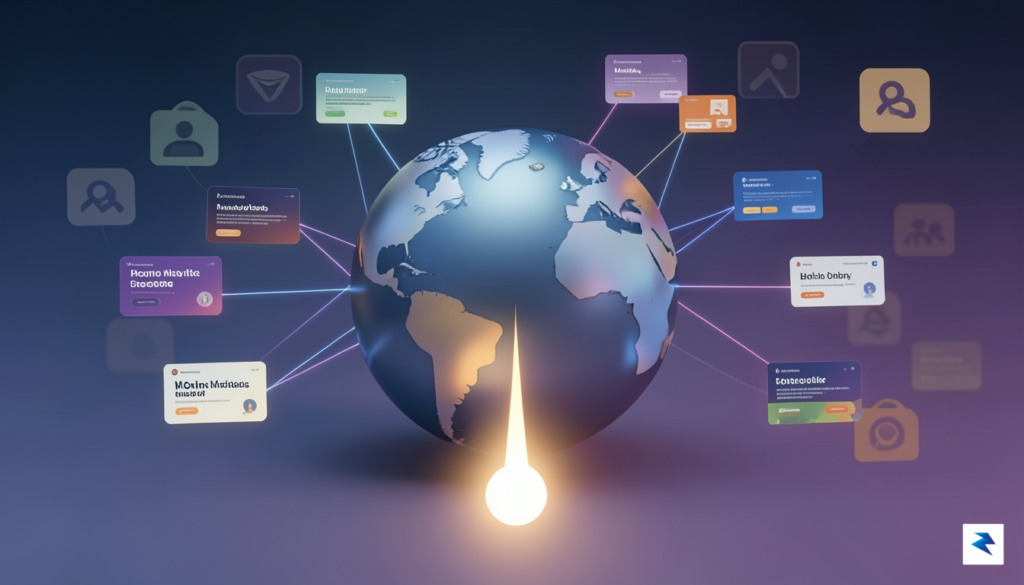

Self-hosting, the practice of running your own digital services from your own hardware, has historically been perceived as an endeavor exclusively for the technically adept. For decades, setting up a personal server involved navigating complex command-line interfaces, configuring web servers like Apache or Nginx, managing databases, and painstakingly installing applications from source code. This significant technical barrier meant that only a fraction of internet users could truly own and operate their corner of the web, leaving the vast majority reliant on centralized cloud providers and their often opaque terms of service. However, a profound shift is underway, driven by innovative tools and a philosophy championing digital sovereignty, making it increasingly feasible for non-experts to reclaim their digital presence.
The landscape of personal server management has been revolutionized by a new generation of sophisticated yet user-friendly tools. At a foundational level, containerization technologies like Docker have dramatically simplified application deployment. Instead of wrestling with conflicting dependencies and system-level configurations, Docker allows applications to run in isolated “containers,” ensuring they work consistently across different environments and can be installed with minimal fuss. Building upon this, platforms such as Yunohost, Cloudron, and Nextcloud Hub have emerged, offering intuitive web interfaces that abstract away much of the underlying complexity. These platforms provide app stores where users can install a wide array of services—from email and chat servers to photo galleries and document editors—with just a few clicks, transforming the arduous task of server administration into an experience akin to installing apps on a smartphone.
This evolution in tooling introduces a fascinating dynamic between convenience and control. While these platforms significantly lower the barrier to entry, they also present a spectrum of engagement. A purist might still prefer the granular control offered by manual configuration and command-line mastery, optimizing every byte and process. Conversely, someone prioritizing ease of use will find immense value in the automated updates, simplified backups, and pre-configured security features offered by managed self-hosting platforms. Crucially, even when leveraging these more convenient tools, the fundamental principle of self-hosting remains intact: you retain ultimate ownership and control over your data and infrastructure, a stark contrast to surrendering that authority to a third-party cloud provider. The choice then becomes about how much of the technical minutiae you wish to manage versus how much you’re comfortable having automated.
The advent of new top-level domains, such as the proposed .self, acts as a powerful catalyst in this evolving ecosystem. Even with simplified deployment tools, discovering and connecting to personal nodes can still be a fragmented experience in the existing internet infrastructure. A .self domain provides a dedicated, intuitive address for individual servers, much like .com for businesses or .org for non-profits. Imagine being able to reach your personal cloud storage at yourname.self or a friend’s shared photo gallery at friend.self. This standardization simplifies DNS management, enhances discoverability, and fosters a sense of a cohesive network of personal infrastructure. It transforms disparate personal servers into recognizable digital homes, making it easier for individuals to connect to their own services and for communities to form around shared self-hosted resources.
However, with the power of self-sovereignty comes significant responsibility, particularly regarding security. Moving from a managed cloud service to hosting your own data means you become the primary guardian of that data. This entails ensuring your software is always up-to-date, implementing strong authentication measures, configuring firewalls, and establishing robust backup routines. While this might sound daunting, many modern self-hosting tools now automate crucial security aspects, such as automatic software updates and seamless integration with services like Let’s Encrypt for free SSL certificates. Ultimately, embracing self-hosting requires a commitment to digital literacy and vigilance. The trade-off is profound: while it demands attention to security, it empowers users with unparalleled transparency and control, allowing them to truly understand and manage the risks associated with their digital lives, rather than relying blindly on a third party.
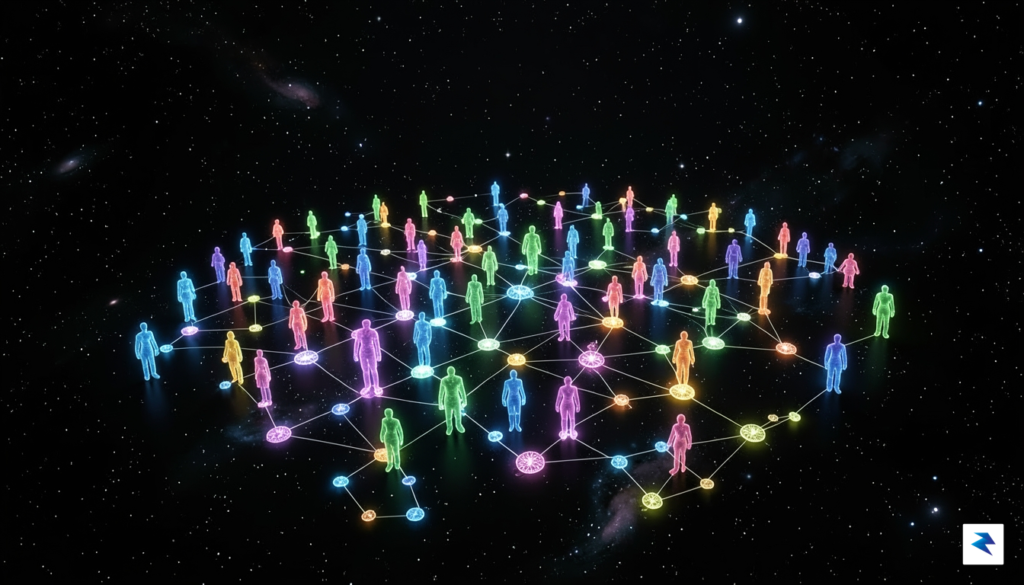
While the technical infrastructure of self-hosting offers the tangible tools for digital independence, truly reclaiming our online experience demands a profound cultural transformation. It’s not simply about owning servers and managing files; it’s about shifting our collective mindset away from the fleeting, algorithm-driven consumption that defines so much of the modern web. This cultural pivot re-emphasizes values like longevity, thoughtful engagement, and an “offline-first” approach, where our digital artifacts are seen as permanent, cherished possessions rather than ephemeral posts destined to vanish into the data ether. By fostering this shift, we begin to cultivate a digital world where personal agency and permanence are paramount.
This move away from centralized algorithms offers significant social benefits that extend far beyond individual control. When platforms dictate what we see and how we interact, they invariably shape our perspectives, often leading to echo chambers and superficial engagement. Decentralized, self-hosted ecosystems, however, empower individuals to curate their own digital spaces, free from the constant pressure of algorithmic optimization for advertising revenue or engagement metrics. This freedom fosters environments ripe for genuine intellectual exchange, diverse viewpoints, and authentic human connection, moving us towards a web that values thoughtful contribution over viral spectacle.
Consider the concept of the “digital garden,” an increasingly popular metaphor for a personal, evolving online space where ideas are cultivated, linked, and allowed to grow over time, rather than presented as static, finished articles. Unlike the sterile, time-bound feed of traditional social media, a digital garden is an organic, non-linear repository of thoughts, projects, and learning. It’s a place where content is tended, updated, and connected, reflecting the ongoing journey of the individual. Personal domains become the fertile soil for these gardens, providing a stable, owned address for this deeply personal and dynamic content, a stark contrast to the rented plots of land offered by social media giants.
These personal domains, serving as the foundation for digital gardens, cultivate deeper and more meaningful connections than the transient interactions driven by algorithmic social media. Instead of chasing likes or shares on a public feed, individuals can invite others into their curated spaces, sparking conversations that are richer, more focused, and less susceptible to the noise of the wider internet. This fosters a sense of shared exploration and intellectual generosity, where engagement is driven by genuine interest in ideas and craftsmanship, rather than by fleeting attention spans. It’s about building a legacy of thought and interaction, not just a stream of temporary updates.
A common apprehension with self-hosting is the potential for isolation; after all, what good is owning your digital space if no one can find or interact with it? This is precisely where the interoperability challenge meets the promise of the Fediverse. The Fediverse is a sprawling network of federated servers, encompassing diverse applications like Mastodon for microblogging, PeerTube for video, and Pixelfed for images, all interconnected through open protocols. It demonstrates that decentralization doesn’t mean fragmentation; rather, it allows for a diverse ecosystem where independent instances can still communicate and share information seamlessly.
The advent of the .self top-level domain is perfectly positioned to integrate into and strengthen this federated future. By providing a stable, universally recognized identity layer for individual self-hosted nodes, .self domains can act as permanent addresses within the Fediverse. This means you can host your Mastodon server, your blog, or your personal knowledge base on your own .self domain, and still be an active, connected participant in the broader decentralized web. It’s about owning your digital home and its contents, while simultaneously having the freedom to connect, share, and communicate with the wider world on your own terms, embodying true self-sovereignty within a vibrant, interconnected community.

The vision of a decentralized web, where individuals truly own and control their digital presence, is undeniably powerful. Yet, transforming this compelling ideal into widespread reality for a new top-level domain like .self faces a complex gauntlet of challenges. It’s not merely a technical undertaking but a journey through established digital infrastructure, entrenched user habits, and significant governance hurdles that demand careful navigation and robust community support.
One of the most formidable obstacles lies in the very foundation of internet naming: domain name governance. The Internet Corporation for Assigned Names and Numbers (ICANN) is the global body responsible for coordinating the internet’s unique identifiers, including the allocation and management of all top-level domains. Securing and operating a new TLD is an arduous, multi-year process involving extensive application procedures, significant financial investment, and rigorous technical and policy compliance. Navigating ICANN’s intricate bureaucracy, demonstrating technical capability, and proving a clear public interest case against potential opposition from established players represents a monumental first step for any aspiring TLD, let alone one seeking to fundamentally alter the web’s power dynamics.
Furthermore, the existing digital landscape is heavily shaped by the dominance of “walled garden” platforms. Services from tech giants, while offering convenience and powerful features, often come at the cost of user data control, portability, and adherence to proprietary standards. The .self initiative aims to provide an open alternative, championing self-hosting and open standards, but this creates inherent tension with the status quo. Convincing a broad user base to migrate from familiar, integrated ecosystems to a new, decentralized model requires overcoming significant inertia and demonstrating tangible, superior value beyond the abstract concept of control. Users are accustomed to simplicity, and any solution must abstract away much of the underlying complexity to gain traction.
Beyond governance and the battle against platform monopolies, the practicalities of user adoption present their own set of hurdles. While the concept of owning your data is appealing, the technical proficiency required for traditional self-hosting remains a barrier for the average internet user. The success of a .self ecosystem hinges on drastically simplifying the process, making server setup, maintenance, and application deployment as intuitive as signing up for a cloud service. This necessitates a robust suite of user-friendly tools, comprehensive documentation, and accessible support channels that can empower individuals, regardless of their technical background, to reclaim their digital autonomy effectively.
Building a sustainable future for .self, therefore, is not a task for a single entity but a collective endeavor requiring a clear roadmap for community participation. The path forward demands grassroots advocacy and dedicated, community-driven development that can foster a vibrant ecosystem. This involves more than just technical contributions; it’s about creating educational content, sharing best practices, building supportive networks, and actively demonstrating the practical benefits of self-hosting through real-world examples. Early adopters and evangelists will play a critical role in shaping the tooling, defining the user experience, and articulating the vision in a way that resonates with a wider audience.
Supporters can actively participate in the growth of the .self ecosystem by engaging in various ways. This could include contributing to open-source software projects that simplify self-hosting, developing plugins or applications tailored for the decentralized web, or even just sharing their own self-hosted successes and challenges to inform and inspire others. Participating in online forums, testing new tools, providing feedback, and spreading awareness about the advantages of a more open and user-controlled internet are all vital contributions. Ultimately, the strength and resilience of .self will be directly proportional to the size, engagement, and collaborative spirit of the community that builds around it, transforming an ambitious idea into a tangible, widely accessible reality.
You must be logged in to post a comment.