
Top 10 Fun Discord Bots
Are you looking to spice up your Discord server with some fun and engaging bots? Do you want to create an environment that keeps your members…


For years, the backbone of Meta’s digital infrastructure relied heavily on general-purpose hardware, specifically high-end graphical processing units (GPUs) designed for broad industrial applications. However, the meteoric rise of generative AI has fundamentally shifted the requirements for data center efficiency. General-purpose chips, while versatile, often carry unnecessary overhead that hinders the extreme, repetitive calculations required to train massive large language models. By transitioning toward purpose-built AI accelerators, Meta is essentially moving from a “one-size-fits-all” approach to a specialized architecture that is fine-tuned to the specific mathematical patterns of its neural networks. This shift represents a transition from buying off-the-shelf tools to crafting precision instruments designed specifically for the company’s unique computational workload.

The motivation behind this internal development goes far beyond mere performance optimization; it is a calculated effort to gain sovereignty over an increasingly volatile supply chain. In recent years, the market for high-performance AI hardware has become a bottleneck, defined by intense competition, skyrocketing costs, and periodic shortages that can stall progress for months. By designing its own silicon, Meta can insulate itself from these market fluctuations, effectively decoupling its product roadmap from the availability of external components. This vertical integration allows the company to dictate its own production schedules and tailor its hardware cycles to align perfectly with the software updates of its AI platforms, such as Llama.
True technological autonomy in the AI era is not just about writing better algorithms; it is about controlling the physical silicon upon which those algorithms live and breathe.
Furthermore, controlling the hardware stack offers Meta a unique advantage in power efficiency and thermal management, two of the most significant challenges in modern data center operations. General-purpose GPUs are designed to handle everything from gaming to scientific modeling, which often results in wasted energy when they are repurposed for AI training. Custom silicon, by contrast, can strip away redundant logic gates and optimize the data path for specific AI operations. This efficiency gain is not merely a cost-saving measure—it is a strategic necessity that allows Meta to scale its AI capacity more aggressively while keeping its total energy consumption within sustainable limits. As competition in the AI landscape intensifies, this level of control over the fundamental building blocks of computation will likely become the primary differentiator between industry leaders and those still beholden to the constraints of third-party vendors.
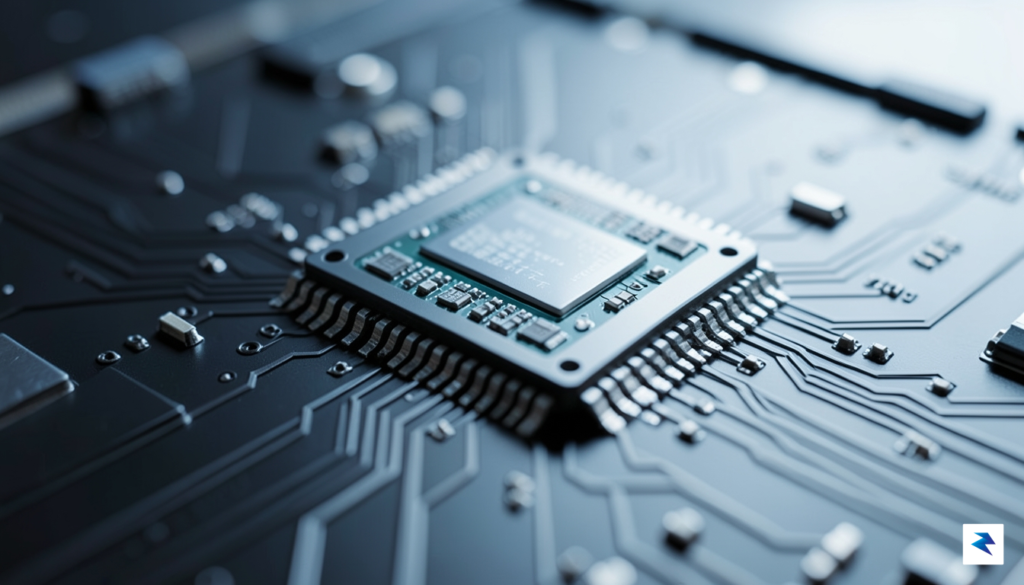
The trajectory of Meta’s custom silicon program has been nothing short of transformative, evolving rapidly from an experimental initiative into the backbone of its massive infrastructure. When Meta first introduced the Meta Training and Inference Accelerator (MTIA), it was designed as a specialized alternative to the general-purpose GPUs that dominated the industry. The first generation focused primarily on establishing a reliable internal foundation for inference tasks, proving that custom-tailored architecture could outperform standard hardware in specific, high-demand scenarios. This initial success provided the roadmap for subsequent iterations, which shifted focus toward the more rigorous demands of large-scale model training and complex generative AI workflows.
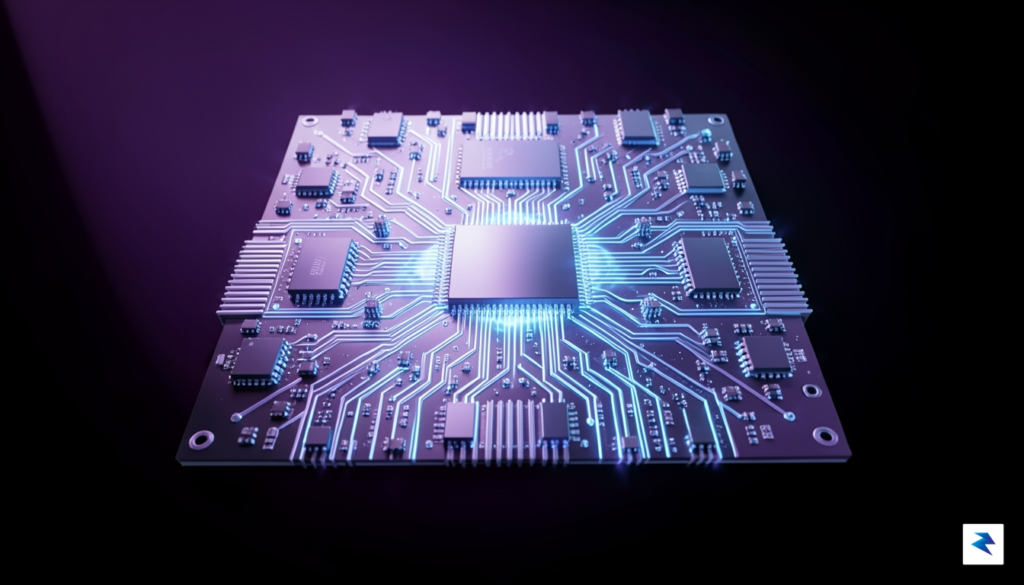
As the series progressed, each generation brought substantial architectural refinements, moving from basic computational blocks to highly optimized compute units capable of handling the massive memory bandwidth requirements of models like Llama. The second and third iterations were marked by significant leaps in power efficiency and clock speed, allowing Meta to reduce the energy footprint of its data centers while simultaneously increasing the speed of model iterations. By decoupling its hardware requirements from reliance on third-party suppliers, Meta has gained the agility to tune its chips precisely to its own software stack, creating a symbiotic relationship between PyTorch and the underlying hardware.
The upcoming fourth generation, slated for a September deployment, represents the culmination of these years of iterative design. This version is expected to offer a dramatic improvement in performance-per-watt, a metric that is critical for Meta’s sustainability goals and operational costs. By accelerating the training cycles for next-generation models, this chip allows Meta to bypass traditional hardware bottlenecks, enabling researchers to experiment with more complex architectures at a fraction of the time.
The shift toward the fourth-generation MTIA is not merely a hardware upgrade; it is a strategic maneuver that positions Meta to maintain dominance in the generative AI race by controlling its most critical bottleneck: compute capacity.
This timeline is particularly vital because Meta is currently locked in an intense arms race to scale its AI capabilities. As training sets grow exponentially larger, the ability to deploy custom silicon that is specifically optimized for these workloads provides a massive competitive advantage. By the time these chips reach full-scale deployment in the fall, they will likely become the primary engine for Meta’s most ambitious AI projects, marking a definitive shift toward total silicon independence and long-term infrastructure stability.
For Meta, the decision to pivot toward proprietary silicon is driven by an unavoidable financial reality: the current model of relying exclusively on third-party GPU vendors is becoming prohibitively expensive. As the company scales its AI infrastructure to support increasingly complex generative models and recommendation engines, the capital expenditure required for massive procurement of high-end graphics processing units has ballooned into a multi-billion-dollar annual burden. By shifting toward custom-designed chips, Meta is attempting to break the cycle of vendor lock-in, where a single dominant supplier controls both the pricing and the availability of the essential hardware needed to run the next generation of digital services.
The core of this economic strategy lies in the optimization of the Total Cost of Ownership (TCO). While the initial research and development costs for custom silicon are substantial, they pale in comparison to the long-term operational expenses associated with purchasing thousands of off-the-shelf units. Off-the-shelf hardware is designed as a “one-size-fits-all” solution, meaning it often includes features or processing overhead that Meta’s specific workloads do not actually require. By stripping away these unnecessary components and tailoring the architecture to the exact needs of its software stack—such as PyTorch optimizations—Meta can achieve significantly higher performance-per-watt efficiency. This efficiency is not just an engineering milestone; it is a direct reduction in the massive electricity and cooling bills that define the modern data center landscape.
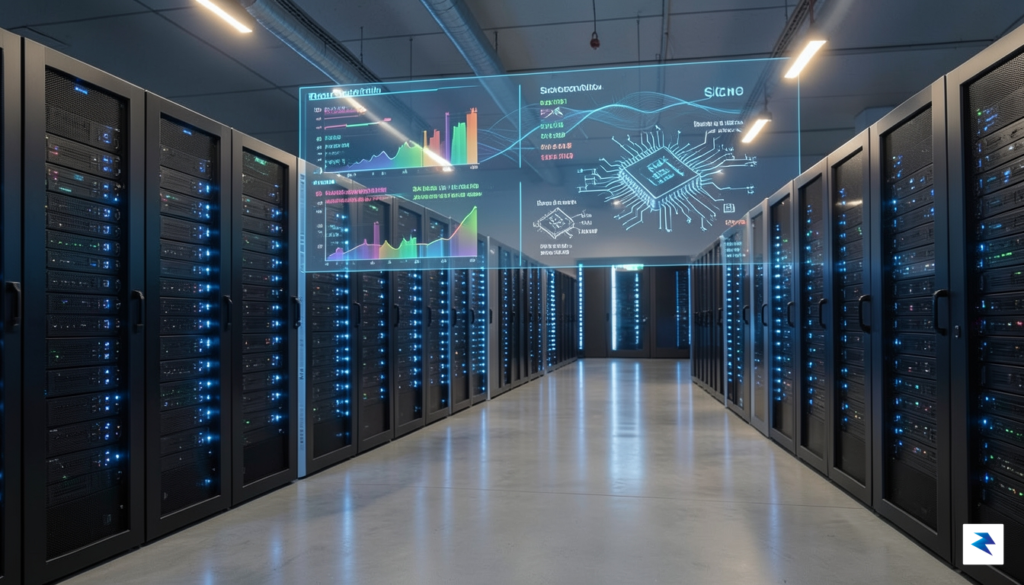
“True independence in the AI era is defined not just by software capabilities, but by the ability to dictate the efficiency and cost-structure of the hardware upon which that software runs.”
Furthermore, the ability to iterate on its own hardware timeline provides Meta with a crucial competitive advantage in supply chain management. When a company is beholden to a single major manufacturer, its roadmap is tethered to that partner’s production constraints, market demand, and pricing volatility. Developing custom silicon allows Meta to exert more control over its manufacturing destiny, potentially insulating the company from the sudden supply shortages that frequently plague the semiconductor industry. Over time, as these custom chips become the backbone of its AI infrastructure, the resulting savings will provide the company with the liquidity to reinvest in further software research and product development, effectively turning a major expense item into a long-term strategic asset.
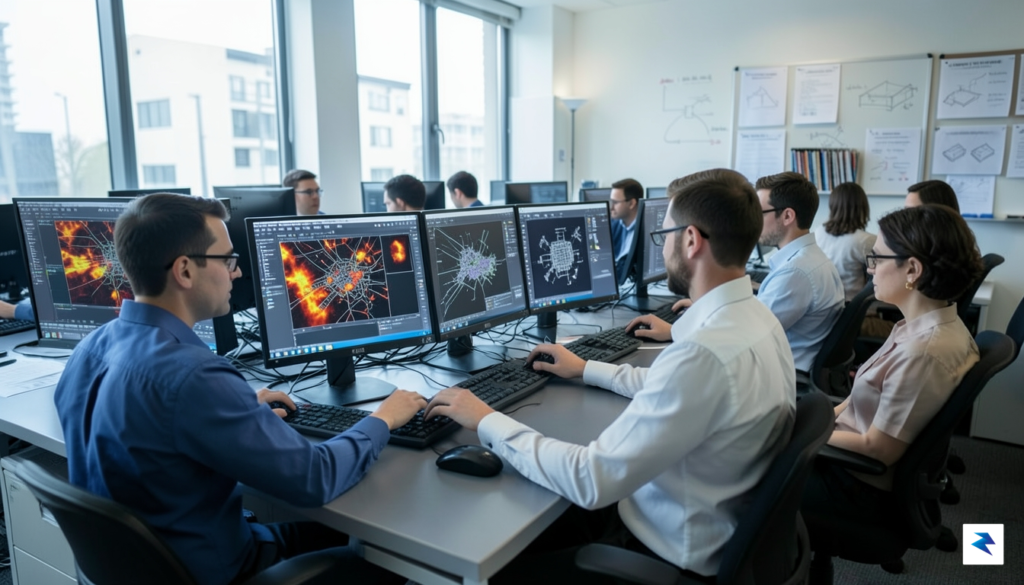
Designing custom silicon at the scale required for Meta’s massive AI models is an engineering feat that borders on the monumental. It is not merely a matter of increasing processing speed; rather, the primary challenge lies in balancing the intense thermal output of these chips with the strict power delivery constraints of existing data center infrastructure. When a chip is designed to run trillions of parameters, it generates significant heat that, if not managed with surgical precision, can lead to throttling or hardware failure. Engineers must therefore innovate at the physical layer, rethinking cooling mechanics and voltage regulation to ensure that these processors can operate at peak performance without compromising the integrity of the surrounding server racks.
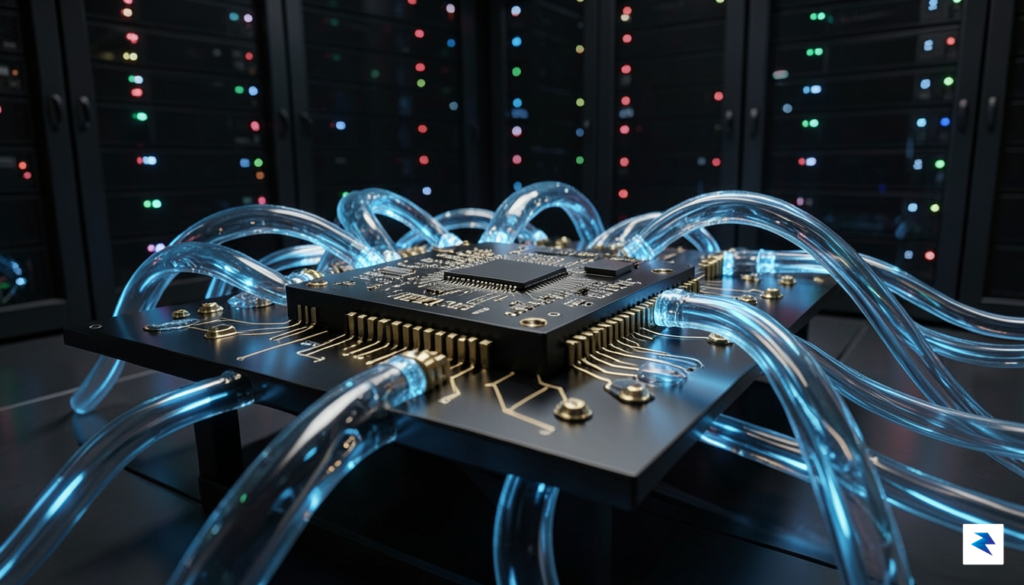
Beyond the physical constraints, the most daunting hurdle is software compatibility. Creating a powerful chip is effectively useless if the software ecosystem cannot communicate with it efficiently. Meta has leaned heavily into the PyTorch framework, and ensuring that their new custom silicon integrates seamlessly with this software stack is a top priority. This requires building a robust abstraction layer—a “compiler” or “runtime” environment—that translates complex PyTorch operations into machine code optimized specifically for the chip’s unique architecture. Without this software bridge, the performance gains achieved in the lab would vanish in the real world, as developers would be unable to leverage the hardware’s full potential for training and inference tasks.
Another critical element in this architectural shift is the integration of high-bandwidth memory (HBM). In modern AI workloads, the bottleneck is rarely just the processor’s clock speed; it is the rate at which data can be fed into the compute cores. By utilizing advanced packaging techniques, Meta aims to place memory as close to the silicon die as possible, significantly reducing latency and energy consumption. This approach minimizes the “data starvation” that often plagues general-purpose GPUs when handling massive datasets.
The success of custom silicon hinges not just on raw compute power, but on the efficiency of the data pipeline and the seamless translation of high-level software code into low-level hardware instructions.
Ultimately, the transition toward proprietary hardware is a move to regain control over the entire compute stack. By tailoring their silicon to the specific mathematical patterns found in their own recommendation engines and generative AI models, Meta can achieve a level of energy efficiency that off-the-shelf components simply cannot match. While the technical risks of this transition are substantial, the potential to eliminate reliance on third-party hardware vendors provides a compelling strategic advantage in the ongoing race for AI supremacy.

The strategic deployment of Meta’s custom AI chips transcends the immediate gains for a single company; it signals a profound, transformative shift in the very fabric of the technology industry. We are witnessing the maturation of a trend where hyperscale tech giants are increasingly becoming their own hardware manufacturers, meticulously crafting silicon tailored to their unique, massive-scale workloads. This isn’t merely about cost savings; it’s a calculated move towards complete control over the performance, efficiency, and supply chain of the foundational infrastructure powering their ambitious AI endeavors. Companies like Google pioneered this with their Tensor Processing Units (TPUs), and Amazon followed suit with Graviton and Inferentia chips, demonstrating a clear path for others with sufficient scale and resources to follow.
This evolving landscape fundamentally reshapes the entire semiconductor ecosystem. For decades, companies like Nvidia and AMD have been the undisputed titans, providing the general-purpose and specialized GPUs that fueled the initial explosion of AI. While their role remains critical, especially for a vast array of enterprises and smaller players, the hyperscalers’ pivot to custom silicon introduces a new dynamic. Meta’s move, therefore, isn’t about entirely replacing its reliance on external vendors overnight but rather optimizing its vast data center operations and gaining a competitive edge by fine-tuning hardware and software in concert. This allows for a level of integration and specialization that off-the-shelf solutions, no matter how powerful, simply cannot match for their specific scale and architectural needs.
Consequently, the relationship between these tech behemoths and traditional chip manufacturers is poised to evolve into a more nuanced partnership rather than a complete severance. Nvidia and AMD will likely continue to supply the cutting-edge, high-performance general-purpose GPUs required for the most demanding foundational model training and perhaps for specialized niche applications where custom solutions aren’t yet viable or efficient. However, the balance of power will shift. Hyperscalers will gain significant leverage, reducing their dependency and potentially driving incumbents to focus more on software stacks, specialized enterprise solutions, or entirely new markets. This forces traditional chipmakers to innovate in different ways, potentially exploring new architectural paradigms or deepening their software ecosystem to maintain their competitive edge in a rapidly fragmenting market.
Ultimately, this trend of custom silicon development by hyperscalers has profound implications for the pace of AI innovation across the board. By designing chips specifically for their proprietary AI models and infrastructure, companies like Meta can achieve unprecedented levels of performance, efficiency, and speed in developing and deploying new AI capabilities. This hardware-software co-design approach allows for rapid iteration and optimization, potentially accelerating breakthroughs in areas from large language models to advanced recommendation systems and virtual world rendering. While it might concentrate some of the most advanced AI development within these well-resourced companies, the overall effect is likely to propel the entire field forward, setting new benchmarks for what’s possible and challenging every player in the AI landscape to innovate more rapidly and strategically than ever before.
You must be logged in to post a comment.