
Why the Kobo Libra Colour Is the Best Kindle Alternative You Can Buy Now
Why the Kobo Libra Colour is the Ultimate Kindle Competitor For over a decade, Amazon has maintained a near-monopoly on the digital reading…
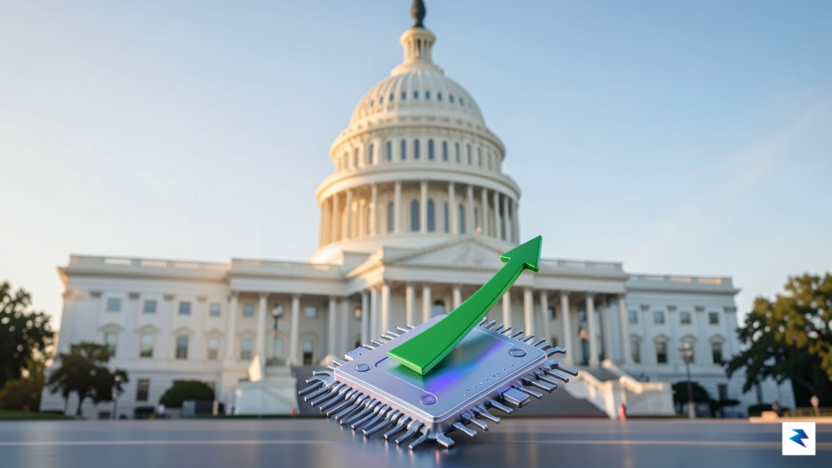
The newly unveiled investment accounts represent a fundamental shift in how the federal government approaches long-term economic security for the next generation. Unlike traditional savings vehicles that rely solely on individual contributions, these specialized accounts are designed to function as hybrid entities, blending public oversight with robust private-sector capital infusions. By leveraging partnerships with industry leaders like Micron, the administration aims to create sustainable capital foundations that grow alongside the child. These accounts are structured as long-term, tax-advantaged portfolios, effectively removing the barrier to entry for families who might otherwise struggle to participate in capital markets, thereby democratizing access to wealth-building tools early in a citizen’s life.

At the core of this initiative is a dual-pronged policy objective: immediate economic empowerment and long-term financial literacy. The administration contends that by providing a baseline investment, children will be better positioned to pursue higher education, vocational training, or entrepreneurial ventures without the crushing weight of initial debt. Furthermore, the program is designed to integrate financial education modules directly into the account management process. As beneficiaries interact with their portfolios, they are expected to gain practical, hands-on experience in understanding compound interest, asset allocation, and the importance of steady, long-term saving habits. This pedagogical approach is intended to instill a culture of fiscal responsibility that persists well into adulthood.
The initiative serves as a bridge between private enterprise and public welfare, transforming corporate social responsibility into tangible, generational assets for American families.
Eligibility for these accounts is structured to ensure broad reaching impact, with the administration focusing on accessibility for a wide range of socioeconomic backgrounds. While specific contribution caps and drawdown rules are currently being finalized, the overarching framework prioritizes the compounding effect of these early investments. By integrating private sector donations—such as the significant commitment recently secured from the semiconductor industry—the government is creating a multiplier effect. This synergy between public policy and private corporate contributions is framed as a blueprint for future economic initiatives, suggesting that the administration intends to rely on these types of collaborative funding models to solve long-standing problems regarding wealth inequality. Ultimately, the goal is to ensure that every participant has a stake in the nation’s economic success, fostering a sense of shared prosperity that begins at birth.

The announcement of a $250 million commitment from Micron Technology toward government-backed investment accounts represents a seismic shift in how major corporations navigate the intersection of public policy and private capital. At its core, this contribution is not merely a philanthropic gesture; it is a calculated strategic maneuver that mirrors the increasing integration between the semiconductor industry and federal economic agendas. By directing such a significant sum into these specific accounts, Micron is signaling a high level of alignment with the administration’s broader vision for long-term domestic prosperity, effectively positioning itself as a cornerstone partner in national development initiatives.
To understand the weight of this donation, one must look at the current landscape of federal semiconductor incentives. Micron’s financial commitment arrives at a time when the tech sector is heavily reliant on federal support, tax credits, and infrastructure grants designed to bolster U.S. chip manufacturing capabilities. By opting to participate in this high-profile financial vehicle, the company is likely reinforcing its standing as a cooperative stakeholder, ensuring that its corporate objectives remain synchronized with the regulatory and legislative priorities of the federal government. This is a departure from traditional corporate social responsibility (CSR) programs, which historically focused on localized charitable outreach or environmental sustainability; instead, this move reflects a more direct, macro-level engagement with the machinery of governance.

The scale of this $250 million investment suggests that Micron is moving beyond standard ESG metrics, choosing instead to tether its corporate reputation to the success of government-led financial programs.
Furthermore, this development highlights a burgeoning trend where technology giants are increasingly leveraging their massive balance sheets to influence, or at least support, the policy goals of the current administration. For a global leader in memory and storage solutions, maintaining a robust, positive relationship with federal authorities is essential for navigating international trade tensions and supply chain security. By channeling resources into these government-backed accounts, Micron is effectively hedging against regulatory uncertainty while demonstrating a commitment to the administration’s specific economic frameworks. This strategic pivot provides a blueprint for other tech firms, suggesting that future corporate influence will be defined by an entity’s willingness to co-invest alongside the state in initiatives that are deemed essential to the national interest.
Ultimately, while the donation is framed as a commitment to long-term growth, it serves as a powerful testament to the evolving relationship between the private sector and the federal government. As Micron balances its operational requirements with the political realities of the semiconductor industry, this $250 million contribution functions as both a bridge and a statement of intent. Whether this trend toward policy-aligned philanthropy will yield tangible long-term benefits for the company remains to be seen, but it undoubtedly secures Micron’s position at the table where the future of American industrial policy is being written.

The core promise of this $250 million injection lies in the mathematical power of long-term compound interest, a force often described as the eighth wonder of the world. By channeling these funds into professionally managed, tax-advantaged investment vehicles, the program seeks to transform a static lump sum into a dynamic engine for generational wealth. When funds are invested early and left to grow across several decades, even moderate annual returns can exponentially expand the principal, potentially providing beneficiaries with a significant financial springboard as they enter adulthood. This approach shifts the paradigm from immediate consumption toward a legacy-building strategy that could fundamentally alter the financial trajectory of thousands of young citizens.

However, the efficacy of this initiative hinges entirely on the robustness of its fiduciary framework and management oversight. For such a large-scale fund to succeed, it must be insulated from political interference and managed by independent financial experts who prioritize the long-term security of the beneficiaries above all else. Establishing a transparent, institutional governance structure is essential to ensure that administrative fees remain low and that the underlying assets are allocated in a diversified portfolio capable of weathering market cycles. Without rigorous professional management, the potential for mismanagement or inefficient capital allocation could erode the very wealth it intends to preserve for the next generation.
The true value of this investment model is not found in the initial donation, but in the disciplined, multi-decade strategy that allows small, initial allocations to blossom into life-changing capital.
When evaluating the broader impact on social mobility, this program serves as a tangible experiment in reducing wealth inequality by providing a baseline of financial security to those who might otherwise lack access to investment capital. By democratizing the ability to participate in market growth, the initiative could help bridge the gap between different socioeconomic strata, providing a cushion that empowers young people to pursue higher education, entrepreneurship, or homeownership without the crushing weight of systemic debt. Yet, this ambition must contend with the inescapable reality of market volatility; an aggressive downturn could threaten the principal if the funds are not protected by conservative risk-mitigation strategies. Safeguarding these assets through balanced asset allocation—mixing equities with stable, lower-risk instruments—remains the most critical challenge for the program’s architects as they seek to balance the need for growth with the imperative of capital preservation.

The injection of $250 million from a semiconductor giant like Micron into a government-led wealth initiative marks a profound shift in the traditional boundaries between private enterprise and public welfare. When corporations of this magnitude participate in state-sponsored social programs, it inevitably invites a rigorous examination of the motivations behind such massive capital allocations. While supporters argue that this infusion provides a necessary boost to underfunded public initiatives, critics contend that it blurs the lines between corporate social responsibility and the strategic pursuit of political influence. This intersection creates a complex landscape where the line between genuine philanthropy and a “seat at the table” for future policy negotiations becomes increasingly difficult to discern.

At the heart of this debate lies the critical issue of transparency and the potential for deep-seated conflicts of interest. When private entities contribute directly to government-run accounts, the public must ask whether such donations are purely altruistic or if they act as a form of “soft lobbying” intended to secure favorable regulatory outcomes. To mitigate these concerns, policymakers must implement robust, publicly accessible tracking mechanisms that account for every dollar donated. Without clear reporting standards and independent oversight, the risk remains that corporate donors could gain undue leverage over policy priorities, effectively shaping social agendas to align with their own bottom lines rather than the public interest.
The true test of corporate philanthropy in the public sphere is not the size of the donation, but the total absence of strings attached to the government’s policymaking authority.
Furthermore, the broader debate surrounding corporate lobbying suggests that this move could set a precedent for how private capital interacts with public welfare vehicles. Proponents argue that in an era of constrained government budgets, private-public partnerships are essential to drive innovation and provide support to families that the state might otherwise fail to reach. Conversely, detractors warn that relying on corporate funds for public services risks the “privatization of policy,” where the quality and reach of social programs become dependent on the fluctuating goodwill of private markets. Ultimately, society must decide if this model serves as a sustainable foundation for public welfare or if it merely trades institutional integrity for immediate financial gain.

The announcement of a $250 million donation from Micron toward these investment accounts has triggered a complex and polarized public response. On one hand, proponents applaud the move as a bold demonstration of corporate social responsibility, suggesting that the semiconductor giant is taking a proactive stance in supporting the next generation of American workers. Supporters argue that such partnerships effectively bridge the gap between private capital and public welfare, providing a tangible boost to domestic economic initiatives. Conversely, skeptics have raised concerns about the optics of such a massive contribution, questioning the potential influence of corporate interests on federal policy and the underlying motivations behind linking a private firm’s financial resources to a specific political administration’s agenda.

This development is likely to serve as a significant litmus test for the future of public-private partnerships within the U.S. technology sector. As legislators and industry leaders observe the reception and effectiveness of this initiative, it may set a precedent for how critical industries—particularly those reliant on federal grants or trade protections—engage with domestic social objectives. If the program yields measurable success in long-term financial stability for its beneficiaries, we may see a shift in how future legislation is drafted, potentially incentivizing—or even requiring—similar corporate philanthropic commitments in exchange for government support or subsidies. This model could fundamentally alter the traditional boundaries between corporate strategy and national economic policy.
The long-term viability of this policy experiment hinges on transparency and the ability to demonstrate that such private-sector contributions serve a genuine public good without compromising the autonomy of federal programs.
Whether other major corporations will follow Micron’s lead remains an open question, though it is certain that the tech industry will be watching closely. Should this initiative prove to be a successful strategy for enhancing corporate reputation while aligning with government priorities, other firms in sectors like artificial intelligence, renewable energy, and biotechnology might feel compelled to adopt similar structures. However, this trend also carries the risk of creating a “pay-to-play” perception, where the influence of large corporations becomes tethered to their participation in government-backed social programs. Ultimately, the success of this endeavor will depend on its ability to maintain public trust, ensuring that these investments remain focused on their stated goals rather than becoming conduits for political lobbying or strategic branding exercises. Over the coming years, this initiative will likely be cited as a pivotal moment in the evolving relationship between the American state and the powerful tech conglomerates that drive its modern economy.
You must be logged in to post a comment.