Tesla’s Q2 Deliveries Surge: How Pricing and Strategy Drove Record Sales
Decoding Tesla’s Q2 Sales Surge Tesla’s latest performance report has sent a resounding message to the automotive industry, as the company…

Microsoft is embarking on a profound transformation of its artificial intelligence strategy, signaling a significant departure from conventional internal development models. This strategic evolution sees the tech giant centralizing its formidable AI deployment efforts into a newly dedicated corporate entity, a move that fundamentally redefines how it brings advanced AI capabilities to market. Rather than embedding these complex, large-scale initiatives within existing product divisions, this focused subsidiary is designed to streamline the entire deployment lifecycle. This structural shift underscores a recognition that the unique demands of scaling cutting-edge AI require a specialized approach, distinct from traditional software development pathways.
Historically, large technology companies have often integrated AI development within various product teams, leading to a fragmented approach where resources, expertise, and strategic focus can be diluted. While this embedded model fosters innovation within specific product lines, it often struggles with the immense challenges of cross-product synergy, standardized deployment practices, and the sheer computational and logistical demands of next-generation AI. By establishing a dedicated deployment subsidiary, Microsoft aims to overcome these inefficiencies, consolidating specialized talent, infrastructure, and operational methodologies under a single, unified vision. This centralization not only optimizes resource allocation but also fosters a culture singularly focused on the rapid, reliable, and responsible deployment of AI at an industrial scale.
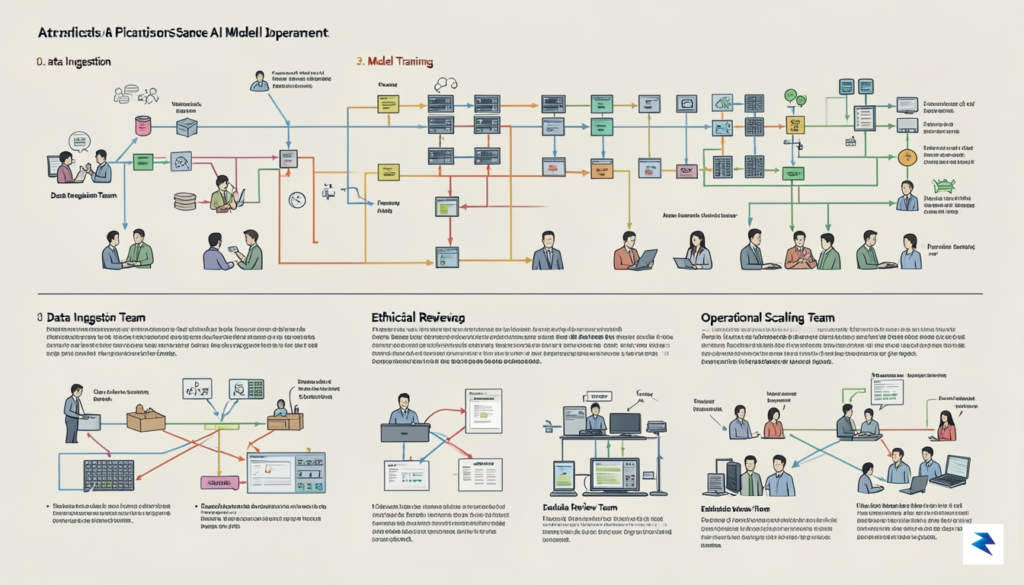
The journey from a powerful AI model in a lab to a robust, enterprise-grade solution in the real world is fraught with unique complexities and inherent risks. Scaling AI models, especially those built on expansive foundational models, demands a level of specialized infrastructure, data governance, and ethical oversight that far exceeds typical software engineering requirements. Considerations like managing colossal computational demands, ensuring data privacy and security across diverse deployments, and navigating the evolving landscape of AI ethics necessitate a dedicated operational framework. A specialized subsidiary is uniquely positioned to address these multifaceted challenges, building bespoke infrastructure, developing specific risk mitigation strategies, and attracting talent with the precise skill sets required for large-scale, secure, and compliant AI deployment.
Crucially, this organizational separation empowers Microsoft to foster an environment of unparalleled agility and rapid iteration within its AI deployment efforts, without causing ripple effects throughout its established core software operations. The fast-paced nature of AI innovation demands constant experimentation, quick pivots, and the ability to learn and adapt at an accelerated rate. By housing these endeavors in a distinct entity, Microsoft can allow its new subsidiary to embrace a more experimental, startup-like ethos, pushing boundaries and iterating on deployment strategies at a speed that might otherwise disrupt the meticulous development cycles of its flagship products like Windows, Office, or Azure. This strategic insulation protects the stability and predictability of its core businesses while simultaneously unlocking the full potential for groundbreaking advancements and market agility in the AI domain.
Ultimately, the creation of this dedicated AI deployment subsidiary is more than just an internal restructuring; it represents a bold declaration of Microsoft’s intent to lead the next generation of artificial intelligence. It signals a proactive strategy to optimize every aspect of the AI lifecycle, from conception to global implementation, ensuring that the company can bring its cutting-edge innovations to customers with unprecedented speed and reliability. This strategic recalibration is designed to accelerate market entry for new AI capabilities, maximize the efficiency of resource utilization, and establish a clearer, more streamlined pathway for the commercialization and widespread adoption of its powerful AI advancements. It’s a move poised to cement Microsoft’s position at the forefront of the AI revolution, transforming how advanced intelligence is built, deployed, and experienced worldwide.

The commitment of $2.5 billion to a new AI deployment company represents far more than a simple capital injection; it signals a profound strategic pivot and a long-term play in the foundational infrastructure of artificial intelligence. This substantial sum is not merely for incremental upgrades but for building a robust, dedicated ecosystem designed to accelerate the deployment of the most demanding, high-compute AI models. Such an investment underscores Microsoft’s intent to gain a decisive edge in the rapidly evolving AI landscape, moving beyond offering cloud AI services to actively controlling and optimizing the entire deployment pipeline for next-generation intelligence.
A significant portion of this capital will undoubtedly be channeled into the procurement of cutting-edge Graphics Processing Units (GPUs), the veritable workhorses of modern AI. High-performance GPUs, like NVIDIA’s H100s or the upcoming B200s, are indispensable for training and running complex large language models and other advanced AI applications. These chips are not only expensive but also subject to intense global demand and supply chain constraints. A multi-billion-dollar commitment ensures bulk purchasing power and priority access, crucial for establishing and maintaining a competitive fleet of compute resources capable of handling the colossal computational requirements of advanced AI deployments.
Beyond the silicon itself, the energy infrastructure required to power and cool these vast arrays of GPUs is immense. Data centers housing AI supercomputers consume enormous amounts of electricity, comparable to small towns. Therefore, a considerable part of the $2.5 billion will be allocated to building or upgrading state-of-the-art facilities, implementing advanced cooling technologies, and potentially securing dedicated renewable energy sources to meet these insatiable power demands sustainably. This encompasses everything from land acquisition and construction to power grid interconnections and sophisticated environmental control systems, all critical for reliable and efficient AI operations.
Furthermore, a substantial investment of this magnitude also targets the acquisition and retention of top-tier talent. The specialized expertise required to design, build, and operate AI infrastructure at this scale is scarce and highly sought after. This includes AI researchers, machine learning engineers, data scientists, cloud architects, and data center operations specialists. The $2.5 billion will fuel competitive compensation packages, advanced research initiatives, and a stimulating work environment necessary to attract and keep the brightest minds dedicated to pushing the boundaries of AI deployment efficiency and innovation.
In a historical context, this capital expenditure echoes the monumental investments made by tech giants in the early days of cloud computing. Companies like Amazon with AWS, Microsoft with Azure, and Google Cloud poured billions into building out their global data center networks, laying the groundwork for the digital transformation we see today. This $2.5 billion commitment to AI infrastructure signals a similar foundational investment, positioning the new subsidiary not just as a service provider but as a critical enabler of the next wave of technological evolution, much like cloud providers became the backbone of the internet economy.
This investment highlights a pivotal ‘build vs. buy’ dynamic in the current AI economy. While many companies might opt to lease compute power from existing cloud providers, owning the infrastructure end-to-end offers unparalleled control, optimization opportunities, and the ability to tailor hardware and software stacks precisely for specific, cutting-edge AI workloads.
This strategic choice to “build” rather than solely “buy” or lease from its own Azure AI services or third parties indicates a desire for deep integration and control over the entire AI stack, from chips to models. It allows for highly customized environments, potentially addressing unique latency, security, or regulatory requirements for specific enterprise or government clients. By controlling its own deployment infrastructure, the new entity can fine-tune performance, innovate at a deeper level, and ultimately offer more specialized and efficient solutions than a general-purpose cloud offering might provide, cementing Microsoft’s long-term influence in the AI domain.

The dawn of generative AI has ushered in an era of intense strategic maneuvering among tech giants, transforming the competitive landscape from a battle over cloud infrastructure to a deeper contest for AI deployment and integration. Microsoft’s substantial commitment to its new AI deployment company is not an isolated event; rather, it’s a significant move within a broader industry trend where major players like Amazon, OpenAI, and Anthropic are all pushing towards more profound vertical integration. This evolution signifies a recognition that success in AI isn’t solely about developing cutting-edge models, but equally about efficiently delivering those capabilities into the hands of enterprises and end-users, ensuring seamless integration, robust performance, and reliable scaling.
At the heart of this evolving ecosystem are the foundational cloud providers – Amazon Web Services (AWS), Microsoft Azure, and Google Cloud Platform (GCP) – which serve as the indispensable backbone for AI development. These platforms provide the immense compute power, primarily in the form of specialized GPUs, high-speed networking, and vast data storage necessary to train and run sophisticated AI models. Beyond raw infrastructure, they are increasingly offering sophisticated AI development platforms and services, such as AWS SageMaker, Azure AI Studio, and Google Cloud AI Platform, designed to streamline the entire AI lifecycle. Simultaneously, model developers like OpenAI (backed heavily by Microsoft) and Anthropic (which has secured significant investments from Amazon and Google) are focusing on creating powerful, general-purpose AI models, pushing the boundaries of what AI can achieve.
Microsoft’s relationship with OpenAI exemplifies a fascinating dynamic of ‘coopetition’ that is becoming increasingly common in the AI sector. As OpenAI’s exclusive cloud provider, Azure is not merely a vendor; it is deeply intertwined with OpenAI’s operations, powering everything from model training to inference. This symbiotic relationship ensures that as OpenAI innovates, Azure benefits from increased usage and the prestige of hosting industry-leading models. However, Microsoft itself is also a significant developer of AI models and applications, integrating AI capabilities directly into its own product suite, from Microsoft 365 Copilot to Dynamics 365. The creation of a dedicated AI deployment subsidiary further refines Microsoft’s strategy, allowing it to directly leverage its deep investment in OpenAI, as well as its own extensive AI capabilities, to offer comprehensive, end-to-end AI solutions directly to enterprise clients, potentially creating new avenues for value capture that complement, and in some cases, might even compete with, its partners’ offerings.
This strategy offers a stark contrast to some of the prevailing philosophies in AI deployment, particularly when compared with Amazon’s approach via AWS. AWS has historically championed a broad, open marketplace model, offering a diverse array of AI services through platforms like Amazon Bedrock, which allows customers to choose from various foundational models from different providers, including Amazon’s own Titan models, as well as third-party offerings. The AWS philosophy often centers on providing extensive tools, infrastructure, and choice, empowering customers to build and integrate solutions largely on their own terms. In contrast, Microsoft’s new deployment company signals a potential shift towards a more curated, vertically integrated, and perhaps more hands-on approach for enterprise AI adoption. By establishing a dedicated entity, Microsoft aims to minimize friction for businesses seeking to implement complex AI solutions, offering expert guidance and seamless integration, primarily leveraging Azure-optimized models and services. This move suggests a desire to own more of the deployment pipeline and ensure that businesses realize the full potential of AI, deeply embedding Microsoft’s ecosystem into their operations.
Microsoft’s latest investment underscores a critical pivot in the AI race: it’s no longer just about who builds the best model, but who can most effectively and efficiently deploy that intelligence into real-world applications for businesses.
Ultimately, Microsoft’s substantial investment in its AI deployment arm is a powerful strategic declaration. It signifies an intent not just to be a foundational cloud provider for AI, nor merely a key investor in leading AI labs, but also a dominant force in the crucial layer of AI application and integration. This move intensifies the competition across the entire AI value chain, from infrastructure to model development and, critically, to the direct deployment of AI solutions for global enterprises. It forces all major players to rethink their strategies, emphasizing the need for comprehensive, tailored, and highly efficient pathways for businesses to harness the transformative power of artificial intelligence, thereby accelerating the broader adoption and impact of AI across industries.

For many enterprises, the journey from AI aspiration to fully integrated, production-ready solutions has been fraught with challenges, often described as the “last mile” problem. Businesses frequently invest heavily in AI research and development, crafting sophisticated models that demonstrate immense potential in controlled environments. However, transitioning these proof-of-concept models into robust, scalable, and secure operational systems within the complex tapestry of existing IT infrastructure proves to be a significant hurdle. This final stretch demands specialized expertise in areas like MLOps, data governance, continuous integration, and performance optimization, which many organizations simply lack in-house, leading to stalled projects, budget overruns, and missed opportunities.
The emergence of a dedicated AI deployment entity, backed by substantial investment, fundamentally alters this landscape. Rather than leaving individual enterprises to navigate the intricacies of operationalizing AI on their own, this new venture acts as a specialized bridge, offering a streamlined pathway from cutting-edge research to tangible business value. It promises to deliver not just the AI models themselves, but also the entire ecosystem required for their effective functioning: optimized infrastructure, standardized deployment frameworks, and expert support. This approach aims to dramatically reduce the friction and complexity traditionally associated with enterprise-scale AI adoption, making advanced capabilities accessible to a broader range of organizations.
One of the most significant technical implications lies in the standardization and industrialization of AI deployment. This dedicated arm can develop and refine best practices for model validation, version control, and infrastructure provisioning, moving AI from an artisanal craft to a repeatable engineering discipline. Enterprises will benefit from pre-configured, optimized deployment pipelines that abstract away much of the underlying complexity, allowing their internal teams to focus more on strategic use cases and less on the intricate mechanics of operationalization. Consequently, this leads to faster time-to-market for AI-powered products and services, as the headaches of scalability and integration are largely handled by specialists.
Furthermore, the emphasis on performance optimization, particularly latency reduction, will be paramount in this new architectural paradigm. Many critical enterprise AI applications, such as real-time fraud detection, personalized customer interactions, or autonomous system control, demand instantaneous responses. A dedicated deployment entity will engineer solutions from the ground up to minimize computational delays, leveraging advanced techniques like edge computing, optimized model serving frameworks, and specialized hardware acceleration. This ensures that AI inferences are delivered with the speed necessary to drive immediate, impactful business decisions, transforming reactive processes into proactive ones.
Equally crucial is the built-in focus on enterprise-grade security and compliance. Integrating AI into core business operations means handling sensitive data and adhering to stringent regulatory requirements. This new deployment company will likely bake robust security protocols, data privacy measures, and compliance frameworks directly into its offerings, providing enterprises with a trusted and secure foundation for their AI initiatives. This includes secure data ingress and egress, encrypted model storage, robust access controls, and comprehensive auditing capabilities, significantly mitigating the risks associated with deploying advanced AI models in highly regulated industries. For businesses, this translates into greater peace of mind and a reduced burden of managing complex security landscapes themselves.
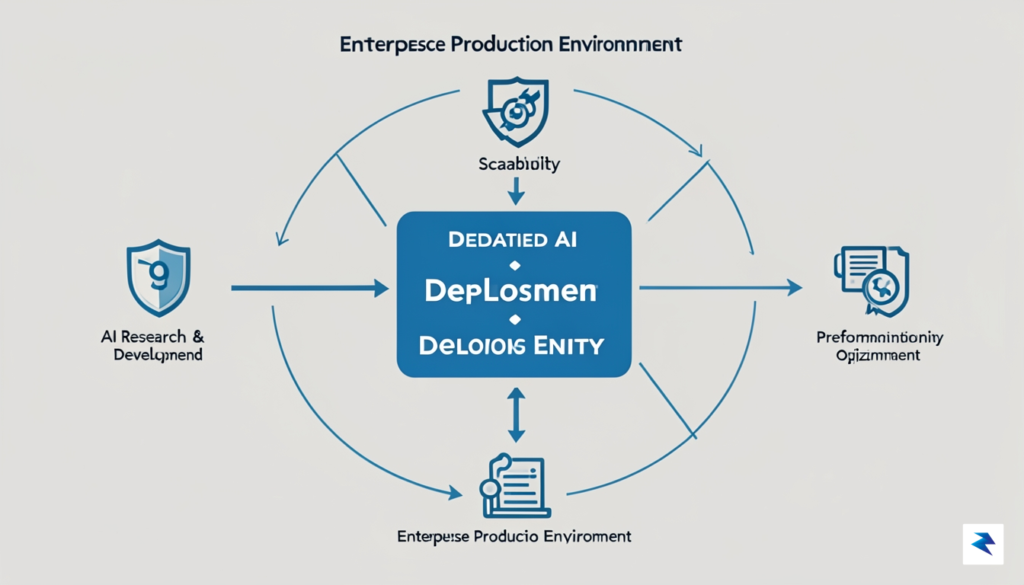
Ultimately, this strategic move signifies a maturation of the enterprise AI market. It shifts the burden of complex AI infrastructure and operationalization from individual companies to a specialized provider, enabling businesses to consume AI capabilities as a more reliable, standardized service. This will not only accelerate the adoption of advanced AI across industries but also allow organizations to unlock the full potential of their data without being bogged down by the technical intricacies of deployment, thereby driving innovation and competitive advantage more effectively.

The recent commitment to establishing a dedicated AI deployment company marks a significant inflection point for the entire artificial intelligence sector. For years, the generative AI landscape has been characterized by breathtaking innovation, rapid model development, and a fervent exploration of capabilities. While this era of discovery has been exhilarating, it has also highlighted a growing chasm between cutting-edge research and the practical, secure, and scalable deployment of these powerful tools in real-world business environments. This new initiative signals a maturation of the industry, moving definitively beyond the novelty phase towards a more disciplined, infrastructure-led growth strategy, focusing on operationalizing AI at an enterprise scale.
This strategic pivot is poised to profoundly impact the entire AI development lifecycle. Historically, bringing an AI model from concept to production has been fraught with challenges, often requiring highly specialized teams to navigate complex integration issues, ensure data governance, manage security protocols, and maintain performance. By creating a dedicated entity focused solely on deployment, the aim is to streamline this often-arduous journey. It will likely foster the development of standardized MLOps (Machine Learning Operations) frameworks, robust tooling, and best practices, accelerating the transition from experimental prototypes to fully integrated, reliable business solutions. This professionalization of the deployment phase will reduce friction, enhance predictability, and ultimately shorten the time-to-market for novel AI capabilities across various industries, making advanced AI more accessible and practical for widespread adoption.
Furthermore, the implications for cost-reduction for end-users are substantial. As AI deployment processes become more standardized, efficient, and scalable through a dedicated infrastructure, the overall cost associated with implementing and maintaining advanced AI solutions is expected to decrease. Currently, many businesses face significant upfront investments and ongoing operational expenses when attempting to integrate sophisticated AI models due to the bespoke nature of many deployments and the scarcity of specialized talent. A consolidated, optimized deployment strategy can leverage economies of scale, reduce the need for custom engineering for every project, and mitigate the risks associated with complex integrations. This shift will democratize access to powerful generative AI tools, making them financially viable for a broader spectrum of organizations, from large enterprises to small and medium-sized businesses, fostering innovation and competitive advantages across diverse market segments.
Looking ahead, this infrastructure-first approach creates a far more robust and stable foundation for the next generation of generative AI tools. As models become even more sophisticated, demanding greater computational resources, more intricate data pipelines, and stricter ethical oversight, the need for a resilient deployment backbone will only intensify. This strategic move ensures that future breakthroughs in areas like multimodal AI, highly personalized content generation, or autonomous decision-making systems can be delivered securely, efficiently, and at unprecedented scale. It transforms AI from a series of isolated, high-cost projects into a fundamental, reliable layer of enterprise technology, ensuring that cutting-edge innovations don’t remain theoretical marvels but become practical, impactful instruments driving productivity and creativity across global economies.
The future of AI isn’t just about building smarter models; it’s about building smarter pipelines to deliver them, securely and at scale, to every corner of industry.

You must be logged in to post a comment.