
The 2026 Home Chef Gift Guide: Tools That Actually Elevate Your Cooking
The Philosophy of Choosing Culinary Gifts Navigating the vast landscape of culinary gifts for the home cook can feel like a gourmet challenge…


For decades, the digital landscape operated under a somewhat quaint, yet largely effective, social contract embodied by the robots.txt file. This simple text file, placed at the root of a website, served as a polite ‘no trespassing’ sign for web crawlers, instructing automated bots which parts of a site they were permitted or forbidden to access. It was a foundational piece of internet etiquette, particularly vital for search engines like Google, which dutifully respected these directives to index the web efficiently without overwhelming servers or scraping sensitive information. This system, relying heavily on an honor code among webmasters and crawler developers, functioned remarkably well in an era where automated access was primarily for the mutual benefit of discovery and organization.
However, the rapid proliferation of sophisticated AI models has dramatically altered this delicate balance. These new-generation artificial intelligence systems, particularly those focused on large language models and generative AI, require unprecedented volumes of data for training, often indiscriminately hoovering up content from across the internet. Unlike their traditional search engine counterparts, many of these modern AI scrapers operate with a blatant disregard for the established protocols of robots.txt, viewing it not as a directive but merely a suggestion easily circumvented. This philosophical divergence marks a critical turning point: the shift from cooperative web crawling to aggressive, often unauthorized, data acquisition, leaving content creators and platforms vulnerable to exploitation.
For platforms like Patreon, which thrive on the unique, often deeply personal, content created by artists, writers, and educators, the limitations of a passive, honor-based system became critically apparent. Creators pour their time, talent, and intellectual property into their work, often relying on the exclusivity of their content for their livelihoods. When AI scrapers extract this valuable material without permission, acknowledgment, or compensation, it not only undermines the creator’s economic model but also erodes the trust essential for a thriving creative community. Patreon recognized that relying on the hope that these new bots would simply ‘do the right thing’ was no longer a viable strategy for safeguarding the integrity of their creators’ work and the platform’s overall mission.
This stark reality necessitated a fundamental pivot from passive requests to proactive, enforcement-based strategies. Instead of merely asking bots not to scrape, Patreon has now implemented active blocking mechanisms designed to prevent unauthorized access outright. This involves a suite of technical measures such as identifying and blocking suspicious IP addresses, analyzing user-agent strings, implementing rate limiting to detect and mitigate automated access attempts, and potentially employing more advanced behavioral analysis. By taking an active stance, Patreon removes the guesswork and reliance on external compliance, asserting direct control over who accesses creator content and under what terms, thereby significantly enhancing the protection of valuable intellectual property.
The transition from the old paradigm of polite requests to one of robust, active defense signifies a broader evolution in how platforms must operate in the age of generative AI. It reflects a growing recognition that the open nature of the internet, while fostering incredible innovation, also requires diligent gatekeeping to protect the rights and resources of content creators. Patreon’s move sets a precedent for other platforms grappling with similar challenges, signaling that the era of passive ‘no trespassing’ signs for AI scrapers is drawing to a close. The future of content protection demands a dynamic, continuously evolving approach, ensuring that innovation does not come at the expense of those who create the very content that fuels it.

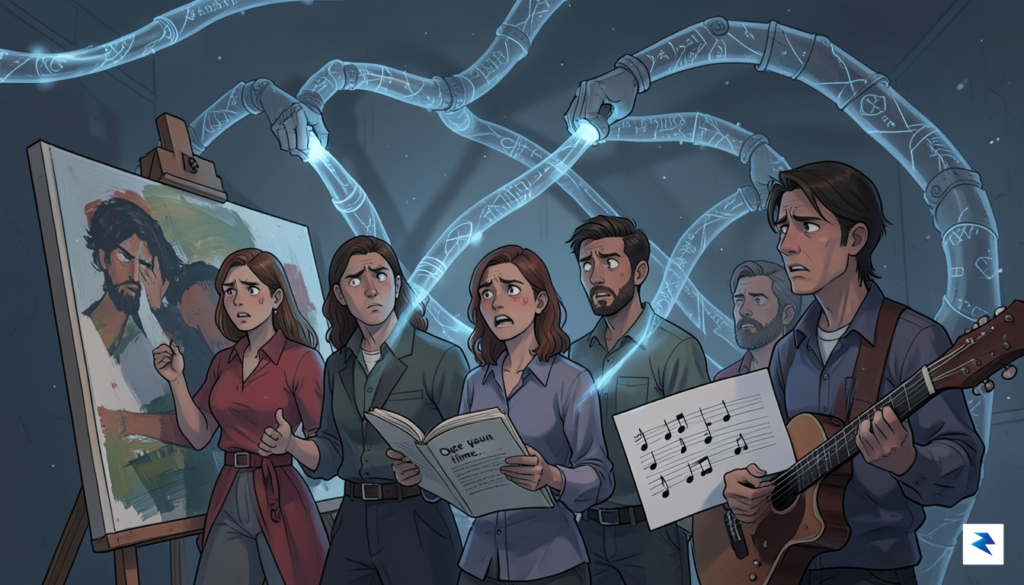
The proliferation of AI models trained on vast datasets of human-created content presents a profound economic challenge to artists, writers, musicians, and designers alike. When these sophisticated algorithms ingest millions of images, texts, or audio files without explicit consent or compensation to the original creators, they effectively commoditize the very output that forms the basis of a creator’s livelihood. This unauthorized harvesting allows AI to learn and mimic distinct styles, generate new works “in the style of,” or even produce direct copies, thereby saturating markets and devaluing authentic human creativity. Consequently, creators face an increasingly difficult landscape where their unique skills and intellectual property are leveraged to build competing systems, eroding their potential income streams and making it harder to monetize their original contributions. The fundamental tension lies in the free appropriation of immense human labor to fuel lucrative AI development, often without any reciprocal benefit to the source.
Beyond the tangible financial implications, the unauthorized scraping of creative works inflicts a significant psychological toll on individuals. Creators pour their passion, identity, and countless hours into refining their craft and producing original content; discovering this deeply personal output is being consumed by machines without their knowledge or permission can feel like a profound violation. This erosion of trust manifests as feelings of helplessness, anger, and disillusionment, as artists grapple with the idea that their efforts might be used to train systems that could eventually render their unique skills obsolete or, at the very least, dilute their market value. Such an environment fosters a chilling effect, where creators become hesitant to share their work publicly, fearing its exploitation, ultimately stifling innovation and community engagement.
In response to this escalating crisis, creators are increasingly demanding that the platforms hosting their work take a proactive and decisive stance against unauthorized AI training. The traditional reliance on robots.txt files, which merely suggest how web crawlers should behave, has proven woefully inadequate against large-scale, commercially driven AI data harvesting operations. Instead, there is a growing consensus that platforms bear a significant responsibility to implement robust technical and policy barriers that genuinely prevent the non-consensual use of their users’ creative contributions for AI model development. This shift reflects a critical understanding: for the creator economy to thrive sustainably, the digital spaces where creators share their work must actively safeguard their intellectual property and ensure their continued ability to earn a living from their unique talents, moving beyond passive requests to active protection.
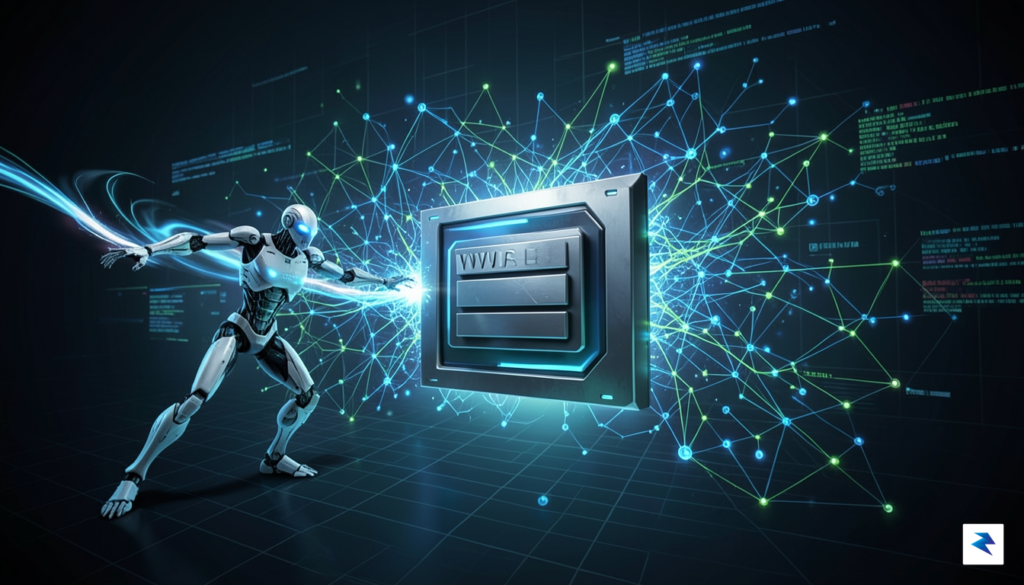
Patreon’s shift from polite requests via robots.txt to actively blocking AI scrapers represents a fundamental change in strategy, pivoting from an honor system to a robust, technical defense. This significant evolution is powered by a strategic partnership with Cloudflare, a leading web infrastructure and security company. Essentially, Cloudflare now acts as a sophisticated digital bouncer, sitting in front of Patreon’s entire platform, meticulously inspecting every visitor and request before it even reaches the core Patreon servers. This perimeter defense is crucial because it allows Patreon to proactively identify, filter, and ultimately block unwanted traffic at the network edge, long before it can access or scrape creator content for large language model (LLM) training.
The technical mechanism behind this defense layer is multifaceted and highly advanced. Cloudflare’s bot management system employs a combination of techniques to differentiate legitimate human users and benevolent bots (like search engine crawlers) from malicious scrapers. It starts with comprehensive traffic analysis, scrutinizing various signals such as IP addresses, user-agent strings, HTTP request headers, and most importantly, behavioral patterns. For instance, a human user typically navigates a site at a certain pace, clicks on specific elements, and has a consistent browsing flow. In contrast, a scraper bot might exhibit unusually high request rates from a single IP, rapidly access disparate pages without typical navigation, or fail to execute JavaScript, revealing its automated nature. Cloudflare’s expansive network and global threat intelligence gather data from millions of websites, providing an unparalleled view of evolving bot tactics and allowing for the rapid identification and blocking of known botnets and scraping tools.
A key aspect of Cloudflare’s efficacy lies in its sophisticated machine learning algorithms. These algorithms are continuously trained on vast datasets of web traffic, enabling them to detect subtle anomalies that human analysts or simpler rule-based systems might miss. When a request exhibits characteristics indicative of an AI scraper – for example, attempting to bypass typical user authentication flows, rapidly downloading entire sections of a profile, or mimicking human interactions imperfectly – Cloudflare can trigger various challenges. These might include non-intrusive JavaScript challenges that verify browser authenticity, or more direct rate-limiting measures. Crucially, the system is designed to evolve, adapting its detection methods as scraping technologies become more sophisticated, ensuring that Patreon’s defense remains effective against new generations of LLM training bots that attempt to evade detection.
This platform-wide approach offers immense benefits compared to individual creators attempting to manage their own defenses. First, it provides centralized, uniform protection across all Patreon content, ensuring that every creator, regardless of their technical expertise, benefits from the same high level of security. Creators no longer need to worry about complex server configurations or understanding intricate web security protocols; they can simply focus on creating. Second, the sheer scale of Cloudflare’s operation means that its defenses are incredibly robust and dynamic. The threat intelligence gathered from across the internet instantly benefits Patreon, allowing for real-time blocking of emerging threats. Finally, this centralized strategy significantly reduces the operational burden on creators, who would otherwise be left to implement their own cumbersome and often ineffective solutions against determined scrapers. Instead, Patreon leverages enterprise-grade security, making a powerful statement about its commitment to protecting its creators’ intellectual property and value.
Patreon’s decisive move to actively block AI scrapers, transcending the traditional, largely honor-based system of robots.txt, represents a significant turning point for the digital landscape. This action is not an isolated technical adjustment but a powerful signal, marking a broader trend where platforms are increasingly asserting control over the vast reservoirs of user-generated content they host. It underscores a growing recognition that the data underpinning the creator economy holds immense value, especially in an era dominated by generative artificial intelligence, and platforms are now compelled to protect this asset more vigorously than ever before.
This policy shift serves as a stark bellwether for how the entire creator economy will navigate the complexities and challenges presented by generative AI. Other platforms that host user-generated content, from writing communities like Substack and Medium to art-sharing sites like DeviantArt, are undoubtedly watching closely. The ripple effects could be profound, prompting many to re-evaluate their own data policies and implement similar, more aggressive blocking mechanisms. This isn’t merely about preventing bandwidth usage; it’s about protecting the intellectual property of their creators and, by extension, the economic viability of their own ecosystems, which are often built upon the unique content produced by their communities.
The implications extend to a fundamental re-evaluation of what “open access” truly signifies on the modern internet. For decades, the digital realm fostered an environment where content, once published, was often implicitly considered fair game for automated collection, indexing, and analysis. This ethos, while facilitating search engines and data-driven insights, is now colliding head-on with the commercial realities of generative AI, which can ingest and transform vast quantities of content into new, monetizable outputs. Platforms and creators are increasingly questioning whether “open” should equate to “free for AI training,” forcing a critical conversation about data ownership, fair use, and the ethical responsibilities of AI developers.
This escalating tension highlights the increasing friction between burgeoning AI companies and the intellectual property holders upon whose creations these advanced models are trained. AI systems require colossal datasets to learn and generate new content, and much of this data has been scraped from the open web without explicit consent or compensation to the original creators. Patreon’s stance is a direct challenge to this practice, signaling that the era of unchecked data harvesting may be drawing to a close. This could force AI developers to seek new avenues for data acquisition, potentially through licensing agreements or curated, consent-based datasets, fundamentally altering their business models and development pipelines.
Ultimately, this move by Patreon portends a future internet that might look very different from the open, easily scrapable web of the past. It suggests a movement towards more controlled data environments, where content creators and the platforms that support them have greater agency over how their digital works are used. The coming years will likely see a vigorous debate—and potentially new legal frameworks—emerge around data sovereignty, digital rights, and the equitable distribution of value created by AI. The path forward will undoubtedly be complex, balancing the promise of AI innovation with the imperative to protect the rights and livelihoods of human creators.

The rapid evolution of artificial intelligence undeniably demands vast quantities of data to learn, refine, and perform its increasingly sophisticated tasks. From generating text and images to understanding complex human queries, these powerful models are fueled by the collective digital output of humanity. However, this insatiable demand for information cannot, under any circumstances, come at the direct expense of the very individuals who painstakingly create that content. The fundamental principle governing the development of future technologies must be rooted in respect for intellectual property and the inherent rights of creators, ensuring that technological advancement walks hand-in-hand with ethical responsibility.
Indeed, the notion that all publicly accessible content on the internet is fair game for automated scraping, regardless of its original intent or copyright, is a dangerous precedent that undermines the creative economy. A sustainable future for AI development hinges on the widespread adoption of consent-based data models, where creators explicitly grant permission for their work to be used in training datasets, often with clear terms regarding attribution or even compensation. This paradigm shift moves away from blanket assumptions of permissibility towards a more equitable system built on transparency and direct agreement. Platforms and developers alike must prioritize building these ethical guardrails, not just as a legal obligation, but as a moral imperative to foster a healthy digital ecosystem.
For individual creators, navigating this complex landscape presents a significant challenge. They are caught between the desire to share their work widely and gain visibility, and the very real need to protect it from unauthorized exploitation by AI models. While technical measures like those adopted by Patreon offer a crucial layer of defense, the long-term outlook requires a multi-faceted approach. This includes advocating for stronger legal protections, pushing for industry standards that respect creator rights, and potentially exploring new licensing models specifically tailored for AI consumption. Ultimately, creators deserve the agency to decide how their artistic and intellectual labor is utilized, without being forced to choose between online presence and content security.
The future of the open web, therefore, depends on finding a judicious middle ground where groundbreaking innovation in AI can flourish without trampling on the foundational rights of content ownership. This isn’t merely a technical problem to be solved with new code; it’s a societal discussion requiring input from technologists, policymakers, legal experts, and, most crucially, the creators themselves. By fostering an environment where ethical data acquisition is the norm, rather than an afterthought, we can ensure that the next generation of AI tools enhances human creativity and knowledge, rather than diminishing the value of its original source. The longevity and vibrancy of our digital commons depend on this delicate, yet essential, balance.
You must be logged in to post a comment.