
The End of the Guessing Game: How Colleges Are Simplifying Tuition Prices
The Evolution of College Pricing Transparency For generations, the higher education landscape has operated behind a veil of financial…


In the age of generative AI, we have become dangerously addicted to the dopamine hit of the green checkmark. When a snippet of code executes perfectly on the first attempt, the temptation to ship it immediately is overwhelming. However, equating functional output with software quality is a fundamental error that can haunt a codebase for years. A script that runs successfully is merely a proof of concept; it is not, by default, a production-ready asset. By prioritizing the immediate result over the structural foundation, we inadvertently trade long-term stability for short-term velocity, turning our software into a fragile house of cards that works only under perfect, predicted conditions.
Functionality is ultimately just one small dimension of a much larger puzzle. True engineering excellence demands that we look beyond the input-output loop and examine the architectural integrity of the logic beneath the surface. AI models are trained to optimize for syntax correctness and pattern matching, meaning they prioritize the most statistically probable sequence of tokens rather than the most maintainable or scalable design. While the resulting code may look clean to the eye, it often lacks the nuanced understanding of system constraints, edge cases, and future extensibility that a human developer provides. Relying on an algorithm to design your architecture is akin to asking a parrot to draft a blueprint; the result may sound correct, but it lacks the structural consciousness required to withstand the pressures of real-world use.
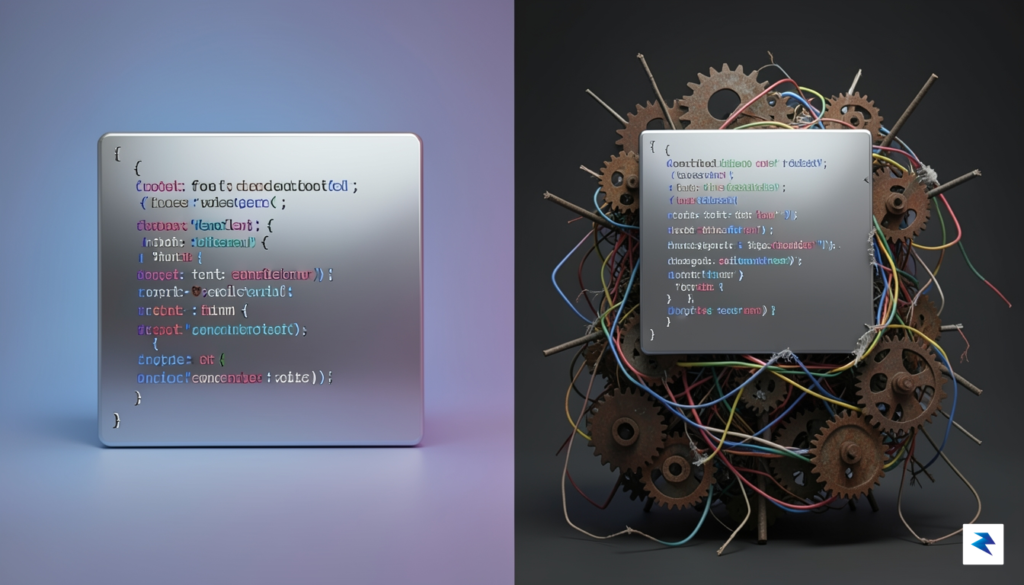
Furthermore, we must confront the inherent “black box” problem of AI-generated logic. When we accept code without fully auditing its underlying mechanisms, we lose the ability to debug the system effectively when things inevitably go wrong. If you cannot explain exactly why a piece of code works, you do not actually own that code; you are merely renting it from an opaque model that does not understand the business logic or the domain-specific challenges of your project. This lack of ownership creates a “technical debt tax” that compounds over time. When a critical bug emerges in an AI-generated module, the lack of human-centric architectural design makes the remediation process exponentially more difficult and time-consuming than if the code had been written with intent from the start.
True code quality is not defined by whether it runs today, but by how easily it can be understood, modified, and scaled by human beings tomorrow.
Ultimately, the “it works” fallacy is a trap that prioritizes the present at the expense of the future. We must shift our evaluation criteria from asking “Does it produce the right output?” to asking “Is this code resilient, maintainable, and aligned with our long-term architectural goals?” By slowing down and rigorously auditing AI output, we transform these generated snippets from dangerous shortcuts into useful, albeit secondary, tools. If we continue to accept functionality as a substitute for quality, we risk building systems that are functional on the surface but fundamentally hollow at their core.

When we accept AI-generated code simply because the output passes a unit test, we are often unknowingly signing a long-term contract with technical debt. The danger lies in the fact that machine-generated code lacks the “why” behind the “how.” While a human developer writes with an understanding of the product’s roadmap and the team’s architectural philosophies, an AI operates in a vacuum, focusing solely on the immediate syntax requested. This creates a codebase that functions perfectly on day one but becomes a labyrinth of opaque patterns six months later, when the original intent has long since faded from collective memory.
The primary issue is the cognitive load imposed on the human engineer who must eventually maintain this “black box” logic. When a bug emerges in a module generated by an LLM, the developer cannot rely on the mental model they would have formed had they written the code themselves. Instead, they must reverse-engineer the AI’s logic, a process that is significantly more mentally taxing than reading human-authored code. Because the AI doesn’t understand the nuances of our specific legacy system or the domain-specific constraints we operate under, it often defaults to generic, bloated, or “textbook” patterns that fail to account for the unique, messy reality of our production environment.

Technical debt isn’t just about bad code; it is about the erosion of the team’s shared mental model of the system.
Furthermore, AI code frequently ignores the subtle, unwritten rules that define a healthy codebase. A human developer might prioritize modularity or anticipate how a service will scale in two years, whereas an AI might prioritize the shortest path to a passing test result. Over time, these small, “correct” but poorly integrated snippets accumulate into a systemic burden. When an engineer is forced to patch or extend this code, they are essentially performing surgery on a system they don’t fully comprehend, often leading to a cycle of “franken-coding” where original, elegant structures are obscured by layers of patches and workarounds designed to appease the machine’s initial, suboptimal output.
Ultimately, the cost of this debt is paid in developer velocity and morale. When a team spends the majority of their sprint cycles untangling the logic of their own automated tools, the promise of AI-driven productivity evaporates. We must recognize that code is not just a collection of instructions for a computer; it is a form of communication between developers. By offloading the writing process to an entity that cannot participate in that communication, we fracture the very foundation that allows a system to grow and evolve sustainably over time.
At its core, professional software development is not merely a task of machine instruction; it is a profound exercise in human communication. While compilers and interpreters are indifferent to the stylistic nuances of our work, the developers who inherit our codebases six months or six years down the line are not. When we prioritize raw speed or the immediate gratification of a functional snippet, we often neglect the reality that code is written primarily for human eyes. AI models are exceptionally proficient at churning out syntactically correct logic, yet they frequently produce structurally opaque solutions that function today but become technical debt tomorrow. If a human colleague cannot intuitively grasp the intent behind a block of code, the software has effectively failed its most critical objective: long-term sustainability.
The danger of relying on “magic” code fragments—those clever, highly compressed, or obscure one-liners that AI loves to generate—lies in their inherent fragility. These patterns often leverage advanced language features or non-idiomatic tricks that might look impressive in a vacuum but prove nearly impossible to debug when a production environment throws an unexpected edge case. When logic is hidden behind cleverness, the cognitive load required to maintain that system skyrockets. A developer must be able to step into a piece of code, understand the architectural intent, and refactor it with confidence. If an AI generates a solution that is functionally correct but conceptually alien, it creates a “black box” that forces the human maintainer to either accept it blindly or spend hours deciphering what should have been a straightforward implementation.
True programming prowess is not defined by the ability to generate code, but by the ability to curate logic that is transparent, modular, and easy to evolve as project requirements shift.
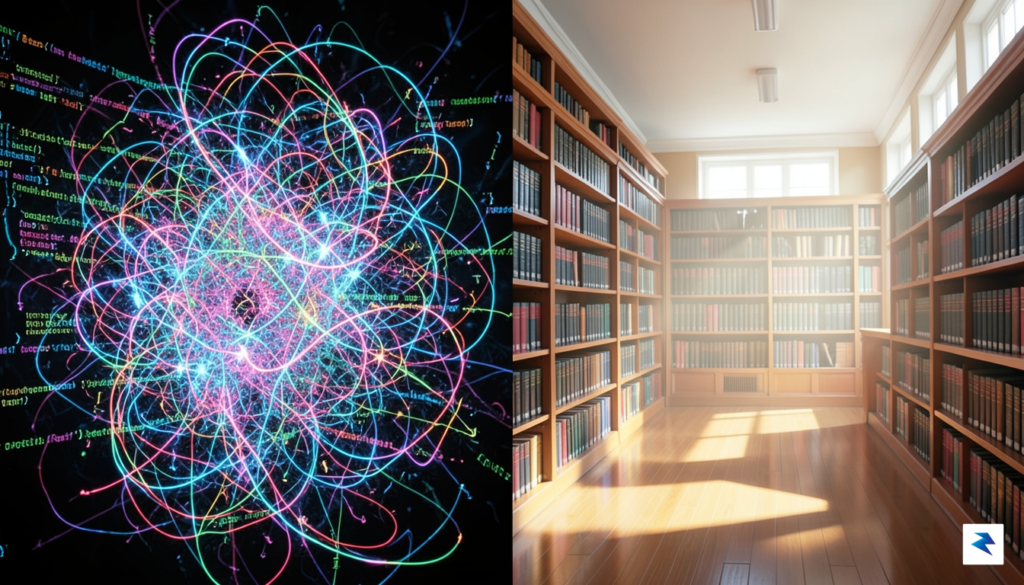
Ultimately, the human element of programming serves as the final arbiter of quality because machines lack the capacity for context-aware judgment. An AI does not understand the broader constraints of a company’s existing tech stack, the specific preferences of a team’s coding standards, or the future trajectory of a product’s features. It optimizes for the prompt, whereas a human developer optimizes for the ecosystem. When we defer to AI-generated structures without skepticism, we risk losing the “why” behind the “how.” The ability to explain, justify, and adapt one’s logic is far more valuable than the mere act of writing it. By insisting on readability, we ensure that our software remains a living, breathing asset rather than a brittle collection of automated guesses that no one dares to touch.

To move from a passive recipient of AI suggestions to an “editor-in-chief,” you must adopt a rigorous evaluation framework that treats every generated block as a draft rather than a final product. The goal isn’t to find bugs—which AI is often good at avoiding—but to verify that the implementation aligns with your system’s long-term health. Before committing any AI-generated snippet to your repository, subject it to a four-point diagnostic checklist:

When evaluating these points, you must establish a clear threshold for rejection. If a suggestion requires more than fifty percent refactoring to meet your standards—or if it introduces a pattern that deviates from your architectural paradigm—it is almost always safer and faster to discard the output and write the implementation from scratch. Refactoring AI code often leads to “Frankenstein” functions, where the logic of the original prompt clashes with the logic of your manual edits, creating hidden technical debt that is notoriously difficult to debug later.
Ultimately, the responsibility for every line of code rests solely with the human developer. If you cannot explain the “why” behind every decision the AI made, you do not yet own that code.
True ownership requires that you understand the trade-offs inherent in the implementation. If the AI suggests a library or a specific design pattern, interrogate the choice: why is this approach better than the alternative? If you find yourself unable to justify the inclusion of a snippet because you don’t fully grasp its mechanics, treat it as a black box. By systematically rejecting code that fails this test of “comprehensible ownership,” you ensure that your software remains a tool you control, rather than a collection of opaque, machine-generated artifacts that you are merely maintaining by accident.

The future of professional software development does not hinge on a binary choice between human intuition and machine-generated velocity. Instead, it relies on a nuanced strategy of “Skeptical Adoption”—a mindset that treats AI as a highly capable but fundamentally uncritical apprentice. By integrating AI tools into the workflow as a catalyst for efficiency rather than an arbiter of truth, developers can leverage speed without forfeiting the architectural integrity of their systems. This approach recognizes that while an algorithm can generate functional syntax in milliseconds, it lacks the contextual foresight required to anticipate long-term technical debt, security vulnerabilities, or the specific business logic nuances that define a robust, maintainable codebase.
Maintaining high engineering standards is not merely an act of pride; it is a vital career investment. When we prioritize the rigor of code reviews, documentation, and architectural design over the immediate gratification of a working snippet, we cultivate a deep, experiential knowledge base that AI cannot replicate. Over time, this discipline distinguishes the senior engineer from the casual coder. Those who rely blindly on automated outputs risk becoming “prompt operators” who lose the ability to debug complex systems when the abstractions fail. Conversely, those who treat AI as an assistant—auditing every line, questioning the efficiency of every function, and stress-testing the logic—strengthen their own analytical muscles, ensuring their skills remain relevant and highly sought after as the technology landscape shifts.
Ultimately, human judgment remains the most valuable asset in the entire software development lifecycle. Technology may automate the process of writing, but it cannot replace the responsibility of ownership. When you push code to production, your name is attached to its behavior, its failures, and its evolution. Embracing a philosophy where the human developer serves as the ultimate guardian of quality ensures that we do not merely build software that works today, but software that remains resilient, secure, and adaptable for years to come. By remaining skeptical, staying curious, and exerting final authority, we transform AI from a potential liability into a powerful engine for innovation.
“The measure of an engineer is not how quickly they can make something work, but how well they understand why it works and whether it should work that way in the first place.”
* Verify, don’t trust: Always treat AI-suggested code as a draft that requires a comprehensive security and logic audit.
* Architect for longevity: Prioritize patterns that AI might overlook, such as future-proofing, readability for human teammates, and system-wide consistency.
* Maintain ownership: Never deploy code that you cannot explain, debug, or refactor independently, regardless of its source.
You must be logged in to post a comment.