
Why Oregon Dropped Its Legal Challenge Against the Paramount-Warner Bros. Merger
The Paramount-Warner Bros. Merger: A Complex Regulatory Landscape The contemporary American media landscape is currently defined by a…
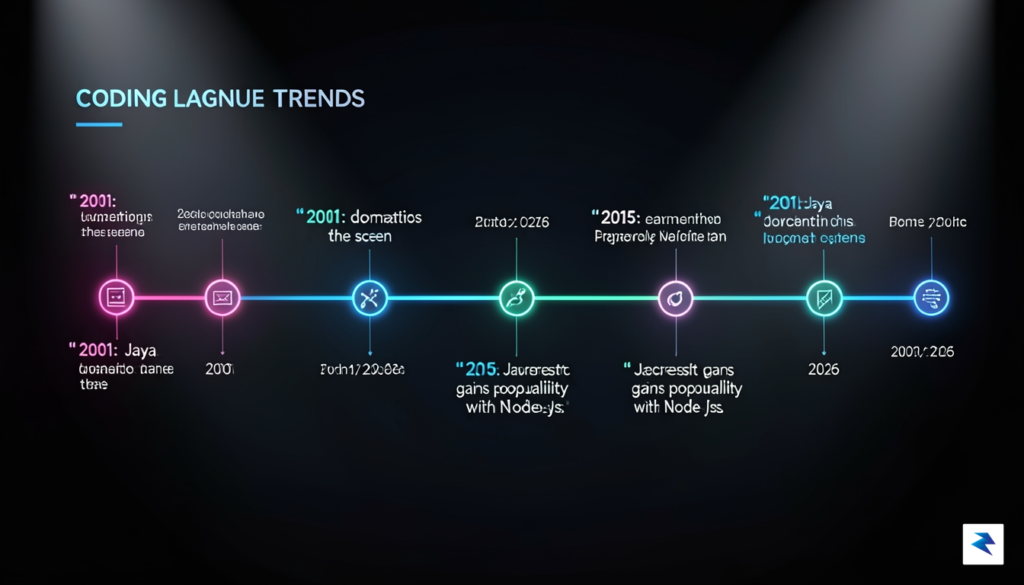
When the TIOBE Index first emerged in 2001, the software landscape looked fundamentally different than it does today. At that time, the industry was dominated by the rapid expansion of Java and the established power of C++, as developers primarily focused on building monolithic desktop applications and local server environments. For two and a half decades, this index has served as a reliable barometer for the programming world, tracking the ebb and flow of language adoption by analyzing data from popular search engines. By measuring the volume of queries regarding specific languages—ranging from tutorials and documentation searches to troubleshooting requests—the index provides a unique, crowd-sourced view of which tools developers are actually using to solve real-world problems.
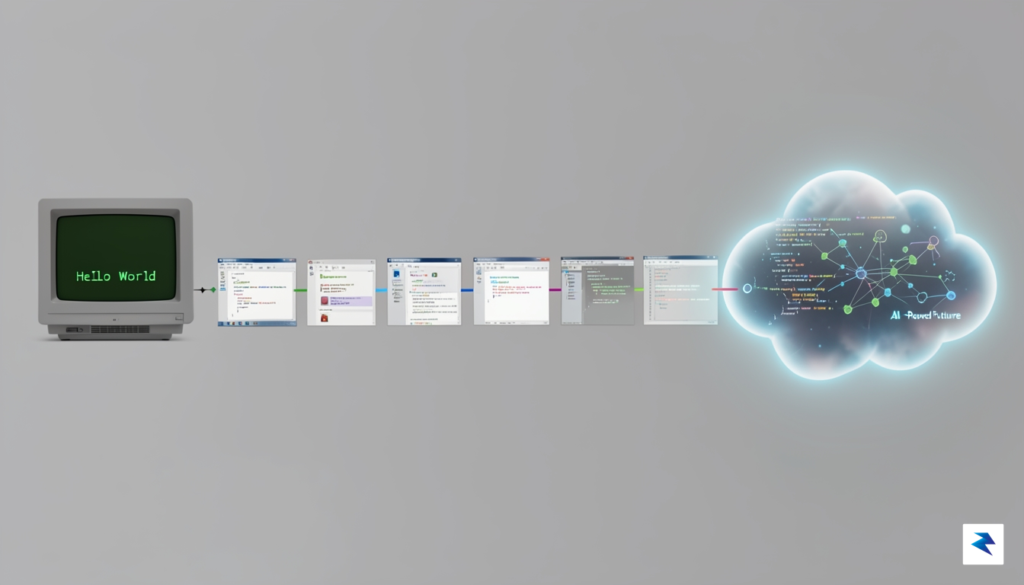
The progression of the TIOBE Index over these 25 years mirrors the seismic shifts in how we build technology. We have transitioned from an era defined by localized software deployments to the current age of cloud-native architecture, distributed systems, and massive-scale artificial intelligence. In the early 2000s, the index was often a battleground for enterprise-level languages that prioritized stability and broad compatibility. However, the modern developer ecosystem has become significantly more fragmented and specialized, reflecting a shift toward performance, memory safety, and rapid prototyping. Today’s top languages are no longer just those that are “easy to learn,” but those that provide the robust infrastructure required for complex, globalized software stacks.
The longevity of the TIOBE Index is a testament to the fact that while syntax and frameworks change, the fundamental human need to communicate through code remains the primary driver of digital innovation.
As we move further into 2026, the rise of languages like Rust into the top tier of popularity highlights a critical maturation in the industry’s priorities. Developers are increasingly moving away from languages that trade safety for speed, opting instead for tools that prevent entire classes of security vulnerabilities at compile time. This shift is particularly telling in an era where AI-driven development tools generate vast amounts of code automatically; having a language that inherently enforces memory safety has moved from a “nice-to-have” feature to an absolute necessity. This evolution—from the dominance of Java and C++ to the sophisticated, security-conscious landscape of 2026—demonstrates that the programming world is not just growing larger, but is also becoming significantly more resilient and precise in its engineering standards.
For years, Rust occupied a unique niche as a “developer favorite” that promised to reconcile the high-performance demands of systems programming with the rigorous safety standards of modern software engineering. Its entry into the top 10 of the TIOBE Index is not merely a statistical milestone; it signifies a fundamental shift in how the industry approaches infrastructure development. At the heart of this transition is Rust’s innovative approach to memory safety. By utilizing a unique ownership model and a strict borrow checker, the language eliminates common vulnerabilities—such as buffer overflows and dangling pointers—at compile time, effectively removing entire classes of bugs that have historically plagued C and C++ projects.

Beyond the technical elegance of its compiler, Rust’s rapid adoption has been fueled by an urgent, industry-wide mandate for secure code. As cyber threats become more sophisticated, government agencies and global security organizations have begun to advocate for a transition away from memory-unsafe languages. The push from organizations like the White House Office of the National Cyber Director has created a compelling incentive for enterprises to migrate legacy systems toward languages that prioritize security by design. Rust has emerged as the primary beneficiary of this policy shift, as it offers the same “close-to-the-metal” performance that engineers require, while simultaneously meeting the rigorous compliance standards that modern infrastructure demands.
Rust’s rise reflects a broader industry consensus: performance should no longer come at the cost of security. By baking memory safety into the development lifecycle, Rust has transformed from a niche academic interest into a critical component of the global software supply chain.
Furthermore, Rust has successfully proven that it can replace C and C++ in performance-critical environments without sacrificing the efficiency of the underlying hardware. From the integration of Rust into the Linux kernel to its widespread adoption in cloud-native infrastructure and high-frequency trading platforms, the language has demonstrated its capability to handle complex, large-scale systems. Developers are increasingly choosing Rust because it balances the low-level control of traditional systems languages with a modern, expressive syntax and a robust tooling ecosystem. As more corporations prioritize long-term maintainability and vulnerability reduction, Rust’s position in the top tier of programming languages appears not just earned, but increasingly indispensable for the future of digital infrastructure.

For over two decades, the software development landscape has witnessed countless languages rise and fall, yet Python remains the undisputed titan of the industry. Hovering consistently near a 19% market share, its dominance is not merely a product of longevity but a result of its seamless integration into the modern digital fabric. The primary engine behind this enduring popularity is the explosive growth of artificial intelligence and large language model (LLM) development. Because Python serves as the primary gateway for researchers and engineers building everything from generative models to predictive analytics, it has effectively cemented itself as the lingua franca of the AI revolution. As organizations scramble to integrate machine learning into their core business workflows, the path of least resistance almost always leads back to Python’s extensive library ecosystem.
Beyond the high-stakes world of AI, Python’s accessibility continues to act as a powerful force for its stability. Unlike languages that demand a steep learning curve involving manual memory management or complex build systems, Python prioritizes readability and simplicity, making it the default choice for educational institutions and coding bootcamps worldwide. This low barrier to entry ensures a constant influx of new developers who enter the workforce already fluent in Python syntax. Consequently, businesses do not have to struggle to find talent; the pipeline is perpetually replenished with a generation of programmers who view Python as their primary tool for web automation, data analysis, and general-purpose scripting.
The true strength of Python lies not in its raw execution speed, but in the sheer density of its ecosystem—a massive, interconnected web of frameworks that makes it virtually impossible to replace in global infrastructure.
Furthermore, Python’s hold on the industry is reinforced by its deep integration into the foundational layers of global infrastructure. From the backend of major cloud services to the complex scripts that manage automated testing and deployment pipelines, Python is the glue that holds disparate systems together. Because so much enterprise software relies on legacy Python scripts and highly specialized frameworks, the cost and technical debt associated with migrating to a different language are often prohibitive. This “network effect” ensures that as long as the language continues to evolve and remain performant, it will remain the central hub around which the rest of the software development world orbits, effectively insulating it from the typical volatility seen in the TIOBE rankings.

For decades, the software engineering world was anchored by a reliable, albeit rigid, hierarchy dominated by C, C++, and Java. These languages provided the foundational infrastructure for the modern digital age, offering granular control over hardware or the structural stability required for massive enterprise systems. However, as we pass the 25-year milestone of the TIOBE index, a palpable shift is occurring. Organizations are no longer measuring the success of a language solely by its raw execution speed or the sheer volume of existing documentation; instead, they are increasingly prioritizing developer velocity, memory safety, and the ability to iterate rapidly without incurring significant technical debt.
This transition represents a fundamental change in how we value “developer experience.” While older staples like Java forced developers to navigate verbose boilerplate and complex dependency management, modern challengers are designed with human-centric tooling as a first-class citizen. Languages like TypeScript have redefined the expectations for web development by bringing type safety to a previously chaotic ecosystem, while Go has simplified concurrent programming to a degree that makes the traditional threading models of the 1990s feel cumbersome by comparison. This movement away from “code-at-all-costs” toward “maintainable, safe code” is slowly eroding the market share of languages that were once considered untouchable pillars of the industry.
Perhaps the most significant disruption is coming from Rust, which has finally breached the top ten. For years, the systems programming domain was the exclusive territory of C and C++. Yet, Rust has managed to encroach upon this space by solving the “memory safety” problem at the compiler level, effectively eliminating entire classes of bugs that have plagued legacy C codebases for decades. By providing the performance of C alongside the modern safety guarantees that contemporary security standards demand, Rust has become the preferred choice for new infrastructure projects. This isn’t just a trend; it is a pragmatic recalibration of the industry’s risk profile.
The decline of legacy languages is rarely a sudden collapse; rather, it is a gradual migration where new, mission-critical projects start elsewhere, leaving older code to exist in a state of perpetual, high-cost maintenance.
Ultimately, the industry is reaching a tipping point where the hidden costs of legacy paradigms—such as manual memory management or outdated concurrency models—are beginning to outweigh the benefits of their long-standing ubiquity. While C and Java will certainly remain relevant for the foreseeable future due to the sheer scale of the systems currently running on them, they are no longer the default choice for the next generation of software. The surge of modern, expressive languages signals that the era of prioritizing raw machine performance over developer well-being and system security is effectively coming to an end.
For the modern developer, the TIOBE Index serves as far more than mere industry trivia; it acts as a strategic compass for navigating a landscape defined by rapid technological turnover. Rather than chasing every fleeting trend, you should view these rankings as a roadmap for balancing your professional portfolio. The core of a resilient career lies in maintaining a bimodal skill set: cultivating deep expertise in “stable” workhorses like Python, Java, or C#, while simultaneously dedicating time to “emerging” high-performance languages like Rust or Go. By anchoring your career in the reliability of mature ecosystems, you ensure consistent employability, while your investment in newer, performance-oriented languages positions you to capitalize on the next wave of infrastructure innovation.

Distinguishing between long-term industry shifts and ephemeral hype is perhaps the most difficult challenge for any software engineer. A language’s sustained climb—like Rust’s steady trajectory into the top ten—usually signals a fundamental change in how the industry approaches memory safety, concurrency, and systems-level efficiency. In contrast, short-term spikes often occur when a framework or language solves a niche problem that may eventually be absorbed by larger, more established ecosystems. To vet a language, look beyond its current ranking; investigate its community growth, corporate backing, and whether it solves a structural pain point that is unlikely to vanish within the next decade.
The most valuable developers are not those who know every syntax, but those who understand the underlying architectural patterns that remain consistent regardless of the language being used.
Ultimately, the most effective way to future-proof your career is to embrace polyglot programming. Instead of viewing yourself as a “Java developer” or a “Python developer,” begin to cultivate an identity as an engineer who selects the right tool for the specific constraints of the project at hand. When you understand the paradigms of functional programming in Rust, the dynamic flexibility of Python, and the object-oriented robustness of Java, you become immune to the stagnation that often follows the decline of a single language. This versatility allows you to adapt to team shifts, project pivots, and architectural requirements that would leave a single-language specialist behind. By treating your learning path as a deliberate mix of industry standard-bearers and innovative challengers, you turn the TIOBE Index into a powerful tool for long-term career growth.
You must be logged in to post a comment.