
Is the Solar E-Bike a Breakthrough or Just Expensive E-Waste?
The Promise of Solar-Integrated E-Bikes The vision of a bicycle that charges itself while you ride, or even while it sits parked in the sun,…


Cargo theft has evolved from a series of isolated incidents into a sprawling, multi-billion-dollar global epidemic that threatens the very foundation of international commerce. Each year, organized criminal syndicates intercept shipments of high-value electronics, pharmaceuticals, and luxury goods, causing losses that ripple far beyond the immediate financial impact. When a trailer vanishes, the damage extends to delayed manufacturing lines, empty retail shelves, and the erosion of consumer trust in the reliability of the supply chain. Despite increased investment in security protocols, the sheer scale of the problem continues to grow, forcing logistics leaders to confront a reality where traditional defenses are increasingly ineffective against professionalized theft rings.
The primary reason for this failure lies in the limitations of legacy security hardware. For decades, the industry has relied on bulky, conspicuous GPS tracking units that are easily spotted by experienced thieves. These devices often require frequent battery maintenance and emit signals that can be detected by readily available electronic jamming equipment, effectively turning a security asset into a liability. Once a thief identifies a standard tracking unit, they can simply strip it from the cargo or encase it in a signal-blocking “Faraday cage,” rendering the entire monitoring system useless within minutes of an interception. Consequently, companies are finding that their current investments in visibility are often bypassed before the goods have even left the terminal.

The transition toward covert, low-cost tracking represents a pivotal shift in logistics, moving away from reactive recovery toward proactive, intelligence-based security.
To combat this, the logistics sector is desperately searching for alternatives that prioritize discretion over raw power. The ideal solution must be thin, inexpensive, and nearly impossible for criminals to identify during a high-speed heist. By moving toward technologies that blend seamlessly into standard packaging—such as smart labels or ultra-thin sensors—companies can finally gain the upper hand. These covert tracking methods allow for real-time visibility without alerting perpetrators, providing security teams with the stealth required to monitor high-risk shipments discreetly. As logistics providers move away from the “big box” GPS model, they are finally beginning to deploy the kind of low-profile, resilient technology necessary to outmaneuver increasingly sophisticated criminal networks.

Samsara has unveiled a significant advancement in cargo security: a new, highly discreet tracking label designed to revolutionize the way businesses monitor high-value shipments. Moving beyond the bulk and complexity of traditional hardware, this innovative solution takes the form of a thin, adhesive label, remarkably similar in appearance to a standard shipping sticker. Its low-profile design allows it to be affixed directly to individual packages, pallets, or containers, making it virtually undetectable to opportunistic thieves. Crucially, its disposable nature simplifies logistics, eliminating the need for retrieval and recharging, which has historically been a major operational hurdle for granular item-level tracking. This simplicity ensures that enhanced visibility can be deployed without adding significant friction to existing workflows.
At the heart of this new tracking label lies Bluetooth Low Energy (BLE) technology, a power-efficient wireless standard perfectly suited for applications requiring long battery life and short-range communication. Unlike classic Bluetooth, BLE is optimized to consume minimal power while periodically broadcasting its presence. Each label acts as a beacon, emitting a unique identifier signal that can be detected by Samsara’s robust network
For years, Global Positioning System (GPS) technology has served as the backbone of logistics security, providing reliable coordinates for fleets navigating vast distances. However, GPS is inherently power-hungry, requiring significant battery capacity to maintain a constant connection to satellite networks, which often results in bulky, conspicuous devices that are easily spotted by sophisticated thieves. In contrast, Bluetooth Low Energy (BLE) technology fundamentally shifts the paradigm by trading the wide-area range of satellites for a highly efficient, short-range broadcast protocol. Because BLE consumes a mere fraction of the power required by cellular or GPS transceivers, manufacturers can shrink these trackers into slim, adhesive labels that are virtually indistinguishable from standard shipping barcodes or packing slips.
The operational magic of BLE lies in its reliance on a crowdsourced infrastructure rather than a direct satellite link. Instead of struggling to maintain a high-energy connection to the sky, these labels continuously broadcast a low-energy signal that is picked up by “gateways”—the smartphones, tablets, or dedicated telematics hubs already present in warehouses, distribution centers, and freight cabs. By leveraging this existing ecosystem of connected devices, BLE trackers can maintain near-constant visibility of cargo without needing their own cellular data plans or massive power supplies. This approach effectively turns the entire supply chain into a mesh network, providing granular, room-level location data that traditional GPS simply cannot match when a shipment is buried deep inside a metal trailer or a crowded storage facility.
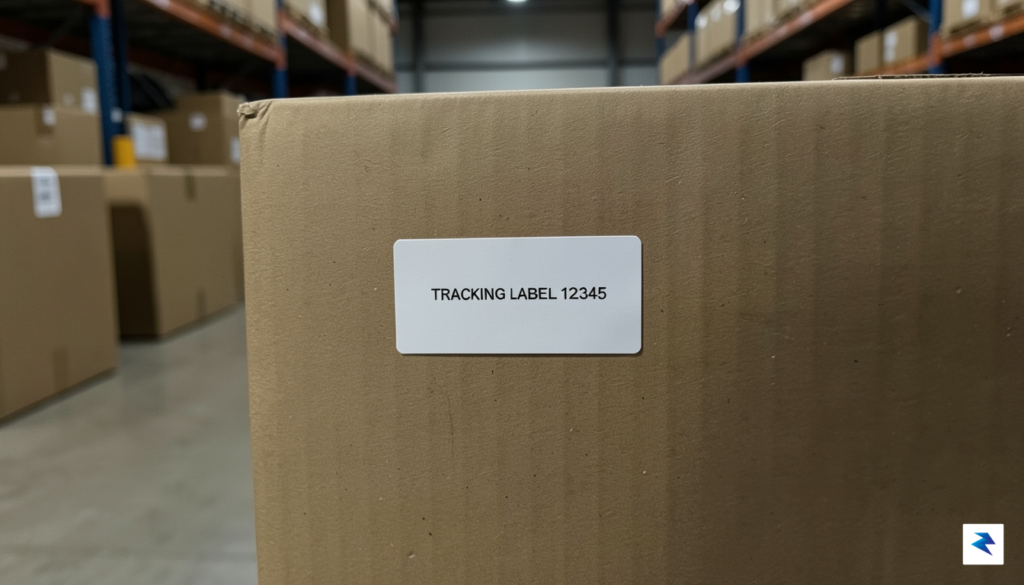
By prioritizing stealth and energy efficiency over the raw power of satellite triangulation, BLE labels transform cargo tracking from a detectable perimeter defense into an invisible, ubiquitous safety net.
Beyond the technical specifications, the most significant shift for logistics managers is the move toward a “disposable” electronics model. Traditional asset trackers often necessitate complex reverse-logistics programs, where expensive, rechargeable units must be recovered, serviced, and redeployed after every journey to justify their initial cost. BLE labels remove this logistical burden entirely; their low cost and extreme power efficiency allow them to be treated as single-use consumables. Because the batteries last for the duration of a shipment without requiring replacement, companies can simply apply a label at the point of origin and let it accompany the cargo to its final destination without further maintenance. This transition not only reduces the administrative overhead of tracking programs but also ensures that every single pallet can be secured—not just the high-value assets that previously justified the cost of a premium GPS unit.

The integration of smart tracking labels into existing logistics workflows represents a fundamental shift from reactive inventory management to a proactive, data-driven ecosystem. For years, supply chain operations have been hampered by the “black hole” effect—the period between a pallet leaving a warehouse and arriving at its final destination where visibility is effectively lost. By digitizing the “last mile” and warehouse environments through these intelligent labels, companies can finally bridge the gap between static inventory data and real-time movement. This granular level of oversight does far more than mitigate theft; it transforms how businesses reconcile stock levels, reducing the common discrepancies that lead to shrinkage and administrative overhead.
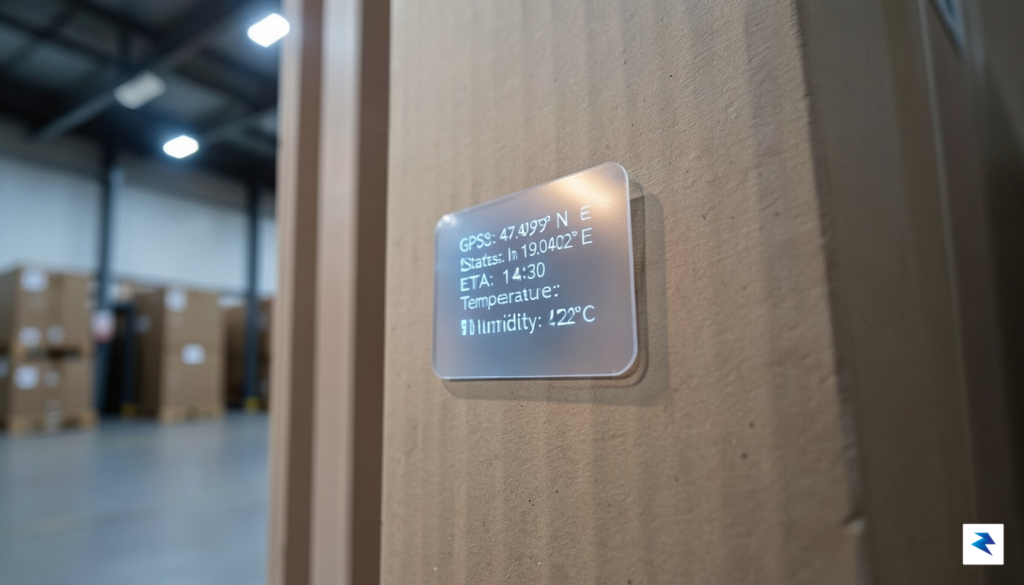
Historically, inventory accuracy has relied on periodic manual scanning, a process prone to human error and significant time delays. Transitioning to automated, real-time location tracking removes the burden of manual check-ins, allowing warehouse managers to maintain a continuous, accurate pulse on their assets. When every item is digitally accounted for throughout the entire journey, the reliance on fragmented spreadsheets and delayed status updates evaporates. Instead, operations teams gain a live, interactive map of their supply chain. This shift not only accelerates throughput by eliminating bottlenecks at loading docks and sorting facilities but also ensures that the physical inventory on the floor matches the digital records within the enterprise resource planning (ERP) system with unprecedented precision.
The true power of next-generation tracking lies not in the alert triggered during a theft, but in the preventative intelligence gathered during the thousands of miles of safe transit that precede it.
Beyond simple monitoring, the data generated by these smart labels acts as a foundation for advanced predictive analytics. By aggregating location and movement patterns over time, companies can identify recurring bottlenecks, such as high-risk transit routes or inefficient storage patterns, before they manifest as operational failures or security vulnerabilities. These insights allow logistics planners to reroute shipments dynamically or adjust security protocols based on empirical evidence rather than intuition. As this data matures, businesses can create a “digital twin” of their supply chain, allowing for simulations that test how changes in logistics providers or warehouse layouts might impact both the speed of delivery and the vulnerability of the cargo. Ultimately, this level of transparency turns the supply chain from a cost-heavy necessity into a strategic asset, providing a competitive edge that is built on the foundation of absolute operational awareness.

The evolution of cargo security has long been defined by a persistent cat-and-mouse game, where every technological leap in protection is met by a sophisticated countermeasure from organized crime syndicates. Traditionally, logistics providers relied on overt security measures—such as high-visibility seals, heavy-duty padlocks, and conspicuous alarm systems—to deter theft. While these tools serve as a visual warning, they also provide thieves with a clear roadmap of what needs to be bypassed or disabled. The introduction of covert, invisible tracking technology shifts this dynamic entirely by injecting uncertainty into the criminal planning process. When a thief can no longer distinguish between a secured shipment and a decoy, or when they are unaware that their movements are being monitored in real-time, the risk-to-reward ratio of an operation becomes dangerously unpredictable.

This transition toward “invisible” security represents a fundamental change in how logistics companies protect their assets. By moving away from bulky, easily identifiable hardware, firms can now embed intelligence directly into the packaging itself, rendering the theft prevention mechanisms virtually undetectable to the untrained eye. This covert nature forces criminal organizations to operate under the assumption that they are constantly being tracked, which significantly complicates their tactical execution. Instead of simply cutting a lock, a would-be thief must now contend with the possibility that their location, speed, and even the ambient conditions of the cargo are being streamed to law enforcement or private security teams. Consequently, the psychological deterrence provided by this technology is just as potent as the physical recovery capability it offers.
The most effective security strategy is one that eliminates the criminal’s ability to plan. When visibility is hidden, the advantage shifts from the perpetrator back to the supply chain manager.
However, no single piece of hardware should be viewed as a silver bullet. The most robust logistics operations utilize a multi-layered security protocol where invisible tracking acts as the final, critical fail-safe rather than the only line of defense. This approach integrates human intelligence, vetted personnel practices, route optimization, and physical hardening alongside these new tracking advancements. By combining these layers, logistics providers create a dense web of protection that is exponentially harder to subvert. As we look toward the next decade, hardware innovation will likely continue to shrink in size while growing in capability, utilizing low-power, wide-area networks to maintain connectivity even in the most remote or shielded environments. Ultimately, the future of global trade will depend on this ongoing race, where the integration of intelligent, covert sensors becomes the standard for safeguarding the integrity of the world’s supply chains.
You must be logged in to post a comment.