
Toyota Facing Federal Lawsuit Over Alleged Theft of Electric Vehicle Tech
The Genesis of the Dispute: A Vision for African Agriculture The genesis of this legal confrontation is rooted in a fundamental challenge that…
For nearly a decade, Siri occupied a peculiar place in our digital lives: a groundbreaking concept that often fell short of its grand promise. Initially introduced with much fanfare, it quickly became known as much for its charming but ultimately frustrating misunderstandings as for its occasional utility. Users frequently found themselves caught in a dance of rigid syntax and literal interpretations, where a slight deviation from pre-programmed commands would lead to the dreaded “I don’t understand” or a comical misinterpretation. This legacy Siri, in essence, was a sophisticated command-and-control system disguised as a conversational agent, struggling profoundly with context, nuance, and the fluid nature of human speech.

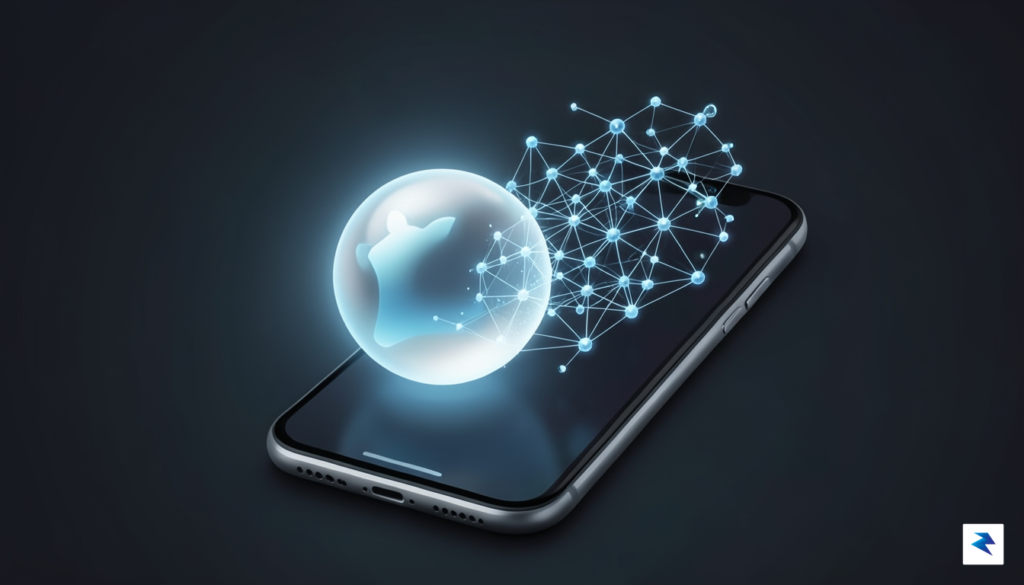
The advent of Apple Intelligence marks a profound and fundamental transformation, moving Siri beyond its rudimentary past into the realm of a truly intelligent, generative AI. This isn’t merely an update; it represents a complete architectural overhaul, integrating sophisticated Large Language Models (LLMs) directly into the core of the assistant’s capabilities. Rather than simply parsing keywords and executing predefined scripts, the new Siri is now powered by a deep understanding of natural language, allowing it to process and generate responses that are far more coherent, relevant, and contextually aware. This shift fundamentally alters the interaction paradigm, transitioning from a brittle command-line interface to a genuinely conversational experience.
Apple’s renewed focus prioritizes natural language processing (NLP) above all else, effectively liberating users from the constraints of rigid syntax triggers. No longer will you need to memorize specific phrases or rephrase your questions multiple times to be understood. The updated Siri is engineered to grasp intent even when faced with ambiguity, follow multi-turn conversations seamlessly, and infer context from previous interactions or even from what’s currently on your screen. This means you can ask follow-up questions without repeating the original query, or make requests like “remind me about *this* later” while viewing an email or webpage, and Siri will intelligently connect the dots, making interactions feel significantly more intuitive and less like interrogating a database.
This evolution culminates in Siri transcending its former role as a utilitarian tool to emerge as a sophisticated, context-aware partner. It’s designed to understand the complexities of daily life, offering proactive assistance, streamlining tasks, and personalizing interactions based on a deeper comprehension of individual preferences and digital habits. The integration of on-device processing ensures that this enhanced intelligence operates with privacy at its core, allowing Siri to access personal context without compromising user data. Ultimately, the goal is to foster a relationship with your devices that feels less like issuing commands to a machine and more like engaging in a natural, productive dialogue with a truly smart, helpful assistant.
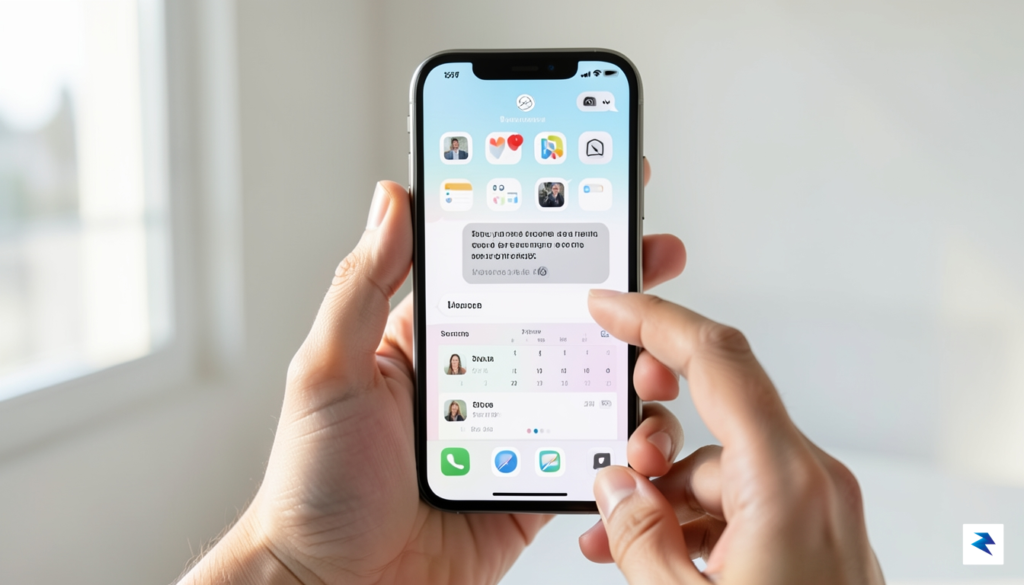
The evolution of Siri, powered by Apple Intelligence, fundamentally redefines how we interact with our devices, transforming a simple voice assistant into an omnipresent, proactive partner. No longer confined to basic commands or single-step actions, the new Siri is engineered to seamlessly integrate into virtually every aspect of your digital life. This significant leap forward enables users to tackle intricate, multi-layered requests that were previously fragmented and often impossible without manual intervention. It’s a profound shift from merely executing commands to truly understanding intent and anticipating subsequent needs, mirroring a more natural human conversation.
At the core of this transformation lies Siri’s dramatically improved ability to maintain context throughout an extended conversation. Imagine discussing a complex project with a colleague; you wouldn’t need to re-state the topic with every new sentence. Similarly, the updated Siri remembers the thread of your interaction, allowing you to build upon previous requests with follow-up questions or adjustments without starting from scratch. This contextual awareness is crucial for handling multi-step tasks, enabling the assistant to intelligently connect disparate pieces of information and actions across your device, moving beyond superficial interactions to genuine problem-solving.
This enhanced intelligence manifests in highly practical ways, directly impacting daily workflows. For instance, summarizing a lengthy email thread that has accumulated over days or weeks is now effortlessly handled by Siri. Instead of wading through dozens of replies, the assistant can distill the core points and key decisions, presenting you with a concise overview in moments. Furthermore, navigating deep within specific app menus, a task often involving multiple taps and scrolls, becomes a conversational request. Whether it’s finding a specific setting buried layers deep or initiating a particular function within an app, Siri acts as your intuitive guide, streamlining complex digital navigation.
Perhaps one of the most compelling advancements is Siri’s newfound prowess in cross-app functionality, acting much like a human concierge. Consider a scenario where you receive an email detailing a meeting, complete with date, time, and location. Previously, extracting that information and manually creating a calendar event involved switching apps and copying details. Now, you can simply ask Siri to “Add this meeting to my calendar,” and it will intelligently pull the relevant data from the email, confirm the details, and create the event without you ever leaving your current context or lifting a finger to type. This seamless integration across applications signifies a monumental shift in how information flows and tasks are accomplished on your device.
Ultimately, the practical impact of this conversational AI on user workflows is profound, fostering an environment where technology truly serves as an extension of your intent rather than a tool requiring constant instruction. Daily interactions become more fluid, less fragmented, and remarkably efficient. By handling the minutiae of information retrieval and task execution, Siri frees up cognitive load, allowing users to focus on higher-level thinking and creative endeavors. It’s about making technology disappear into the background, enabling a more natural, intuitive, and ultimately more productive experience with your Apple devices.
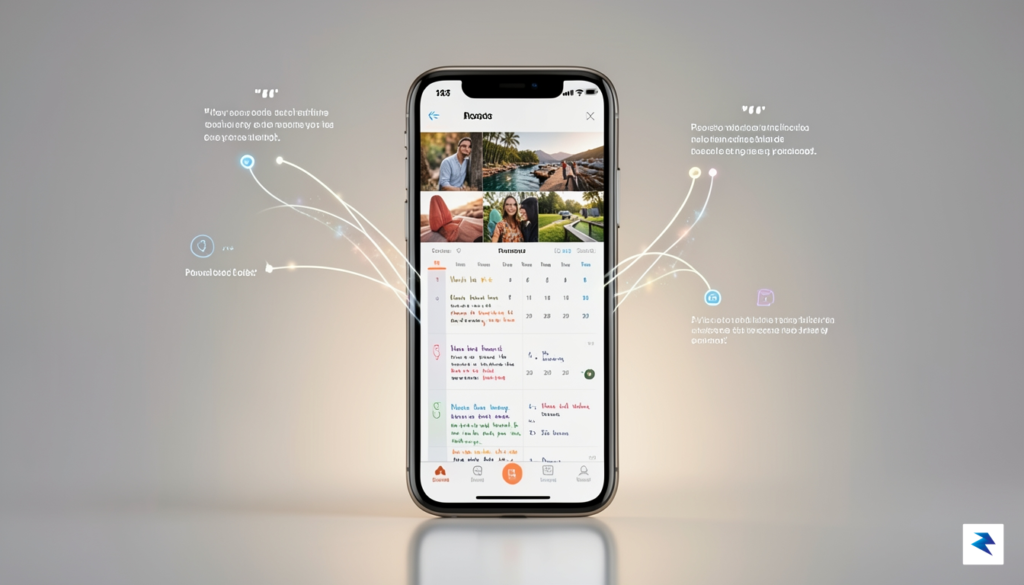
The true power of the evolved Siri lies in its sophisticated personal context index, a foundational shift that moves the assistant from being a simple command-line interface to a genuine digital companion. Unlike generic large language models that draw from a vast, static ocean of public internet data, Siri now acts as a tethered bridge to your own digital life. By indexing your personal ecosystem—ranging from your scattered notes and calendar entries to your deep archives of emails and iMessages—the AI gains the ability to connect disparate dots that you might not have even realized were related. When you ask about a flight, it doesn’t just search the web for an airline; it cross-references your confirmation email, checks your calendar for the associated trip, and even cross-references your photo library to see if you’ve recently saved a screenshot of your boarding pass.
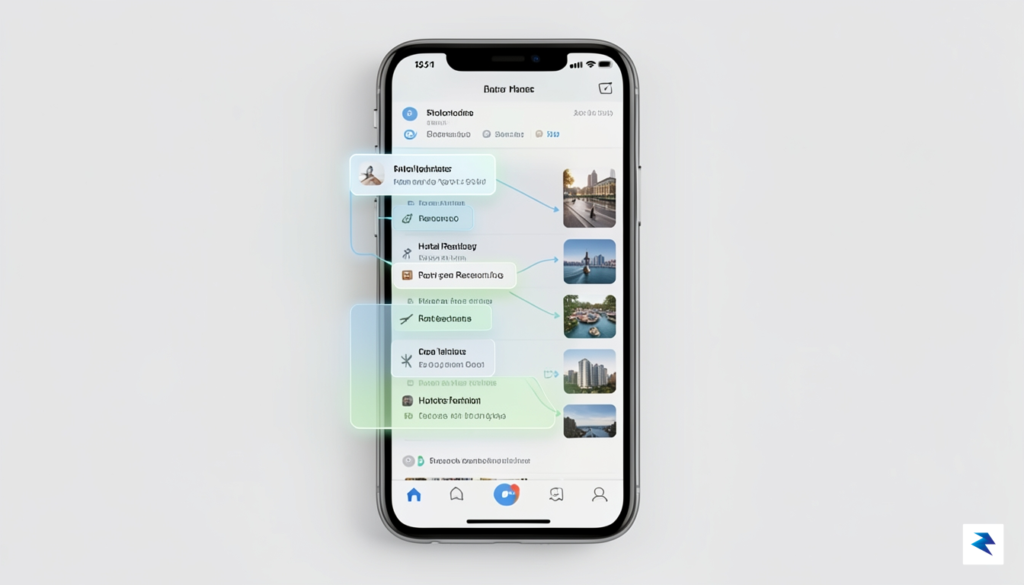
This deep integration is made possible through a privacy-first architecture that prioritizes local processing. Rather than sending your intimate correspondence or private documents to a massive cloud server for interpretation, Siri utilizes on-device machine learning to “read” your data where it lives. This means the assistant can synthesize information from a handwritten note you scribbled in the Notes app and combine it with a reminder you set days ago, all while ensuring your sensitive information never leaves the secure enclosure of your device. This local-first approach transforms the assistant from a generic respondent into a bespoke concierge that knows exactly who you are, what you are working on, and how you prefer to get things done.
The true magic of the new Siri isn’t just in what it knows, but in its ability to synthesize your fragmented digital history into a single, coherent narrative that saves you from the tedious task of searching through multiple apps.
Balancing this level of utility with the fundamental human need for privacy is perhaps Apple’s most significant achievement in this iteration. Users often feel a sense of hesitation when granting an AI access to their personal history, yet the value proposition here is undeniable: the more context the system has, the less friction you experience in your daily workflow. By maintaining a strict boundary between public knowledge and your private data, Siri manages to provide proactive, highly relevant answers that feel intuitive rather than invasive. As the assistant continues to learn your habits—such as identifying which contacts you message most frequently or how you organize your projects—it becomes an extension of your own cognitive process, anticipating your needs before you even finish forming the query.

In an era where generative AI is often synonymous with massive data harvesting, Apple has staked its reputation on a fundamentally different philosophy: privacy by design. While competitors frequently rely on sending vast amounts of user data to centralized data centers for processing, Apple’s reimagined Siri prioritizes on-device intelligence whenever possible. By keeping your most sensitive personal information, such as calendar events, messages, and photos, within the secure confines of your hardware, the system eliminates the primary security risks associated with cloud-based AI. This approach ensures that your digital assistant functions not as a gateway for data mining, but as a local, private tool tailored specifically to your habits and needs.
When tasks exceed the capabilities of the local processor, Apple introduces a sophisticated architectural evolution known as Private Cloud Compute. This system allows Siri to tap into the immense power of Apple’s silicon-based servers only when necessary, while maintaining a level of encryption and verification that is virtually unprecedented in the industry. The brilliance of this design lies in its transparency; the servers are specifically built to process requests without storing them, meaning your data is never used to train global AI models or create a permanent profile of your digital activity. Because the code running on these servers can be independently audited by security researchers, users can verify that Apple is adhering to its promise of data non-persistence.
The core differentiator in Apple’s AI strategy is the separation of intelligence from data retention: your personal information stays yours, even when the cloud provides the computational muscle.
For enterprise users and those deeply concerned with digital sovereignty, this hybrid approach is a game-changer. Historically, the trade-off for high-level AI performance has been the surrender of data privacy, forcing businesses to choose between productivity and security. Apple effectively removes this tension by creating a verifiable boundary where data is processed locally unless the complexity of the request demands cloud computing, at which point the session is strictly transient. By refusing to compromise on these privacy principles, Siri positions itself as a uniquely trustworthy assistant for a generation that is increasingly skeptical of how their personal information is leveraged by Big Tech.
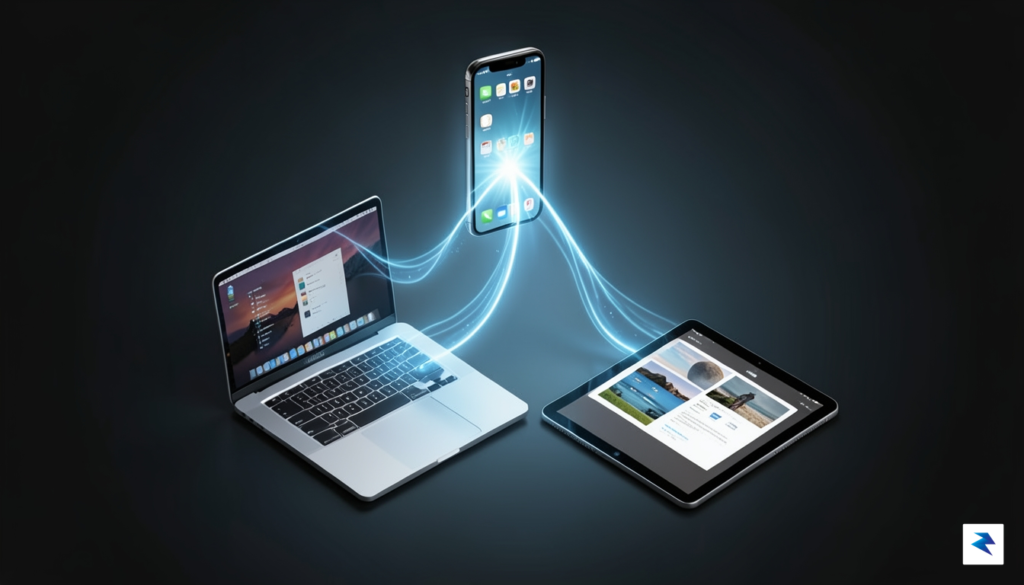
For years, Siri functioned primarily as a siloed command-line interface, restricted to simple tasks like setting timers or launching applications. Today, that narrative has shifted entirely; Siri is no longer a peripheral feature, but the connective tissue of the entire Apple ecosystem. By embedding the assistant directly into the core of the operating system, Apple has transformed it into a pervasive utility that bridges the gap between hardware and software. Whether you are working on a Mac, browsing on an iPad, or messaging on an iPhone, Siri now acts as a unified layer of intelligence that understands the context of your digital environment, regardless of the device in your hand.
The most significant leap forward is the introduction of on-screen awareness, a feature that fundamentally alters how we interact with our devices. Previously, Siri was essentially “blind,” requiring users to dictate specific instructions without the assistant knowing what content was currently displayed. Now, Siri can “see” the contents of your active windows, recognizing text, images, and UI elements in real-time. This capability allows for immediate action—such as dragging an address from an email directly into a calendar invitation or summarizing a complex article simply by asking, “What are the main points here?” This shift moves the assistant from a passive listener to an active participant, drastically reducing the friction between intent and execution.
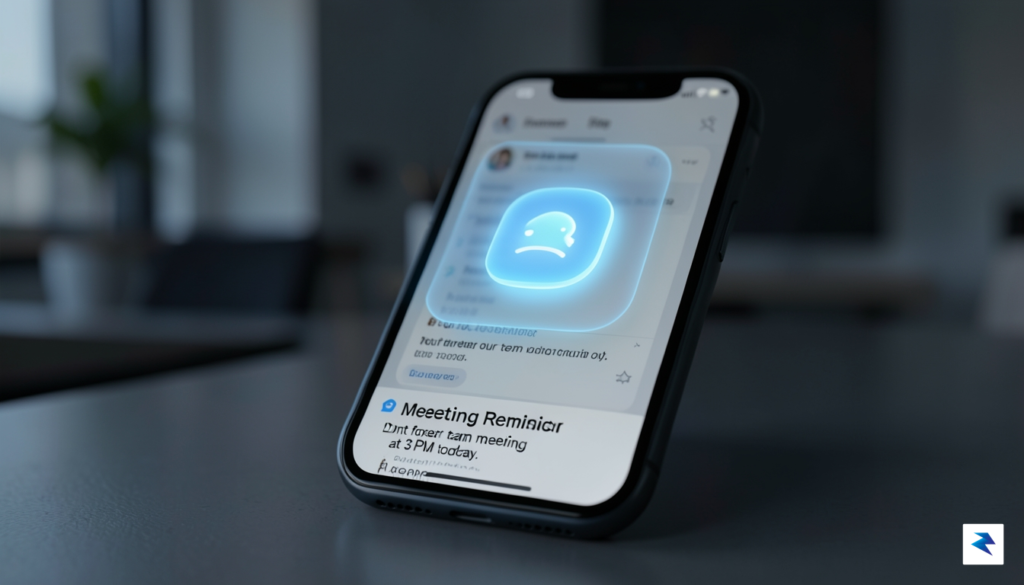
This deep integration significantly boosts both accessibility and productivity by automating multi-step workflows that once required manual navigation. By leveraging cross-device continuity, the new Siri can coordinate tasks across your hardware; you can initiate a request on your Mac and have the results seamlessly prepared on your iPhone. This creates a cohesive experience where the “assistant” is no longer tied to a specific piece of hardware but is instead tied to you, the user. Consider the efficiency gains when an assistant can reference a document open on your laptop to draft a response on your phone, effectively acting as an invisible bridge between your disparate digital workspaces.
The true power of the reimagined Siri lies in its ability to understand not just what you say, but what you are looking at, turning every app into an interactive extension of your own productivity.
Furthermore, this architectural change signals a move toward a more proactive, anticipatory computing model. By understanding the context of your workflow, Siri can suggest relevant actions before you even have to ask, effectively managing the “busy work” that plagues modern digital life. As this intelligence continues to permeate every corner of the Apple ecosystem, the distinction between using an app and interacting with the system itself will continue to blur, placing the user at the center of an environment that is finally intelligent enough to keep up with their demands.

The evolution of digital assistants is currently undergoing a fundamental shift, moving away from simple voice-command execution toward a landscape defined by agentic intelligence. For years, we have interacted with assistants that functioned primarily as reactive tools—waiting for a specific prompt to set a timer or check the weather. However, the trajectory of modern AI suggests that the next generation of Siri will transition into a proactive partner capable of navigating complex, multi-step workflows on the user’s behalf. By leveraging deep integration with system-level data and context-aware modeling, Apple is positioning Siri to act not just as a voice interface, but as an autonomous agent that can understand the intent behind a request, rather than just the literal words spoken.
This transition toward agentic features—where Siri can autonomously bridge the gap between different applications to complete tasks—represents a significant leap in utility. Imagine a scenario where you ask to organize a travel itinerary; instead of merely searching for flight times, an agentic Siri could potentially cross-reference your calendar, draft a confirmation email, and suggest restaurant reservations based on your past preferences, all without requiring you to switch between apps. This is the hallmark of the “invisible” layer of intelligence that Apple seems to be building toward. By maintaining a measured, privacy-first architecture, Apple is attempting to solve the biggest hurdle in AI adoption: trust. Users are far more likely to grant an assistant the autonomy to manage their personal data if they are confident that the processing remains localized and secure, rather than being offloaded to a vulnerable cloud server.
The true measure of a personal assistant is not how well it understands a command, but how much mental load it removes from the user’s daily life.
Ultimately, the question remains whether this iteration of Siri finally fulfills the ambitious promise of a truly helpful digital companion that was envisioned over a decade ago. While we are not yet at the point where Siri can fully anticipate every need before it is voiced, the foundation is clearly being laid. As these conversational models become more adept at interpreting the nuances of human language and the specific context of our digital environments, the friction of interacting with technology will continue to dissolve. We are moving toward a future where our devices stop being mere tools and start becoming genuine extensions of our own personal workflow, providing a level of assistance that feels less like a programmed response and more like a deeply intuitive service.
You must be logged in to post a comment.