OpenAI’s New Hardware Tease: Is This the Future of AI-Powered Coding?
The Evolution of AI Beyond the Screen For years, the development of artificial intelligence has been confined to the digital realm, trapped…
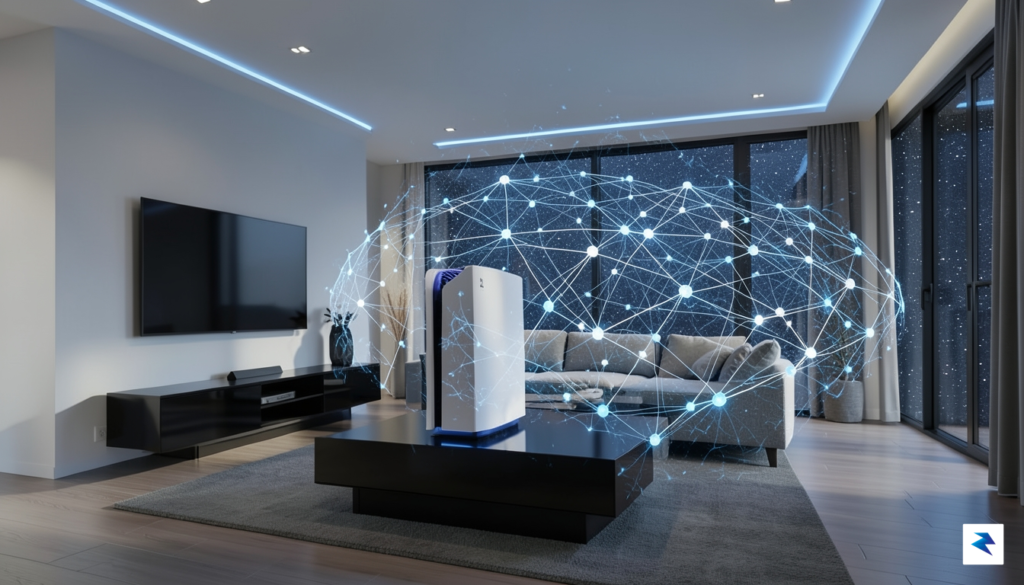
For nearly three decades, the PlayStation brand has been defined by a singular, powerful image: a sleek piece of hardware tucked into an entertainment center, anchoring the social and gaming life of the living room. From the gray monolithic chassis of the original console to the imposing architectural presence of the PlayStation 5, Sony has mastered the art of creating a “walled garden” where high-fidelity experiences are tied strictly to fixed, proprietary hardware. This console-centric model fostered a legacy of couch co-op, cinematic single-player journeys, and a sense of shared physical space that defined generations of gaming culture. However, as the digital landscape shifts beneath our feet, the traditional tether between a player and their television is beginning to feel more like a boundary than a foundation.
Recent insights from Sony’s executive leadership during investor Q&A sessions have signaled a departure from this historical comfort zone. Recognizing that the modern gamer is increasingly mobile and platform-agnostic, Sony is no longer satisfied with being merely the centerpiece of the living room. Instead, they are actively looking to extend the brand’s reach into the “ubiquitous” gaming space. This pivot is not an abandonment of the high-end console experience, but rather an evolution that acknowledges the necessity of meeting players where they are—whether that is on a handheld device, a PC, or through cloud-based streaming services that operate independently of dedicated silicon.
“Our goal is to create an ecosystem that is not defined by the limitations of a single device, but by the strength of the software and services that connect our players globally.”
The market necessity for this shift is undeniable. As hardware costs rise and the barrier to entry for high-end gaming increases, Sony must find ways to sustain its massive user base without relying solely on the lifecycle of a single box. By expanding beyond the living room, Sony is effectively future-proofing its intellectual property, ensuring that the next generation of players can engage with titles like God of War or The Last of Us regardless of whether they have a PS6 sitting under their TV. This strategy sets the stage for the next era of PlayStation, where the console becomes the high-performance hub of a larger, more fluid network of services. By decoupling the gaming experience from the physical hardware, Sony is preparing to transform the PlayStation brand from a piece of consumer electronics into a persistent, accessible, and inescapable digital environment.

To truly transcend the traditional boundaries of the living room, Sony must fundamentally shift its infrastructure from a hardware-reliant model to a fluid, cloud-integrated ecosystem. This evolution begins with a significant scaling of PlayStation’s cloud gaming capabilities, ensuring that high-fidelity, AAA experiences are not tethered to a physical console chassis. By leveraging global server farms and edge computing, Sony can deliver latency-sensitive, low-input-lag gaming to virtually any screen with an internet connection. This isn’t just about streaming; it is about creating a seamless transition where a player can pause a 4K, ray-traced epic on their TV and resume the exact same moment on a tablet or smartphone without a perceptible drop in visual quality or mechanical responsiveness.
The PlayStation Portal served as a critical proof-of-concept for this strategy, teaching Sony invaluable lessons about consumer demand for portable, remote-play-centric gaming. However, the next logical step is a transition from simple remote play to a more robust, high-performance portable device. While a dedicated handheld could function as a companion to the core console, it would likely feature localized processing power capable of handling indie titles or optimized versions of larger games, acting as a bridge between native performance and cloud-based streaming. By combining local hardware grunt with high-speed cloud synchronization, Sony could effectively eliminate the “hardware wall” that currently limits players to their primary gaming setup.
The future of PlayStation relies on the idea that your library is not tied to a machine, but to your identity, allowing your gaming progress to follow you wherever you go.
Furthermore, an aggressive mobile-first strategy is essential for capturing a global audience that increasingly views the smartphone as their primary computing device. This involves more than just bringing PlayStation hits to mobile; it requires the development of a unified cross-platform synchronization layer. Imagine a scenario where cloud saves, social interactions, and even in-game inventory management are fully accessible via a centralized PlayStation mobile hub. By integrating these features, Sony can keep players engaged with their favorite franchises even when they are away from their controllers. Ultimately, going “beyond the living room” means that the PlayStation brand becomes a ubiquitous service rather than a singular object under the television, ensuring that the high-quality experiences Sony is famous for are available whenever and wherever the player decides to engage.
The allure of the personal computer has grown significantly over the last decade, drawing in a dedicated segment of the gaming population that once called the console home. For many enthusiasts, the migration to PC is driven by a desire for unparalleled freedom—the ability to customize hardware, utilize sophisticated modding communities to extend a game’s lifespan, and enjoy performance ceilings that consoles historically struggled to reach. Beyond the raw technical specifications, the PC ecosystem offers a sense of permanence; users are not beholden to a single hardware generation, allowing them to carry their digital libraries and performance tweaks across years of upgrades. This flexibility has turned the PC into a sanctuary for players who prioritize control and longevity over the plug-and-play simplicity of traditional consoles.
To win back this discerning audience, Sony is shifting its strategy from rigid exclusivity toward a “best of both worlds” philosophy. The next-generation PlayStation roadmap appears to be architected around the idea that hardware should no longer serve as a walled garden that restricts user choice. Instead, Sony is exploring ways to bridge the divide by offering the optimized, streamlined experience of console gaming while simultaneously embracing the open-ended nature of the PC market. This involves rethinking how their exclusive titles interact with broader hardware ecosystems, ensuring that the high-fidelity experience of a PlayStation blockbuster is not lost when transitioning between devices.
The future of high-end gaming is not about forcing players to choose between the living room and the desk; it is about creating a unified ecosystem where performance and convenience coexist.
Central to this initiative is the ongoing debate regarding day-and-date PC releases. While historically, console manufacturers relied on long-term exclusivity to drive hardware sales, Sony recognizes that the modern gamer values accessibility above all else. By integrating their software more fluidly into the PC space while maintaining a high-performance console that justifies its presence under the television, Sony aims to capture the best of both markets. They aren’t just competing with PCs; they are attempting to become a partner in that ecosystem, providing the top-tier software that PC enthusiasts crave while ensuring their next-gen hardware offers features—such as proprietary high-speed architecture and dedicated gaming-first operating systems—that a standard computer simply cannot replicate out of the box.
Ultimately, the objective is to make the next-gen PlayStation feel like an extension of the modern gaming lifestyle rather than a competitor to it. Whether it is through cloud-enabled cross-progression or hardware that prioritizes seamless synchronization with other devices, Sony is betting that they can entice the PC-migrant back into the fold. By acknowledging that the “living room” is no longer the sole domain of the gamer, Sony is positioning itself to lead a new era of cross-platform integration that respects the player’s choice of hardware without sacrificing the quality that defines their brand.
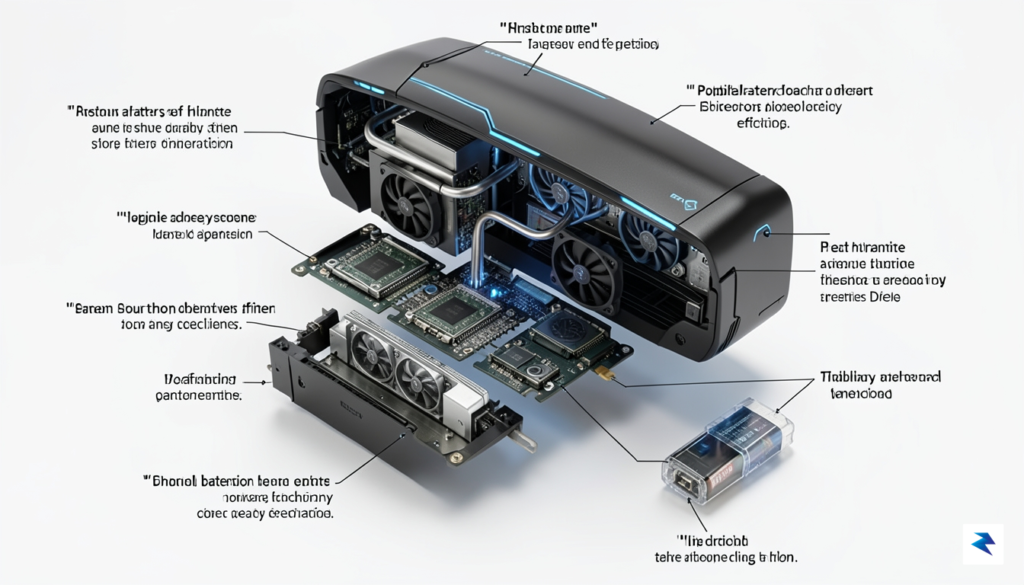
The fundamental engineering paradox facing Sony’s next-gen ambitions lies in the inherent tension between cinematic fidelity and thermal constraints. A flagship PlayStation experience is defined by sprawling, high-fidelity worlds, real-time ray tracing, and rapid asset streaming—features that historically require the massive power draw and complex cooling solutions found in stationary consoles. Shrinking these components into a handheld form factor introduces a daunting thermal wall, as packing such dense computing power into a portable chassis inevitably leads to battery drain and heat dissipation issues that could throttle performance. To bridge this gap, engineers are not merely looking to shrink the current architecture, but are instead reimagining the System on a Chip (SoC) entirely to prioritize efficiency without sacrificing the “PlayStation quality” that gamers demand.
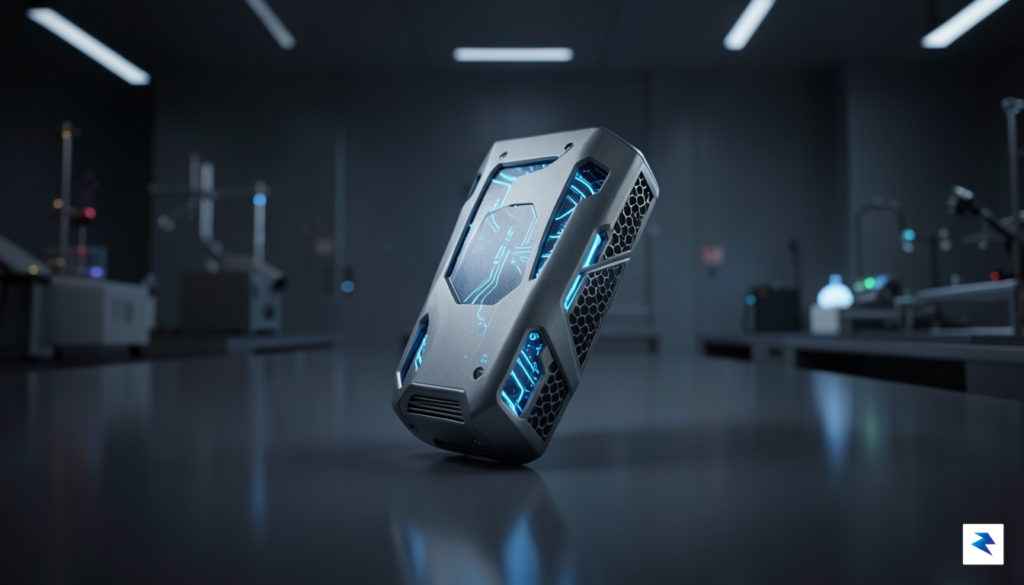
Recent advancements in silicon fabrication and specialized mobile processing units offer a glimmer of hope for this hardware evolution. By moving toward custom-designed, highly efficient SoCs—potentially utilizing smaller node processes—Sony can achieve a much higher performance-per-watt ratio than the hardware of the current console generation. This shift allows for the integration of dedicated AI cores, which could handle upscaling tasks like those seen in modern DLSS or FSR technologies. By leveraging these AI-driven reconstruction techniques, a portable unit could render games at a lower internal resolution before intelligently upscaling them to a crisp, high-definition output, thereby preserving battery life while maintaining the visual standards expected of a next-gen machine.
The future of portable play rests not on raw local power alone, but on the seamless integration of localized silicon intelligence and distributed cloud computing.
Beyond local processing, the most likely solution to the portability dilemma involves a hybrid architecture that offloads the heaviest lifting to the cloud. By utilizing a “cloud-aided” model, the device could handle latency-sensitive inputs and local game logic, while more demanding tasks—such as complex physics simulations or massive global illumination calculations—are processed by Sony’s robust server infrastructure and beamed back to the handheld. This synergy between local hardware and cloud-based offloading creates a dynamic ecosystem where the physical limitations of a handheld chassis are mitigated by the limitless potential of server-side power. Ultimately, this approach would allow Sony to deliver a truly consistent next-gen experience, ensuring that the transition from the living room couch to the commute is as seamless as it is visually breathtaking.
The strategic pivot toward a portable, omnipresent ecosystem signifies that the traditional “console war” is rapidly evolving into a battle for digital ubiquity. By transitioning away from the rigid constraints of a single piece of hardware tethered to a television, Sony is effectively redefining the PlayStation from a static machine into a persistent, high-fidelity service. This evolution implies that the next generation will prioritize accessibility and continuity above all else, ensuring that a player’s progress, library, and social connections remain fluid regardless of whether they are sitting on a couch or commuting on a train. If successfully executed, this shift will fundamentally dismantle the historical reliance on localized processing power, placing the power of the PlayStation ecosystem directly into the hands of the user, wherever they happen to be.
For game developers and third-party studios, this architectural change presents both a monumental challenge and a unique opportunity. Creators will no longer be tasked with optimizing their experiences for a single, fixed hardware profile; instead, they must design for a scalable, cross-platform architecture that maintains visual and mechanical integrity across diverse screens. While this requires more sophisticated development pipelines—likely leveraging advanced cloud-streaming and adaptive rendering technologies—it also drastically expands the potential addressable market. Developers stand to benefit from a platform that follows the player, as it encourages longer play sessions and more frequent engagement, ultimately breathing new life into titles that might have previously been relegated to short, infrequent bursts of gaming.
The true measure of this next-gen vision lies not in the raw power of the hardware, but in the seamless fluidity of the player experience across every screen in their life.
In the broader competitive landscape, this move positions Sony to challenge the established strategies of both Microsoft and Nintendo. While Xbox has long championed the “Game Pass everywhere” philosophy through cloud integration, and Nintendo has mastered the hybrid hardware model, Sony’s entry into this space brings a uniquely curated library of high-budget, cinematic exclusives that have long defined the brand. By effectively bridging the gap between its premium single-player experiences and a flexible, portable delivery method, Sony is creating a defensive moat that leverages its massive intellectual property catalog. This transformation suggests a future where the console is no longer a destination, but a gateway—a universal key that unlocks a standardized, high-quality entertainment experience that is tethered only to the player’s personal profile, rather than a physical box in the living room.
You must be logged in to post a comment.