
World Cup Ticket Scams: How to Spot and Avoid AI-Driven Fraud
The Evolution of Sporting Event Fraud For decades, the image of a sporting event scam was synonymous with the frantic, sweat-drenched sidewalk…
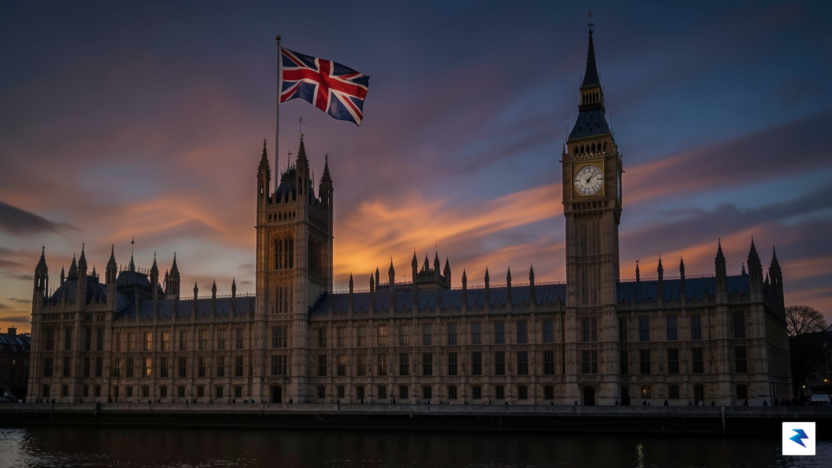

The departure of Keir Starmer stands as a jarring testament to a decade defined by unprecedented volatility within the walls of 10 Downing Street. Since 2014, the United Kingdom has witnessed a procession of six Prime Ministers, each tenure characterized by increasing brevity and a deepening sense of governance fatigue. This rapid succession—moving from the long-standing leadership styles of the past to a modern era of hyper-accelerated turnover—has fundamentally altered the relationship between the British public and their elected officials. Where there was once an expectation of long-term strategic planning, there is now a pervasive anticipation of the next inevitable collapse, leaving the nation’s political machinery feeling less like a steady engine of governance and more like a fragile, precarious house of cards.

This persistent churn of leadership has exacted a heavy toll, both on the psychological health of the electorate and the stability of the national economy. When the premiership becomes a temporary appointment, the ability of the state to commit to multi-year infrastructure projects, international trade deals, or complex policy reforms evaporates. Investors, both domestic and global, are naturally wary of jurisdictions where the primary architect of national strategy may be replaced with little notice. Consequently, the constant shifting of priorities creates a “stop-start” economic environment that stifles growth and undermines investor confidence. Beyond the balance sheets, the public experience is one of disorientation; citizens find themselves struggling to keep pace with the shifting ideological priorities of a government that seems perpetually focused on its own survival rather than the long-term prosperity of the country.
The true crisis is not found in the personality of any single leader, but in the structural inability of the current parliamentary environment to foster durability or consensus.
To dismiss these events as mere partisan misfortune is to miss the broader, more systemic rot inherent in the current political environment. The frequency of these transitions suggests that the fault lies not with individual politicians, but with a systemic failure to manage the intense pressures of modern governance. The adversarial nature of the parliamentary system, combined with a 24-hour news cycle that demands immediate results, has created an ecosystem where leaders are perpetually in the crosshairs of their own parties and the media. This environment incentivizes short-term tactical wins over the quiet, often tedious work of governing, effectively trapping the nation in a loop of instability. Unless there is a fundamental reassessment of how leadership is cultivated and supported within the UK, this revolving door will likely continue to spin, further eroding the foundational strength of British democracy.
The departure of Keir Starmer from the premiership did not occur in a vacuum, but rather as the culmination of a protracted period of legislative gridlock and shifting public sentiment. For months, the administration faced intense criticism regarding its inability to deliver on flagship economic pledges, particularly concerning the cost-of-living crisis and stagnant growth figures. As key performance indicators failed to meet ministerial targets, the government’s narrative of stability began to erode, leaving the Prime Minister increasingly isolated as he struggled to maintain a unified front against a backdrop of mounting fiscal instability.
Internal party dynamics played an equally significant role in the unraveling of his leadership. The parliamentary party, often fractured by competing visions for the nation’s future, found itself increasingly at odds with the Downing Street executive over the direction of crucial social reforms and infrastructure spending. These policy disagreements were not merely bureaucratic squabbles; they represented fundamental fissures regarding the government’s core identity. When high-profile backbenchers began to publicly voice their dissent, it signaled to the electorate that the administration had lost the cohesion necessary to steer the country through its most pressing challenges.
External economic pressures further compounded these internal struggles, forcing the government into a series of reactive measures that appeared haphazard to observers. Persistent inflationary concerns, coupled with a lack of clear consensus on trade policy, created an environment where long-term planning became nearly impossible. Every attempt to pivot or recalibrate the legislative agenda was met with skepticism, both from opposition benches and from within his own ranks. The resulting stagnation meant that the administration was consistently fighting fires rather than setting an agenda, effectively draining the political capital required to sustain a premiership.
The resignation was not a singular event prompted by one specific policy failure, but rather the result of a sustained erosion of authority that left the Prime Minister without a viable path forward in a hostile political climate.
Ultimately, the timeline of the final weeks revealed a government effectively paralyzed by its own contradictions. The failure to secure support for a landmark budget proposal served as the final catalyst, transforming existing murmurs of discontent into a formalized call for change. By the time the resignation was officially announced, it was widely acknowledged that the executive branch had exhausted its options for recovery. The transition marked the conclusion of a volatile chapter in British history, leaving behind a legacy defined by the immense difficulty of governing in an era of fractured consensus and rapid economic flux.

While the rapid succession of prime ministers often feels like a series of personal or political miscalculations, the true source of this instability lies deep within the architecture of Westminster itself. This volatility is not merely a product of individual failings or sudden scandals; it is a symptom of a systemic governance crisis. When leadership cycles shrink, the capacity for long-term strategic planning evaporates, leaving the nation in a perpetual state of reactive crisis management. The Westminster model, historically designed for a slower, more deliberate era of parliamentary consensus, is now struggling to contain the pressures of a hyper-connected, impatient political landscape.

One of the most significant catalysts for this turnover is the relentless nature of the 24-hour news cycle and the democratizing, yet volatile, influence of social media. In an age where every parliamentary utterance is instantly scrutinized and amplified by millions, the margin for error has effectively vanished. Leaders are no longer afforded the time to cultivate policy; instead, they are forced to navigate an environment where public opinion shifts in real-time, often dictated by viral narratives rather than substantive legislative goals. This environment creates a feedback loop where the pressure to perform immediately often leads to reactionary policies that satisfy the headlines of the day but fail to address the underlying structural challenges facing the country.
The constant turnover of leadership creates a “short-termism” trap, where institutional memory is discarded in favor of the immediate political survival of the next incumbent.
Furthermore, managing a fractured parliamentary majority has become an increasingly insurmountable task. The traditional binary of party politics has given way to complex internal factions that often prioritize ideological purity over executive stability. As parties grapple with these deep internal divisions, prime ministers find themselves balancing the demands of their own backbenchers against the conflicting expectations of a diverse electorate. This disconnect between what a party mandates and what the public demands creates a fragile governing environment where even minor policy disagreements can trigger a leadership challenge. Without a stable foundation, the government becomes a revolving door, prioritizing the maintenance of power over the implementation of a coherent, long-term national agenda.
Ultimately, the lack of strategic, multi-year planning is perhaps the most damaging byproduct of this instability. When the average tenure of a prime minister is measured in months rather than years, the machinery of government grinds to a halt as departments shift their focus to align with the priorities of a new administration. This perpetual state of transition prevents the realization of complex infrastructure projects, economic reforms, and social policies that require a decade or more of consistent political will. Until the structural incentives within the party system and the parliamentary process are realigned to favor stability over expediency, the United Kingdom will likely remain caught in this cycle of administrative churn.
With the sudden resignation of the Prime Minister, the governing party is thrust immediately into a high-stakes internal contest to determine its next leader. This process typically begins with the 1922 Committee—a powerful body of backbench Conservative MPs—setting the rules and the calendar for the leadership race. Candidates must first secure a requisite number of nominations from their fellow parliamentarians to prove they have the mandate to lead. Once the field of contenders is established, the parliamentary party undergoes a series of elimination rounds. In each round, MPs cast secret ballots, and the candidate with the fewest votes is systematically removed until only two hopefuls remain.
The final phase of this selection process moves the decision from the halls of Westminster to the broader party membership. While the exact mechanics can be adjusted by the party board, the remaining two candidates usually embark on a whirlwind tour of the country, participating in televised debates and regional hustings to persuade the grassroots members. This transition period is inherently fraught with uncertainty, as the government is essentially operating in a state of suspended animation. During this time, the outgoing Prime Minister often remains in office as a caretaker, handling essential duties but notably constrained from making major policy shifts or long-term commitments that might bind their successor.
The transition period is not merely a political hurdle; it is a constitutional necessity designed to ensure that the machinery of state continues to function even while the executive branch undergoes a fundamental change in leadership.
Beyond the internal party dynamics, there are significant legal and constitutional requirements that govern the transfer of power. Once a winner is declared by the party membership, they do not automatically assume the premiership. Instead, they must be invited by the Monarch to form a government, a tradition that reinforces the formal link between the Crown and the head of government. This ritualized handover is the final step in a process that balances party internal democracy with the traditional requirements of the British constitution. For the British public, this period of transition is a test of stability, as the nation watches to see how quickly the incoming leader can command the confidence of the House of Commons and chart a path forward for an increasingly fractured political landscape.
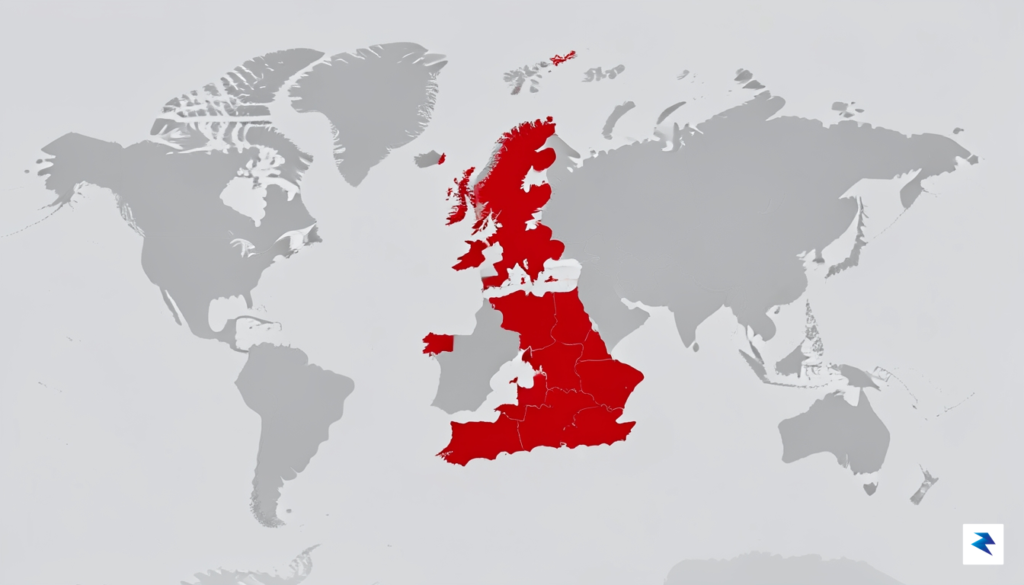
The revolving door of leadership at 10 Downing Street has fostered a pervasive sense of unpredictability that is fundamentally reshaping the United Kingdom’s role on the world stage. For much of the post-war era, the UK served as a cornerstone of diplomatic stability, acting as a bridge between the United States and the European Union while maintaining a robust presence in major international forums. However, the rapid succession of six prime ministers in a single decade has fractured this perception of reliability. Allies, particularly within the G7 and NATO, now find themselves navigating a diplomatic landscape where the UK’s long-term commitments are increasingly viewed through the lens of domestic political fragility. When a nation’s strategic priorities shift with every change in leadership, it becomes difficult for international partners to invest deeply in long-term collaborative frameworks, effectively sidelining London from the influential position it once held as a primary architect of global policy.
This inconsistency has direct repercussions for the UK’s standing in critical international alliances. Within NATO, while the UK remains a staunch military contributor, the lack of a singular, enduring vision for its post-Brexit foreign policy has left gaps in its strategic messaging. Similarly, in economic forums like the G7, the constant domestic focus required by internal party struggles has hampered the UK’s ability to drive global agendas or act as a mediator during crises. International adversaries have taken note of this perceived weakness, often exploiting the friction caused by a country that appears more preoccupied with its internal survival than with projecting a coherent external posture. The transition from a nation defined by its consistency to one defined by its volatility has forced a recalibration of how other powers engage with London, shifting from a relationship of partnership to one of wary observation.
The erosion of political continuity does more than just confuse diplomats; it signals to the world that the UK is currently a nation in transition, struggling to define its purpose in a post-imperial, post-Brexit era.
Beyond the diplomatic theater, the economic ramifications of this instability have been profound, particularly regarding international investor confidence. Global markets thrive on predictability, and the frequent turnover of prime ministers creates a climate of uncertainty that makes long-term capital investment in the UK significantly more risky. Foreign investors are increasingly hesitant to commit to major infrastructure or trade projects when the regulatory and legislative environment could shift with the next change in government. This hesitancy has cooled the appetite for the post-Brexit “Global Britain” vision, as international firms prioritize stability and clear governance over the potential, yet volatile, opportunities in the UK market. Ultimately, if the UK cannot project a sense of internal order, it will struggle to maintain the economic and diplomatic gravity required to influence the global order effectively.

Restoring confidence in the British political system requires far more than merely installing a new occupant at 10 Downing Street. The rapid turnover of leadership over the last ten years has exposed structural fractures that extend well beyond individual personalities or partisan affiliations. To cultivate genuine stability, the UK must engage in a fundamental reappraisal of how policy is formulated, ensuring that long-term national interests are prioritized over the immediate, often reactive demands of the 24-hour news cycle. This might involve strengthening the role of independent oversight bodies and non-partisan civil service expertise, which could act as a buffer against the volatility of frequent leadership contests.
Beyond procedural adjustments, there is a pressing need to redefine how leaders are held accountable to the public. Currently, the disconnection between Westminster’s internal maneuvering and the lived experiences of citizens has fostered a pervasive sense of apathy and distrust. Fostering a more robust culture of public engagement—perhaps through deliberative democratic processes like citizens’ assemblies—could bridge this gap. By inviting the electorate into the policy-making process on complex, long-term issues such as economic reform and public service funding, the government could build a broader mandate for change that survives the lifespan of any single administration.
“True political stability is not found in the longevity of a single leader, but in the enduring strength of the institutions that hold them to account.”
Looking toward the future, the prospect of national renewal rests on the ability of the political class to move past the cycle of perpetual crisis management. While the current turbulence is undoubtedly damaging, it also serves as a necessary catalyst for introspection. If the major parties can commit to a more collaborative approach regarding essential national infrastructure and economic strategy, the UK could emerge from this period of instability with a more resilient governance model. Achieving this, however, will require a departure from the adversarial “winner-takes-all” mentality that has characterized recent years. Whether the nation can pivot toward this more sustainable mode of governance remains an open question, but the necessity for a shift in course has never been more urgent. The path ahead is undoubtedly steep, yet it remains within the grasp of a system that, despite its recent failings, possesses a deep historical capacity for adaptation and reform.
You must be logged in to post a comment.