Trump Administration Lifts Restrictions on Anthropic’s Mythos and Fable AI
The Shift in AI Policy: Understanding the Mythos and Fable Reversal The landscape of federal artificial intelligence governance has undergone…

As Dr. Vinton Cerf prepares to conclude his distinguished tenure at Google, the world reflects on a career that has, quite literally, architected the digital age. Often hailed as one of the “Fathers of the Internet,” Cerf’s pioneering vision and relentless work transformed a fragmented collection of nascent research networks into the pervasive global ecosystem we know today. His early foundational efforts at the U.S. Defense Advanced Research Projects Agency (DARPA) in the 1970s laid the essential groundwork for what would become the internet, grappling with the complex challenge of enabling diverse computer networks to communicate seamlessly with each other. This period of intense innovation was not merely about connecting machines, but about forging a new paradigm for human interaction and information exchange that would redefine modern civilization.
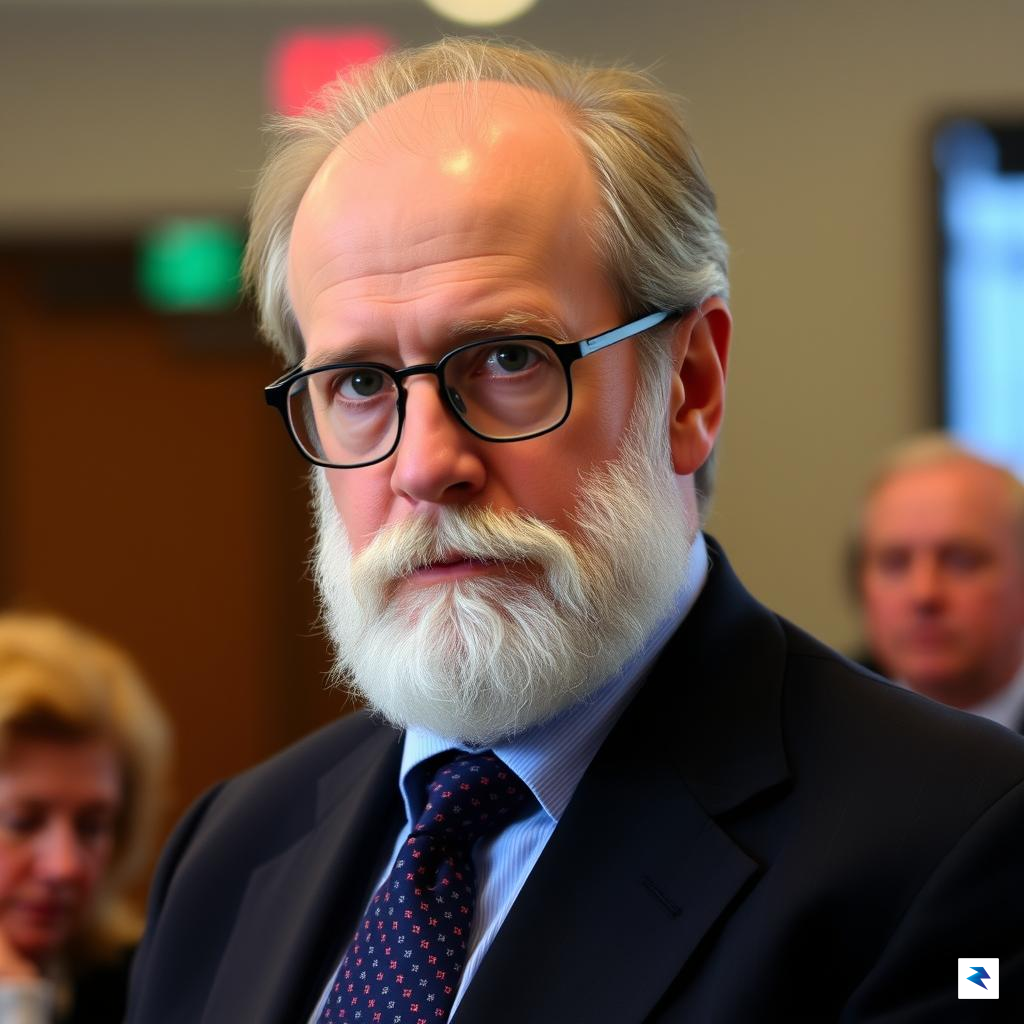
It was during this pivotal era that Cerf, collaborating closely with his colleague Robert Kahn, conceived and developed the Transmission Control Protocol/Internet Protocol (TCP/IP). The challenge they faced was monumental: how to build a robust, scalable system that could link heterogeneous networks – ranging from the ARPANET to packet radio and satellite networks – each with its own unique characteristics and limitations. Their ingenious solution involved designing a common language, a set of rules that would allow disparate networks to interoperate, breaking data into manageable packets, addressing them correctly, and ensuring their reliable delivery across vast distances. This revolutionary design provided the conceptual framework for “internetworking,” allowing information to flow freely and reliably regardless of the underlying physical network.
Crucially, TCP/IP wasn’t just a temporary fix; it proved to be the enduring, scalable “plumbing” that underpins the entire internet even today. These protocols define how data is formatted, addressed, transmitted, routed, and received, ensuring that an email sent from London reaches its recipient in Tokyo, or that a webpage loaded in Sydney renders perfectly in New York. The genius of TCP/IP lies in its layered architecture and its ability to adapt and evolve, accommodating new technologies and unprecedented growth without requiring fundamental changes to its core principles. From the earliest dial-up modems to today’s fiber optic broadband

The modern digital landscape did not emerge from a single stroke of genius, but rather through a painstaking process of collaborative experimentation that spanned several decades. In the late 1960s, the concept of packet switching—breaking data into smaller, manageable chunks—offered a radical alternative to the rigid, circuit-switched systems used by telephone networks. This theoretical foundation paved the way for ARPANET, a pioneering project funded by the U.S. Department of Defense. It was within this environment that Vint Cerf and his contemporaries began to wrestle with a fundamental technical problem: how to allow disparate, geographically isolated computer systems to communicate seamlessly. This was not merely an engineering challenge; it was an attempt to forge a universal language for machines that were never intended to speak to one another.

The true breakthrough arrived with the development of the Transmission Control Protocol and the Internet Protocol (TCP/IP). By establishing a standardized set of rules for data transmission, Cerf and his partner, Bob Kahn, effectively created a “network of networks.” This architecture allowed for a decentralized, resilient system where information could traverse multiple paths to reach its destination. This era was defined by an intense, open-source spirit where academic researchers shared findings freely, prioritizing interoperability over proprietary control. Because these pioneers viewed their work as a public good, they laid the groundwork for a global infrastructure that prioritized open access, a philosophy that remains at the heart of the internet’s design to this day.
The internet was designed to be an open, collaborative, and decentralized system, a vision that transformed it from a niche academic research tool into the backbone of global human civilization.
As the project transitioned from laboratory testing to functional public infrastructure, the impact of these protocols became undeniable. What began as a closed experimental web connecting a handful of universities rapidly evolved into a sprawling, interconnected grid that would eventually become the World Wide Web. This transition marked a profound shift in how humanity stores, shares, and consumes information. It was the collective dedication of these early computing pioneers that turned a fragile experiment in packet switching into the robust, ubiquitous network that now powers everything from global finance to personal correspondence. By fostering an environment where innovation could flourish without borders, Cerf and his colleagues ensured that the internet would not just be a tool for researchers, but a fundamental utility for the entire world.

When Vint Cerf joined Google in 2005 as the company’s “Chief Internet Evangelist,” he was already a titan of the digital age, having co-designed the TCP/IP protocols that form the backbone of modern connectivity. However, his tenure at Google marked a significant shift in his career trajectory, moving him from the drawing board of an engineer to the global stage of a digital diplomat. In this unique role, Cerf acted as a bridge between the hyper-technical world of packet switching and the often-opaque corridors of government policy. He utilized his immense credibility to translate complex technical realities for lawmakers, ensuring that those in power understood the delicate architecture required to maintain a truly global, interconnected network.
One of the most defining aspects of his time at the tech giant was his unwavering advocacy for net neutrality. Cerf firmly believed that the internet’s power lay in its neutrality—the principle that service providers should not discriminate based on the type of content or the identity of the user. He argued that if the infrastructure of the web were allowed to be partitioned or throttled by corporate interests, it would stifle innovation and destroy the egalitarian spirit that allowed the internet to flourish in the first place. By consistently lobbying for open standards and fair access, he helped frame net neutrality not merely as a regulatory debate, but as a fundamental prerequisite for a free and democratic society.
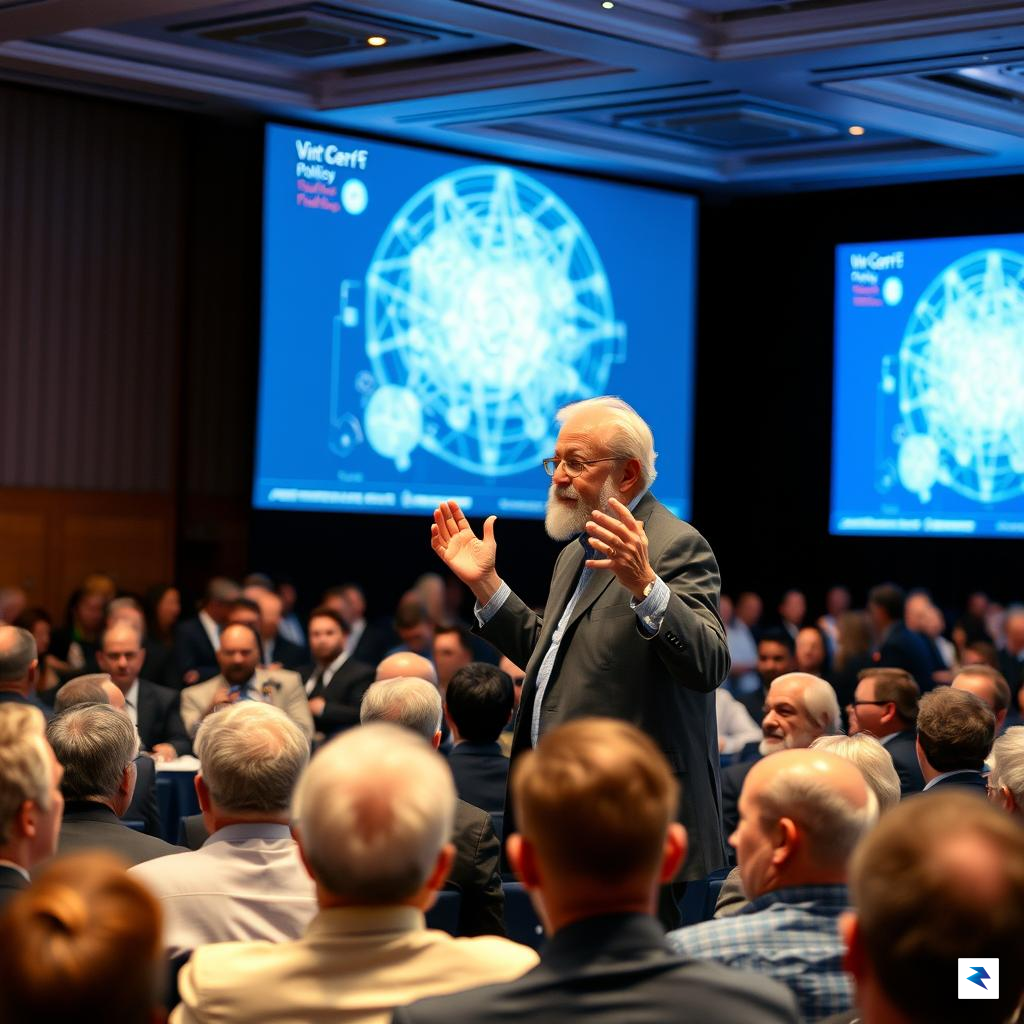
“The internet is not a luxury; it is a vital utility that must remain open, secure, and accessible to every individual on the planet, regardless of their geography or economic status.”
Beyond his policy work, Cerf was a tireless champion for expanding internet access to the developing world. He recognized that the digital divide was not just an issue of convenience, but a profound barrier to education, economic opportunity, and healthcare. His efforts at Google often focused on fostering infrastructure projects and advocating for policies that would lower the cost of entry for underserved regions. He frequently challenged the industry to look beyond profit margins, pushing for a future where the “Father of the Internet” could witness his creation serving as a universal equalizer rather than a tool of exclusion.
Ultimately, Cerf’s role as an evangelist was about protecting the internet from the twin threats of fragmentation and censorship. As various nations began to experiment with “splinternets”—walled-off, state-controlled versions of the web—Cerf remained a vocal critic of digital borders. His work ensured that the technical community and the political sphere remained in constant, productive dialogue, preventing the internet from splintering into a collection of isolated, disconnected silos. By remaining a consistent, principled voice, he helped preserve the vision of a singular, borderless network that remains a cornerstone of modern life.

The digital landscape, for all its revolutionary advancements, now finds itself at a profound crossroads, presenting a new generation of leaders with challenges far more intricate than those faced by its architects. While the foundational protocols and global connectivity established by pioneers like Vint Cerf transformed the world, the internet’s current state is characterized by rapidly escalating complexities. From its nascent days of academic exchange, where threats were primarily limited to basic viruses or mischievous hackers, the internet has matured into a global nervous system under constant siege. Today, sophisticated, state-sponsored cyber warfare, ransomware syndicates, and industrial espionage pose existential risks not just to data, but to critical infrastructure, democratic processes, and national security. The sheer volume and sensitivity of information now traversing the web create an irresistible target, demanding ever more robust, adaptive, and collaborative defense mechanisms across borders and sectors.
This escalating threat environment is exacerbated by the increasing centralization of vast swathes of internet activity and data. What was once envisioned as a distributed network, resilient by its very nature, has seen enormous consolidation around a handful of hyperscale cloud providers, social media behemoths, and e-commerce giants. While these platforms offer unparalleled convenience and innovation, they also represent massive honeypots for attackers and wield unprecedented power over information flow and economic activity. The implications for individual privacy are staggering, as personal data becomes a commodity, meticulously collected, analyzed, and often monetized in ways users rarely fully comprehend. This concentration of power also raises critical questions about censorship, algorithmic bias, and the potential for single points of failure that could disrupt essential services for millions or even billions worldwide.
Compounding these technological and structural shifts is an ongoing tension between the internet’s founding ideals of open access and the modern imperative for regulation and governance. The initial vision championed a borderless realm of free information exchange, yet today, governments worldwide grapple with how to legislate an inherently global medium within national boundaries. Debates around net neutrality, content moderation, and the digital rights of citizens highlight a fundamental struggle to balance freedom of expression with the prevention of harm, misinformation, and illicit activities. This often leads to a patchwork of conflicting laws and standards, challenging the very notion of a unified, interoperable internet and risking further fragmentation of the global digital commons.
Furthermore, the way we interact with the internet has fundamentally transformed, moving from desktop-centric browsing to a pervasive mobile-first experience, increasingly mediated by artificial intelligence. This shift has profound implications for how information is consumed, disseminated, and understood. AI-driven algorithms personalize our feeds, curate our searches, and even generate content, promising greater relevance but simultaneously raising concerns about filter bubbles, echo chambers, and the erosion of shared factual realities. The future of discovery and knowledge acquisition hinges on navigating these AI-powered landscapes responsibly, ensuring transparency, fairness, and the continued cultivation of critical thinking skills amidst an ocean of algorithmically-curated information. The next generation of internet leaders must not only secure the existing infrastructure but also design new paradigms that safeguard human agency and societal well-being in an increasingly intelligent and interconnected world.

Vint Cerf’s departure from his active professional duties is far more than a personal retirement; it marks the definitive conclusion of the formative era of our digital existence. By co-designing the TCP/IP protocols that form the bedrock of modern communication, Cerf did not merely create a tool—he architected a universal language that allowed disparate networks to converse as one. His career has been defined by a relentless commitment to the idea that the internet should be a global, decentralized commons rather than a proprietary walled garden. As he steps back, we are left to steward a legacy built on the radical, yet profoundly successful, premise that technology functions best when it is accessible, interoperable, and open to all.

Looking toward the horizon, the principles Cerf championed—specifically the philosophy of “permissionless innovation”—remain the most vital blueprint for the challenges ahead. In an age where digital gatekeepers and fragmented ecosystems threaten the open nature of the web, his vision serves as a necessary compass. Permissionless innovation ensured that any individual with a computer and an idea could contribute to the collective tapestry of the internet, sparking revolutions in commerce, education, and social interaction that were once unimaginable. Preserving this spirit is not merely a nostalgic exercise; it is an urgent necessity for the next generation of engineers and dreamers who will define how we inhabit digital spaces.
“The internet is not a finished product, but a living, breathing ecosystem that requires constant vigilance to remain a public good.”
Ultimately, the weight of Cerf’s legacy is measured not just in lines of code, but in the empowerment of billions of people who now occupy a world shrunken by instant connectivity. As we transition into an era dominated by artificial intelligence, quantum computing, and the proliferation of the Internet of Things, his insistence on standards and neutrality becomes even more critical. We must ensure that the infrastructure of tomorrow remains as resilient and egalitarian as the one he helped conceive decades ago. By holding fast to the foundational values of open access and interoperability, we honor his life’s work, ensuring that the internet continues to serve as the greatest engine for human collaboration and discovery in history.
You must be logged in to post a comment.