
Is Your Military App Spying on You? The Hidden Dangers of Foreign Code
The Hidden Risks in Digital Tools for Service Members For the modern service member, the smartphone has become as essential to mission…


The landscape of youth athletics is currently undergoing a transformation so profound that it has forced coaches, scouts, and statisticians to rethink the limits of human potential. We have entered the era of “trackflation,” a phenomenon where long-standing records that once defined the pinnacle of high school achievement are being dismantled with such regularity that they no longer carry the weight of prestige they once held. Just a few decades ago, a sub-four-minute mile or a sub-ten-second 100-meter dash were milestones that defined a generational talent, often serving as the gateway to professional stardom. Today, these benchmarks are being approached—and sometimes surpassed—by teenagers who have not yet even obtained their driver’s licenses, signaling a seismic shift in how we measure athletic excellence.

To understand the scale of this shift, one need only look at the historical data. For nearly half a century, the progression of youth records moved at a predictable, incremental pace; however, in the last decade, the curve has bent sharply upward. Where a handful of athletes might have broken specific barrier times in an entire decade during the 1980s, we are now seeing dozens of young runners achieving those same feats within a single season. This devaluation of historical milestones is not an indictment of the legends of the past, but rather a testament to a new, hyper-optimized reality. The term “trackflation” aptly describes this economy of performance: as the supply of “elite” times increases, the individual value of any single record necessarily deflates, pushing the bar of what is considered “fast” to unprecedented heights.
“We are witnessing a departure from the traditional developmental arc of young runners, where the ceiling of performance is being raised by a combination of technological advancement, early professionalization, and a more sophisticated understanding of human physiology.”
Several converging factors are driving this acceleration, most notably the cultural shift toward early specialization and year-round training regimens that mirror those of adult professionals. Modern teenagers are not merely running; they are engaging in data-driven training cycles, utilizing advanced recovery protocols, and benefiting from footwear technology that provides a tangible mechanical advantage previously unavailable to high schoolers. As we peel back the layers of this trend, it becomes clear that we are not just seeing a group of gifted individuals, but a fundamental change in the ecosystem of youth sports. This evolution challenges us to consider whether these rapid advancements are a byproduct of better science, better equipment, or a fundamental change in the genetic and psychological makeup of the modern athlete.

The sudden surge in blistering track times among the youth demographic is not merely a product of increased aerobic capacity or generational grit; it is the result of a paradigm shift in the material science of performance. At the forefront of this evolution is the “super-shoe” revolution, which utilizes hyper-responsive PEBA foams and rigid carbon-fiber plates to fundamentally alter running economy. These shoes act as a mechanical lever, storing and returning energy with every stride while reducing the metabolic cost of maintaining high-velocity paces. For a high schooler accustomed to traditional racing flats, slipping into a pair of top-tier spikes is akin to gaining a competitive advantage that was previously reserved for professional athletes at the Olympic level.

Beyond the footwear, the environment in which these athletes compete has undergone a subtle but significant transformation. Modern track surfaces are engineered with precise durometer measurements, providing a surface that is both forgiving on the joints and exceptionally energetic in its rebound. These engineered tracks, combined with improved facility design that minimizes wind resistance and optimizes turn radii, allow runners to sustain higher velocities with less wasted effort. When these high-performance environments are paired with the physiological advantages provided by the gear, the result is a compounding effect that pushes the limits of what was once considered “fast” for a developing athlete.
The modern young runner is also the beneficiary of a democratization of high-level sports science that was once gated behind expensive university programs or professional teams. Today’s training is no longer governed by the “more is better” philosophy; instead, it is guided by granular, real-time data. Wearable technologies allow coaches to monitor heart rate variability, lactate thresholds, and recovery metrics with surgical precision. By removing the guesswork from training cycles, coaches can ensure that athletes reach their physiological peak exactly when it matters most, effectively eliminating the wasted training blocks that frequently led to stagnation or injury in previous decades.
“We are no longer training by intuition alone; we are training by optimization. When you combine precise recovery tracking with periodized intensity, the ceiling for human potential shifts upward.”
Furthermore, the integration of advanced nutrition and recovery protocols has become standard practice for elite youth programs. Athletes are now educated on the specific fueling requirements needed to sustain high-intensity anaerobic efforts, ensuring that they enter every race with maximized glycogen stores and optimal hydration. This holistic approach—marrying the mechanical efficiency of modern hardware with the analytical precision of digital coaching—has created a “perfect storm” for performance. While it is tempting to attribute these records solely to individual talent, the reality is that the gap between a good runner and a great one is increasingly being filled by the sophisticated infrastructure surrounding them.
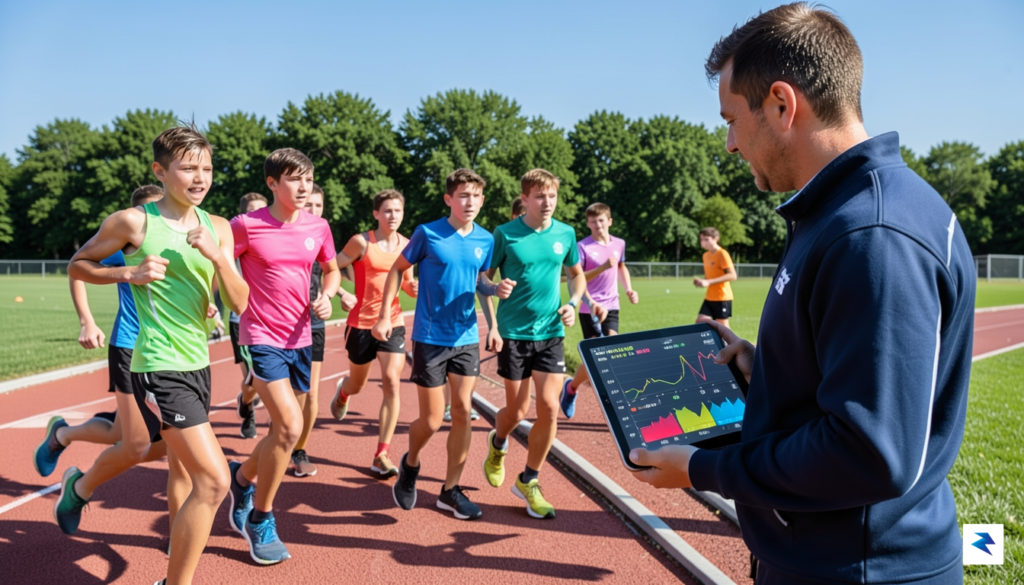

The landscape of youth running has undergone a seismic shift, marking a transition from the era of the “multi-sport generalist” to a new reality defined by intense, singular focus. Only a few decades ago, distance running was often a secondary pursuit for athletes who played soccer in the fall or basketball in the winter. Today, that casual seasonal approach is rapidly fading, replaced by a culture of year-round specialization. Modern high school phenoms are no longer merely “running for the school team”; they are engaging in sophisticated, year-round periodization plans that manage their physiological peaks and valleys with the precision of a professional marathoner.
This professionalization is fueled by unprecedented access to elite-level resources that were once reserved for collegiate or Olympic athletes. Private performance centers and specialized running coaches now cater to teenagers, offering services that go far beyond the track. Young runners are increasingly integrating periodized strength training, biomechanical gait analysis, and advanced recovery protocols—such as cryotherapy and professional-grade massage—into their weekly routines. By treating the human body as a high-performance machine, these athletes are building durability and speed at ages where their predecessors were still learning the basic mechanics of their stride.
The modern youth runner doesn’t just train harder; they train with a level of scientific intent that was virtually nonexistent at the high school level twenty years ago.
The democratization of elite knowledge through social media has further accelerated this trend. Platforms like Strava, Instagram, and YouTube allow teenagers to peer into the training logs of professional athletes, effectively crowdsourcing the “secrets” of elite performance. Where a runner once had to rely solely on the wisdom of a local high school coach, they now have access to global training methodologies, nutritional strategies, and mental performance techniques at their fingertips. This hyper-connectivity creates a feedback loop where young runners are constantly exposed to the latest science, driving them to adopt higher training volumes and more rigorous intensities earlier in their development. Consequently, the threshold for what constitutes a “competitive” high school time has been pushed to unprecedented levels, leaving the old-school hobbyist model in the rearview mirror.

While the recent surge in elite youth running times is undeniably exciting, heralding an era of unprecedented speed, it’s crucial to consider the less glamorous side of this hyper-competitive landscape. The pursuit of elite status at an increasingly young age, often through early specialization, carries significant risks that extend far beyond the finish line. We must critically examine the sustainability of this model and the profound psychological weight placed on teenagers to perform at the highest levels, year after year, during their formative years.
The relentless pursuit of faster times often translates into an unforgiving training regimen, placing immense repetitive stress on developing bodies. Young athletes, whose skeletal and muscular systems are still maturing, are particularly vulnerable to overuse injuries such as stress fractures, patellofemoral pain syndrome, and Achilles tendonitis. These aren’t minor setbacks; they can lead to chronic pain, long-term physical limitations, and even force promising careers to end prematurely. The pressure to push through discomfort or minor pain, often exacerbated by the desire to not fall behind peers or disappoint coaches and parents, only compounds these physical risks, turning a budding talent into a potential injury statistic.
Beyond the physical toll, the psychological burden on these young runners can be profound. The high-stakes competition and constant demand for peak performance can lead to debilitating anxiety, chronic stress, and even depression. When a teenager’s identity becomes almost exclusively tied to their athletic achievements, failures on the track can feel like personal failures, impacting their self-worth and overall mental well-being. This intense pressure cooker environment, often fueled by external expectations from coaches, parents, and even social media, can strip the joy from the sport, transforming a passion into a chore and fostering an unhealthy relationship with running itself.
Perhaps one of the most sobering indicators of this unsustainable model is the alarmingly high drop-out rate among promising young athletes. Many who achieve impressive results in their early teens find themselves burnt out and disillusioned with the sport by their late teens or early twenties, never reaching their full potential as adults. The constant grind, the physical ailments, and the mental exhaustion collectively chip away at their intrinsic motivation, leading to an early exit from a sport they once loved. This phenomenon suggests that while early specialization might yield immediate results, it often sacrifices long-term engagement and enjoyment, ultimately hindering the development of lifelong athletes rather than fostering them.
Therefore, as we celebrate the incredible speed of today’s young runners, it’s imperative to also prioritize their holistic well-being. Striking a balance between competitive drive and healthy development is crucial, ensuring that the pursuit of excellence doesn’t come at the cost of their physical and psychological health. Nurturing a love for the sport, emphasizing varied training, and fostering a supportive environment free from excessive pressure are vital steps toward creating a sustainable path for these remarkable young athletes.


The seismic shift we are witnessing in youth athletics suggests that the traditional developmental arc of a distance runner is being fundamentally rewritten. As high schoolers increasingly clock times that were once reserved for seasoned professionals, college programs are finding themselves in a high-stakes arms race for talent. The era where a sub-four-minute mile or a sub-nine-minute two-mile was a rarity is rapidly vanishing; today, these benchmarks are becoming entry-level requirements for elite recruitment. Consequently, scholarship competition has reached a fever pitch, forcing collegiate coaches to identify potential prodigies years earlier than before, which effectively pushes the pressure of professional-grade performance down into the formative adolescent years.
This rapid acceleration toward a new baseline of excellence will inevitably ripple through future Olympic cycles. We are moving toward a landscape where the transition from high school to the international stage is no longer a multi-year bridge, but a seamless, high-velocity jump. If the current trajectory continues, Olympic trials could soon be populated by athletes who have spent the better part of their teenage years training with the sophistication and intensity of veterans. This shift promises to elevate the depth of national teams, but it also invites a complex set of challenges regarding the sustainability of such early-stage dominance.

The true test of this era will not be how fast these athletes can run at seventeen, but whether the infrastructure of the sport can support their longevity through their late twenties and beyond.
Ultimately, the challenge for coaches, parents, and governing bodies lies in reconciling this unprecedented speed with the necessity of long-term athlete development. While the allure of broken records and championship hardware is undeniable, the physical and psychological toll of maintaining “freakish” velocity can be severe. To ensure that these young stars do not burn out before reaching their true physiological prime, the sport must pivot toward a more holistic approach that prioritizes injury prevention, mental health, and structural durability over short-term accolades. If the community can strike this delicate balance, we may be on the cusp of a golden age for distance running—one where the ceiling of human potential is not just nudged, but shattered entirely.
You must be logged in to post a comment.